

Forex Broker Guides
Exness Withdrawal Methods: Complete Guide for Traders
Comprehensive overview of withdrawal methods, limits, and processing times for Exness traders worldwide.

Forex Analyst
Forex Analyst specializing in currency markets, market trends, technical and fundamental analysis, and providing clear insights to help traders make informed decisions.
Exness has built a reputation for offering some of the fastest and most flexible withdrawal processes in the online brokerage industry. Traders across more than 130 countries rely on the platform to move profits from their trading accounts to personal bank accounts, electronic wallets, and cryptocurrency addresses with minimal friction. Understanding the full range of Exness withdrawal methods, their associated costs, processing windows, and regional availability is essential for efficient capital management.
Contents
- Exness Withdrawal Ecosystem Overview
- Bank Transfer Withdrawals and Regional Options
- South African Bank Withdrawals Including Capitec
- Electronic Wallet Withdrawals
- Cryptocurrency Withdrawals and Exchange Transfers
- Exness to Binance Transfer Process
- Withdrawal Processing Times and Fee Structure
- Minimum and Maximum Withdrawal Limits
- Step-by-Step Withdrawal Process
- Verification Requirements for Withdrawals
- Common Withdrawal Issues and Resolution
- Security Measures Protecting Withdrawals
- Comparing Withdrawal Methods for Your Needs
- Tips for Optimizing Your Withdrawal Workflow
- Regional Withdrawal Considerations
- Final Assessment of Exness Withdrawal Methods
This guide covers every withdrawal channel currently supported by Exness, from traditional bank wire transfers to instant cryptocurrency settlements. We examine region-specific options such as Capitec Bank for South African clients, detail the steps for transferring funds to Binance and other exchanges, and explain how account verification tiers affect withdrawal limits. Whether you are a new trader making your first withdrawal or an experienced user optimizing your cash-out workflow, this resource provides the practical details you need.
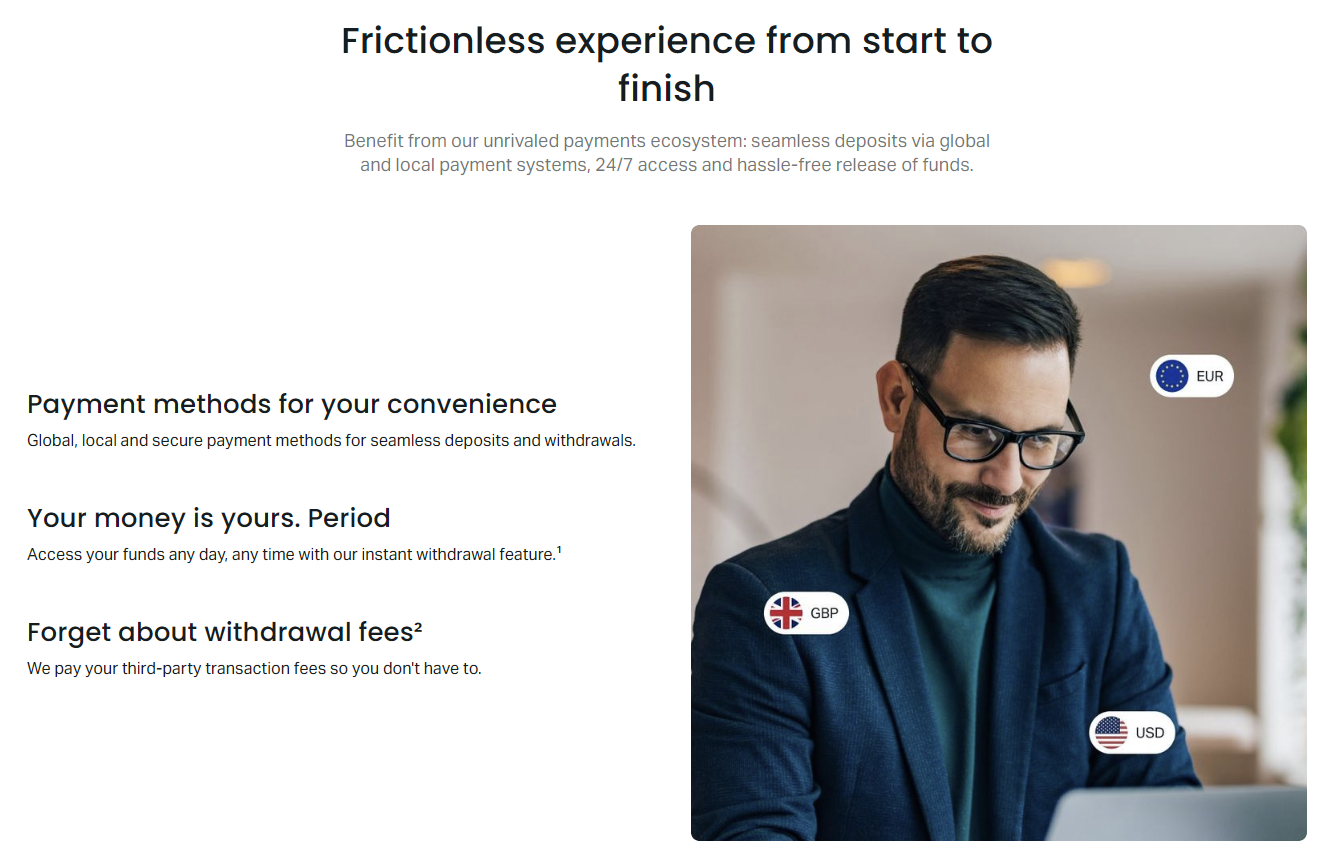
Exness processes withdrawal requests 24 hours a day, seven days a week, including weekends and public holidays. This round-the-clock operation is a significant advantage over brokers that only process payouts during business hours. The platform also emphasizes transparency by publishing real-time withdrawal statistics and maintaining a policy of zero internal fees for most methods, though third-party payment processors may apply their own charges.
Exness Withdrawal Ecosystem Overview
The Exness withdrawal ecosystem is designed around three core principles: speed, security, and accessibility. The broker segregates client funds from operational capital and partners with regulated financial institutions to ensure that withdrawal requests are honored promptly. Automated systems handle the majority of transactions, allowing for near-instant approvals for verified accounts using electronic methods.
- Automated processing for verified accounts reduces manual review delays
- Segregated client accounts protect funds from broker insolvency
- Multi-currency support eliminates forced conversion costs for many regions
- Real-time status tracking available in the Personal Area dashboard
- Dedicated payment support team operates across multiple time zones
Withdrawal requests are initiated from the Personal Area, where traders select a payment method, enter the amount, and confirm the transaction. The system automatically validates the request against available balance, margin requirements, and verification status. Once approved, funds are dispatched through the chosen channel. Processing time varies by method, with electronic wallets and cryptocurrencies typically completing within minutes, while bank transfers may require one to three business days depending on the receiving institution.
The platform supports over 100 payment methods globally, though the exact selection depends on the trader's country of residence and account verification level. Major categories include bank transfers, credit and debit cards, electronic payment systems, and cryptocurrency networks. Each method has distinct characteristics regarding speed, limits, and geographic availability that traders should evaluate before selecting a primary withdrawal channel.
Bank Transfer Withdrawals and Regional Options
Bank transfers remain the most widely used withdrawal method for traders moving larger sums or operating in regions with limited electronic wallet penetration. Exness partners with local and international banks to offer direct deposits in local currencies, reducing foreign exchange costs. The process typically requires the trader to provide accurate banking details including account holder name, account number, bank name, and SWIFT or IBAN codes where applicable.
South African Bank Withdrawals Including Capitec
South African traders benefit from dedicated local bank transfer integration that supports major institutions including Capitec Bank, Standard Bank, First National Bank, Absa, and Nedbank. Exness withdrawal to Capitec and other South African banks is processed in ZAR, eliminating currency conversion fees. Funds typically reflect in the recipient account within one to two business days after Exness releases the payment. The minimum withdrawal amount for local bank transfers is generally low, making this method accessible for traders of all account sizes.
For international bank wires, Exness supports SWIFT transfers in major currencies including USD, EUR, GBP, and others. These transfers may pass through intermediary banks, which can deduct fees and extend processing to three to five business days. Traders should confirm whether their receiving bank charges incoming wire fees, as these are outside Exness control. Providing complete and accurate beneficiary information minimizes the risk of delays or returns.
Scroll horizontally to see all columns
| Region | Supported Currencies | Typical Processing | Exness Fee |
|---|---|---|---|
| South Africa (Local) | ZAR | 1-2 business days | Zero |
| European Union (SEPA) | EUR | 1-2 business days | Zero |
| International (SWIFT) | USD, EUR, GBP, others | 3-5 business days | Zero (intermediary fees may apply) |
| Nigeria (Local) | NGN | 1-2 business days | Zero |
| Kenya (Local) | KES | 1-2 business days | Zero |
Traders should note that bank transfer withdrawals require the destination account to be in the same name as the Exness account holder. Third-party withdrawals are not permitted under anti-money laundering regulations. If a trader needs to send funds to a different beneficiary, they must first withdraw to their own verified account and then initiate a separate transfer from their bank.
Electronic Wallet Withdrawals
Electronic wallets offer a balance of speed and convenience for traders who prefer not to share bank details directly with the broker or who need faster access to funds than traditional bank transfers provide. Exness integrates with several global and regional e-wallet providers, each with its own coverage map and fee structure.
- Neteller and Skrill available in most supported countries with near-instant processing
- Perfect Money popular in CIS regions and parts of Africa and Asia
- WebMoney serves traders in Russia, Ukraine, and neighboring markets
- Sticpay expanding across Asia, Africa, and Latin America
- Local e-wallets such as M-Pesa (Kenya), GCash (Philippines), and others
E-wallet withdrawals are typically processed within minutes once approved, making them the fastest non-crypto option. However, traders must ensure their e-wallet account is verified to the level required by the provider to receive the funds. Some e-wallets impose their own withdrawal limits or fees when moving money from the wallet to a bank account, which should be factored into the total cost calculation.
Electronic wallets bridge the gap between banking infrastructure and trader demand for speed, but the final leg to a personal bank account often reintroduces traditional delays.
Cryptocurrency Withdrawals and Exchange Transfers
Cryptocurrency withdrawals have grown rapidly in popularity due to their speed, global accessibility, and independence from banking hours. Exness supports withdrawals to major blockchain networks including Bitcoin, Ethereum, Tether (USDT on ERC-20 and TRC-20), USD Coin, Binance Coin, and others. The broker does not charge internal fees for crypto withdrawals, though network miner or gas fees apply and are deducted from the sent amount.
Exness to Binance Transfer Process
Many traders use Binance as their primary cryptocurrency exchange and want to move trading profits directly from Exness to their Binance funding wallet. The Exness to Binance transfer process is straightforward: in the Exness Personal Area, select cryptocurrency withdrawal, choose the desired coin and network (such as USDT on TRC-20 for lower fees), and paste the deposit address from your Binance account. Always verify that the network selected in Exness matches the network selected in Binance for that specific asset; sending USDT on ERC-20 to a TRC-20 address will result in permanent loss of funds.
Exness to Binance withdrawal requests are typically broadcast to the blockchain within minutes. Confirmation time depends on network congestion and the fee paid. TRC-20 transactions usually confirm in under a minute, while ERC-20 may take several minutes during high Ethereum gas periods. Binance credits the deposit after the required number of block confirmations, which varies by asset. Traders can monitor the transaction hash in the Exness withdrawal history and on a block explorer.
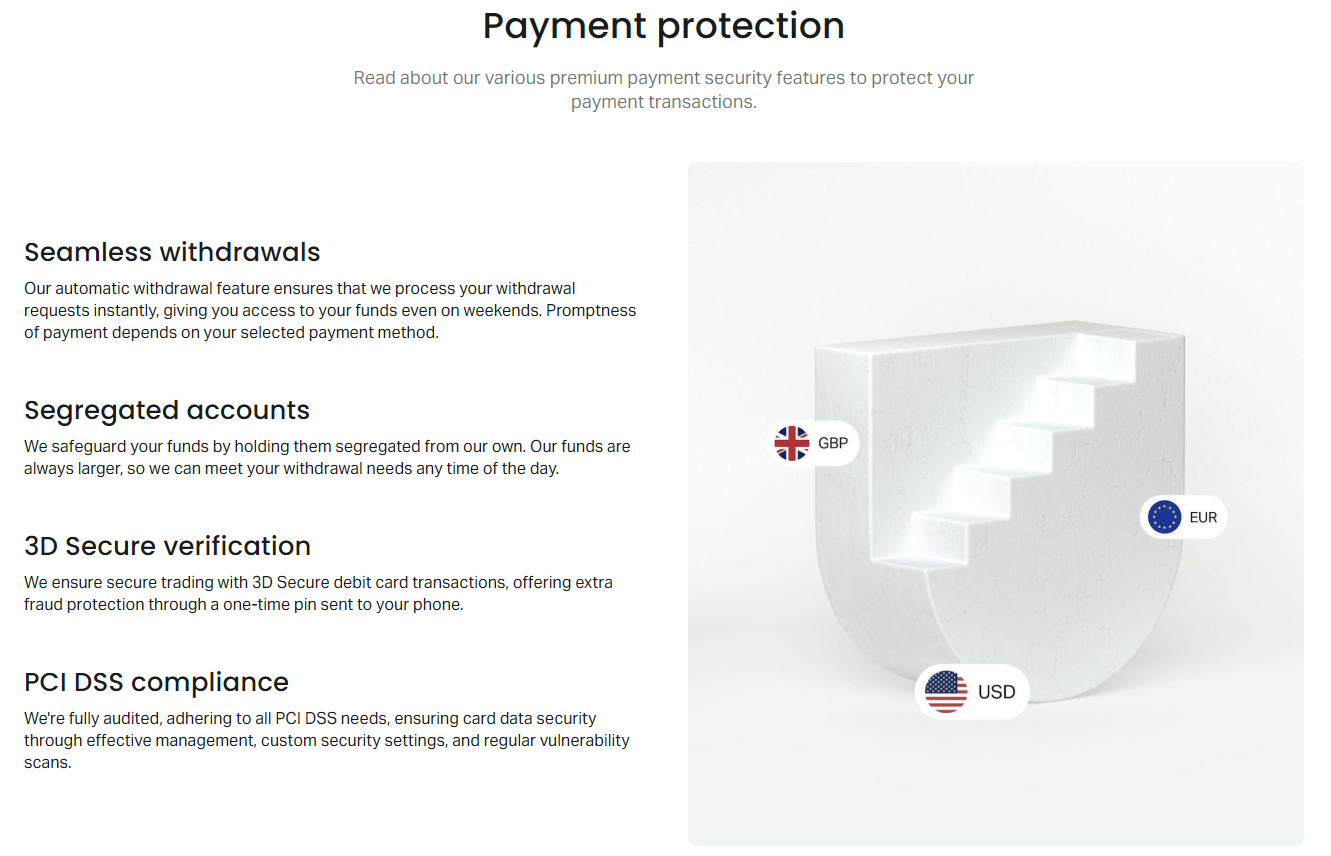
Cryptocurrency withdrawals are available 24/7 without weekend delays. This makes them ideal for traders who need immediate access to funds outside banking hours. However, crypto withdrawals require a fully verified Exness account with two-factor authentication enabled. The platform may also impose additional security checks for large crypto withdrawals, including email confirmation and manual review for amounts exceeding certain thresholds.
Scroll horizontally to see all columns
| Asset | Supported Networks | Network Fee (Approx.) | Typical Confirmation |
|---|---|---|---|
| Bitcoin (BTC) | Native BTC | 0.0005 BTC | 10-60 minutes |
| Ethereum (ETH) | ERC-20 | 0.005 ETH | 2-10 minutes |
| Tether (USDT) | TRC-20, ERC-20 | 1-5 USDT (TRC-20 cheaper) | <1 min (TRC-20), 2-10 min (ERC-20) |
| USD Coin (USDC) | ERC-20, TRC-20 | 1-5 USDC | Similar to USDT |
| Binance Coin (BNB) | BEP-20 | 0.0005 BNB | <1 minute |
Traders should be aware that cryptocurrency withdrawals are irreversible. Unlike bank transfers or e-wallet transactions, there is no chargeback or recall mechanism once a transaction is confirmed on the blockchain. This underscores the importance of verifying destination addresses carefully and using copy-paste rather than manual entry to avoid typographical errors.
Withdrawal Processing Times and Fee Structure
Exness maintains a policy of zero internal fees for withdrawals across all methods. This means the broker does not deduct a commission or processing fee from the withdrawal amount. However, external costs may arise from payment processors, intermediary banks, or blockchain networks. Understanding the total cost requires examining each layer of the transaction path.
- Exness internal fee: Zero for all methods
- Bank intermediary fees: $15-$50 for SWIFT, varies by bank
- E-wallet provider fees: 1-3% for wallet-to-bank transfers
- Cryptocurrency network fees: Dynamic, paid to miners/validators
- Currency conversion fees: Apply if withdrawal currency differs from account currency
Processing times are published as estimates based on typical conditions. Electronic methods (e-wallets, crypto) are usually completed within minutes to a few hours. Bank transfers depend on the receiving bank's clearing schedule. Exness processes requests continuously, but the final credit time is determined by the destination institution. Traders can track the status of each withdrawal in the Personal Area transaction history, which shows timestamps for request submission, approval, and dispatch.
Zero broker fees do not mean zero total cost. The last mile of any withdrawal often carries the highest fees, especially for cross-border bank wires.
Minimum and Maximum Withdrawal Limits
Withdrawal limits at Exness are determined by a combination of the payment method's inherent constraints, the trader's account verification level, and regulatory requirements for the jurisdiction. Minimum withdrawal amounts are generally low, often equivalent to $1 or the local currency equivalent, making the platform accessible for traders withdrawing small profits. Maximum limits per transaction and per day vary significantly by method.
Scroll horizontally to see all columns
| Method | Minimum | Maximum per Transaction | Daily Limit |
|---|---|---|---|
| Bank Transfer (Local) | $1 / 10 ZAR | $50,000 | $100,000 |
| Bank Transfer (SWIFT) | $10 | $100,000 | $200,000 |
| Credit/Debit Card | $1 | $10,000 | $50,000 |
| E-Wallets (Neteller, Skrill) | $1 | $50,000 | $100,000 |
| Cryptocurrency | $1 equivalent | No fixed maximum | No fixed maximum |
Higher verification tiers unlock increased limits. Basic verification (identity and address documents) permits standard limits suitable for most retail traders. Enhanced verification, which may include source of funds documentation, raises limits substantially and reduces the likelihood of manual review delays. Professional clients and high-volume traders can request custom limits through their account manager.
Step-by-Step Withdrawal Process
Executing a withdrawal from Exness follows a consistent workflow regardless of the chosen method. The process is designed to be completed in under two minutes for verified users. Familiarity with each step reduces errors and ensures the fastest possible processing.
- Log in to your Exness Personal Area at my.exness.com
- Navigate to the Withdrawal section in the main menu
- Select your preferred withdrawal method from the available list
- Enter the withdrawal amount in your account currency
- Provide or confirm the destination details (bank account, wallet address, etc.)
- Review the summary including any estimated network or processor fees
- Confirm the request using two-factor authentication (2FA)
- Monitor the transaction status in the History tab
For first-time withdrawals to a new destination, Exness may require additional confirmation such as a test transaction or verification of the destination account ownership. This is a security measure to prevent unauthorized withdrawals if account credentials are compromised. Once a destination is verified, subsequent withdrawals to the same details proceed without extra steps.
Verification Requirements for Withdrawals
Exness operates a tiered verification system that directly impacts withdrawal capabilities. All traders must complete basic identity verification (Proof of Identity and Proof of Residence) before any withdrawal can be processed. This is a regulatory requirement under anti-money laundering (AML) and know-your-customer (KYC) frameworks that apply to the broker's licensing jurisdictions.
- Proof of Identity: Valid passport, national ID card, or driver's license
- Proof of Residence: Utility bill, bank statement, or government letter dated within 3 months
- Payment Method Verification: May require card photo (masked) or bank statement for bank transfers
- Enhanced Verification: Source of funds documents for higher limits or specific jurisdictions
Documents are uploaded through the secure Personal Area portal. The compliance team typically reviews submissions within a few hours during business days. Incomplete or unclear documents will be rejected with specific feedback. Traders should ensure scans or photos are legible, show all four corners of the document, and match the personal information registered in the Exness account.
Verification is not a one-time hurdle. Regulatory changes or account activity patterns can trigger re-verification requests, so keep your documents current and accessible.
Common Withdrawal Issues and Resolution
Even with a well-designed system, withdrawal issues occasionally arise. Most are caused by incomplete verification, mismatched account details, or external processor delays. Understanding the common failure points helps traders resolve them quickly or avoid them altogether.
- Name mismatch between Exness account and destination bank account
- Insufficient free margin due to open positions using collateral
- Withdrawal amount exceeds available balance after margin requirements
- Unverified payment method for first-time use
- Network congestion delaying cryptocurrency confirmations
- Receiving bank rejecting international transfer due to compliance checks
When a withdrawal is rejected or delayed, the first step is to check the transaction status in the Personal Area for an error code or message. Exness support is available 24/7 via live chat, email, and phone for payment-related inquiries. Providing the transaction ID and a screenshot of any error message accelerates resolution. For bank transfers that appear stuck, traders should also contact their receiving bank with the SWIFT MT103 or transfer reference to trace the funds.
Security Measures Protecting Withdrawals
Exness implements multiple security layers to protect withdrawal integrity. These measures safeguard against unauthorized access while maintaining the speed that traders expect. The security framework combines account-level controls, transaction monitoring, and infrastructure protections.
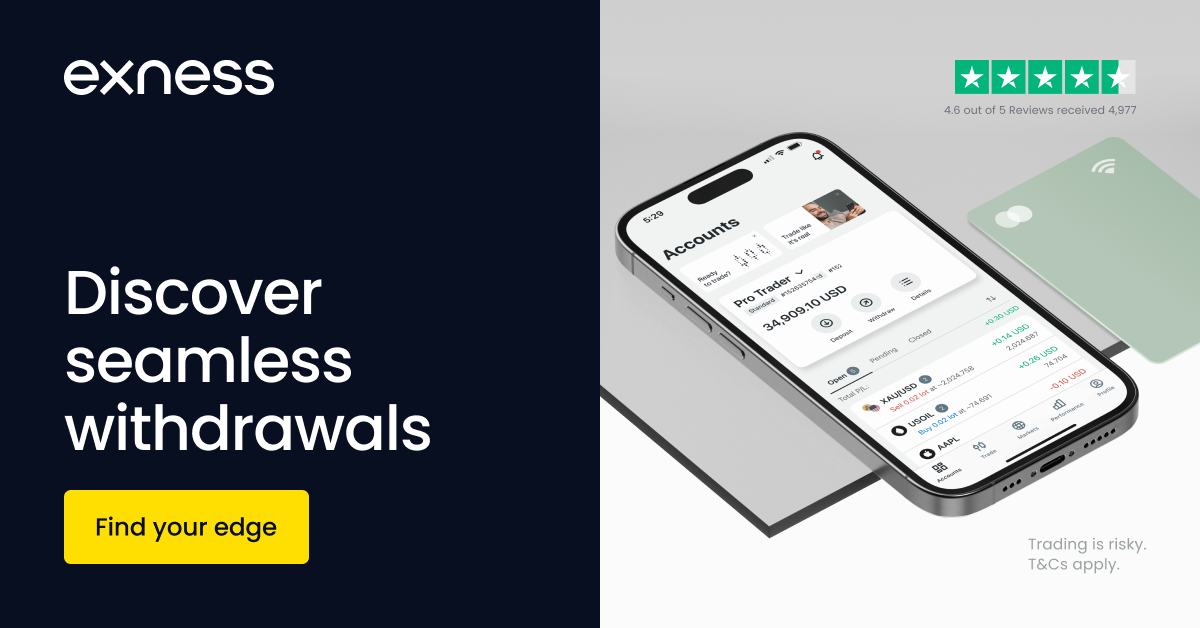
Two-factor authentication (2FA) is mandatory for all withdrawal requests. Traders can choose between SMS codes, authenticator apps (Google Authenticator, Authy), or email codes. The platform also employs device fingerprinting and IP analysis to detect suspicious login patterns. Withdrawal requests from new devices or unusual locations may trigger additional verification challenges.
- Mandatory 2FA for every withdrawal confirmation
- Withdrawal password separate from login password (optional but recommended)
- Email and SMS notifications for all withdrawal activity
- Automated fraud detection monitoring for anomalous patterns
- Segregated client accounts at top-tier banks
- Regular third-party security audits and penetration testing
The strongest security control is the trader's own vigilance. Never share 2FA codes, withdrawal passwords, or login credentials with anyone claiming to be Exness support.
Comparing Withdrawal Methods for Your Needs
Choosing the optimal withdrawal method depends on the trader's priorities: speed, cost, convenience, or geographic availability. No single method is best for every situation. Many experienced traders maintain multiple verified withdrawal channels to adapt to changing circumstances.
Scroll horizontally to see all columns
| Priority | Recommended Method | Trade-off |
|---|---|---|
| Fastest access to funds | Cryptocurrency (TRC-20 USDT) | Requires crypto knowledge, irreversible |
| Lowest total cost for large amounts | Local bank transfer in local currency | Slower (1-2 business days) |
| Convenience and familiarity | Credit/Debit card refund | Lower limits, card must support refunds |
| Regions with limited banking | E-wallets (Neteller, Skrill, Sticpay) | Wallet-to-bank fees may apply |
| Privacy preference | Cryptocurrency | Public blockchain transparency |
Traders in South Africa often find local bank transfers to Capitec or other major banks the most cost-effective for regular withdrawals, while using cryptocurrency for urgent needs. In regions with capital controls or limited banking infrastructure, e-wallets and crypto provide essential access. The key is to verify and test each method with a small amount before relying on it for significant withdrawals.
Tips for Optimizing Your Withdrawal Workflow
Efficient withdrawal management saves time and reduces costs over the long term. Implementing a few best practices can streamline the process and minimize friction when you need to access your trading profits.
- Complete full verification early, before you need to withdraw
- Test each withdrawal method with a small amount first
- Keep destination account details updated in the Personal Area
- Schedule regular withdrawals to avoid accumulating large balances at the broker
- Use cryptocurrency for weekend or holiday withdrawals when banks are closed
- Monitor network fees for crypto and choose low-fee networks (TRC-20, BEP-20)
- Maintain records of all withdrawal confirmations for tax purposes
- Enable withdrawal notifications for real-time status updates
Regional Withdrawal Considerations
Exness tailors its withdrawal offering to local market conditions and regulatory frameworks. Traders should be aware of region-specific nuances that affect method availability, processing times, and compliance requirements.
- European Economic Area: SEPA transfers in EUR are fast and free
- United Kingdom: Faster Payments for GBP withdrawals to UK banks
- Southeast Asia: Strong e-wallet and local bank integration (GCash, PayMaya, local banks)
- Latin America: Growing crypto adoption, local bank transfers in BRL, MXN, COP, ARS
- Middle East: Bank transfers in AED, SAR, QAR; crypto widely used
- Sub-Saharan Africa: Mobile money (M-Pesa), local bank transfers, crypto
- CIS Region: Perfect Money, WebMoney, local bank cards, crypto
Regulatory changes can affect withdrawal method availability with limited notice. Exness communicates such changes via email and Personal Area notifications. Traders should ensure their contact email is current and check announcements periodically, especially if operating in jurisdictions with evolving financial regulations.
Final Assessment of Exness Withdrawal Methods
Exness withdrawal methods stand out for their breadth, speed, and trader-centric fee structure. The combination of zero internal fees, 24/7 processing, and support for over 100 payment channels across diverse geographies makes the platform exceptionally accessible. Cryptocurrency withdrawals provide true instant settlement for those comfortable with blockchain technology, while local bank integrations in key markets like South Africa, Nigeria, Kenya, and Southeast Asia deliver cost-effective fiat access. The tiered verification system balances regulatory compliance with user experience, and the security framework protects funds without introducing unnecessary friction.
Traders should approach withdrawal method selection strategically, matching the channel to their specific needs for speed, cost, and convenience. Maintaining multiple verified withdrawal options provides resilience against temporary disruptions in any single channel. By completing verification early, testing methods with small amounts, and keeping destination details current, traders can ensure that accessing their profits is as seamless as the trading process that generated them.
Frequently Asked Questions
What is the fastest Exness withdrawal method?
Cryptocurrency withdrawals on networks like TRC-20 (USDT) or BEP-20 (BNB) typically complete within minutes, making them the fastest option available 24/7 including weekends.
Does Exness charge fees for withdrawals?
Exness does not charge internal fees for any withdrawal method. However, external fees may apply from banks, e-wallet providers, or blockchain networks.
How do I withdraw from Exness to Capitec Bank in South Africa?
Select Local Bank Transfer in the Withdrawal section, choose ZAR currency, enter your Capitec account details (account holder name must match Exness verification), and confirm. Funds usually arrive in 1-2 business days.
Can I withdraw from Exness directly to Binance?
Yes. Choose cryptocurrency withdrawal, select the asset and network (e.g., USDT TRC-20), paste your Binance deposit address for the matching network, and confirm. Ensure the network matches exactly to avoid loss.
What is the minimum withdrawal amount at Exness?
Minimum withdrawal is typically $1 or the local currency equivalent for most methods. Some bank transfers may have slightly higher minimums (e.g., $10 for SWIFT).
Why was my Exness withdrawal rejected?
Common reasons include name mismatch with destination account, insufficient free margin, unverified payment method, incomplete account verification, or exceeding withdrawal limits.
How long does a bank transfer withdrawal take?
Local bank transfers typically take 1-2 business days. International SWIFT transfers take 3-5 business days depending on intermediary banks and the receiving institution.
Can I withdraw to someone else's bank account?
No. Anti-money laundering regulations require the destination account to be in the same name as the Exness account holder. Third-party withdrawals are not permitted.