

Forex Trading Guides
Exness USDCHF Trading: Complete Guide for Forex Traders
Master USDCHF trading on Exness with professional tools, competitive conditions, and risk management strategies.

Forex Analyst
Forex Analyst specializing in currency markets, market trends, technical and fundamental analysis, and providing clear insights to help traders make informed decisions.
The USDCHF currency pair represents the exchange rate between the US dollar and the Swiss franc, making it one of the most actively traded major pairs in the forex market. Known for its stability and safe-haven characteristics, USDCHF attracts traders seeking exposure to both the world's primary reserve currency and Switzerland's historically neutral financial system. Exness provides comprehensive access to this pair through multiple account types, platforms, and trading conditions designed to accommodate various trading styles and experience levels.
Contents
- Understanding USDCHF Pair Characteristics
- Exness Trading Platforms for USDCHF
- Account Types and USDCHF Trading Conditions
- Spreads, Commissions, and Swap Rates for USDCHF
- Execution Quality and Order Types
- Risk Management Tools for USDCHF Trading
- Technical Analysis on Exness Platforms
- Fundamental Factors Affecting USDCHF
- Trading Strategies for USDCHF on Exness
- Mobile Trading USDCHF on Exness App
- Advanced USDCHF Trading Features
- Regulatory Framework and Fund Security
- Deposits, Withdrawals, and Account Management
- Final Assessment of Exness USDCHF Trading
Trading USDCHF on Exness offers several distinct advantages including competitive spreads starting from zero pips on certain account types, market execution with minimal slippage, and access to both MetaTrader 4 and MetaTrader 5 platforms. The broker's regulatory framework across multiple jurisdictions provides an additional layer of security for traders. Understanding the specific characteristics of USDCHF, combined with Exness's trading infrastructure, enables traders to develop more effective strategies for this unique currency pair.
This guide examines every aspect of USDCHF trading on Exness, from platform selection and account configuration to risk management techniques and strategy development. Whether you are a scalper targeting tight spreads during the London-New York overlap or a swing trader analyzing Swiss National Bank policy decisions, the information presented here will help you navigate USDCHF markets more effectively using Exness's trading ecosystem.
The Swiss franc's reputation as a safe-haven currency creates distinctive trading dynamics for USDCHF. During periods of global uncertainty, capital often flows into CHF, causing the pair to decline. Conversely, risk-on sentiment typically strengthens USD against CHF. Exness's trading conditions are structured to support both directional approaches, with flexible leverage options and no restrictions on trading styles including hedging, scalping, and algorithmic trading.
Understanding USDCHF Pair Characteristics
USDCHF exhibits unique behavioral patterns that distinguish it from other major currency pairs. The pair typically shows lower volatility compared to EURUSD or GBPUSD, with average daily ranges often between 50-80 pips during normal market conditions. This reduced volatility stems from the Swiss National Bank's historical intervention policies and Switzerland's status as a global financial safe haven. Traders must adjust position sizing and risk parameters accordingly when transitioning from more volatile pairs to USDCHF.
The pair demonstrates strong correlation with risk sentiment across global markets. When equity markets rally and risk appetite increases, USDCHF tends to rise as investors move away from safe-haven assets. During market stress, the reverse occurs with CHF strengthening against USD. This correlation makes USDCHF an effective barometer for broader market sentiment and a useful hedging instrument for equity portfolio managers. Exness provides real-time correlation data through its analytical tools, allowing traders to monitor these relationships dynamically.
- Lower average daily volatility compared to EURUSD and GBPUSD
- Strong negative correlation with gold and other safe-haven assets
- High sensitivity to Swiss National Bank policy announcements
- Significant liquidity during European and North American session overlap
- Reduced spreads during peak trading hours on Exness platforms
Seasonal patterns also influence USDCHF behavior. The pair often experiences reduced liquidity during August and the year-end holiday period when Swiss banking activity slows. Conversely, March and September typically see increased volatility around quarterly SNB policy reviews. Exness maintains consistent trading conditions throughout these periods, though spreads may widen slightly during major news events. Understanding these seasonal tendencies helps traders anticipate periods of higher or lower trading costs.
Exness Trading Platforms for USDCHF
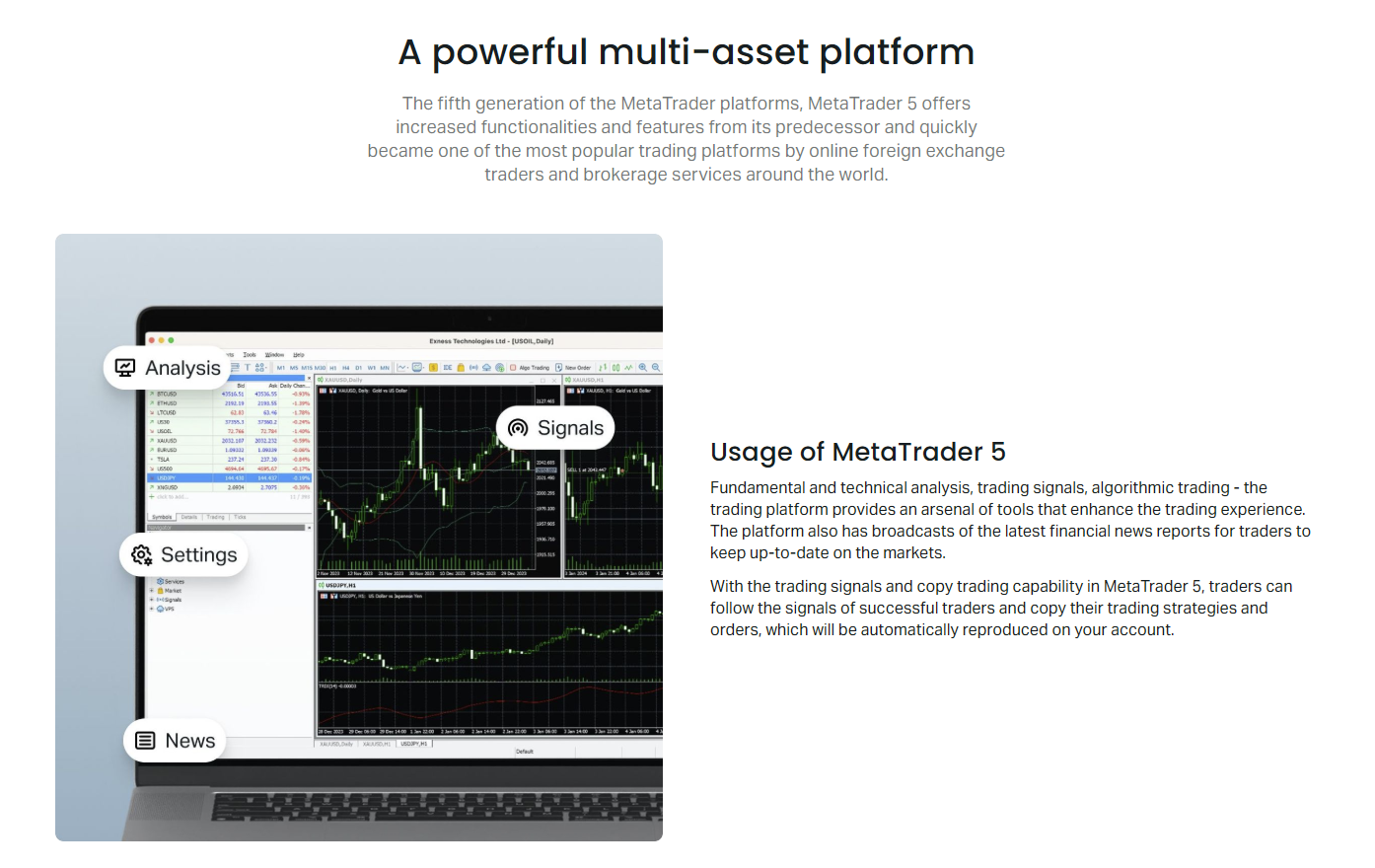
Exness offers multiple platform options for USDCHF trading, each with distinct features suited to different trading approaches. The MetaTrader 4 platform remains popular for its extensive expert advisor ecosystem and familiar interface, while MetaTrader 5 provides additional timeframes, order types, and analytical tools. The proprietary Exness Terminal and Web Terminal offer browser-based access without installation requirements, and mobile applications ensure continuous market connectivity.
MetaTrader 5 on Exness includes 21 timeframes compared to MT4's nine, allowing more granular analysis of USDCHF price action. The platform supports netting and hedging modes simultaneously, enabling sophisticated position management strategies. Built-in economic calendar integration displays Swiss and US economic events directly on charts, while the Depth of Market feature reveals liquidity levels at different price points. These tools are particularly valuable for USDCHF where precise entry timing around SNB announcements can significantly impact results.
The Exness Web Terminal provides full trading functionality through any modern browser without software installation. This platform synchronizes seamlessly with MT4 and MT5 accounts, maintaining consistent chart layouts, indicators, and expert advisors across devices. For USDCHF traders who monitor Swiss franc movements during European hours but execute from different locations, this cross-platform continuity eliminates the risk of missed signals or configuration discrepancies.
Account Types and USDCHF Trading Conditions
Exness offers five primary account types, each with distinct USDCHF trading conditions. Standard and Standard Cent accounts feature commission-free trading with spreads starting from 0.3 pips on USDCHF, making them suitable for beginners and traders preferring simplified cost structures. Professional accounts including Raw Spread, Zero, and Pro offer tighter spreads with commission-based pricing, catering to high-volume traders and scalpers who benefit from reduced per-trade costs.
Scroll horizontally to see all columns
| Account Type | Min Spread | Commission | Min Deposit | Best For |
|---|---|---|---|---|
| Standard | 0.3 pips | None | $1 | Beginners, swing traders |
| Standard Cent | 0.3 pips | None | $1 | Micro lot testing, new traders |
| Raw Spread | 0.0 pips | $3.5/lot/side | $200 | Scalpers, high frequency |
| Zero | 0.0 pips | $3.5/lot/side | $200 | Algorithmic traders |
| Pro | 0.1 pips | None | $200 | Position traders, hedgers |
The Raw Spread and Zero accounts provide the tightest USDCHF spreads, often reaching 0.0 pips during peak liquidity hours. However, the $3.5 per lot per side commission must be factored into total trading costs. For a standard lot of USDCHF, this equals $7 round-trip commission. Traders executing more than 20 lots monthly typically find commission-based accounts more cost-effective despite the per-trade fee. Exness's trading calculator helps determine the break-even volume for each account type based on individual trading frequency.
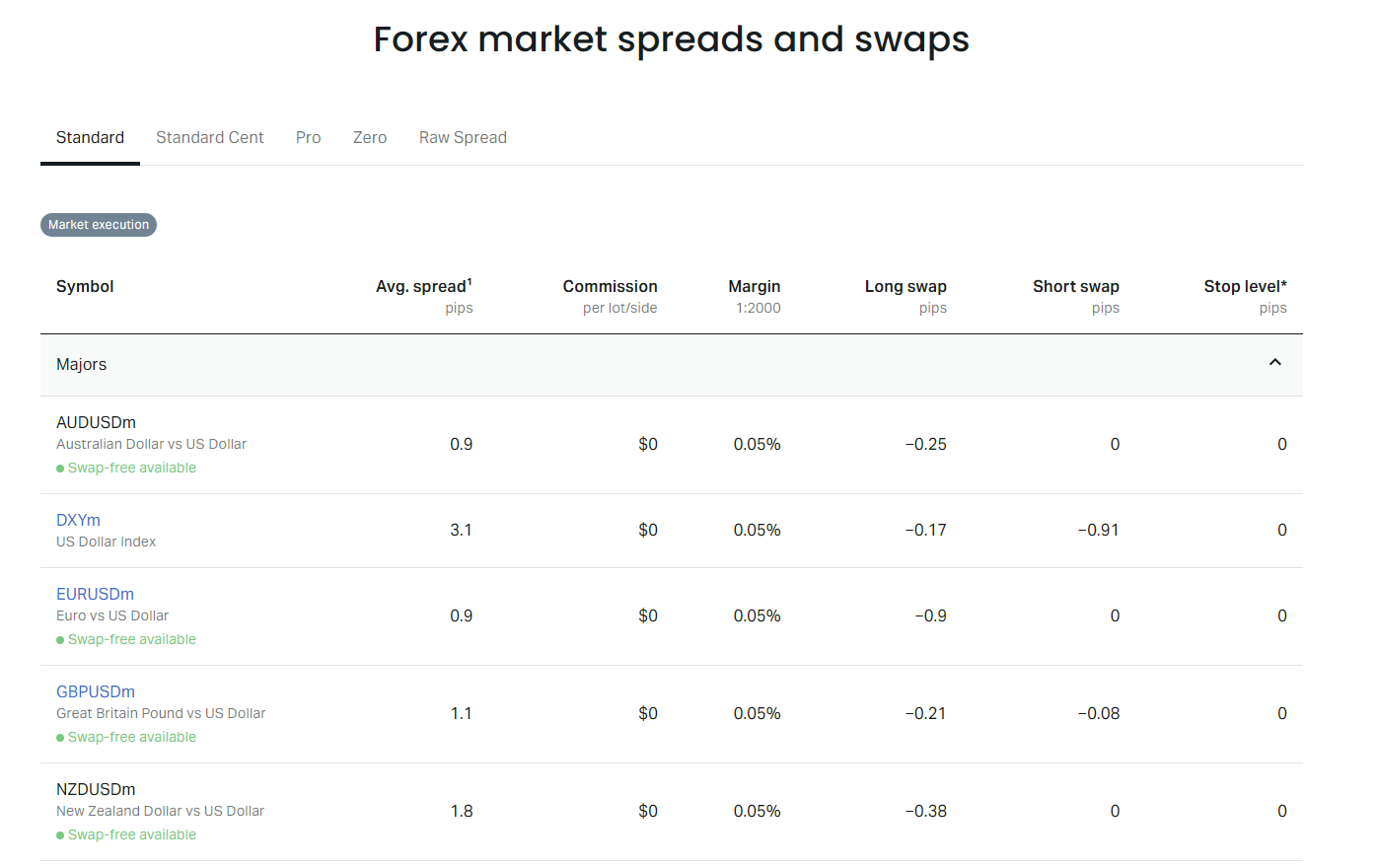
Leverage flexibility represents another key differentiator. Exness offers unlimited leverage for accounts with equity below $1,000, with progressive reductions at higher equity thresholds. For USDCHF trading, this means a trader with $500 equity can access 1:2000 leverage, while accounts above $50,000 are capped at 1:200. This structure allows new traders to learn position sizing with smaller capital while protecting larger accounts from excessive risk. The broker's margin call and stop-out levels remain consistent across all account types at 60% and 0% respectively.
Spreads, Commissions, and Swap Rates for USDCHF
Understanding the complete cost structure for USDCHF trading on Exness requires analyzing spreads, commissions, and swap rates simultaneously. The spread represents the primary cost for Standard and Pro accounts, while commission-based accounts shift the cost structure toward fixed per-lot fees. Swap rates, applied to positions held overnight, can significantly impact profitability for swing traders holding USDCHF positions for days or weeks.
USDCHF swap rates on Exness reflect the interest rate differential between the Federal Reserve and Swiss National Bank policy rates. Historically, the SNB has maintained negative or near-zero rates while the Fed has operated at higher levels, resulting in positive swaps for long USDCHF positions and negative swaps for short positions. However, rate changes by either central bank can reverse this dynamic. Exness updates swap rates daily and publishes them transparently in the contract specifications and trading platforms.
Scroll horizontally to see all columns
| Position Direction | Swap Points | Daily Cost/Income (1 lot) | Annualized Rate |
|---|---|---|---|
| Long USDCHF | +0.25 points | +$2.50 | ~9.1% |
| Short USDCHF | -0.85 points | -$8.50 | ~-31% |
| Long (Wed rollover) | +0.75 points | +$7.50 | Triple swap |
| Short (Wed rollover) | -2.55 points | -$25.50 | Triple swap |
The Wednesday triple swap adjustment accounts for weekend rollover when markets are closed. For USDCHF traders holding positions across Wednesday-Thursday, this triples the swap credit or debit. Swing traders must incorporate this into holding cost calculations, particularly for short USDCHF positions where negative swaps compound significantly over time. Exness's swap-free account option, available for Islamic accounts and certain jurisdictions, eliminates swap charges entirely but may incorporate wider spreads or alternative fee structures.
Total trading cost analysis must include spreads, commissions, and swaps. Ignoring any component creates an incomplete picture of strategy profitability.
Execution Quality and Order Types
Exness employs market execution for all account types, meaning orders are filled at the best available price without requotes. This model eliminates dealer intervention but introduces the possibility of slippage during volatile periods. For USDCHF, which typically exhibits lower volatility than other majors, slippage is generally minimal during normal conditions. However, SNB policy announcements, Swiss GDP releases, and US non-farm payrolls can create brief liquidity gaps where slippage may occur.
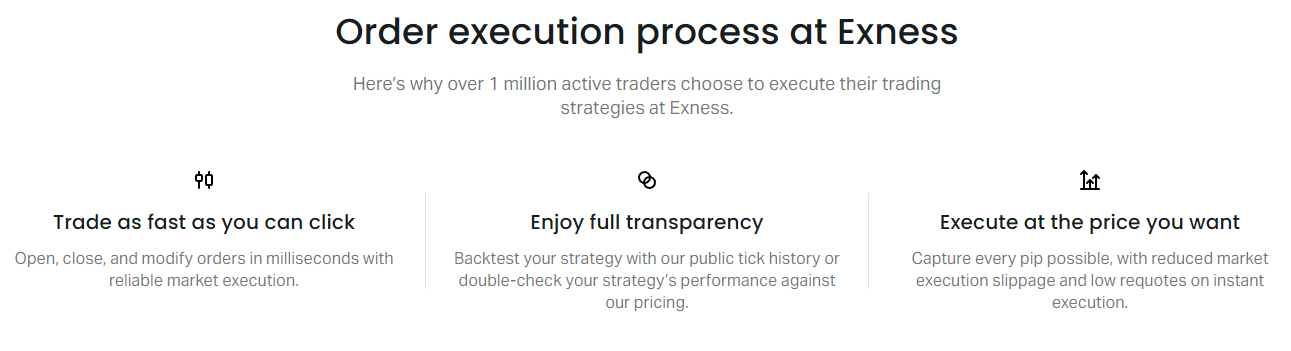
The broker's execution statistics show average order processing speeds below 25 milliseconds, with over 99% of orders executed without slippage under normal market conditions. During high-impact news events, Exness maintains execution transparency by not restricting trading or widening spreads artificially beyond what liquidity providers offer. This approach contrasts with brokers who implement trading pauses or spread widening during volatility, which can prevent order execution entirely.
- Market execution with no requotes on all account types
- Average execution speed under 25 milliseconds
- Support for market, limit, stop, and stop-limit orders
- One-click trading directly from charts on all platforms
- Partial fill capability for large USDCHF positions
Advanced order types on MT5 enhance USDCHF trade management. Stop-limit orders combine a stop trigger with a limit price, providing protection against excessive slippage during news events. Trailing stops automatically adjust as USDCHF moves favorably, locking in profits while allowing trends to develop. The netting system on MT5 consolidates multiple positions in the same direction into a single entry, simplifying portfolio management for traders scaling into USDCHF positions across different timeframes.
Risk Management Tools for USDCHF Trading
Effective risk management on Exness leverages both platform-native features and broker-level protections. The most fundamental tool remains the stop-loss order, which Exness guarantees will execute at the specified price for pending orders under normal conditions. For USDCHF, where sudden SNB interventions can cause gap openings, guaranteed stop-loss orders (available on certain account types) provide additional protection against weekend gaps or extreme volatility events.
Exness's negative balance protection ensures traders cannot lose more than their account equity, a critical safeguard for leveraged USDCHF positions. This protection applies automatically across all account types and jurisdictions. The margin call level at 60% and stop-out at 0% provide clear thresholds for position management. Traders receive real-time margin notifications through the platform, mobile app, and email, allowing proactive adjustment before forced liquidation occurs.
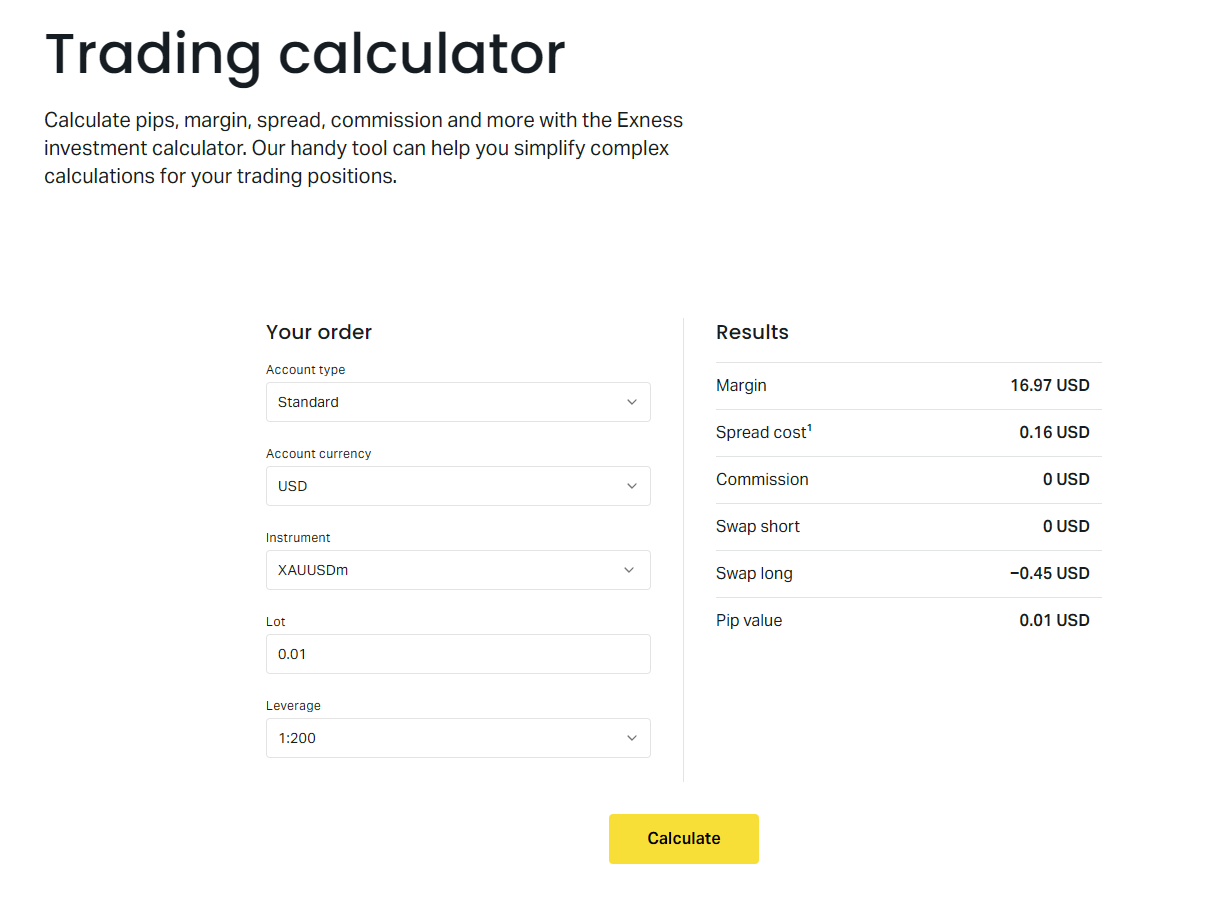
The Exness trading calculator integrates directly with account specifications to compute precise position sizing, margin requirements, and potential profit/loss scenarios for USDCHF trades. Input parameters include account currency, leverage, entry price, stop-loss, and take-profit levels. The calculator outputs required margin, pip value, swap costs, and risk-reward ratios. This tool proves invaluable for USDCHF where pip value calculations differ from USD-quoted pairs due to CHF being the quote currency.
Technical Analysis on Exness Platforms
Both MT4 and MT5 on Exness provide comprehensive technical analysis toolkits for USDCHF. The platforms include 38 built-in indicators on MT4 and 38 plus additional custom indicators on MT5, covering trend, momentum, volatility, and volume categories. For USDCHF's range-bound tendencies, oscillators like RSI, Stochastic, and CCI help identify overbought and oversold levels within established channels. Trend-following tools including moving averages, MACD, and ADX assist in determining directional bias during trending phases.
Custom indicator support allows traders to implement specialized USDCHF tools such as correlation matrices showing real-time relationships with EURUSD, gold, and equity indices. Pivot point calculators automatically plot daily, weekly, and monthly levels that institutional traders monitor for USDCHF. The platforms' template system enables saving complete analytical setups including indicators, chart properties, and drawing tools for instant application to any USDCHF chart.
- 38 built-in indicators plus unlimited custom indicators
- 9 timeframes on MT4, 21 on MT5 for multi-resolution analysis
- Graphical objects including Fibonacci, Gann, and Elliott tools
- Strategy tester for backtesting USDCHF expert advisors
- Real-time correlation coefficients with major pairs and assets
The Strategy Tester on MT5 provides multi-threaded, multi-currency backtesting with tick-level precision. USDCHF traders can validate strategies across years of historical data, including periods of SNB intervention and policy changes. The visual mode displays trades on charts for manual verification, while optimization runs test parameter combinations automatically. Exness provides high-quality historical data directly through the platform, eliminating the need for third-party data sources that may contain gaps or inaccuracies.
Fundamental Factors Affecting USDCHF
USDCHF fundamental analysis centers on the monetary policy divergence between the Federal Reserve and Swiss National Bank. The SNB's mandate includes price stability and consideration of economic conditions, with explicit attention to exchange rate impacts on Switzerland's export-dependent economy. The Fed's dual mandate of maximum employment and price stability creates a different policy framework. Interest rate differentials between the two central banks drive the primary fundamental trend in USDCHF.
Swiss economic indicators that move USDCHF include KOF Leading Indicator, GDP quarterly releases, CPI inflation data, and SNB quarterly policy assessments. The SNB's sight deposits data, published weekly, provides insight into potential foreign exchange interventions. US indicators include non-farm payrolls, CPI, PCE inflation, ISM manufacturing and services PMIs, and FOMC meeting minutes. Exness's economic calendar integrates these events with impact ratings and consensus forecasts, enabling traders to prepare for high-volatility windows.
Scroll horizontally to see all columns
| Event | Frequency | Typical Impact | Trading Approach |
|---|---|---|---|
| SNB Policy Rate Decision | Quarterly | High | Reduce position size pre-event |
| US Non-Farm Payrolls | Monthly | High | Avoid new entries 30 min before |
| US CPI Inflation | Monthly | High | Widen stops for existing positions |
| Swiss CPI | Monthly | Medium | Monitor for SNB reaction signals |
| SNB Sight Deposits | Weekly | Low-Medium | Track intervention signals |
Geopolitical risk events disproportionately affect USDCHF due to CHF's safe-haven status. European political instability, global trade tensions, and financial crisis fears typically strengthen CHF against USD. Exness's market news integration from FXStreet delivers real-time headlines directly on trading platforms, allowing USDCHF traders to react to breaking developments without switching applications. The news filter can be configured to display only CHF and USD relevant items, reducing information overload during active trading sessions.
The SNB's willingness to intervene directly in currency markets makes USDCHF unique among major pairs. Central bank action risk must be priced into every trading decision.
Trading Strategies for USDCHF on Exness
USDCHF's characteristics support several distinct trading approaches on Exness. Range trading exploits the pair's tendency to respect well-defined support and resistance levels during low-volatility periods. Traders identify horizontal channels using pivot points, Fibonacci retracements, and previous session highs/lows, then buy near support and sell near resistance with tight stops. Exness's tight spreads on Raw Spread and Zero accounts make this strategy cost-effective, as frequent entries and exits minimize commission impact relative to profit targets.
Breakout trading targets volatility expansion following consolidation periods. USDCHF often forms tight ranges ahead of major economic releases, with subsequent breakouts producing sustained directional moves. Traders place buy-stop and sell-stop orders above and below the consolidation range, capturing the initial momentum surge. Exness's market execution ensures these pending orders fill at the first available price, though slippage during explosive breakouts should be anticipated. The broker's lack of minimum distance requirements for pending orders allows placement extremely close to current price.
- Range trading: Buy support, sell resistance in horizontal channels
- Breakout trading: Pending orders around consolidation before news
- Carry trade: Long USDCHF for positive swap accumulation
- Correlation hedging: Offset USDCHF exposure with EURUSD or gold
- Algorithmic: EAs exploiting USDCHF mean reversion tendencies
Carry trade strategies benefit from USDCHF's historically positive swap for long positions. Traders hold long USDCHF positions for weeks or months, collecting daily swap credits while targeting capital appreciation. Exness's swap-free account option provides an alternative for traders unable to utilize swaps due to religious or regulatory constraints. The Pro account's commission-free structure with 0.1 pip spreads suits carry trades where holding costs must be minimized over extended periods.
Mobile Trading USDCHF on Exness App
The Exness mobile application provides full USDCHF trading capability on iOS and Android devices. The app replicates core platform functionality including real-time charts with technical indicators, one-tap trading, position management, and account monitoring. For USDCHF traders who must react to SNB announcements or unexpected geopolitical developments outside desktop hours, mobile access ensures continuous market participation. The app's push notification system delivers price alerts, margin warnings, and economic calendar reminders directly to the device.
Charting on the mobile app includes 9 timeframes, 30+ technical indicators, and drawing tools synchronized with desktop MT4/MT5 profiles. USDCHF charts maintain the same indicator configurations, trend lines, and Fibonacci levels across devices through cloud synchronization. The app supports both hedging and netting modes, with position management gestures allowing quick stop-loss and take-profit adjustments. Biometric authentication secures account access while enabling instant trade execution when opportunities arise.
The app's economic calendar filters events by currency, displaying only CHF and USD high-impact releases. Custom alerts notify traders when USDCHF reaches specified price levels or when technical conditions trigger, such as RSI crossing 70/30 thresholds. Deposit and withdrawal functions integrate directly, allowing account funding within minutes if margin requirements increase unexpectedly. The app's offline mode caches recent charts and account data, ensuring access to critical information even during temporary connectivity loss.
Advanced USDCHF Trading Features
Exness offers several advanced features that enhance USDCHF trading for experienced participants. The VPS hosting service provides low-latency connectivity to Exness trade servers, reducing execution delay for algorithmic strategies and expert advisors. Located in Equinix data centers near Exness infrastructure, the VPS ensures 99.9% uptime and sub-millisecond proximity to pricing engines. For USDCHF scalpers and high-frequency traders, this latency advantage can determine profitability.
Social trading and copy trading functionality allows USDCHF traders to replicate strategies from verified signal providers. The Exness Social Trading platform displays performance metrics including risk score, maximum drawdown, and profit factor for each strategy. Traders can allocate capital proportionally, set copy stop-loss limits, and diversify across multiple USDCHF approaches. Signal providers undergo verification including live trading history review, ensuring transparency for followers.
- VPS hosting with sub-millisecond latency to trade servers
- Social trading platform with verified USDCHF signal providers
- Trading Central integration for automated technical analysis signals
- API access for custom algorithmic trading implementations
- Premier program benefits for high-volume USDCHF traders
Trading Central integration delivers actionable technical analysis signals directly on Exness platforms. For USDCHF, the system identifies pattern completions, trendline breaks, and indicator divergences across multiple timeframes. Signals include entry price, stop-loss, and take-profit levels with confidence ratings. Traders can configure alerts for specific USDCHF setups matching their strategy criteria, reducing screen time while maintaining market awareness.
Technology infrastructure quality separates professional trading outcomes from amateur results. Latency, reliability, and tool integration compound over thousands of trades.
Regulatory Framework and Fund Security
Exness operates under multiple regulatory licenses including CySEC in Cyprus, FCA in the UK, FSCA in South Africa, and FSA in Seychelles. This multi-jurisdictional oversight provides USDCHF traders with robust fund protection including segregation of client funds from operational capital, participation in investor compensation schemes where applicable, and regular financial audits. The broker's transparency reports publish quarterly execution statistics, client profitability metrics, and capital adequacy ratios.
Client funds are held in segregated accounts with tier-1 banks, ensuring USDCHF trading capital remains protected even in the unlikely event of broker insolvency. Exness maintains capital reserves significantly exceeding regulatory minimums, with published figures demonstrating strong financial health. The broker's insurance coverage through Lloyd's of London provides additional protection up to $1 million per client for certain jurisdictions. These safeguards apply equally to all account types and trading instruments including USDCHF.
Deposits, Withdrawals, and Account Management
Funding an Exness account for USDCHF trading supports over 100 payment methods including bank transfers, credit/debit cards, electronic wallets, and regional payment systems. Most deposits process instantly with zero fees from Exness, though payment providers may charge their own fees. Minimum deposit starts at $1 for Standard and Standard Cent accounts, making USDCHF accessible to traders with limited initial capital. The broker supports account denominated in USD, EUR, CHF, and other major currencies, eliminating conversion costs for CHF-denominated accounts trading USDCHF.
Withdrawals process automatically 24/7 for most electronic methods, with bank transfers completing within 1-3 business days. Exness charges no withdrawal fees, and the minimum withdrawal amount matches the minimum deposit for each payment method. The instant withdrawal feature, available for verified accounts using electronic wallets and cards, processes funds within minutes. This capability proves valuable for USDCHF traders needing rapid access to profits after successful trades or requiring capital reallocation during volatile market periods.
The Exness Personal Area provides centralized account management including multi-account oversight, trading history export, tax reporting documents, and referral program tracking. USDCHF traders managing multiple strategies across different account types can monitor aggregate exposure, margin utilization, and performance metrics from a single dashboard. The verification process follows KYC/AML requirements with document upload directly through the Personal Area, typically completing within 24 hours for standard documentation.
Final Assessment of Exness USDCHF Trading
Exness delivers a comprehensive USDCHF trading environment combining competitive pricing, advanced technology, and robust regulatory oversight. The broker's multi-account structure accommodates every trading style from micro-lot beginners on Standard Cent accounts to institutional-scale algorithmic traders on Raw Spread accounts. Execution quality remains consistent across account tiers, with market execution ensuring fair fill prices without dealer intervention. Platform diversity including MT4, MT5, Web Terminal, and mobile applications provides flexibility for any trading workflow.
The USDCHF-specific advantages on Exness include tight spreads during peak hours, positive swap rates for long positions supporting carry strategies, and advanced risk management tools including negative balance protection and guaranteed stop-loss options. Fundamental traders benefit from integrated economic calendars, real-time news feeds, and correlation analysis tools. Technical traders access professional charting, strategy testing, and custom indicator ecosystems. The broker's commitment to transparency through published execution statistics and quarterly reports builds confidence in the trading environment.
Traders should evaluate their specific USDCHF approach against Exness's offerings. Scalpers and high-frequency traders gain most from Raw Spread or Zero accounts with VPS hosting. Swing traders and carry traders benefit from Pro account's commission-free structure and positive swaps. Beginners find Standard Cent accounts ideal for learning with minimal risk. The mobile app ensures no trading opportunity is missed regardless of location. With no restrictions on trading styles, Exness supports the full spectrum of USDCHF strategies from discretionary to fully automated.
Frequently Asked Questions
What is the minimum spread for USDCHF on Exness?
USDCHF spreads start from 0.0 pips on Raw Spread and Zero accounts during peak liquidity hours. Standard and Pro accounts offer spreads from 0.3 pips and 0.1 pips respectively, commission-free.
Does Exness charge swap fees for holding USDCHF overnight?
Yes, swap rates apply to positions held past 23:59 server time. Long USDCHF typically earns positive swap while short USDCHF pays negative swap, reflecting the USD-CHF interest rate differential. Swap-free accounts are available for eligible clients.
Can I use expert advisors for USDCHF trading on Exness?
Exness supports all trading styles including algorithmic trading with expert advisors on both MT4 and MT5. No restrictions exist on EA usage, scalping, hedging, or high-frequency trading. VPS hosting is available for low-latency EA operation.
What leverage is available for USDCHF on Exness?
Exness offers unlimited leverage for accounts with equity below $1,000, with progressive caps at higher equity levels (1:2000 up to $1,000, 1:200 above $50,000). Leverage applies uniformly across all instruments including USDCHF.
How fast are USDCHF order executions on Exness?
Average order execution speed is under 25 milliseconds with over 99% of orders filled without slippage under normal conditions. Market execution model ensures no requotes, though slippage may occur during major news events.
Is USDCHF trading available 24/7 on Exness?
USDCHF trades 24 hours a day, 5 days a week from Monday 00:00 to Friday 23:59 server time (GMT+2/GMT+3). Trading pauses during weekend market closure and resumes at weekly open.
What platforms support USDCHF trading on Exness?
USDCHF is available on MetaTrader 4, MetaTrader 5, Exness Web Terminal, and Exness mobile apps for iOS and Android. All platforms synchronize positions, charts, and account data in real time.