

Forex Trading Guides
Exness USDCAD Trading: Conditions, Spreads, and Strategy Guide
Explore trading conditions, platform tools, and risk management for the USD/CAD pair on Exness.

Forex Analyst
Forex Analyst specializing in currency markets, market trends, technical and fundamental analysis, and providing clear insights to help traders make informed decisions.
The USDCAD pair represents the exchange rate between the United States dollar and the Canadian dollar. As one of the major commodity currency pairs, it attracts attention from traders who follow oil prices, interest rate differentials, and North American economic data. Exness offers access to this pair through several account types and platforms, each with distinct cost structures and execution models.
Contents
- Understanding the USDCAD Currency Pair
- Exness Trading Conditions for USDCAD
- Account Types Suitable for USDCAD Trading
- Trading Platforms for USDCAD on Exness
- Execution Quality and Order Types
- Analytical Tools for USDCAD Analysis
- Risk Management When Trading USDCAD
- Trading Sessions and USDCAD Volatility
- USDCAD Correlation with Oil and Commodities
- Practical USDCAD Trading Strategies on Exness
- Using Exness Trading Calculator for USDCAD
- Deposits, Withdrawals, and Funding for USDCAD Traders
- Key Takeaways for Exness USDCAD Trading
Traders choosing Exness for USDCAD benefit from competitive spreads, multiple execution modes, and a range of analytical resources. The broker provides both MetaTrader 4 and MetaTrader 5, a proprietary web terminal, and mobile applications. Understanding how these components work together helps traders build a workflow suited to their strategy and risk tolerance.
This guide covers the essential aspects of trading USDCAD on Exness, from account selection and platform features to execution quality, risk management, and practical strategy considerations. Each section focuses on actionable information rather than promotional claims.
Understanding the USDCAD Currency Pair
USDCAD is classified as a major pair because it includes the US dollar, the world's primary reserve currency, and the Canadian dollar, which is heavily influenced by commodity exports. Canada is a leading crude oil exporter, so the pair often moves in response to energy market dynamics. When oil prices rise, the Canadian dollar tends to strengthen, pushing USDCAD lower. Conversely, falling oil prices typically weaken the Canadian dollar and lift the pair.
- Quote convention: USD is the base currency, CAD is the quote currency
- Pip value: 0.0001 for standard pricing, 0.00001 for fractional pricing
- Typical daily range: 50 to 120 pips under normal conditions
- High correlation with crude oil (WTI) and broader commodity indices
- Sensitive to Bank of Canada and Federal Reserve policy decisions
- Active during North American session overlap with European hours
The pair also reacts to economic releases from both countries, including employment reports, inflation data, GDP figures, and trade balances. Traders monitoring USDCAD should track the US Dollar Index (DXY) and West Texas Intermediate (WTI) crude oil as primary external drivers. Seasonal patterns, such as increased Canadian energy demand in winter, can also create recurring tendencies.
Exness Trading Conditions for USDCAD
Exness provides USDCAD across all its live account types. The cost to trade varies by account, with spreads and commissions structured differently for Standard, Pro, Raw Spread, and Zero accounts. Leverage is flexible up to the maximum permitted by the client's regulatory jurisdiction. Swap rates apply to positions held overnight and differ between long and short sides.
Scroll horizontally to see all columns
| Account Type | Typical Spread | Commission | Max Leverage |
|---|---|---|---|
| Standard | From 1.0 pip | None | 1:Unlimited* |
| Standard Cent | From 1.0 pip | None | 1:Unlimited* |
| Pro | From 0.4 pip | None | 1:Unlimited* |
| Raw Spread | From 0.0 pip | $3.5 per side/lot | 1:Unlimited* |
| Zero | From 0.0 pip | $0.2 per side/lot | 1:Unlimited* |
The asterisk on leverage indicates that unlimited leverage is available for eligible accounts meeting specific equity and trading volume requirements. Regulatory restrictions may impose lower caps in certain regions. Swap rates for USDCAD are published in the Exness personal area and on the contract specifications page. Traders holding positions past the daily rollover should factor these costs into their strategy, especially for swing or position trades.
Account Types Suitable for USDCAD Trading
Choosing the right account depends on trading frequency, position size, and cost sensitivity. High-frequency scalpers often prefer Raw Spread or Zero accounts where tight spreads offset commission costs. Swing traders and those with smaller balances may find Standard or Pro accounts more economical due to the absence of commissions. The Standard Cent account allows micro-lot trading with cent-denominated balances, useful for strategy testing with real market conditions.
- Standard: No commission, wider spreads, suitable for beginners and swing traders
- Standard Cent: Cent-denominated, micro lots, ideal for low-risk live practice
- Pro: Tighter spreads, no commission, designed for experienced traders
- Raw Spread: Near-zero spreads, fixed commission, favored by scalpers and EA users
- Zero: Zero spreads on top pairs, low commission, optimized for high-volume trading
All account types support hedging, expert advisors, and the full range of order types. Islamic swap-free versions are available for clients who require them. The minimum deposit varies by region and payment method but is generally low across account types. Traders can open multiple accounts under the same personal area to test different conditions simultaneously.
Trading Platforms for USDCAD on Exness
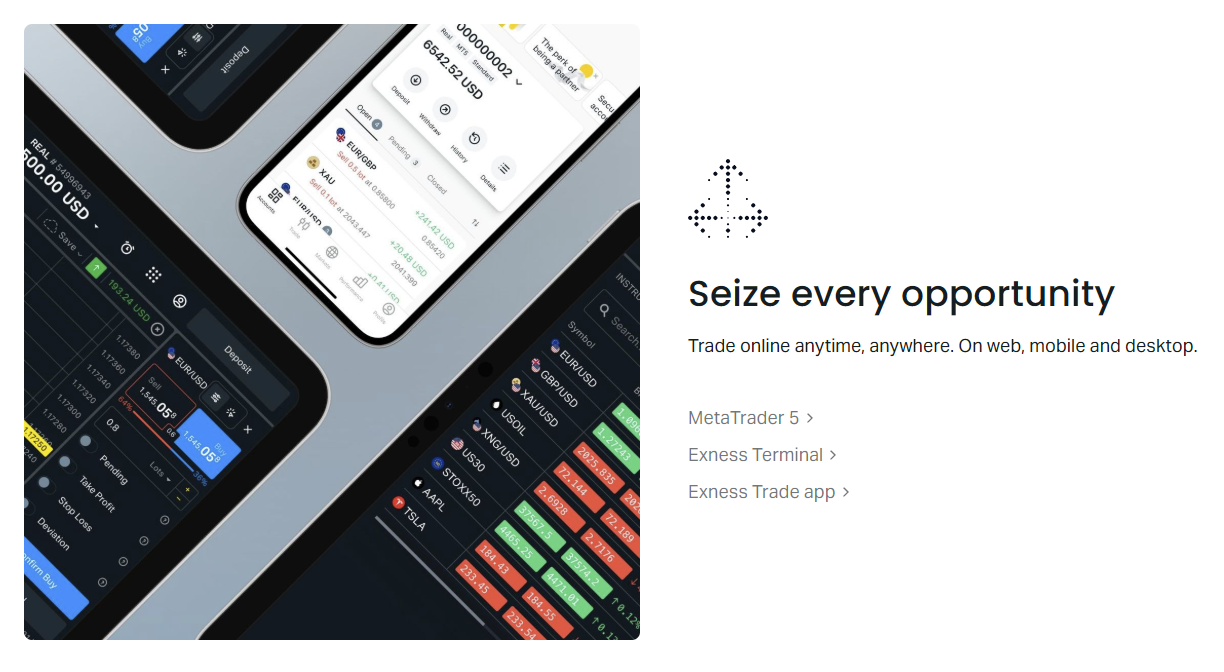
Exness supports MetaTrader 4, MetaTrader 5, a browser-based web terminal, and native mobile applications for iOS and Android. Each platform provides access to USDCAD with full charting, indicator libraries, and order management. The web terminal requires no installation and syncs with the trader's account credentials, making it convenient for quick access from any device.
MetaTrader 5 offers additional timeframes, more pending order types, an integrated economic calendar, and depth of market functionality. MetaTrader 4 remains popular for its extensive custom indicator ecosystem and lightweight resource usage. The Exness Trade app provides a streamlined mobile experience with one-tap trading, real-time quotes, and account management features. All platforms reflect the same pricing and execution engine.
- MT4: Mature ecosystem, extensive custom indicators, lower system requirements
- MT5: More timeframes, depth of market, built-in calendar, netting and hedging modes
- Web Terminal: No download, cross-platform, full charting and order suite
- Exness Trade App: Mobile-optimized, push notifications, biometric login
- MT4/MT5 Mobile: Full desktop feature parity, chart synchronization
Execution Quality and Order Types
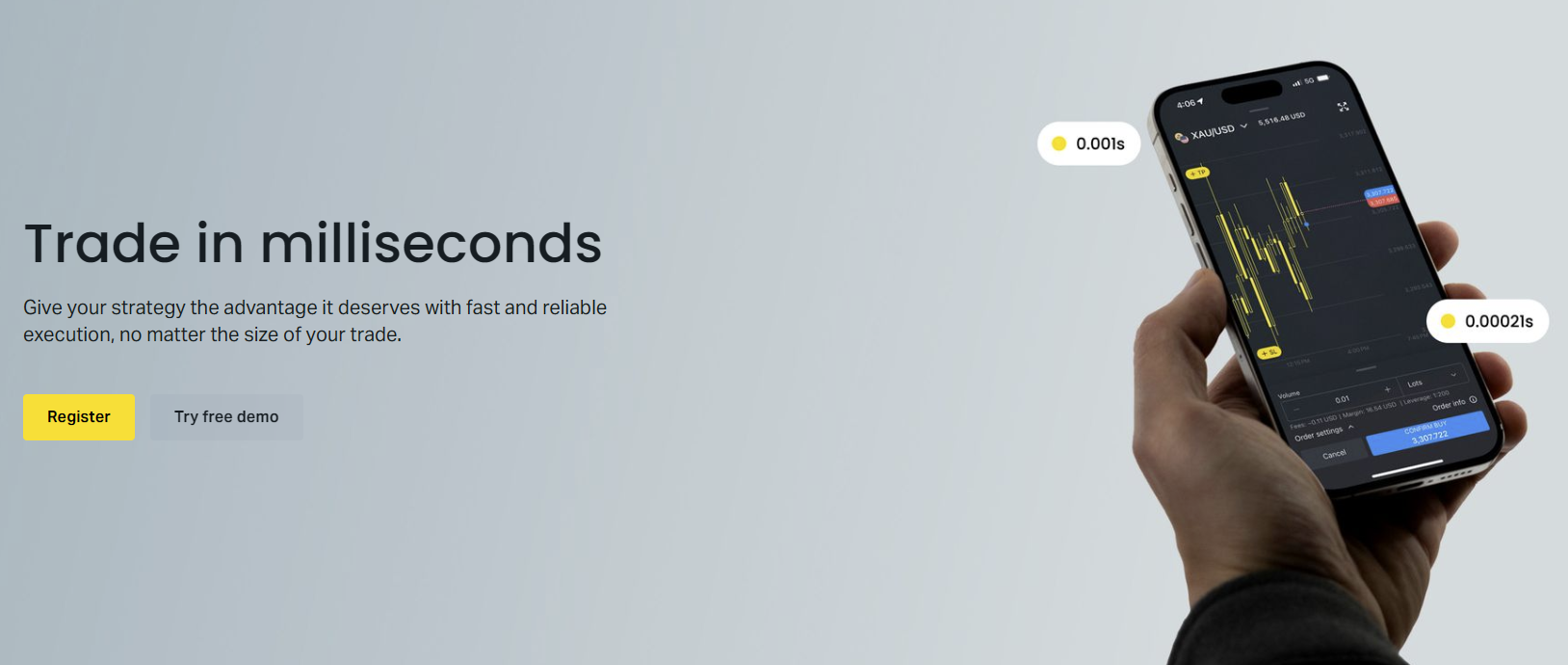
Exness operates a no-dealing-desk model with market execution for most account types. Orders are filled at the best available price from liquidity providers. The broker publishes execution statistics, including slippage and requote rates, which traders can review for transparency. For USDCAD, execution speed is typically measured in milliseconds, with the majority of orders filled without requotes under normal market conditions.
Available order types include market, limit, stop, and stop-limit orders. Trailing stops can be set to lock in profits as the market moves favorably. One-cancels-other (OCO) functionality is supported on MT5. During high-impact news events, spreads may widen and slippage can increase. Traders using automated strategies should test their expert advisors under simulated news conditions to verify behavior.
Scroll horizontally to see all columns
| Order Type | Description | Platform Availability |
|---|---|---|
| Market | Immediate execution at best price | All platforms |
| Buy/Sell Limit | Enter at better price than current | All platforms |
| Buy/Sell Stop | Enter on breakout confirmation | All platforms |
| Buy/Sell Stop Limit | Stop trigger with limit protection | MT5 only |
| Trailing Stop | Dynamic stop loss following price | All platforms |
Analytical Tools for USDCAD Analysis
Exness integrates several analytical resources directly into its platforms and website. Trading Central provides technical analysis signals and pattern recognition across multiple timeframes. The economic calendar highlights upcoming events for the US and Canada with forecast, previous, and actual values. FXStreet market news delivers real-time headlines and commentary relevant to major pairs including USDCAD.
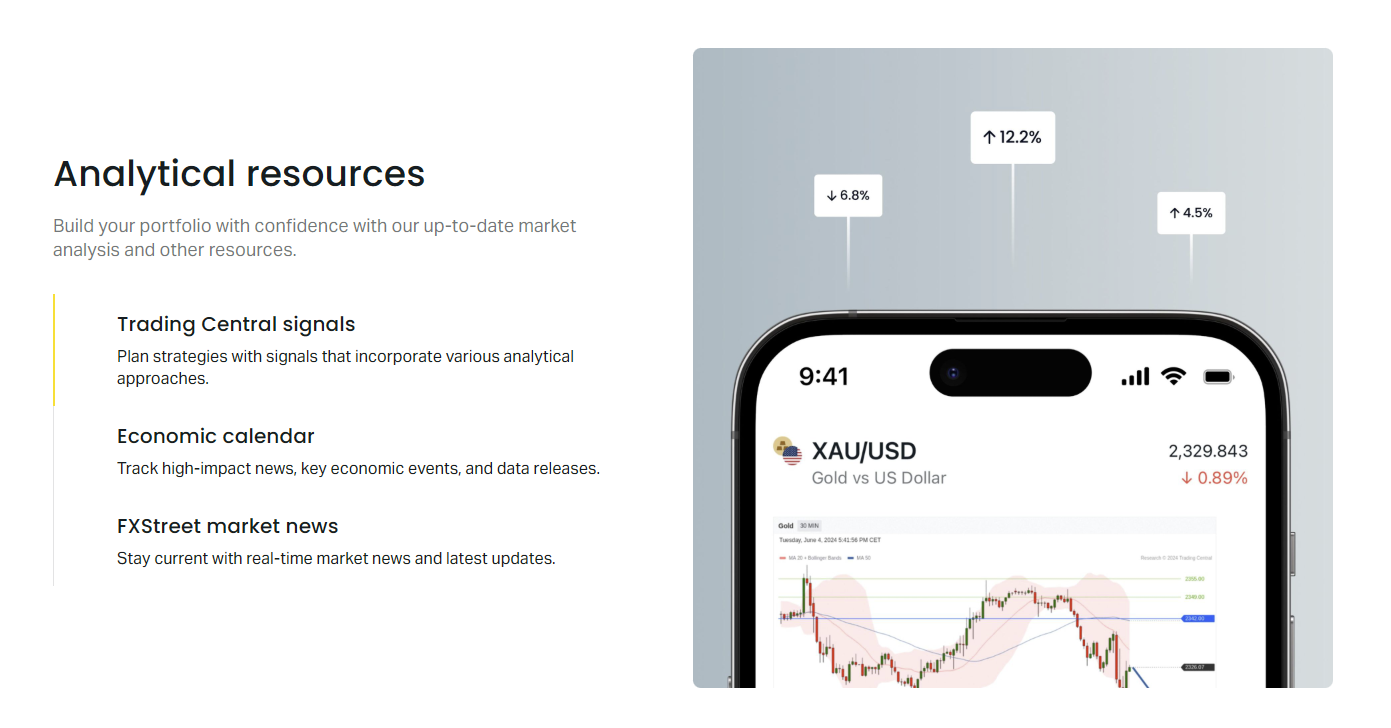
The web terminal and MT5 include the economic calendar as a native tab. Trading Central signals appear as chart overlays and in a dedicated signals window. Traders can filter signals by timeframe, direction, and confidence level. The Exness website also hosts a currency converter, pip calculator, margin calculator, and profit calculator for quick position sizing and risk assessment.
- Trading Central: Automated technical signals, chart patterns, key levels
- Economic Calendar: Filterable by country, impact, and timeframe
- FXStreet News: Real-time forex headlines and market commentary
- Market Sentiment: Client positioning data for major pairs
- Currency Converter: Live rates for quick cross-currency checks
Risk Management When Trading USDCAD
Effective risk management is essential when trading any leveraged product. USDCAD can experience rapid moves during oil inventory releases, central bank announcements, or geopolitical events affecting energy markets. Position sizing, stop-loss placement, and correlation awareness form the foundation of a disciplined approach.
Traders should calculate position size based on account equity, stop-loss distance in pips, and the pip value for their lot size. The Exness trading calculator automates this process. Avoid overleveraging, especially during low-liquidity periods such as the Asian session or holiday hours. Be aware that USDCAD often correlates negatively with oil prices and positively with USD-index strength.
- Define maximum risk per trade and per day before entering
- Place stop-loss at a technical invalidation point, not an arbitrary dollar amount
- Adjust position size for wider stops during volatile sessions
- Track USDCAD correlation with AUDUSD, NZDUSD, and oil futures
- Reduce exposure ahead of Bank of Canada or FOMC announcements
- Use the margin calculator to verify free margin before scaling in
Trading Sessions and USDCAD Volatility
USDCAD sees its highest liquidity and tightest spreads during the overlap of the London and New York sessions, approximately 13:00 to 17:00 UTC. The Asian session typically offers lower volatility and wider spreads. The New York session alone, from 13:00 to 22:00 UTC, drives the majority of daily volume for this pair. Economic releases from either country can cause sharp intraday moves regardless of session.
Scroll horizontally to see all columns
| Session | UTC Hours | Typical Spread | Volatility Profile |
|---|---|---|---|
| Asian (Tokyo) | 00:00-09:00 | Wider | Low, range-bound |
| London Open | 08:00-13:00 | Moderate | Increasing activity |
| London/NY Overlap | 13:00-17:00 | Tightest | High, trend development |
| New York Afternoon | 17:00-22:00 | Moderate | Moderate, news-driven |
Traders employing breakout strategies often focus on the London open and the overlap period. Range-bound strategies may find the Asian session more suitable. Scalpers benefit from the tightest spreads during peak liquidity. Swing traders should note that daily candles close at 17:00 New York time (22:00 UTC in winter, 21:00 UTC in summer), which defines the daily timeframe reference.
USDCAD Correlation with Oil and Commodities
The Canadian dollar is often described as a petrocurrency because crude oil exports represent a significant portion of Canada's trade balance. When WTI crude oil rises, the CAD tends to appreciate, causing USDCAD to fall. This inverse relationship is not perfect and can decouple during periods of divergent monetary policy or risk sentiment shifts. Traders should monitor the correlation coefficient over their trading horizon rather than assuming a fixed relationship.
Correlation between USDCAD and oil is dynamic. It strengthens when oil supply shocks dominate and weakens when interest rate differentials drive capital flows.
Other commodities such as natural gas, gold, and base metals also influence the Canadian dollar to a lesser degree. The US dollar index (DXY) exerts a direct influence since USD is the base currency. A rising DXY typically lifts USDCAD, all else equal. Traders can use the Exness correlation matrix or external tools to track rolling correlations and adjust hedging or diversification decisions accordingly.
Practical USDCAD Trading Strategies on Exness
Strategy selection should align with the trader's time availability, risk tolerance, and analytical preference. Exness platforms support discretionary, automated, and copy trading approaches. The following strategies are commonly applied to USDCAD but require individual testing and adaptation.
- Trend following: Use moving averages or Donchian channels on H4/D1 during overlap session
- Breakout trading: Enter on London open range break with volume confirmation
- Mean reversion: Trade Bollinger Band extremes during Asian session low volatility
- News straddle: Place pending orders straddling price before high-impact releases
- Carry trade: Exploit interest rate differential via swap-positive direction (monitor rollover)
- Correlation hedge: Offset USDCAD exposure with oil futures or CADJPY positions
Automated strategies can be deployed via expert advisors on MT4 or MT5. Exness VPS hosting is available for clients meeting volume thresholds, reducing latency for algorithmic execution. Copy trading through Exness Social Trading allows replication of verified signal providers who trade USDCAD. All strategies should be forward-tested on a demo account before committing live capital.
Using Exness Trading Calculator for USDCAD
The Exness trading calculator is a web-based tool that computes margin requirements, pip value, swap costs, and potential profit or loss for any position size. It supports all account types and instruments, including USDCAD. Traders input the account type, leverage, instrument, lot size, and direction to receive instant calculations. This eliminates manual errors and speeds up pre-trade planning.
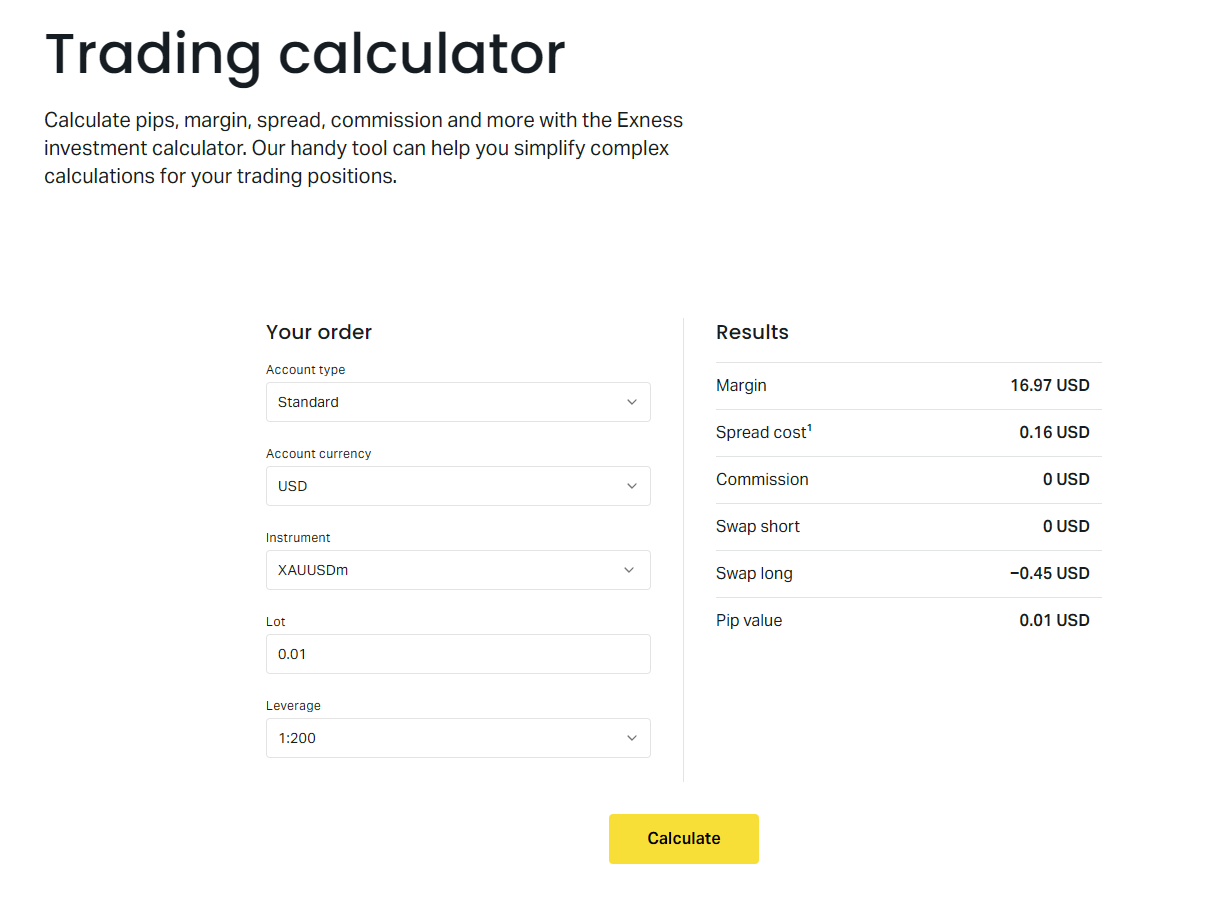
The calculator also displays the stop-out level and margin call threshold for the selected account. For USDCAD, pip value varies slightly with the exchange rate; the calculator uses the current market price. Swap estimates are based on the current long and short rates. Traders can compare scenarios across account types to determine which offers the most efficient cost structure for their typical trade size.
Deposits, Withdrawals, and Funding for USDCAD Traders
Exness supports a wide range of deposit and withdrawal methods, including bank cards, electronic wallets, bank transfers, and regional payment systems. Most deposits are instant and free of broker-side fees. Withdrawal processing times vary by method, with electronic wallets typically completing within hours and bank transfers taking several business days. The broker does not charge withdrawal commissions, though payment providers may apply their own fees.
- Visa/Mastercard: Instant deposit, 1-3 business days withdrawal
- Skrill/Neteller: Instant deposit and withdrawal
- Perfect Money: Instant deposit and withdrawal
- WebMoney: Instant deposit and withdrawal
- Bank transfer: 1-5 business days both ways
- Regional methods: Vary by country (e.g., Pix, UPI, local bank apps)
Minimum deposit requirements are low, often starting at $1 or equivalent depending on the method. Minimum withdrawal amounts also vary. Traders should verify their account (KYC) before requesting withdrawals to avoid delays. The personal area provides a complete transaction history and real-time status tracking. Currency conversion occurs automatically if the payment method currency differs from the account currency, at rates set by the payment processor.
Frequently Asked Questions
What is the typical spread for USDCAD on Exness Standard account?
The typical spread for USDCAD on the Standard account starts from 1.0 pip. Actual spreads vary with market conditions and time of day.
Which Exness account type is best for scalping USDCAD?
Raw Spread and Zero accounts are generally preferred for scalping due to near-zero spreads, though they charge a fixed commission per lot.
Does Exness offer swap-free USDCAD trading?
Yes, Islamic swap-free accounts are available for all account types, allowing USDCAD positions to be held overnight without swap charges.
What is the maximum leverage for USDCAD on Exness?
Eligible accounts can access unlimited leverage (1:Unlimited) for USDCAD, subject to equity and volume requirements. Regulatory caps may apply in some jurisdictions.
Can I trade USDCAD on the Exness web terminal?
Yes, the Exness web terminal provides full access to USDCAD with charting, indicators, and all order types without requiring a download.
How does oil price affect USDCAD on Exness?
USDCAD typically has an inverse correlation with crude oil prices. Rising oil tends to strengthen CAD, pushing USDCAD lower, though the correlation varies over time.
Are there any restrictions on trading USDCAD during news events?
Exness does not restrict trading during news. However, spreads may widen and slippage can increase. Traders should manage risk accordingly.
Key Takeaways for Exness USDCAD Trading
Trading USDCAD on Exness offers access to competitive spreads, multiple account structures, and a choice of platforms suited to different trading styles. The pair's sensitivity to oil prices and North American economic data creates regular opportunities for informed traders. Success depends on selecting the appropriate account type, understanding session-based liquidity patterns, applying disciplined risk management, and using the analytical tools provided. Traders should verify current conditions in their personal area, test strategies on demo, and stay aware of the inherent risks in leveraged forex trading.