

Forex Trading
Exness EURJPY Trading: Complete Guide for Forex Traders
Master EURJPY trading strategies, costs, and platform features on Exness broker.

Forex Analyst
Forex Analyst specializing in currency markets, market trends, technical and fundamental analysis, and providing clear insights to help traders make informed decisions.
The EURJPY currency pair represents the exchange rate between the euro and the Japanese yen, combining two of the world's most actively traded currencies. This cross pair attracts traders seeking exposure to European economic developments and Japanese monetary policy without direct US dollar involvement. Exness provides access to EURJPY through multiple account types and platforms, offering competitive conditions that suit various trading styles from scalping to swing trading.
Contents
- Why Trade EURJPY on Exness
- EURJPY Pair Characteristics and Market Dynamics
- Exness Trading Platforms for EURJPY
- Account Types and EURJPY Trading Conditions
- Spreads, Commissions, and Swap Costs Analysis
- Execution Quality and Order Types
- Risk Management for EURJPY Volatility
- Technical Analysis Tools on Exness Platforms
- EURJPY Trading Strategies on Exness
- Mobile Trading Experience for EURJPY
- Funding, Withdrawals, and Account Management
- EURJPY Trading During Major Economic Events
- Comparing EURJPY with Other Yen Crosses on Exness
- Advanced Tools: VPS, Signals, and Social Trading
- Tax Considerations and Record Keeping
- Common EURJPY Trading Mistakes to Avoid
- Final Assessment of Exness EURJPY Trading
Trading EURJPY on Exness means accessing institutional-grade liquidity, transparent pricing, and execution technology designed for high-frequency and discretionary strategies alike. The broker's infrastructure supports both MetaTrader 4 and MetaTrader 5, alongside a proprietary web terminal and mobile applications. This article examines every aspect of EURJPY trading on Exness, from market mechanics and cost structures to platform capabilities and risk management approaches.
Understanding the unique characteristics of EURJPY is essential before placing trades. The pair often exhibits higher volatility than major pairs like EURUSD, driven by divergent monetary policies between the European Central Bank and the Bank of Japan. Economic releases from both regions, including inflation data, GDP figures, and central bank communications, create regular trading opportunities. Exness delivers these opportunities with spreads that remain tight even during volatile sessions.
This comprehensive guide covers platform selection, account type comparisons, cost analysis, execution quality, analytical tools, and practical strategies tailored to EURJPY. Whether you are new to forex or an experienced trader evaluating Exness for cross-pair trading, the following sections provide actionable insights grounded in the broker's actual trading conditions.
Why Trade EURJPY on Exness
Exness has built a reputation for offering some of the most competitive trading conditions in the retail forex industry. For EURJPY specifically, the broker provides several advantages that directly impact profitability and trading experience. These include consistently low spreads, zero commission options on standard accounts, and raw spread pricing with low commissions on professional accounts.
The broker's liquidity aggregation from top-tier banks and non-bank providers ensures deep order books for EURJPY throughout the trading day. This depth translates to minimal slippage during normal market conditions and reliable fill rates during high-impact news events. Exness publishes execution statistics transparently, allowing traders to verify fill quality independently.
- Spreads from 0.0 pips on Raw Spread and Zero accounts for EURJPY
- Standard accounts offer commission-free trading with competitive all-in spreads
- Leverage up to 1:2000 available depending on jurisdiction and account equity
- Instant withdrawal processing for most payment methods
- No requotes on market execution accounts
- Negative balance protection across all account types
Regulatory oversight adds another layer of confidence. Exness operates under multiple licenses including CySEC in Europe, FCA in the UK, FSCA in South Africa, and FSA in Seychelles. Client funds are segregated from operational funds, and the broker participates in investor compensation schemes where applicable. These safeguards matter particularly when trading volatile pairs like EURJPY where rapid price movements can occur.
EURJPY Pair Characteristics and Market Dynamics
EURJPY behaves differently from major dollar pairs due to its cross-currency nature. The pair reflects the relative strength of the eurozone economy versus Japan, influenced by interest rate differentials, trade flows, and risk sentiment. When global risk appetite increases, EURJPY tends to rise as investors favor higher-yielding euros over the traditional safe-haven yen. During risk-off periods, the opposite dynamic typically unfolds.
The pair's average daily range often exceeds 100 pips, providing ample opportunity for day traders and swing traders alike. However, this volatility also means wider stop-losses may be necessary compared to less volatile pairs. The Asian session often sets the initial tone for EURJPY, with Tokyo market participants positioning ahead of European open. The London session typically sees the highest volume and tightest spreads, while the New York afternoon can see reduced liquidity as European traders close positions.
Scroll horizontally to see all columns
| Session | Typical Volume | Spread Tendency | Key Drivers |
|---|---|---|---|
| Asian (Tokyo) | Moderate | Wider | BOJ policy, Japan data, risk sentiment |
| European (London) | Highest | Tightest | ECB policy, eurozone data, cross flows |
| US (New York) | High | Tight | US data impact on risk, late-day positioning |
| Overlap (London/NY) | Peak | Optimal | Maximum liquidity, major economic releases |
Interest rate differentials between the ECB and BOJ play a fundamental role in EURJPY's longer-term direction. When the ECB maintains higher rates than the BOJ, the pair tends to appreciate over time due to positive carry. Conversely, BOJ policy tightening or ECB easing can reverse this dynamic. Traders holding positions overnight should monitor swap rates, which reflect these interest rate differentials and can significantly impact profitability of longer-term trades.
EURJPY serves as a barometer for global risk sentiment, often leading other cross pairs during major market transitions.
Exness Trading Platforms for EURJPY
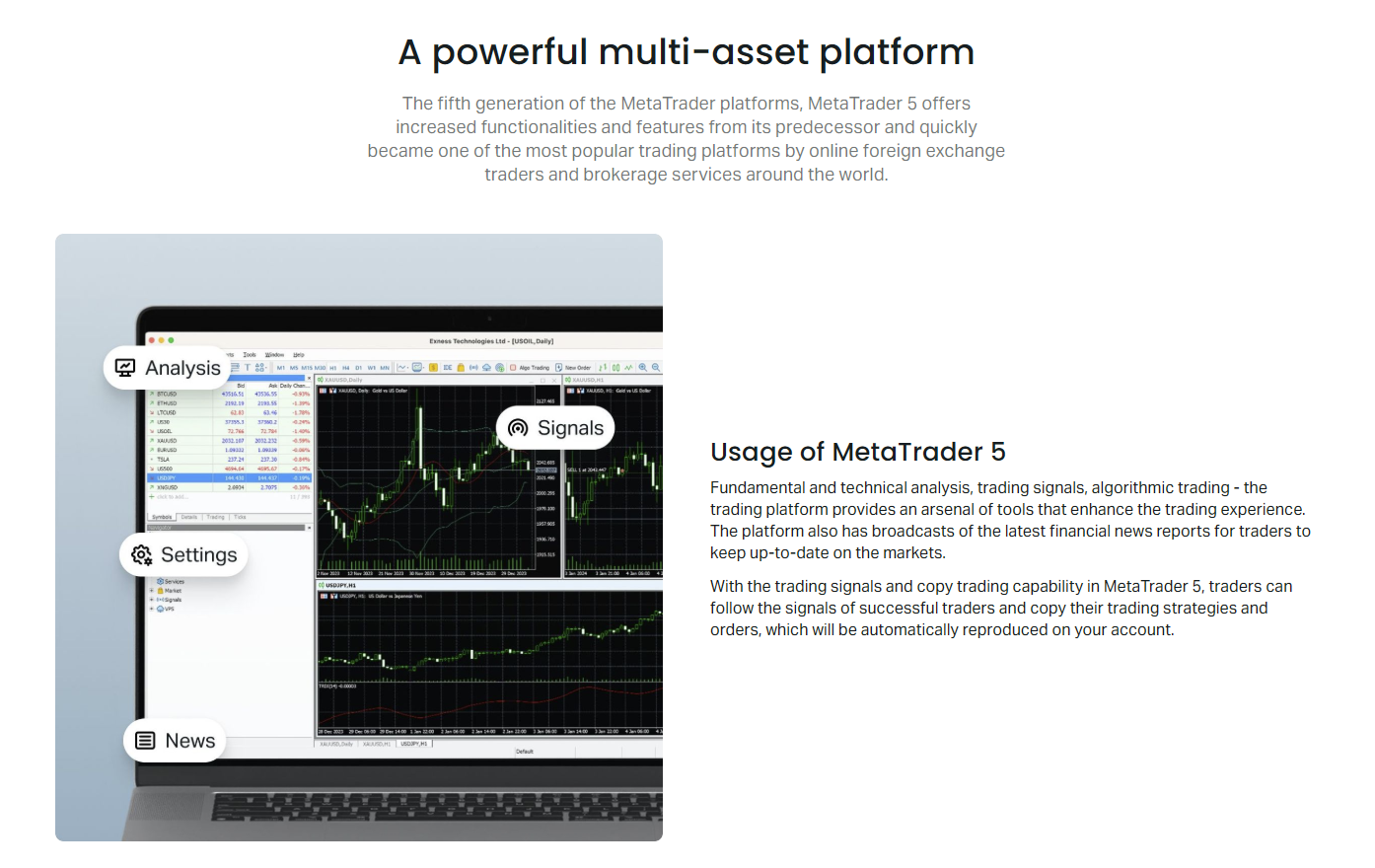
Exness offers multiple platform options for EURJPY trading, each with distinct advantages. MetaTrader 4 remains popular for its simplicity, extensive expert advisor ecosystem, and familiar interface. MetaTrader 5 adds more timeframes, additional order types, an economic calendar, and improved backtesting capabilities. The proprietary Exness Web Terminal provides browser-based access without installation, while mobile apps ensure connectivity from anywhere.
All platforms support one-click trading, customizable charts, and a full suite of technical indicators. The web terminal synchronizes with desktop and mobile versions, allowing seamless transitions between devices. For algorithmic traders, both MT4 and MT5 support expert advisors with VPS hosting available directly through Exness for uninterrupted operation.
- MT4: 9 timeframes, 30 built-in indicators, hedging support
- MT5: 21 timeframes, 38 built-in indicators, netting and hedging
- Web Terminal: No download, full charting, one-click trading
- Mobile Apps: iOS and Android, push notifications, offline mode
- VPS: Free for eligible accounts, low latency to Exness servers
Platform choice often depends on trading style. Scalpers and high-frequency traders may prefer MT5's additional order types and faster strategy tester. Discretionary traders often find MT4's interface sufficient and benefit from the larger community of custom indicators. The web terminal suits traders who cannot install software or need quick access from multiple locations.
Account Types and EURJPY Trading Conditions
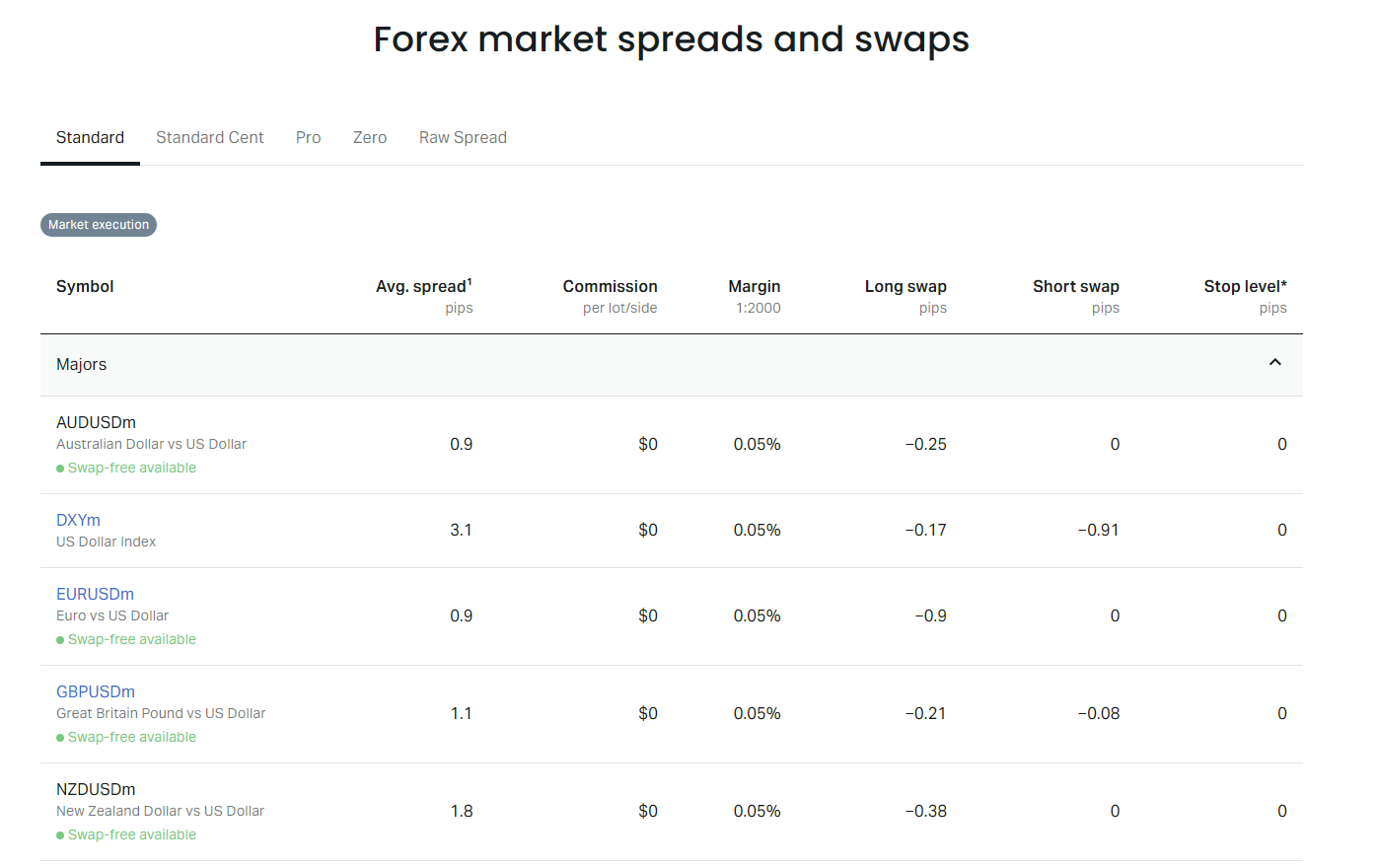
Exness offers five main account types, each with distinct EURJPY conditions. Standard and Standard Cent accounts use market execution with spreads only, no commissions. Pro, Raw Spread, and Zero accounts use market execution with raw spreads plus commissions. The choice depends on trading volume, strategy sensitivity to costs, and capital availability.
Scroll horizontally to see all columns
| Account | Min Deposit | EURJPY Spread | Commission | Execution |
|---|---|---|---|---|
| Standard | $1 | From 0.3 pips | None | Market |
| Standard Cent | $1 | From 0.3 pips | None | Market |
| Pro | $200 | From 0.1 pips | None | Market |
| Raw Spread | $200 | From 0.0 pips | $3.5 per side/lot | Market |
| Zero | $200 | From 0.0 pips | $3.5 per side/lot | Market |
Standard accounts suit beginners and lower-volume traders who prefer simplicity. The all-in spread includes all costs, making profit calculations straightforward. Standard Cent accounts allow micro-lot trading (0.01 cent lots) ideal for learning with real money at minimal risk. Professional accounts (Pro, Raw Spread, Zero) cater to higher-volume traders where commission-based pricing reduces total costs despite the per-trade fee.
Raw Spread and Zero accounts differ primarily in commission structure and minimum deposit requirements in some regions. Both offer spreads from 0.0 pips on EURJPY during peak liquidity. The Pro account occupies a middle ground with low spreads but no commissions, suitable for traders who want raw-like pricing without per-trade fees. Islamic swap-free versions exist for all account types where permitted by regulation.
Leverage varies by account equity and regulatory jurisdiction. Under CySEC and FCA, retail clients are limited to 1:30 for major pairs and 1:20 for non-major pairs like EURJPY. Professional clients and clients under other jurisdictions may access up to 1:2000. Margin requirements adjust dynamically based on position size and account equity, with stop-out levels typically at 0% for professional accounts and 50% for retail accounts.
Spreads, Commissions, and Swap Costs Analysis
Total trading cost on EURJPY combines spread, commission (if applicable), and swap for overnight positions. Exness publishes typical spreads for each account type, but actual spreads vary with market conditions. During the London-New York overlap, EURJPY spreads on Raw Spread and Zero accounts frequently reach 0.0-0.1 pips. Standard accounts typically show 0.3-0.6 pips during the same period. Asian session spreads widen across all account types.
Commission on Raw Spread and Zero accounts is $3.5 per side per standard lot, meaning $7 round-trip per lot. For a trader executing 10 lots monthly on EURJPY, this equals $70 in commissions. Compared to a Standard account spread of 0.5 pips ($50 per 10 lots), the Raw Spread account saves approximately $30 monthly assuming 0.1 pip average spread. Higher volume amplifies these savings.
- Calculate break-even volume: commission cost vs spread savings
- Monitor spread widening during news events on all account types
- Swap rates update daily, check before holding positions overnight
- Long EURJPY typically pays positive swap when ECB rate > BOJ rate
- Short EURJPY typically incurs negative swap under same conditions
- Weekend swaps triple on Wednesday rollover
Swap rates deserve careful attention for swing and position traders. Exness updates swap values daily based on interbank rates. A long EURJPY position when the ECB deposit rate exceeds the BOJ policy rate generally earns positive swap. The opposite holds for short positions. Triple swap applies Wednesday to Thursday rollover to account for weekend settlement. Traders should verify current swap rates in the platform or Exness calculator before holding positions beyond daily close.
Execution Quality and Order Types
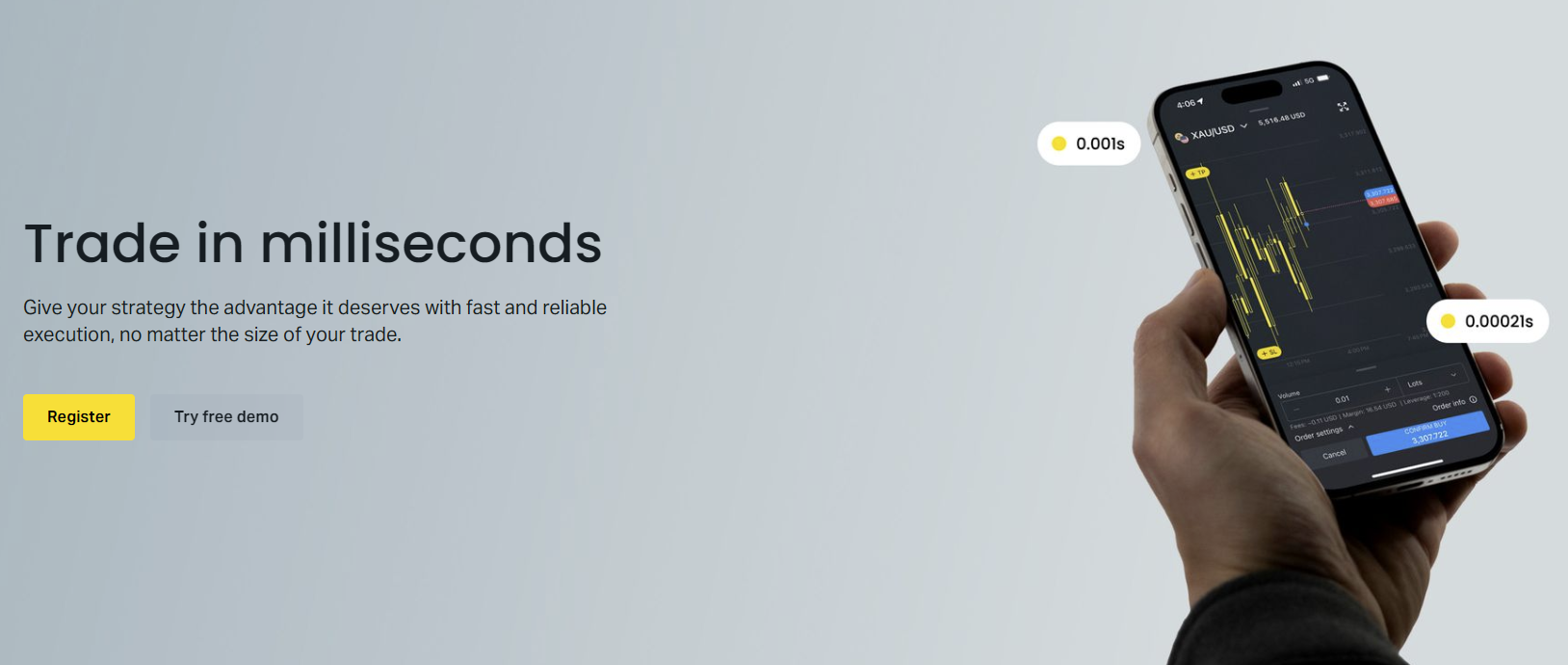
Execution quality directly affects trading outcomes, especially for EURJPY where volatility can cause rapid price changes. Exness uses market execution across all account types, meaning orders fill at the best available price without requotes. This model eliminates dealer intervention but allows positive and negative slippage. The broker's aggregated liquidity pool from multiple providers helps minimize slippage during normal conditions.
Available order types include market, limit, stop, stop-limit, and trailing stops on MT5. One-click trading enables rapid entry and exit for scalpers. Partial fill capability ensures large orders execute across available liquidity rather than rejecting. The platform displays depth of market (DOM) on MT5, showing available liquidity at each price level for EURJPY.
- Market orders: Instant execution at best available price
- Limit orders: Enter at specified price or better
- Stop orders: Trigger market order at specified price
- Stop-limit orders: Trigger limit order at specified price (MT5)
- Trailing stops: Automatically adjust stop-loss with price movement
- OCO orders: One-cancels-other for bracket strategies (MT5)
Exness publishes execution statistics including average execution speed, slippage distribution, and fill rates. For EURJPY, median execution speed typically measures in milliseconds. During high-impact events like ECB rate decisions or BOJ interventions, spreads widen and slippage increases across the industry. Traders should adjust position sizes and use appropriate order types during these periods.
Market execution transparency means accepting both positive and negative slippage as the cost of guaranteed fills without dealer intervention.
Risk Management for EURJPY Volatility
EURJPY's higher volatility compared to major pairs demands disciplined risk management. The pair can move 50-100 pips within minutes during central bank announcements or geopolitical events. Exness provides several tools to manage this risk, including guaranteed stop-loss orders (where available), negative balance protection, and margin call alerts.
Position sizing should account for EURJPY's average true range (ATR). A common approach risks 1-2% of account equity per trade with stop-losses placed beyond normal noise levels. For example, if EURJPY's daily ATR is 90 pips, a 1.5x ATR stop-loss (135 pips) on a 0.1 lot position risks approximately $135. On a $10,000 account, this represents 1.35% risk, within the 1-2% guideline.
Scroll horizontally to see all columns
| Account Size | Risk Per Trade | Max Position (1.5x ATR SL) | Max Position (2x ATR SL) |
|---|---|---|---|
| $1,000 | 1% ($10) | 0.07 lots | 0.05 lots |
| $5,000 | 1.5% ($75) | 0.55 lots | 0.41 lots |
| $10,000 | 2% ($200) | 1.48 lots | 1.11 lots |
| $50,000 | 1% ($500) | 3.70 lots | 2.78 lots |
Correlation awareness prevents unintended concentration risk. EURJPY often correlates positively with other yen crosses (GBPJPY, AUDJPY) and negatively with USDJPY during risk-off moves. Holding multiple correlated positions multiplies effective risk. Exness's platform allows monitoring multiple pairs simultaneously, and the trading calculator helps assess combined margin requirements.
Technical Analysis Tools on Exness Platforms
Effective EURJPY analysis requires robust charting and indicator tools. Exness platforms provide comprehensive technical analysis capabilities including 30+ built-in indicators on MT4 and 38+ on MT5. Custom indicators can be imported or developed using MQL4/MQL5. The web terminal offers a streamlined but functional set of drawing tools and indicators for browser-based analysis.
Key indicators for EURJPY include moving averages for trend identification, RSI and Stochastic for momentum, Bollinger Bands for volatility assessment, and Fibonacci retracements for support/resistance levels. The Ichimoku Cloud, popular for yen pairs, provides a complete trend, momentum, and support/resistance system in one indicator. Multiple timeframe analysis is essential given EURJPY's tendency to trend strongly on higher timeframes while ranging on lower ones.
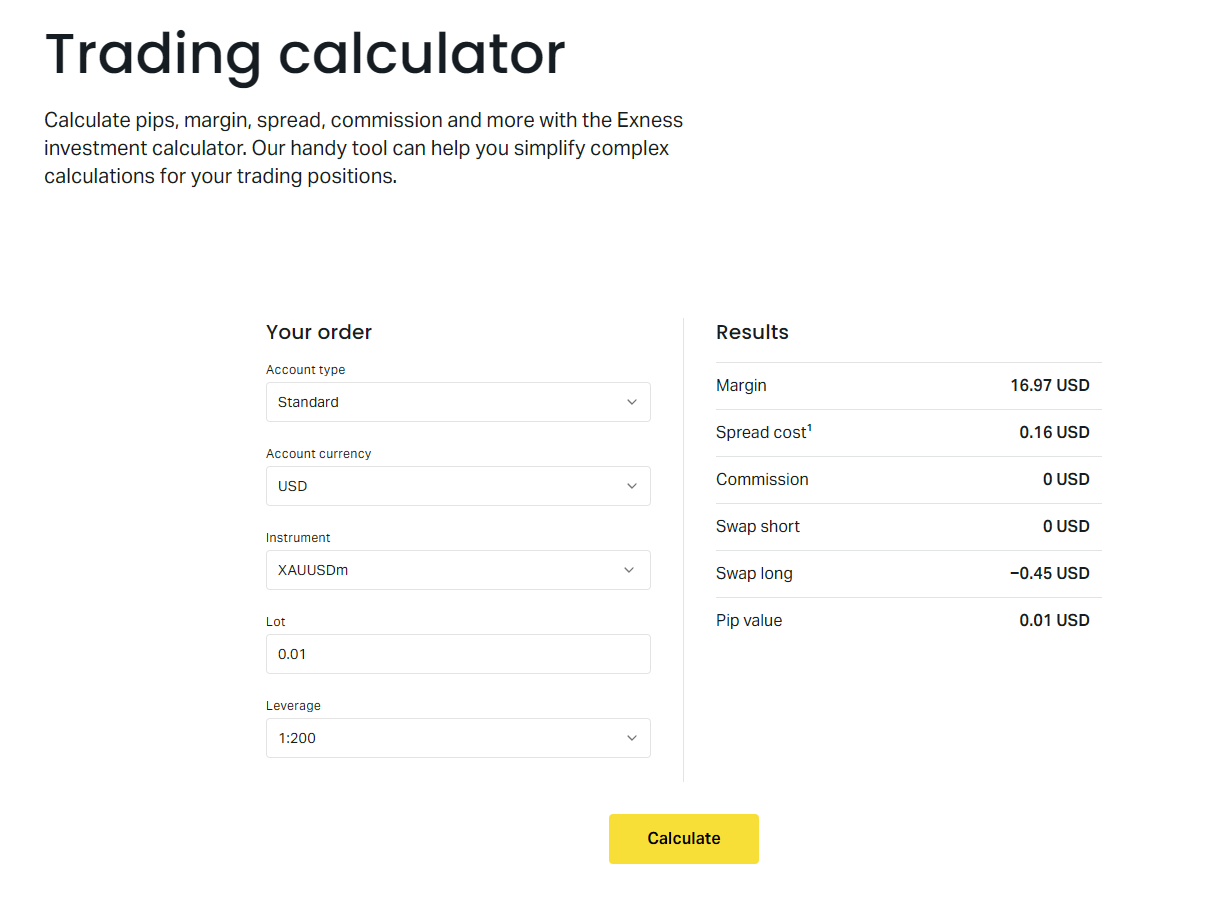
The Exness trading calculator integrates with account specifications to compute margin requirements, pip values, swap costs, and profit/loss projections for EURJPY positions. This tool eliminates manual calculation errors and helps traders size positions according to risk parameters. The calculator accounts for account currency, leverage, and current market prices automatically.
- Trend: Moving averages (20, 50, 200), Ichimoku, ADX
- Momentum: RSI (14), Stochastic (14,3,3), MACD (12,26,9)
- Volatility: Bollinger Bands (20,2), ATR (14), Keltner Channels
- Levels: Fibonacci retracements, Pivot points, Psychological levels
- Volume: On-balance volume, Volume-weighted average price (MT5)
- Custom: Harmonic patterns, Elliott Wave, Market profile
Exness also provides integrated analytical resources including Trading Central signals, economic calendar, and market news from FXStreet. These fundamental tools complement technical analysis by highlighting upcoming events that may impact EURJPY. The economic calendar filters for eurozone and Japan high-impact events, with actual, forecast, and previous values displayed.
EURJPY Trading Strategies on Exness
Several strategy types suit EURJPY's characteristics on Exness. Trend-following strategies capitalize on the pair's tendency for sustained directional moves driven by monetary policy divergence. Range-bound strategies work during consolidation periods, particularly in the Asian session. Breakout strategies target volatility expansion after compression. Carry trade strategies exploit interest rate differentials for longer-term positions.
A practical trend-following approach uses the 200-period moving average on the 4-hour chart for direction, with entries on pullbacks to the 20-period moving average confirmed by RSI momentum. Stop-losses place beyond recent swing highs/lows. Targets aim for 2:1 reward-to-risk minimum. This strategy benefits from Exness's tight spreads on professional accounts during London session execution.
- Trend pullback: 4H 200 MA direction, 20 MA entries, RSI confirmation
- Asian range: Identify Tokyo session high/low, trade breakouts at London open
- News fade: Wait for initial spike reaction, enter counter-move with tight stop
- Carry trade: Long EURJPY when ECB rate > BOJ rate, hold for swap income
- Breakout: Donchian channel 20-period, enter on close beyond channel
- Mean reversion: Bollinger Band extremes with RSI divergence on 1H
Scalping EURJPY on Exness requires the lowest cost structure. Raw Spread or Zero accounts with 0.0 pip spreads and $3.5 commission per side suit high-frequency approaches. Typical scalps target 5-15 pips with 1:1 or 1.5:1 risk-reward. The 1-minute and 5-minute timeframes dominate, with execution speed critical. Exness's VPS hosting reduces latency for automated scalping systems.
No single strategy works in all market conditions. Successful EURJPY traders adapt approach to prevailing volatility and trend regime.
Mobile Trading Experience for EURJPY
Exness mobile applications for iOS and Android provide full trading functionality for EURJPY on the go. The apps support both MT4 and MT5 accounts, with charting, indicators, order management, and account operations. Push notifications alert traders to price levels, margin calls, and economic events. The interface adapts to screen size while maintaining usability for analysis and execution.
Mobile charting includes multiple timeframes, drawing tools, and technical indicators comparable to desktop versions. One-tap trading from charts enables quick entries. The app synchronizes with desktop platforms, so chart templates, indicators, and open positions remain consistent. For EURJPY traders monitoring Asian session developments while away from desk, mobile access proves valuable.
- Real-time EURJPY quotes with bid/ask spread display
- Full charting with 9 timeframes (MT4) or 21 (MT5)
- Technical indicators and drawing tools
- One-tap trading from chart or watchlist
- Push notifications for price alerts and margin calls
- Account management: deposits, withdrawals, transfers
- Economic calendar with event notifications
- Trading history and performance analytics
The Exness Trade app (proprietary) offers a streamlined alternative to MetaTrader mobile apps with a modern interface optimized for mobile workflows. It includes the same analytical resources, calculator, and account management features. Traders can choose based on preference: MetaTrader apps for platform consistency, Exness Trade app for mobile-first design.
Funding, Withdrawals, and Account Management
Efficient capital management supports consistent EURJPY trading. Exness offers numerous deposit and withdrawal methods including bank cards, electronic wallets (Skrill, Neteller, WebMoney, Perfect Money), bank transfers, and regional payment systems. Most deposits process instantly with no fees from Exness. Withdrawals process automatically 24/7 for electronic methods, with bank transfers taking 1-3 business days.
The Exness Personal Area centralizes account management: opening new trading accounts, transferring between accounts, verifying identity, and accessing trading history. Verification typically completes within 24 hours with standard documents (government ID, proof of address). Verified accounts enjoy higher withdrawal limits and full feature access. The Personal Area also provides detailed trading reports for performance analysis.
- Instant deposits via cards and e-wallets, no Exness fees
- Automatic withdrawals 24/7 for e-wallets and cards
- Bank transfers: 1-3 business days, may incur bank fees
- Internal transfers between Exness accounts: instant, free
- Minimum withdrawal: $1 for most methods
- No maximum withdrawal limits on verified accounts
Currency conversion occurs automatically when deposit currency differs from account currency. Exness applies competitive conversion rates. Traders funding EURJPY trading may prefer EUR or JPY denominated accounts to avoid conversion costs, though USD accounts work equally well with automatic conversion. The choice affects swap calculations and profit/loss denomination.
EURJPY Trading During Major Economic Events
Major economic events create both opportunity and risk for EURJPY traders. ECB monetary policy meetings, BOJ policy decisions, eurozone and Japan inflation releases, GDP reports, and employment data regularly move the pair 50-200 pips within minutes. Exness maintains execution during these events but spreads widen significantly, sometimes exceeding 10-20 pips on standard accounts.
Preparation involves marking event times on the economic calendar, defining risk parameters, and deciding whether to trade the event, avoid it, or manage existing positions. Common approaches include reducing position size before events, widening stop-losses, or using limit orders instead of market orders to control entry price. Straddle strategies with buy-stop and sell-stop orders bracket the current price before high-impact releases.
Scroll horizontally to see all columns
| Event | Frequency | Typical Impact | Trading Approach |
|---|---|---|---|
| ECB Rate Decision | 8 per year | Very High (100-200 pips) | Avoid or straddle |
| BOJ Policy Meeting | 8 per year | Very High (100-200 pips) | Avoid or straddle |
| Eurozone CPI | Monthly | High (50-100 pips) | Trade with plan |
| Japan CPI | Monthly | High (50-100 pips) | Trade with plan |
| ECB/BOJ Press Conferences | After meetings | Very High | Monitor for clues |
| PMI Flash Estimates | Monthly | Moderate (30-60 pips) | Scalp or avoid |
Post-event trading often presents cleaner opportunities as initial volatility subsides and directional bias emerges. Exness's tight spreads return quickly after events, typically within 15-30 minutes. Traders waiting for confirmation rather than predicting outcomes often achieve better risk-reward. The key is having a predefined plan for each scenario rather than reacting emotionally to price action.
The most profitable EURJPY trades often come after the noise clears, not during the chaotic first minutes of a major release.
Comparing EURJPY with Other Yen Crosses on Exness
EURJPY is one of several yen crosses available on Exness. GBPJPY, AUDJPY, NZDJPY, CADJPY, and CHFJPY offer alternative exposures to yen movements with different base currency drivers. Understanding relative characteristics helps traders select the most suitable pair for their market view. EURJPY typically shows lower volatility than GBPJPY but higher than CHFJPY, with spreads generally tighter than minor crosses.
Correlation analysis reveals that EURJPY and GBPJPY often move together during risk-on/off cycles but diverge on euro- or pound-specific news. AUDJPY and NZDJPY correlate strongly with commodity prices and Chinese economic data. CHFJPY behaves uniquely as both currencies have safe-haven characteristics. Exness provides all these crosses with similar account conditions, allowing seamless switching based on opportunity.
- EURJPY: Eurozone vs Japan, moderate volatility, tight spreads
- GBPJPY: UK vs Japan, higher volatility, wider spreads
- AUDJPY: Australia vs Japan, commodity-linked, China-sensitive
- NZDJPY: New Zealand vs Japan, similar to AUDJPY, smaller economy
- CADJPY: Canada vs Japan, oil-linked, US economy proxy
- CHFJPY: Switzerland vs Japan, dual safe-haven, lower volatility
Spread comparison across yen crosses on Exness Raw Spread accounts shows EURJPY typically among the tightest, often 0.0-0.2 pips during peak hours. GBPJPY runs 0.1-0.3 pips, AUDJPY 0.2-0.4 pips, CHFJPY 0.3-0.6 pips. Commission remains constant at $3.5 per side per lot. Traders should factor spread differentials into pair selection, especially for higher-frequency strategies.
Advanced Tools: VPS, Signals, and Social Trading
Exness enhances EURJPY trading with advanced tools for automation, signal following, and social trading. Free VPS hosting (for accounts meeting volume requirements) enables 24/7 expert advisor operation with sub-millisecond latency to Exness servers. This particularly benefits EURJPY algorithmic strategies capturing Asian session moves while the trader sleeps.
Trading Central integration provides technical analysis signals directly on charts, identifying patterns, key levels, and directional bias for EURJPY. These signals complement discretionary analysis but should not replace independent judgment. The economic calendar and FXStreet news feed keep traders informed of fundamental drivers.
- VPS: Free for eligible accounts, 99.99% uptime, low latency
- Trading Central: Pattern recognition, key levels, directional signals
- Economic Calendar: Filterable events, impact ratings, consensus data
- Market News: FXStreet integration, real-time headlines
- Social Trading: Copy successful EURJPY traders (where available)
- API Access: For custom integration and institutional clients
Social trading features allow copying verified signal providers who trade EURJPY. Performance metrics include historical returns, drawdown, risk score, and follower count. Due diligence remains essential: past performance does not guarantee future results, and copied trades execute at follower's account conditions including spreads and commissions.
Tax Considerations and Record Keeping
Tax treatment of EURJPY trading profits varies by jurisdiction. Most countries classify forex trading as capital gains or ordinary income depending on frequency, intent, and local law. Exness provides comprehensive trading history exports in CSV and PDF formats, including all trades, deposits, withdrawals, fees, and swaps. These records support accurate tax reporting.
Traders should maintain independent records alongside broker statements. Key data points for each EURJPY trade: entry/exit date and time, position size, entry/exit prices, gross profit/loss, commissions, swaps, and net result. The Exness trading calculator and account statements automate much of this, but manual verification ensures completeness.
- Export monthly statements from Personal Area
- Track net P&L after all costs (spread, commission, swap)
- Separate trading income from other income sources
- Consult tax professional for jurisdiction-specific rules
- Retain records for minimum statutory period (typically 5-7 years)
- Consider tax implications of swap income/expense
Some jurisdictions offer tax advantages for certain account structures or trading frequencies. Corporate accounts, where permitted, may provide different tax treatment than individual accounts. Exness supports corporate account opening with additional documentation requirements. Traders should seek professional tax advice before making structural decisions based on tax considerations.
Common EURJPY Trading Mistakes to Avoid
Recurring mistakes undermine EURJPY trading performance regardless of broker quality. Overleveraging tops the list: EURJPY's volatility combined with high leverage causes rapid margin depletion during adverse moves. Exness offers up to 1:2000 leverage, but prudent traders rarely exceed 1:10 to 1:30 effective leverage. Position sizing relative to account equity matters more than maximum available leverage.
Ignoring correlation leads to unintended risk concentration. Holding long EURJPY, long GBPJPY, and short USDJPY simultaneously triples yen exposure. Exness's platform shows all open positions, but traders must mentally aggregate correlated risk. Another mistake: trading during low-liquidity periods (late NY session, holidays) when spreads widen and slippage increases unpredictably.
- Overleveraging: Using maximum leverage instead of risk-based sizing
- Ignoring correlation: Multiple yen crosses multiplying directional risk
- Trading illiquid hours: Wider spreads, unpredictable execution
- No stop-loss: Hoping for reversal instead of accepting small loss
- Revenge trading: Increasing size after losses to recover quickly
- Neglecting swaps: Overnight costs eroding swing trade profits
- News gambling: Predicting outcomes instead of trading reactions
- Poor record keeping: Unable to analyze and improve performance
Psychological discipline separates consistent traders from gamblers. EURJPY's sharp moves trigger fear and greed responses. A written trading plan with defined entry, exit, and risk rules reduces emotional decisions. Exness's demo account allows practicing EURJPY strategies risk-free before committing real capital. Transition to live trading should be gradual, starting with minimum position sizes.
The best EURJPY traders on Exness are not those with the highest leverage, but those who survive drawdowns through disciplined risk management.
Final Assessment of Exness EURJPY Trading
Exness delivers a compelling environment for EURJPY trading through competitive pricing, robust technology, and transparent operations. The combination of raw spread accounts with commissions as low as $3.5 per side, multiple platform choices, and instant withdrawals addresses core trader needs. Regulatory oversight across multiple jurisdictions adds credibility, while negative balance protection limits downside risk.
EURJPY's unique characteristics—moderate-to-high volatility, clear fundamental drivers, strong technical adherence, and favorable swap dynamics on long positions—make it suitable for diverse strategies. Exness's infrastructure supports all approaches from scalping to position trading. The broker's educational resources, analytical tools, and responsive customer support further reduce friction for traders at all experience levels.
Frequently Asked Questions
What is the minimum deposit to trade EURJPY on Exness?
Standard and Standard Cent accounts require only $1 minimum deposit. Pro, Raw Spread, and Zero accounts require $200 minimum deposit.
What are typical EURJPY spreads on Exness during London session?
Raw Spread and Zero accounts often show 0.0-0.1 pips. Standard accounts typically show 0.3-0.6 pips. Pro accounts range 0.1-0.3 pips.
Does Exness charge commission on EURJPY trades?
Standard and Pro accounts have no commission (spread only). Raw Spread and Zero accounts charge $3.5 per side per standard lot ($7 round-trip).
Can I trade EURJPY on Exness mobile app?
Yes, both MetaTrader 4/5 mobile apps and the proprietary Exness Trade app support full EURJPY trading with charting, indicators, and order management.
What leverage is available for EURJPY on Exness?
Retail clients under CySEC/FCA: up to 1:20. Professional clients and other jurisdictions: up to 1:2000 depending on account equity.
Are swap-free accounts available for EURJPY on Exness?
Yes, Islamic swap-free accounts are available for all account types where permitted by regulation. Standard swap rates apply otherwise.
How fast are EURJPY withdrawals on Exness?
Electronic wallet and card withdrawals process automatically 24/7, typically within minutes. Bank transfers take 1-3 business days.
Does Exness offer guaranteed stop-loss for EURJPY?
Guaranteed stop-loss availability depends on regulatory jurisdiction. Check your specific account conditions in the Personal Area or contact support.