

Forex Trading Tools
Exness Pip Calculator: Complete Guide for Forex Traders
Master pip value calculations across currency pairs and account types with Exness trading tools.

Forex Analyst
Forex Analyst specializing in currency markets, market trends, technical and fundamental analysis, and providing clear insights to help traders make informed decisions.
The Exness pip calculator stands as an essential tool for forex traders who need accurate pip value calculations across different currency pairs and account configurations. Understanding pip values forms the foundation of effective risk management, allowing traders to determine exact position sizes that align with their risk tolerance and account equity. This comprehensive guide explores how the calculator works, its practical applications, and how it integrates with the broader Exness trading ecosystem.
Contents
- How the Exness Pip Calculator Works
- Pip Value Fundamentals Across Currency Pairs
- Account Type Impact on Pip Calculations
- Position Sizing Using Pip Value Data
- Integrating Swap Rates and Holding Costs
- Leverage and Margin Interaction with Pip Risk
- Multi-Currency Account Considerations
- Using the Calculator for Risk Management Planning
- Calculator Access Across Exness Platforms
- Common Calculation Errors and How to Avoid Them
- Advanced Scenarios: Hedging and Partial Closures
- Comparing Exness Calculator with Alternative Tools
- Practical Workflow for Daily Trading Preparation
- Troubleshooting Calculator Discrepancies
- Future Developments and Calculator Enhancements
- Key Takeaways for Exness Pip Calculator Users
- Final Assessment of Exness Pip Calculator Utility
Pip calculation might appear straightforward at first glance, but the nuances of varying contract sizes, account currencies, and leverage settings create complexity that manual calculations often miss. The Exness trading calculator suite addresses these variables automatically, reducing the likelihood of costly sizing errors. Whether you trade major pairs like EURUSD or exotic crosses with wider spreads, precise pip valuation ensures your stop-loss and take-profit levels reflect actual monetary risk rather than approximate estimates.
Professional traders consistently emphasize that position sizing contributes more to long-term profitability than entry timing or market analysis alone. A well-calibrated pip calculator transforms abstract percentage risk into concrete lot sizes, making risk management systematic rather than discretionary. The following sections detail every aspect of the Exness pip calculator, from basic operation to advanced scenarios involving swap rates, commission structures, and multi-currency portfolios.
How the Exness Pip Calculator Works
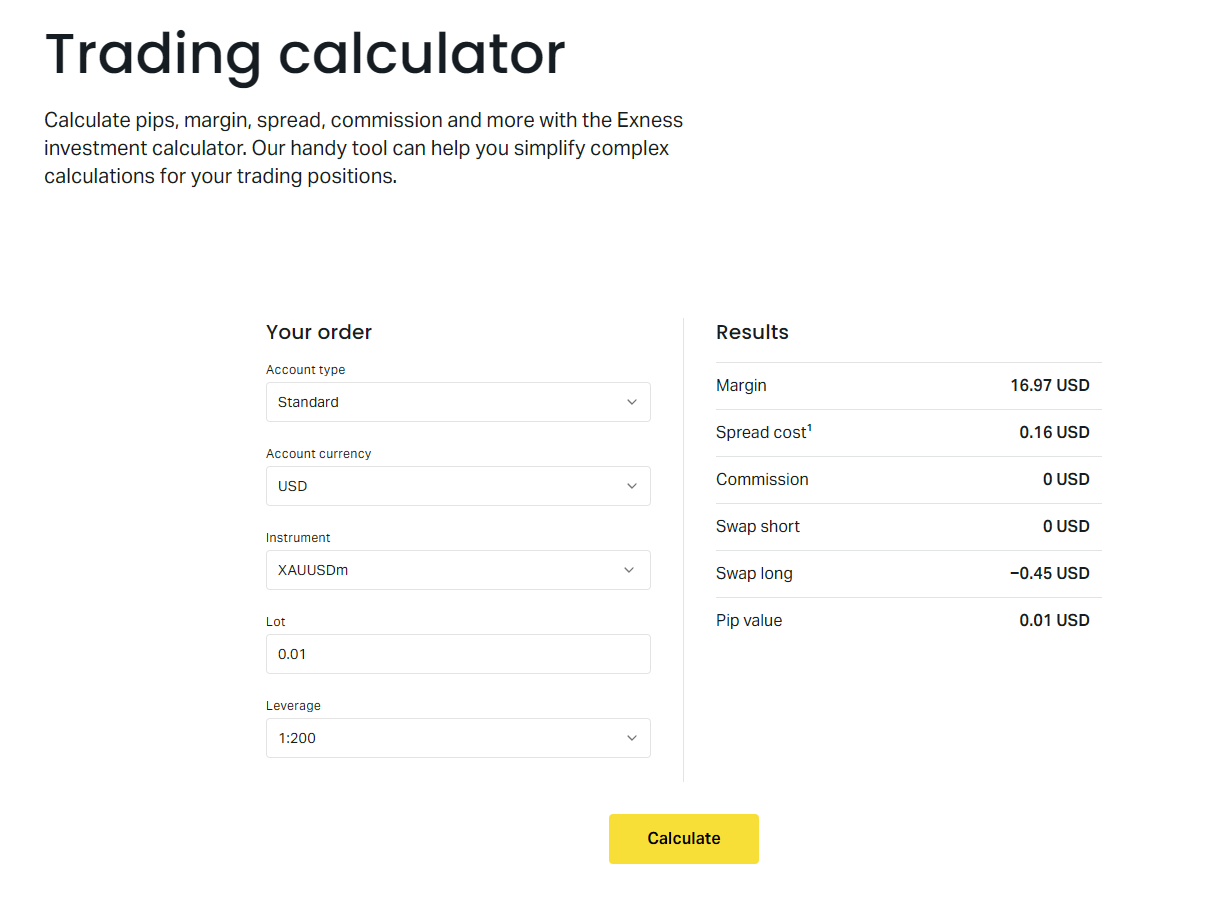
The Exness pip calculator operates by accepting several input parameters and returning the monetary value of a single pip movement for the specified trade configuration. Users select the trading instrument, account type, account currency, trade volume in lots, and optionally the leverage setting. The calculator then processes these inputs against current market specifications to produce an exact pip value in the account's base currency. This automation eliminates the need for traders to memorize contract specifications or manually convert between quote currencies and account currencies.
- Instrument selection covers forex pairs, metals, energies, indices, stocks, and cryptocurrencies
- Account type determines spread markup, commission structure, and contract specifications
- Account currency conversion applies real-time cross rates for non-USD denominated accounts
- Volume input accepts standard lots, mini lots, and micro lots with decimal precision
- Leverage setting affects margin requirements but not pip value directly
The calculator distinguishes between standard accounts where costs are embedded in spreads and professional accounts where raw spreads combine with per-lot commissions. This distinction matters because pip value remains constant regardless of account type, but the effective cost per pip changes when commissions enter the equation. Traders using Raw Spread or Zero accounts must factor commission costs into their risk calculations separately from the raw pip value the calculator provides.
Pip Value Fundamentals Across Currency Pairs
Pip value varies significantly across currency pairs due to differences in quote currency, contract size, and current exchange rates. For pairs where USD serves as the quote currency (EURUSD, GBPUSD, AUDUSD, NZDUSD), one standard lot yields a fixed pip value of $10 per pip. Pairs with USD as the base currency (USDJPY, USDCHF, USDCAD) require division by the current exchange rate, making their pip values fluctuate with price. Cross pairs (EURGBP, EURJPY, GBPJPY) involve two conversion steps, first to USD then to the account currency, introducing additional variability.
Scroll horizontally to see all columns
| Pair Category | Example Pairs | Pip Value Formula | Typical Range (USD Account) |
|---|---|---|---|
| USD Quote Currency | EURUSD, GBPUSD, AUDUSD | Fixed $10 per pip | $10.00 |
| USD Base Currency | USDJPY, USDCHF, USDCAD | $10 / Current Rate | $7.00 - $10.00 |
| Cross Pairs | EURGBP, EURJPY, GBPJPY | ($10 / Quote Rate) * Base Rate | $8.00 - $13.00 |
| Metals (Gold/Silver) | XAUUSD, XAGUSD | Contract Size * Tick Size | $1.00 - $10.00 |
The Exness pip calculator handles all these variations automatically, but understanding the underlying mechanics helps traders anticipate how pip values shift during volatile sessions. For instance, USDJPY pip value increases as the yen strengthens against the dollar, meaning a fixed lot size carries more dollar risk at 140.00 than at 150.00. Cross pair pip values can move substantially when both constituent currencies experience simultaneous volatility, a scenario common during major economic announcements affecting multiple regions.
Account Type Impact on Pip Calculations
Exness offers multiple account types, each with distinct cost structures that influence effective trading costs per pip. Standard and Standard Cent accounts operate on spread-only pricing with no commissions, making the spread the sole transaction cost. Professional accounts — Raw Spread, Zero, and Pro — feature tighter raw spreads but add per-lot commissions charged at open and close. The pip calculator displays raw pip value independent of these costs, so traders must manually incorporate spread and commission expenses into their total risk assessment.
- Standard accounts: spread-only, wider spreads, no commission
- Standard Cent: same as Standard but denominated in cents for micro risk
- Raw Spread: tight spreads, $3.50 per side per lot commission
- Zero account: zero spread on top pairs, $3.50-$20 per side commission
- Pro account: low spreads, no commission, higher minimum deposit
Cent accounts deserve special attention because they scale all monetary values by a factor of 100. A standard lot on a cent account represents 100,000 cents (1,000 units of base currency) rather than 100,000 units. Consequently, pip values on cent accounts are 1/100th of their standard account equivalents. The Exness pip calculator automatically adjusts for account type when selected, but traders must ensure they choose the correct account type dropdown to avoid sizing errors of two orders of magnitude.
The calculator interface presents results in a clear layout showing pip value, required margin, and estimated profit or loss for various price movements. This consolidated view helps traders evaluate complete trade economics before execution. The margin calculation incorporates current leverage settings and account currency conversion, providing a realistic picture of capital allocation for the proposed position size.
Position Sizing Using Pip Value Data
Translating pip value into appropriate position size represents the core practical application of the calculator. The standard risk management formula divides acceptable monetary risk by the product of pip value and stop-loss distance in pips. For example, a trader with a $10,000 account risking 1% ($100) on a trade with a 20-pip stop-loss on EURUSD (pip value $10 per lot) would calculate: $100 / (20 pips * $10) = 0.5 lots. The Exness pip calculator accelerates this process by providing instant pip values for any instrument and lot size combination.
- Define maximum risk per trade as percentage of account equity (typically 1-2%)
- Determine stop-loss distance in pips based on technical analysis or volatility
- Use calculator to find pip value for intended instrument and account type
- Divide monetary risk by (stop-loss pips * pip value per lot) to get lot size
- Round down to nearest available lot increment for safety margin
Advanced traders often reverse-engineer this process by starting with a desired lot size and calculating the resulting risk. This approach proves useful when scaling into positions or when minimum lot size constraints apply. The calculator supports both workflows by allowing volume input to drive risk output or risk parameters to drive volume recommendations. Understanding both directions enhances flexibility in dynamic market conditions where optimal position size may change rapidly.
Scroll horizontally to see all columns
| Instrument | Stop Loss (pips) | Pip Value/Lot | Max Lots (1% Risk) |
|---|---|---|---|
| EURUSD | 20 | $10.00 | 0.50 |
| GBPJPY | 35 | $12.50 | 0.23 |
| USDJPY | 25 | $9.20 | 0.43 |
| XAUUSD | 150 | $1.00 | 0.67 |
The table illustrates how wider stops and higher pip values dramatically reduce permissible position sizes. Gold (XAUUSD) exemplifies this with its low pip value per lot but typically wide stop-loss requirements due to higher volatility. Traders must balance instrument selection, stop placement, and account size to achieve meaningful position sizes without exceeding risk parameters. The Exness calculator facilitates this balancing act by enabling rapid comparison across multiple instruments.
Position sizing is the only aspect of trading you control completely. Market direction, volatility, and spread are external variables. Your lot size is a decision.
Integrating Swap Rates and Holding Costs
Swap rates, also known as rollover fees, represent the interest rate differential between the two currencies in a forex pair and constitute a significant cost for positions held overnight. While the pip calculator focuses on price movement valuation, comprehensive risk assessment must account for swap accumulation over the expected holding period. Exness provides swap rates for long and short positions separately, and these rates can be positive (credit) or negative (debit) depending on the interest rate differential and broker markup.
- Swap rates apply at 23:59 server time (GMT+2/GMT+3 with DST)
- Wednesday swaps triple to account for weekend rollover
- Long and short swaps differ for the same pair
- Islamic/swap-free accounts eliminate swaps but may widen spreads
- Swap rates update daily based on interbank interest rate differentials
The Exness trading calculator suite includes a swap calculator that projects holding costs over specified durations. For swing traders holding positions for days or weeks, swap costs can exceed spread and commission expenses combined. A long position on USDTRY, for instance, might incur substantial negative swaps due to Turkey's historically high interest rates, while the opposite short position could generate positive carry. The pip calculator does not incorporate swaps directly, so traders should use both tools in tandem for complete cost analysis.
Leverage and Margin Interaction with Pip Risk
Leverage does not change pip value directly, but it determines the margin required to open a position of a given size. Higher leverage reduces margin requirements, freeing capital for additional positions or providing a larger buffer against margin calls. However, leverage amplifies both gains and losses proportionally, making risk management through position sizing even more critical. The Exness pip calculator displays required margin alongside pip value, enabling traders to verify that their intended position size fits within available margin at their chosen leverage level.
- Exness offers leverage up to 1:2000 on specific account types and instruments
- Margin requirement = (Contract Size * Volume * Price) / Leverage
- Higher leverage reduces margin but does not reduce pip risk
- Stop-out level at Exness is typically 0% for most account types
- Margin call occurs when equity falls below required margin
The relationship between leverage, margin, and pip risk creates a three-dimensional constraint space. A trader with $1,000 equity using 1:500 leverage can open a 1-lot EURUSD position requiring approximately $200 margin, leaving $800 free margin. A 20-pip adverse move costs $200 (20 pips * $10), reducing equity to $800 and free margin to $600. The same position at 1:100 leverage would require $1,000 margin, leaving zero free margin and triggering immediate stop-out risk. The calculator's margin output helps traders visualize these constraints before committing capital.
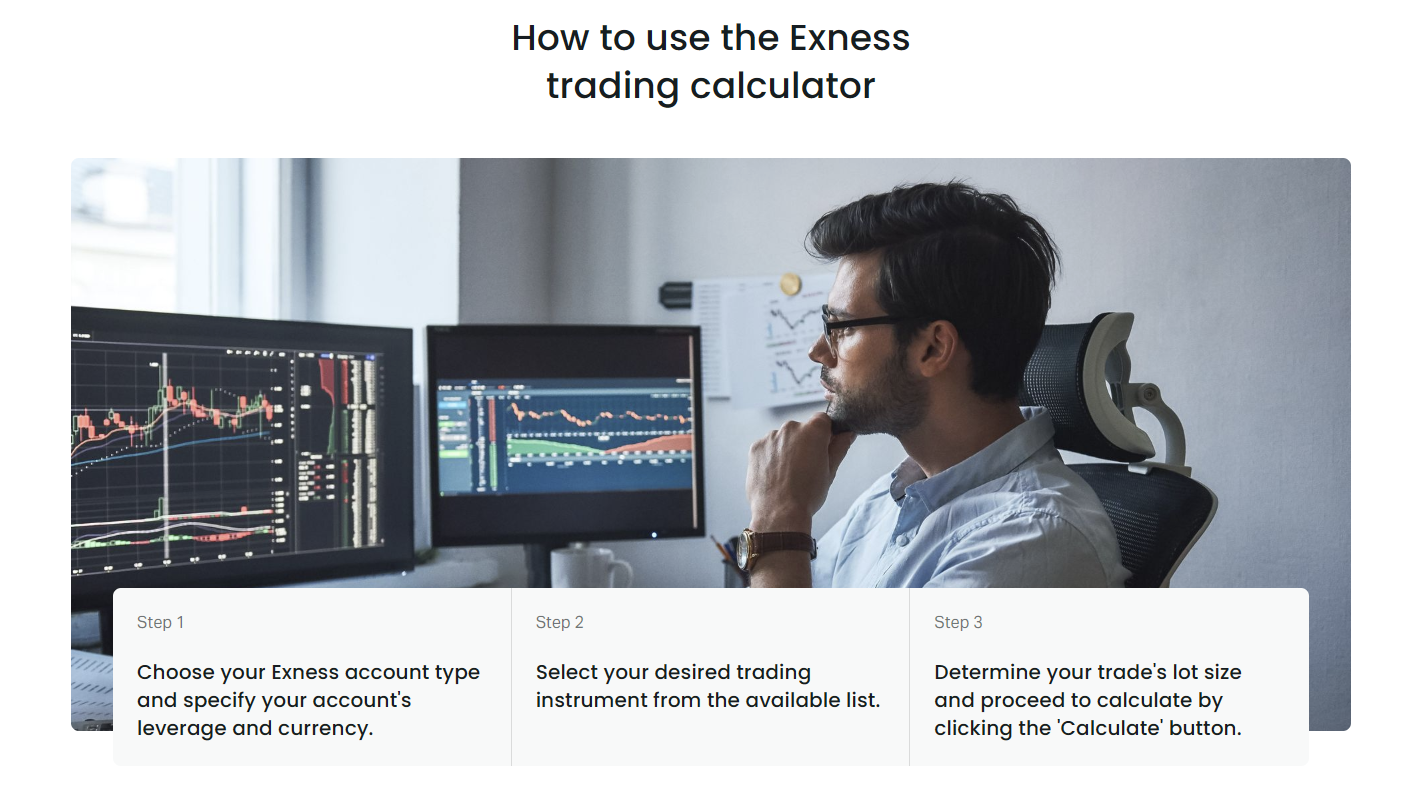
The calculator guide illustrates how each input parameter affects the final calculations. Traders can experiment with different leverage settings to see margin impact without changing pip risk. This feature proves especially valuable when managing multiple concurrent positions across different instruments, where aggregate margin usage must remain within account equity limits. The tool also shows profit/loss projections for various price movements, helping traders set realistic take-profit targets aligned with their risk-reward ratios.
Multi-Currency Account Considerations
Exness supports account denominated in multiple base currencies including USD, EUR, GBP, CHF, JPY, PLN, CNY, ZAR, THB, VND, IDR, MYR, PHP, INR, BRL, MXN, NGN, KES, EGP, AED, BDT, SGD, PKR, and others. When the account currency differs from the quote currency of the traded pair, the pip calculator performs real-time currency conversion using current cross rates. This conversion introduces an additional variable: pip value in account currency fluctuates not only with the traded pair's price but also with the account currency's exchange rate against the quote currency.
- Account currency conversion uses real-time mid-market rates
- Pip value in EUR account for USDJPY requires USDJPY and EURUSD rates
- Conversion spreads may apply depending on account type
- Base currency choice affects swap calculation currency
- Withdrawal and deposit currencies may differ from account currency
Traders with non-USD accounts should monitor both the traded pair and the account currency pair for correlated movements. For example, a EUR-denominated account trading GBPJPY faces exposure to GBPJPY price action, USDJPY rate (for pip conversion), and EURUSD rate (for account currency conversion). A simultaneous move in EURUSD could amplify or offset the pip value change from GBPJPY movement. The Exness calculator handles these multi-layer conversions automatically, but awareness of the mechanism helps traders anticipate unexpected pip value shifts during correlated market moves.
Scroll horizontally to see all columns
| Account Currency | Traded Pair | Conversion Path | Additional Rate Risk |
|---|---|---|---|
| EUR | GBPUSD | GBPUSD -> EURUSD | EURUSD fluctuation |
| GBP | EURJPY | EURJPY -> GBPJPY -> GBPUSD | GBPJPY, GBPUSD fluctuation |
| JPY | EURUSD | EURUSD -> USDJPY | USDJPY fluctuation |
| ZAR | XAUUSD | XAUUSD -> USDZAR | USDZAR fluctuation |
The conversion path complexity increases with exotic account currencies, potentially involving two or three cross rates. Exness maintains competitive conversion spreads, but during high volatility periods, these spreads can widen, affecting the effective pip value received or paid. Traders should consider whether maintaining accounts in their local currency provides sufficient convenience to offset the additional conversion complexity, or whether a USD-denominated account simplifies risk calculations enough to justify currency conversion costs on deposits and withdrawals.
A pip calculator that ignores account currency conversion gives a false sense of precision. Every conversion layer adds both cost and variability to your true risk per pip.
Using the Calculator for Risk Management Planning
Effective risk management extends beyond single-trade position sizing to encompass portfolio-level exposure limits, correlation awareness, and drawdown controls. The Exness pip calculator supports this broader planning by enabling rapid assessment of pip risk across multiple instruments simultaneously. Traders can input their full watchlist, standardize on a fixed risk percentage, and generate a position size reference sheet for each instrument at various stop-loss distances. This preparation reduces decision-making pressure during active market hours when opportunities require quick execution.
- Create instrument-specific position size tables for common stop distances
- Set maximum concurrent risk across all open positions (e.g., 5% total)
- Monitor correlation clusters to avoid concentrated directional exposure
- Adjust position sizes when account equity changes significantly
- Use calculator to verify risk before adding to winning positions
Portfolio-level risk management requires understanding how individual position risks aggregate. Two 1% risk positions on highly correlated pairs like EURUSD and GBPUSD effectively create 2% directional exposure to USD weakness. The pip calculator helps quantify this by showing identical pip value structures for correlated pairs. Traders can then apply correlation-adjusted position sizing, reducing individual position sizes when taking multiple correlated trades. Some advanced traders maintain spreadsheets that pull pip values from the calculator API and apply correlation matrices for automated portfolio risk monitoring.
Calculator Access Across Exness Platforms
The Exness pip calculator is accessible through multiple channels, ensuring traders can perform calculations regardless of their preferred trading environment. The web-based calculator on the Exness website requires no login and works on any device with a browser. The Exness Trade app includes a built-in calculator accessible from the main menu, providing mobile-friendly calculations with the same accuracy. MetaTrader 4 and MetaTrader 5 platforms lack native pip calculators, but traders can use the web or app versions alongside their terminal. The Exness Terminal web platform integrates calculator functions directly into the trading interface, allowing seamless transition from calculation to execution.
- Web calculator: exness.com/calculator, no login required
- Exness Trade app: built-in calculator under Tools menu
- Exness Terminal: integrated calculator in order entry panel
- MT4/MT5: use external calculator, no native equivalent
- Personal Area: advanced calculators with account-specific data
The Personal Area calculator offers the most comprehensive feature set because it pulls account-specific data including current leverage, account currency, and account type automatically. This eliminates manual selection errors and ensures calculations reflect actual trading conditions. The web calculator serves well for quick checks and prospective planning, while the app version suits traders who manage positions primarily from mobile devices. Platform integration in Exness Terminal represents the most efficient workflow for active traders who calculate and execute in rapid succession.
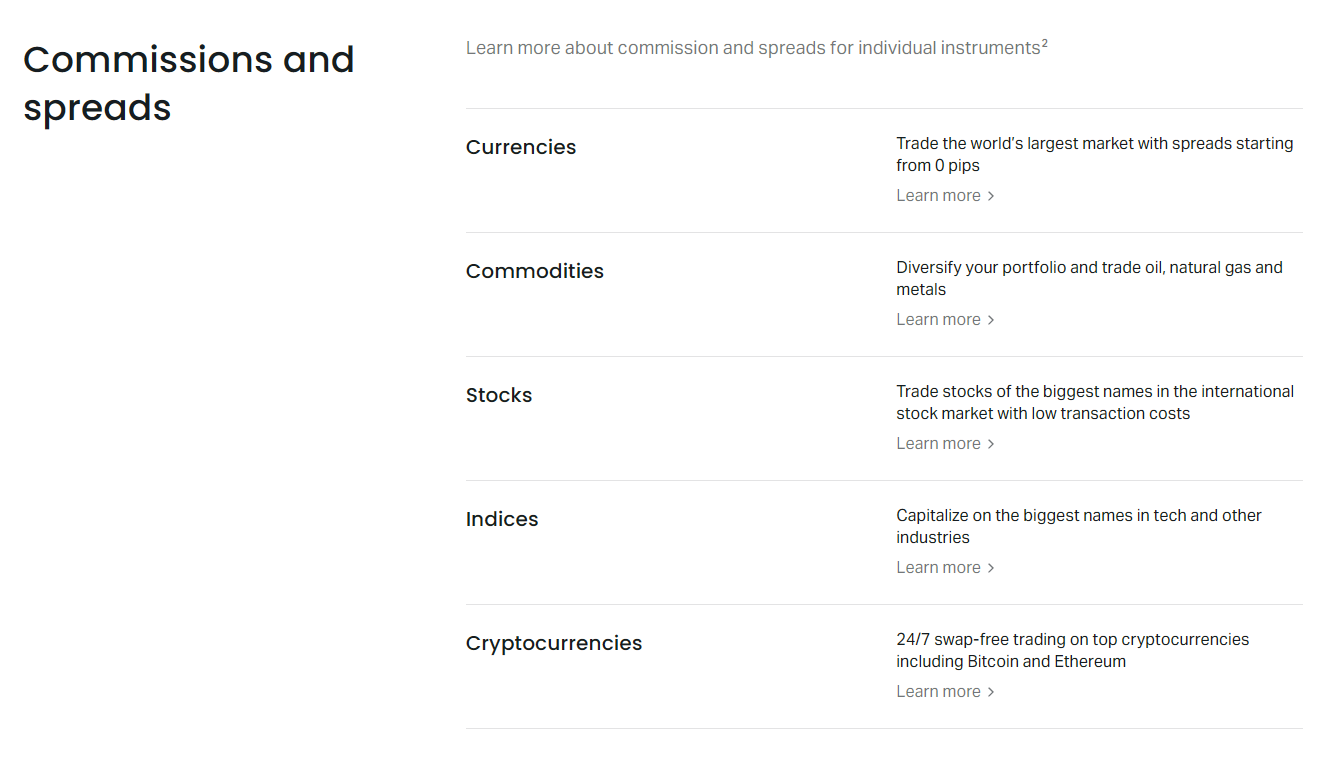
The commissions and spreads display complements the pip calculator by revealing the total cost per trade. While pip value determines profit/loss per price movement, spreads and commissions determine the breakeven threshold. A Raw Spread account with $7 commission per round-turn lot on EURUSD requires approximately 0.7 pips of favorable movement just to cover costs, whereas a Standard account with 1.0 pip spread needs 1.0 pips. Traders should factor these breakeven distances into their stop-loss and take-profit planning, effectively adding the cost pips to their risk calculation.
Common Calculation Errors and How to Avoid Them
Even with automated calculators, traders frequently make errors that lead to incorrect position sizing. The most common mistake involves confusing pip definition across instruments. Forex pairs typically use the fourth decimal place (0.0001) as one pip, but JPY pairs use the second decimal (0.01). Metals, indices, and cryptocurrencies have their own tick size conventions. The Exness calculator handles these definitions correctly when the proper instrument is selected, but manual calculations or third-party tools often apply forex pip definitions universally, producing errors of 10x or 100x.
- Forex majors: 1 pip = 0.0001 (fourth decimal)
- JPY pairs: 1 pip = 0.01 (second decimal)
- Gold (XAUUSD): 1 pip = 0.01 (tick size varies by broker)
- Indices: pip definition varies, often 1.0 or 0.1 index points
- Cryptocurrencies: pip definitions inconsistent across platforms
Another frequent error involves lot size confusion between standard lots (100,000 units), mini lots (10,000 units), and micro lots (1,000 units). Cent accounts add another layer where 1 lot = 1,000 units (100,000 cents). The Exness calculator accepts decimal lot inputs (0.01, 0.1, 1.0, etc.) but traders must ensure their intended volume matches the lot size convention of their platform. MT4/MT5 typically use standard lots as the base unit, so 0.01 = 1 micro lot. Entering 1.0 intending a micro lot would create a position 100x larger than expected.
Advanced Scenarios: Hedging and Partial Closures
Traders employing hedging strategies or partial position closures face additional pip calculation complexities. When holding simultaneous long and short positions in the same instrument, the net pip exposure equals the difference in lot sizes multiplied by pip value. However, margin requirements may not fully offset depending on broker policy. Exness applies margin hedging benefits for fully hedged positions, reducing required margin significantly. The pip calculator can model these scenarios by calculating pip values for each leg separately, then combining them according to the trader's net exposure logic.
- Fully hedged positions: net pip exposure near zero, reduced margin
- Partially hedged: net exposure equals difference in lot sizes
- Partial closures: recalculate pip risk on remaining volume
- Scale-in entries: average entry price changes pip risk baseline
- Scale-out exits: reduce position size, proportionally reduce pip risk
Partial closures deserve particular attention because they change the position's average entry price if executed at different levels. A trader buying 1 lot at 1.1000 and adding 0.5 lots at 1.1020 has an average entry of 1.10067. A subsequent 0.5 lot closure at 1.1030 leaves 1 lot with the original average entry. The pip calculator helps track these evolving metrics by allowing recalculation at each modification. Traders managing complex position structures should maintain a running calculation sheet or use portfolio management tools that integrate with Exness account data via API.
Hedging reduces directional risk but doubles spread costs. Every hedged position pays the spread twice. Calculate whether the risk reduction justifies the cost.
Comparing Exness Calculator with Alternative Tools
Numerous third-party pip calculators exist online, ranging from simple web widgets to sophisticated desktop applications. The Exness calculator distinguishes itself through direct integration with Exness trading conditions: actual spreads, commissions, swap rates, leverage tiers, and contract specifications. Generic calculators often use standardized assumptions (fixed 1:100 leverage, no commission, standard spreads) that diverge significantly from live Exness conditions. This divergence produces pip values and margin requirements that mislead traders into incorrect position sizing.
Scroll horizontally to see all columns
| Feature | Exness Calculator | Generic Calculators |
|---|---|---|
| Account Type Specifics | Yes (Standard, Raw, Zero, Pro, Cent) | Rarely |
| Real Spreads/Commissions | Yes, current live data | Fixed assumptions |
| Account Currency Conversion | Yes, real-time cross rates | Often USD only |
| Swap Rate Integration | Separate swap calculator | Rarely included |
| Leverage Tiers | Actual Exness tiers up to 1:2000 | Fixed presets |
| Instrument Coverage | All Exness tradable assets | Major forex only |
The integration advantage becomes most pronounced for professional account holders where commission structures significantly affect total trading costs. A generic calculator showing $10 pip value for EURUSD cannot distinguish between a Standard account paying 1.0 pip spread ($10 cost) and a Raw Spread account paying 0.1 pip spread plus $7 commission ($1 + $7 = $8 cost). Over hundreds of trades, this $2 per lot difference compounds substantially. The Exness calculator ecosystem, particularly the Personal Area version, maintains synchronization with live trading conditions, ensuring calculations reflect reality rather than approximations.
Practical Workflow for Daily Trading Preparation
Incorporating the pip calculator into a daily trading routine creates consistency and reduces errors. A recommended workflow begins with reviewing the economic calendar for high-impact events that may widen spreads or increase volatility. Next, the trader identifies potential setups on their watchlist and uses the calculator to determine position sizes for each scenario at planned stop-loss levels. These pre-calculated sizes are recorded in a trading plan or journal. During the session, the trader executes using the pre-determined sizes, eliminating emotional sizing decisions. Post-session, the calculator verifies actual risk taken versus planned risk.
- Morning: Check economic calendar, note high-impact events
- Pre-market: Calculate position sizes for watchlist setups
- Record: Document planned entry, stop, target, and lot size
- Session: Execute using pre-calculated sizes only
- Review: Compare actual vs planned risk, adjust for next session
This workflow transforms the pip calculator from a reactive tool into a proactive planning instrument. By front-loading the calculation work during calm pre-market hours, traders preserve cognitive capacity for pattern recognition and execution discipline during active trading. The calculator's speed enables rapid scenario testing — what if the stop moves 5 pips wider? What if I reduce risk to 0.5%? What if I trade the correlated pair instead? Answering these questions in seconds rather than minutes encourages thorough preparation.
Troubleshooting Calculator Discrepancies
Occasionally traders observe discrepancies between calculator outputs and actual trading results. These differences typically stem from several sources: spread widening during news events, slippage on market orders, swap rate changes between calculation and rollover, or commission tier adjustments for high-volume traders. The calculator provides theoretical values based on current conditions at the moment of calculation. Live trading occurs in a dynamic environment where conditions change continuously. Understanding this distinction prevents frustration and misplaced blame on the tool.
- Spreads widen during news, increasing effective cost per pip
- Market orders may fill at worse prices than calculated (slippage)
- Swap rates update daily, projections are estimates
- Commission tiers may change with volume milestones
- Server time vs local time affects swap rollover timing
When discrepancies persist beyond normal market variability, traders should verify their input parameters match actual account settings. Common mismatches include selecting the wrong account type, using outdated leverage assumptions, or entering volume in incorrect lot units. The Personal Area calculator minimizes these errors by auto-populating account-specific fields. For persistent issues, Exness support can verify account configuration and calculator accuracy. Documenting discrepancies with screenshots and timestamps helps support teams identify whether the issue lies in the calculator, the trading platform, or market conditions.
The calculator shows what should happen under current conditions. The market shows what actually happens. The difference is where risk lives.
Future Developments and Calculator Enhancements
Exness continuously updates its trading tool suite based on trader feedback and technological advances. Recent enhancements include mobile-optimized calculator interfaces, API access for algorithmic traders, and integration with the Exness Terminal web platform for one-click calculation-to-execution workflows. Future developments may incorporate machine learning models that suggest optimal position sizes based on historical volatility patterns, account performance metrics, and correlation analysis. The calculator's core mathematical engine remains stable, but its presentation layer and integration points evolve to match changing trader workflows.
- Mobile-first calculator redesign for Exness Trade app
- API endpoints for automated position sizing in trading bots
- Terminal integration for seamless calculate-and-execute
- Historical volatility overlays for stop-loss optimization
- Portfolio-level risk dashboard with correlated exposure alerts
Algorithmic traders particularly benefit from API access, allowing their systems to query pip values, margin requirements, and swap rates programmatically before order submission. This capability enables dynamic position sizing that adapts to changing volatility regimes without human intervention. The Exness developer portal provides documentation and sandbox environments for testing calculator API integration. As regulatory requirements evolve, the calculator also adapts to reflect leverage restrictions, margin rules, and reporting obligations specific to different jurisdictions where Exness operates.
Key Takeaways for Exness Pip Calculator Users
The Exness pip calculator serves as a foundational risk management tool that transforms abstract percentage risk into concrete position sizes. Its accuracy depends on correct input selection — particularly instrument, account type, account currency, and lot size convention. Traders who integrate the calculator into their daily preparation routine, understand its outputs in the context of total trading costs (spreads, commissions, swaps), and respect its limitations regarding dynamic market conditions gain a measurable edge in risk control. The calculator does not make trading decisions; it ensures those decisions are executed with precise sizing aligned to the trader's risk framework.
- Always select correct account type and currency for accurate results
- Combine pip value with spread/commission/swap for true cost per trade
- Pre-calculate position sizes for planned setups before market open
- Verify lot size conventions match your platform (MT4/MT5 = standard lots)
- Use Personal Area calculator for account-specific auto-populated data
- Recalculate after significant equity changes or leverage adjustments
- Monitor correlated exposure across multiple positions using pip values
- Treat calculator outputs as theoretical; live conditions may vary
Frequently Asked Questions
How do I access the Exness pip calculator?
The Exness pip calculator is available on the Exness website under Trading Tools, in the Exness Trade mobile app under Tools, and integrated into the Exness Terminal web platform. The Personal Area version provides account-specific calculations.
Does the pip calculator include spreads and commissions in its output?
No, the pip calculator shows raw pip value only. Spreads, commissions, and swaps must be factored separately. Check the Exness spreads and commissions page for current cost structures by account type.
Why does pip value differ between Standard and Raw Spread accounts?
Pip value itself does not differ by account type. However, effective trading cost per pip varies because Raw Spread accounts charge commissions while Standard accounts widen spreads. The calculator shows raw pip value; you must add costs manually.
How does account currency affect pip calculation?
When your account currency differs from the pair's quote currency, the calculator converts pip value using current cross rates. This adds conversion risk — pip value in your account currency fluctuates with both the traded pair and the conversion pair.
Can I use the calculator for cryptocurrency trading on Exness?
Yes, the Exness calculator supports cryptocurrency CFDs including BTCUSD, ETHUSD, and other major crypto pairs. Pip definitions for crypto vary by instrument, so always verify the tick size in the calculator output.
What is the difference between pip value and tick value?
Pip value refers to the standard fourth-decimal (or second-decimal for JPY) movement. Tick value represents the smallest price increment the broker quotes, which may be fractional pips (pipettes). Exness typically quotes fractional pips, so tick value equals pip value divided by 10.
How often should I recalculate position sizes?
Recalculate when account equity changes by more than 5%, when switching instruments, when changing stop-loss strategy, or after leverage adjustments. Daily pre-market calculation for active setups is recommended.
Does leverage affect pip value?
No, leverage affects margin requirement only. Pip value depends on contract size, instrument, and account currency. Higher leverage allows larger positions with the same margin, but each pip still carries the same monetary value per lot.
Final Assessment of Exness Pip Calculator Utility
The Exness pip calculator delivers reliable, broker-specific pip valuations that form the backbone of disciplined position sizing. Its integration with live trading conditions, multi-currency support, and accessibility across platforms make it superior to generic alternatives for Exness clients. Traders who master its inputs, understand its outputs in the context of total trade costs, and embed it within a structured risk management process gain a durable advantage: the ability to size every position with mathematical precision rather than guesswork. In a profession where survival depends on risk control, this precision compounds over thousands of trades into the difference between consistent profitability and account depletion.