

Trading Indices
Exness Dow Jones Trading: Complete Guide to US30 CFDs
Trade US30 index CFDs with low costs and fast execution on MetaTrader and Exness Terminal.

Forex Analyst
Forex Analyst specializing in currency markets, market trends, technical and fundamental analysis, and providing clear insights to help traders make informed decisions.
The Dow Jones Industrial Average, commonly referenced as US30 or DJ30 in trading terminals, represents 30 of the largest publicly traded companies in the United States. As a price-weighted index, it serves as a key benchmark for American equity market performance. Exness offers access to this index through contracts for difference (CFDs), allowing traders to speculate on price movements without owning the underlying shares.
Contents
- Understanding the US30 Index on Exness
- Account Types for Dow Jones Trading
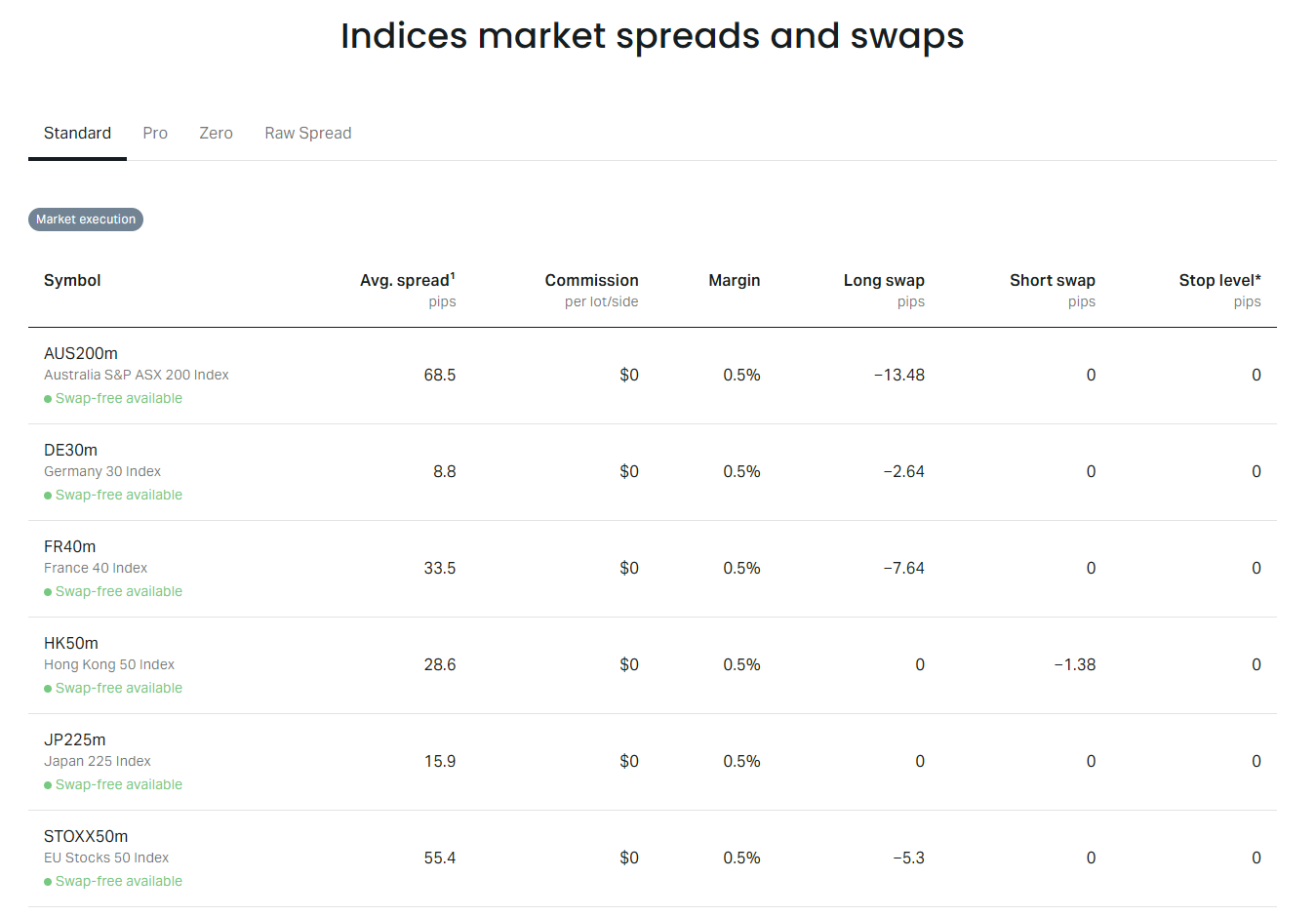
- Spreads, Swaps, and Trading Costs
- Leverage and Margin Requirements
- Trading Platforms for US30 Analysis
- Exness Terminal Features for Index Traders
- MetaTrader Tools for Dow Jones
- Trading Hours and Session Dynamics
- Execution Quality and Order Types
- Risk Management for Dow Jones CFDs
- Technical Analysis Approaches for US30
- Fundamental Drivers of the Dow Jones
- Deposits, Withdrawals, and Account Funding
- Demo Account for Practice
- Comparing Exness with Other Brokers for US30
- Common Mistakes in Dow Jones Trading
- Advanced Strategies for US30 on Exness
- Tax Considerations for Index CFD Traders
- Key Takeaways for Exness Dow Jones Trading
Trading the Dow Jones on Exness provides several structural advantages. The broker aggregates liquidity from multiple providers, which helps maintain tight spreads even during volatile market sessions. Execution speeds are optimized through Equinix data centers, and the availability of both MetaTrader 4, MetaTrader 5, and the proprietary Exness Terminal gives traders flexibility in how they analyze and execute positions.
This guide covers everything you need to know about Exness Dow Jones trading, from account selection and cost structure to platform features, trading hours, and risk considerations. Whether you are a day trader targeting intraday swings or a swing trader holding positions for several days, understanding the specific conditions Exness applies to US30 can materially affect your results.
Understanding the US30 Index on Exness
On the Exness platform, the Dow Jones Industrial Average appears under the symbol US30 or DJ30 depending on the trading terminal. The contract specification defines one standard lot as one contract per index point. This means a one-point move in the index equals one unit of the account currency per lot. For example, if you buy one lot of US30 at 34,500 and the price rises to 34,510, the unrealized profit is 10 units of your account currency before costs.
The index composition includes blue-chip stocks such as Apple, Microsoft, Boeing, Goldman Sachs, and UnitedHealth. Because it is price-weighted, higher-priced stocks have a disproportionate influence on the index value compared to market-cap-weighted indices like the S&P 500. This characteristic creates unique trading dynamics, especially during earnings season when a single high-priced component can move the entire index.
- Symbol: US30 or DJ30
- Contract size: 1 lot = 1 contract per index point
- Quote currency: USD
- Minimum trade size: 0.01 lots
- Maximum trade size: varies by account type and margin rules
- Trading hours: follows US market sessions with extended hours
Account Types for Dow Jones Trading
Exness offers several account types, each with different cost structures that affect Dow Jones trading. The Standard and Standard Cent accounts operate on a spread-only model with no commission. The Raw Spread, Zero, and Pro accounts charge a commission per lot but offer significantly tighter spreads. For index traders, the choice often comes down to trading frequency and position size.
Standard accounts typically show US30 spreads starting around 2.5 to 4 points during peak liquidity. Raw Spread accounts can reduce this to 0.4 to 1.5 points with a commission of approximately $3.5 per lot per side. Zero accounts aim for near-zero spreads on major instruments during core hours with a fixed commission. Pro accounts offer the lowest spreads with a commission structure designed for high-volume traders.
Scroll horizontally to see all columns
| Account Type | Typical US30 Spread | Commission (per lot/side) | Best For |
|---|---|---|---|
| Standard | 2.5–4.0 points | None | Beginners, low frequency |
| Standard Cent | 2.5–4.0 points | None | Micro position sizing |
| Raw Spread | 0.4–1.5 points | ~$3.5 | Active day traders |
| Zero | 0.0–0.8 points | Fixed ~$3.5–$5 | Scalpers, high frequency |
| Pro | 0.2–1.0 points | Volume-based | Professional volumes |
Spreads, Swaps, and Trading Costs
Spreads on US30 fluctuate throughout the trading day. The tightest spreads occur during the overlap of the London and New York sessions, roughly 13:00–17:00 UTC. During the Asian session and pre-market hours, spreads widen due to lower liquidity. Exness publishes average spread data, but real-time spreads in the terminal reflect current market conditions.
Swap rates apply to positions held past the daily rollover at 22:00 UTC. For US30, the swap can be positive or negative depending on the interest rate differential and the broker's markup. Long positions typically incur a negative swap (cost), while short positions may receive a small credit or also pay a fee. Wednesday rollover carries triple swap to account for the weekend.
Scroll horizontally to see all columns
| Cost Component | When Applied | Typical Range |
|---|---|---|
| Spread | On open and close | 0.2–4.0 points |
| Commission | Per side (Raw/Zero/Pro) | $0–$5 per lot |
| Overnight Swap | Daily at 22:00 UTC | -$0.50 to +$0.20 per lot |
| Weekend Swap | Wednesday rollover | 3x daily rate |
The trading calculator in the Exness Personal Area helps estimate total costs before entering a trade. Input your account type, position size, and expected holding period to see projected spread cost, commission, and swap charges. This tool is especially useful for comparing account types side by side.
Leverage and Margin Requirements
Exness offers dynamic leverage on indices, including US30. The maximum leverage depends on the account equity and the specific instrument. For major indices like the Dow Jones, leverage up to 1:2000 is available on Pro and Raw Spread accounts for equity below certain thresholds. As account equity grows, maximum leverage steps down to manage risk exposure.
Margin requirement for US30 is calculated as position size divided by leverage. For example, a 1-lot position at 34,500 with 1:200 leverage requires $172.50 margin. The same position at 1:500 leverage requires only $69. Higher leverage frees up capital but amplifies both gains and losses. Exness implements margin call at 60% and stop out at 0% for most account types, meaning positions are automatically closed when equity falls to zero.
- Maximum leverage up to 1:2000 on Pro/Raw Spread (equity-dependent)
- Standard accounts typically max at 1:2000 for indices
- Margin call level: 60% for most accounts
- Stop out level: 0% (positions closed at zero equity)
- Leverage tiers adjust automatically with equity changes
- Weekend margin requirements may increase
Trading Platforms for US30 Analysis
Exness supports three primary platforms for Dow Jones trading: MetaTrader 4, MetaTrader 5, and the Exness Terminal (web and mobile). Each platform provides full access to US30 with real-time charts, technical indicators, and order execution. The choice depends on your workflow preferences and analytical needs.
MetaTrader 4 remains popular for its extensive library of custom indicators and expert advisors. MetaTrader 5 adds more timeframes, a built-in economic calendar, and improved strategy tester. The Exness Terminal offers a streamlined browser-based experience with TradingView charts, one-click trading, and seamless integration with the Personal Area for account management.
Mobile traders can use the Exness Trade app or MetaTrader mobile apps for iOS and Android. The Exness app provides push notifications for price alerts, economic calendar events, and margin warnings. Charting on mobile includes the most common indicators and drawing tools, sufficient for monitoring and managing existing positions.
Exness Terminal Features for Index Traders
The Exness Terminal includes several features tailored for index CFD trading. TradingView-powered charts offer over 100 indicators and 50 drawing tools. The terminal supports multiple chart layouts, allowing you to monitor US30 alongside correlated instruments like S&P 500, Nasdaq 100, and gold. One-click trading from the chart enables rapid execution during fast moves.
- TradingView charts with 15+ timeframes
- Customizable watchlists with US30 and correlated assets
- Economic calendar filtered for US high-impact events
- Position management with drag-and-drop SL/TP
- Partial close and reverse position functions
- Dark and light theme options
MetaTrader Tools for Dow Jones
MetaTrader 5 provides the Depth of Market (DOM) view for US30, showing real-time bid/ask volumes at each price level. This can help identify support and resistance zones based on order flow. The built-in strategy tester allows backtesting expert advisors on historical US30 data with variable spreads. Custom indicators from the MQL5 marketplace can be installed for specialized analysis.
The combination of TradingView charts in Exness Terminal and DOM in MT5 gives index traders both visual and order-flow perspectives on US30.
Trading Hours and Session Dynamics
US30 trading on Exness follows the CME Globex schedule with extended hours. The primary session runs Sunday 22:05 UTC to Friday 21:00 UTC, with a daily maintenance break from 21:00–22:05 UTC. Pre-market and after-hours trading is available but with wider spreads and lower liquidity. The most active period is the US cash session (13:30–20:00 UTC) when the underlying stocks are trading.
Key economic releases such as Non-Farm Payrolls (first Friday monthly), FOMC decisions, CPI, and GDP reports create significant volatility in US30. Exness typically maintains execution during these events, but spreads can widen substantially. Traders should check the economic calendar and consider reducing position size or avoiding new entries during high-impact news.
Scroll horizontally to see all columns
| Session | UTC Time | Liquidity | Typical Spread |
|---|---|---|---|
| Asian | 00:00–08:00 | Low | Widest |
| London Open | 08:00–13:00 | Medium | Moderate |
| US Cash (Core) | 13:30–20:00 | High | Tightest |
| After Hours | 20:00–22:00 | Low | Wide |
Execution Quality and Order Types
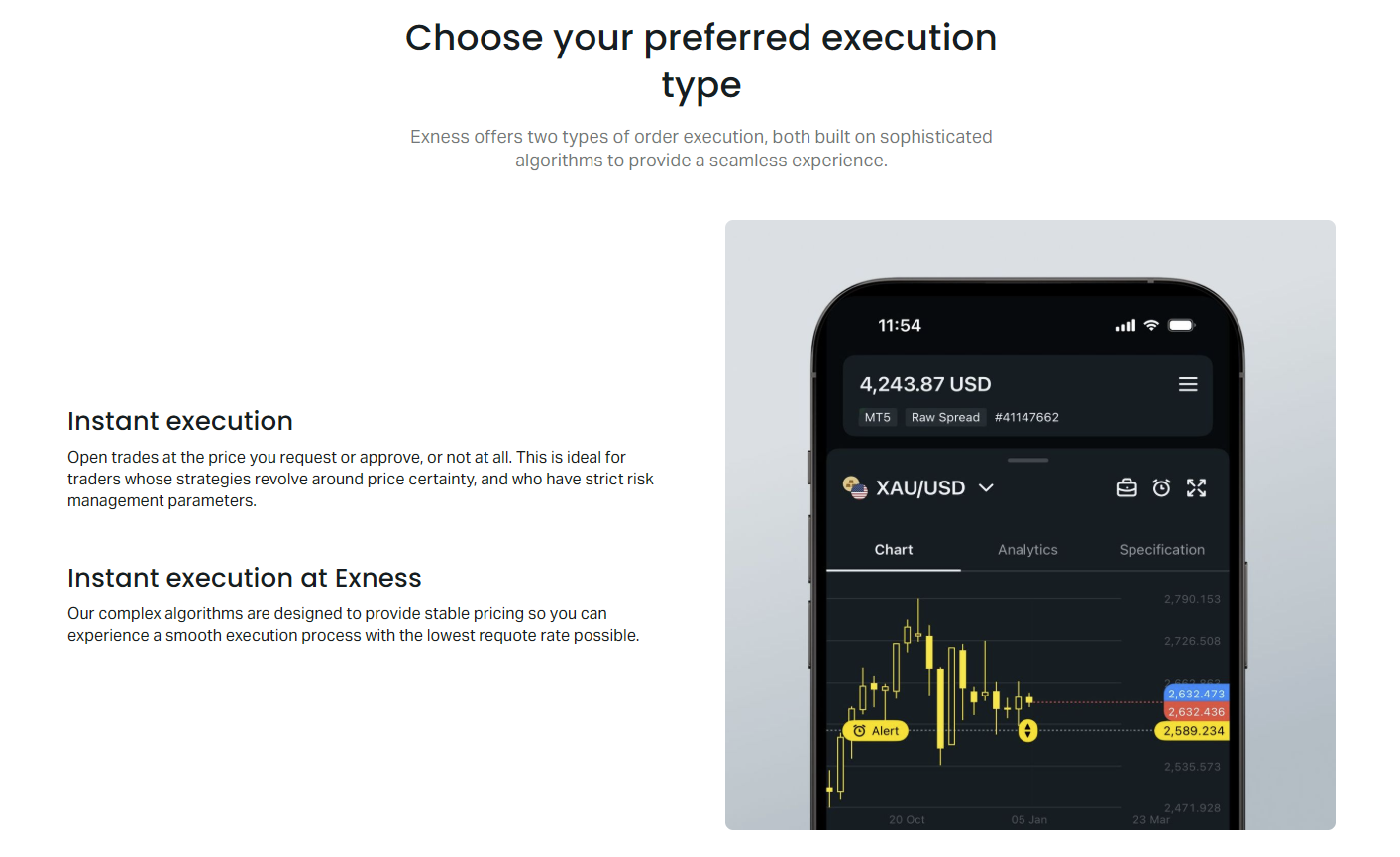
Exness uses market execution for all index CFDs, including US30. Orders are filled at the best available price from liquidity providers with no requotes. The broker publishes execution statistics showing average fill times under 100 milliseconds for most instruments. Slippage can occur during high volatility but is generally symmetrical (positive and negative).
Available order types include market, limit, stop, stop-limit, and trailing stop. One-cancels-other (OCO) orders can be constructed using pending orders with opposing directions. The Exness Terminal and MT5 support partial position closing, allowing traders to scale out of winning trades while leaving a runner.
For algorithmic traders, MetaTrader 5 supports expert advisors with full access to US30 tick data. The Exness VPS service provides low-latency hosting for EAs, with servers located in the same Equinix data centers as the broker's trade servers. This minimizes network latency for high-frequency strategies.
Risk Management for Dow Jones CFDs
Trading US30 on margin carries substantial risk. The index can move 1–2% in a single session during earnings season or macroeconomic shocks. At 1:200 leverage, a 0.5% adverse move wipes out 100% of the margin allocated to that position. Effective risk management requires position sizing, stop-loss discipline, and correlation awareness.
Position sizing should be based on account equity and stop-loss distance, not on available margin. A common rule risks 1–2% of equity per trade. For a $10,000 account risking 1% ($100) with a 50-point stop on US30, the position size would be 2 lots (50 points × $1/point × 2 lots = $100 risk). This calculation assumes no slippage.
- Risk 1–2% of equity per trade maximum
- Always use stop-loss orders
- Avoid overleveraging: keep margin level above 500%
- Monitor correlation with other open positions
- Reduce size during high-impact news
- Use trailing stops to lock in profits
Technical Analysis Approaches for US30
The Dow Jones responds well to traditional technical analysis due to its heavy institutional participation. Support and resistance levels based on prior swing highs and lows, round numbers (e.g., 34,000, 35,000), and moving averages (50, 100, 200-period) are widely watched. Volume profile and VWAP on intraday charts help identify fair value areas during the US session.
Momentum oscillators like RSI (14) and MACD work on higher timeframes for swing trades. On lower timeframes, mean-reversion strategies using Bollinger Bands or Keltner Channels can capture range-bound moves during the Asian and early European sessions. Breakout strategies targeting the US open range (first 30–60 minutes) are popular among day traders.
Round-number psychology is pronounced in US30. Levels ending in 000 or 500 often act as magnets for price action and liquidity clusters.
Fundamental Drivers of the Dow Jones
As a price-weighted index of 30 mega-cap stocks, US30 is driven by both macroeconomic factors and individual component performance. Federal Reserve policy, inflation data, and Treasury yields affect the entire index through discount rate changes. Earnings reports from high-priced components like UnitedHealth, Goldman Sachs, or Microsoft can move the index disproportionately.
Sector rotation also matters. When technology outperforms, the Nasdaq 100 often leads while US30 lags due to its lower tech weighting. Conversely, during financial or industrial rallies, US30 may outperform. Monitoring sector ETFs (XLF, XLI, XLK) alongside the index provides context for directional bias.
- Fed interest rate decisions and forward guidance
- US inflation (CPI, PCE) and employment data
- Component earnings reports (especially high-priced stocks)
- Treasury yield curve movements
- Dollar index (DXY) strength/weakness
- Geopolitical risk affecting global trade
Deposits, Withdrawals, and Account Funding
Funding an Exness account for Dow Jones trading is straightforward. The broker supports bank cards, electronic wallets (Skrill, Neteller, WebMoney, Perfect Money), and local payment methods in many regions. Minimum deposit is $1 for Standard accounts. Most deposits are instant, while withdrawals to e-wallets are typically processed within minutes. Bank card withdrawals may take 1–3 business days.
Exness does not charge deposit or withdrawal fees, though payment providers may apply their own charges. The Personal Area shows all available methods for your registered country. Verification (KYC) is required before first withdrawal, including proof of identity and address. Completing verification early avoids delays when you need to access funds.
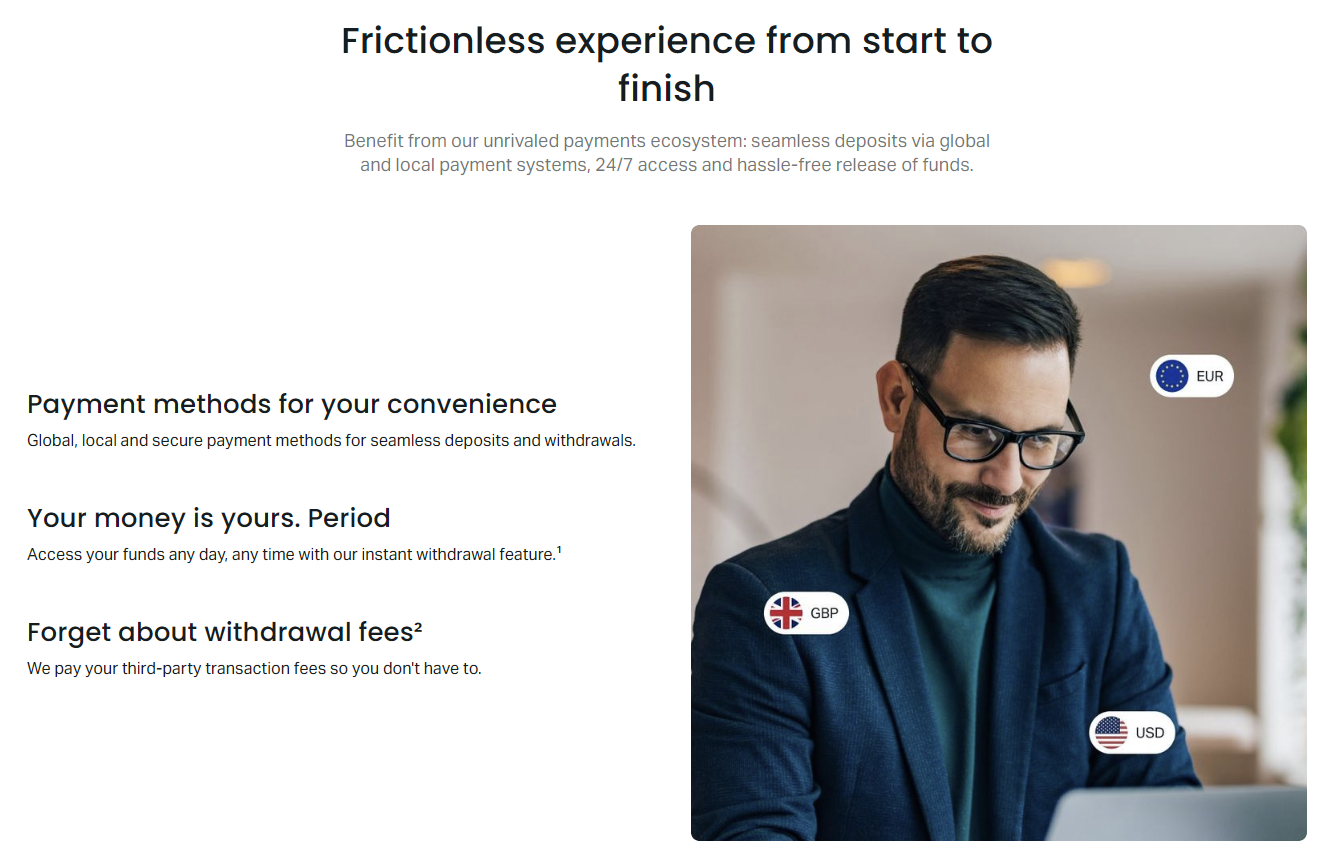
Instant withdrawal is a notable feature for most electronic payment methods. Once verified, withdrawal requests are processed automatically 24/7 without manual approval. This gives traders confidence that profits from US30 trading can be accessed quickly when needed.
Demo Account for Practice
Exness offers unlimited demo accounts with virtual funds up to $100,000. Demo conditions mirror live markets including spreads, swaps, and execution speed. This allows thorough testing of US30 strategies, platform familiarity, and risk management rules without financial risk. Demo accounts do not expire as long as they are accessed at least once every 90 days.
Transitioning from demo to live should be gradual. Start with the minimum position size (0.01 lots) on a Standard Cent or Standard account to experience real-money psychology. The emotional impact of real losses, even small ones, differs significantly from demo trading. Scale up only after consistent profitability over at least 50–100 trades.
Comparing Exness with Other Brokers for US30
When evaluating brokers for Dow Jones trading, compare total cost (spread + commission + swap), execution quality, platform stability, and regulatory standing. Exness competes on tight spreads, instant withdrawals, and high leverage options. Some competitors offer fixed spreads on indices or guaranteed stop-losses (at a cost), which Exness does not currently provide.
Regulatory coverage varies by entity. Exness operates through multiple regulated entities including CySEC (Cyprus), FCA (UK), FSCA (South Africa), and others. The specific entity serving your country determines the leverage limits, negative balance protection, and investor compensation schemes that apply. Always verify which entity holds your funds.
Scroll horizontally to see all columns
| Factor | Exness | Typical Competitor Range |
|---|---|---|
| US30 Spread (Raw/Pro) | 0.2–1.5 pts | 0.5–3.0 pts |
| Commission per Lot | $3.5–$5 | $3–$10 |
| Max Leverage (Indices) | 1:2000 | 1:100–1:500 |
| Withdrawal Speed | Instant (e-wallets) | Hours to days |
| Platforms | MT4, MT5, Web, App | MT4/MT5, proprietary |
Common Mistakes in Dow Jones Trading
New index traders often make predictable errors. Overleveraging is the most common, driven by the high maximum leverage available. Trading without a stop-loss exposes the account to unlimited downside during flash crashes or gap openings. Ignoring the economic calendar leads to avoidable losses during scheduled high-impact events.
Another mistake is treating US30 like a forex pair. The index has different drivers, session characteristics, and correlation structures. Strategies optimized for EURUSD often fail on US30 without adaptation. Similarly, applying the same position sizing across instruments with different volatility (measured by ATR) results in inconsistent risk.
- Using maximum leverage on every trade
- Trading without stop-loss orders
- Ignoring FOMC, NFP, CPI calendar events
- Applying forex strategies without adaptation
- Equal position sizing across different volatilities
- Holding losing positions hoping for reversal
- Overtrading during low-liquidity sessions
The Dow Jones rewards patience and punishes impulse. The best trades often come from waiting for the market to confirm your thesis at key levels.
Advanced Strategies for US30 on Exness
Experienced traders employ several advanced approaches for Dow Jones CFDs. Pairs trading US30 against S&P 500 or Nasdaq 100 exploits temporary divergences between correlated indices. The ratio chart (US30/SPX) reveals mean-reversion opportunities when one index outperforms the other unusually. This market-neutral approach reduces directional risk.
Options hedging using listed index options (if available in your jurisdiction) can protect CFD positions during earnings season or Fed weeks. Buying put spreads on the DJX index options while long US30 CFDs caps downside risk. The cost of the hedge is the premium paid, which should be factored into the trade's risk-reward calculation.
Algorithmic traders can use the Exness API (where available) or MetaTrader expert advisors to automate US30 strategies. Common approaches include VWAP reversion during the US session, opening range breakout, and statistical arbitrage between index futures and CFD prices. The Exness VPS ensures 24/7 uptime for automated systems.
Tax Considerations for Index CFD Traders
Tax treatment of CFD profits varies by country. In many jurisdictions, CFD gains are taxed as capital gains or ordinary income. Some countries classify CFDs as gambling (tax-free) while others treat them as financial instruments subject to specific reporting. Exness provides account statements and trade history exports compatible with tax software, but does not provide tax advice.
Traders should consult a qualified tax professional familiar with derivative instruments in their country of residence. Keeping detailed records of every trade (entry, exit, size, costs) simplifies year-end reporting. The Exness Personal Area allows downloading CSV statements for any date range.
- CFD tax treatment varies by country
- Keep complete trade records with timestamps
- Download monthly statements from Personal Area
- Track swap costs separately for deductions
- Consult a tax professional annually
Frequently Asked Questions
What is the minimum deposit to trade US30 on Exness?
The minimum deposit is $1 for Standard and Standard Cent accounts. Raw Spread, Zero, and Pro accounts require higher minimums, typically $200–$500 depending on the entity.
Does Exness charge commission on Dow Jones trades?
Standard and Standard Cent accounts have no commission (spread only). Raw Spread, Zero, and Pro accounts charge a commission per lot per side, typically around $3.5–$5.
What are the trading hours for US30 on Exness?
US30 trades Sunday 22:05 UTC to Friday 21:00 UTC with a daily break 21:00–22:05 UTC. The most liquid period is the US cash session 13:30–20:00 UTC.
Can I use expert advisors for US30 on Exness?
Yes, MetaTrader 4 and 5 support expert advisors for US30. Exness VPS hosting is available for low-latency automated trading.
What leverage is available for Dow Jones on Exness?
Up to 1:2000 on Pro and Raw Spread accounts for lower equity tiers. Leverage steps down as account equity increases. Standard accounts also offer up to 1:2000 for indices.
How are swaps calculated for US30 positions held overnight?
Swaps are applied daily at 22:00 UTC. Long positions typically pay a fee, shorts may receive a small credit. Wednesday rollover charges triple swap for the weekend.
Is negative balance protection available for US30 trading?
Yes, Exness provides negative balance protection per regulatory requirements of the entity serving your country. You cannot lose more than your account equity.
Which platform is best for trading US30 on Exness?
MetaTrader 5 offers Depth of Market and more timeframes. Exness Terminal provides TradingView charts and one-click trading. Choose based on your analysis style.
Key Takeaways for Exness Dow Jones Trading
Trading the Dow Jones Industrial Average on Exness gives you access to a premier US equity benchmark with competitive costs, multiple platform choices, and flexible leverage. The broker's market execution model, instant withdrawal capability, and regulatory coverage across multiple jurisdictions make it a viable option for both retail and professional index traders. Success depends on matching your account type to your trading frequency, respecting the volatility of US30 with disciplined risk management, and aligning your strategy with the index's unique price-weighted structure and session dynamics.