

Forex Broker Guides
Exness Minimum Deposit Requirements by Account Type
Learn deposit requirements for Standard, Pro, Zero, and Cent accounts with regional specifics.

Forex Analyst
Forex Analyst specializing in currency markets, market trends, technical and fundamental analysis, and providing clear insights to help traders make informed decisions.
Understanding the Exness minimum deposit structure helps traders choose the right account for their capital and strategy. The broker offers several account categories, each with distinct entry thresholds that cater to beginners, experienced speculators, and professional money managers. This guide breaks down every requirement so you can fund efficiently and avoid surprises.
Contents
- Standard Account Minimum Deposit Details
- Standard Cent Account for Micro Lot Trading
- Professional Account Tiers and Entry Thresholds
- Zero Spread Account Specifics
- Raw Spread Account Execution Model
- Regional Minimum Deposit Variations
- Exness Minimum Deposit in Pakistan and India
- African Markets: South Africa and Nigeria
- Payment Methods and Associated Minimums
- Deposit and Withdrawal Symmetry Rules
- Unlimited Leverage and Minimum Equity Requirements
- Islamic Swap-Free Account Deposit Rules
- First Deposit Bonus and Promotional Considerations
- Verification Impact on Deposit Limits
- Currency Conversion and Base Currency Choice
- Common Deposit Errors and Troubleshooting
- Strategic Funding for Different Trader Profiles
- Deposit Processing Times by Method
- Risk Management Starting from First Deposit
- Comparing Exness Minimums to Industry Standards
- Final Assessment of Exness Minimum Deposit Structure
Deposit rules vary by account type, geographic region, and payment processor. While the global baseline is often low, certain methods or local regulations impose higher floors. Knowing these nuances before registration saves time and prevents failed transactions. We cover standard accounts, professional tiers, cent accounts, and regional specifics for major markets.
Exness positions itself as an accessible broker with flexible funding options. The platform supports bank cards, electronic wallets, local bank transfers, and cryptocurrency channels. Each channel carries its own processing speed, fee profile, and minimum amount. Traders should match their preferred method to the account tier that aligns with their trading volume and risk tolerance.
Standard Account Minimum Deposit Details
The Standard account serves as the default entry point for most retail clients. It requires no commission on trades, with costs embedded in the spread. The global minimum deposit for this account starts at one unit of the account base currency, typically one US dollar. This ultra-low barrier allows new traders to test live conditions with minimal capital at risk.
- Global baseline: 1 USD or equivalent in base currency
- No commission charges on round-turn trades
- Spreads start from 0.3 pips on major pairs
- Suitable for discretionary and automated strategies
- Maximum leverage up to 1:2000 depending on equity
Regional payment processors sometimes enforce higher minimums. For example, certain e-wallets in Southeast Asia or Latin America may require ten dollars or more per transaction. Bank wire transfers often carry a higher floor due to intermediary fees. Always check the deposit screen in your Personal Area for the exact figure applicable to your country and method.
Standard Cent Account for Micro Lot Trading
The Standard Cent account denominates balances in cents rather than dollars, allowing position sizes as small as 0.01 cent lots. This account shares the same one-dollar global minimum deposit as the regular Standard account. It is ideal for traders who want real-money experience with negligible monetary risk per trade.
Cent accounts replicate live market conditions including spreads, swaps, and execution quality. The psychological benefit of seeing a balance expressed in thousands of cents helps beginners manage emotions. Professional traders also use cent accounts to test expert advisors at scale before deploying on standard lots.
Scroll horizontally to see all columns
| Feature | Standard Cent | Standard |
|---|---|---|
| Balance Denomination | Cents (USDc) | Dollars (USD) |
| Minimum Deposit | 1 USD | 1 USD |
| Minimum Lot Size | 0.01 cent lot | 0.01 standard lot |
| Typical Spread EURUSD | From 0.3 pips | From 0.3 pips |
| Commission | None | None |
Transitioning from a cent account to a standard account is seamless. Funds can be transferred internally between accounts in the Personal Area without withdrawal fees. This flexibility lets traders scale up gradually as confidence and account equity grow.
Professional Account Tiers and Entry Thresholds
Exness offers three professional account types: Pro, Zero, and Raw Spread. These accounts target higher-volume traders who prioritize raw pricing and commission-based cost structures. Minimum deposits for professional tiers are significantly higher than standard accounts, reflecting the advanced features and tighter spreads provided.
- Pro Account: 200 USD minimum deposit
- Zero Account: 200 USD minimum deposit
- Raw Spread Account: 200 USD minimum deposit
- All professional accounts require verification completion
- Commission per lot varies by account and instrument
The Pro account charges no commission but offers spreads from 0.1 pips. The Zero account provides zero spreads on top instruments for a fixed commission per lot. Raw Spread delivers institutional-grade spreads with a low commission. Traders should calculate their expected monthly volume to determine which commission model yields the lowest total cost.
Professional accounts reward volume with tighter pricing. The 200 USD threshold filters casual users while remaining accessible to serious retail traders.
Zero Spread Account Specifics
The Zero Spread account guarantees zero pip spreads on a selected basket of major forex pairs during standard market hours. A fixed commission applies per round-turn lot. The 200 USD minimum deposit unlocks this feature set. Traders who scalp or run high-frequency strategies benefit most from predictable zero-spread conditions.
Zero spread availability is limited to specific symbols and trading sessions. Outside those windows, standard variable spreads apply. The commission rate is published in the contract specifications and Personal Area. Always confirm the current instrument list before building a strategy around zero-spread execution.
Raw Spread Account Execution Model
Raw Spread accounts connect traders to aggregated liquidity with minimal markup. Spreads reflect true interbank levels, and a low commission covers the broker's service. The 200 USD minimum deposit grants access to this execution tier. Algorithmic traders and those using depth-of-market tools prefer Raw Spread for transparency.
The deposit interface in the Personal Area dynamically adjusts minimum amounts based on the selected payment method and client region. This screenshot illustrates the typical layout where traders choose a funding channel, enter an amount, and confirm the transaction. Real-time validation prevents submissions below the required threshold.
Regional Minimum Deposit Variations
While Exness maintains a global one-dollar baseline for Standard and Cent accounts, local payment partners and regulatory frameworks create variation. Traders in Pakistan, India, South Africa, Nigeria, and other regions may encounter higher effective minimums depending on the chosen deposit channel. Understanding these differences prevents funding delays.
Exness Minimum Deposit in Pakistan and India
In Pakistan and India, popular local methods include bank transfers, JazzCash, Easypaisa, UPI, and various e-wallets. The minimum deposit via these channels typically ranges from 10 to 20 USD equivalent. Cryptocurrency deposits often have lower minimums but require blockchain confirmation times. Traders should compare fees and speed across available options.
African Markets: South Africa and Nigeria
South African traders commonly use Ozow, bank wire, and crypto. Minimums start around 10 USD for electronic methods. Nigerian clients access local bank transfers, USSD, and crypto with similar thresholds. Mobile money integration in several African nations provides instant crediting with low entry barriers. Always verify current limits in the payment section.
Scroll horizontally to see all columns
| Region | Bank Transfer | E-Wallet | Crypto | Card |
|---|---|---|---|---|
| Global Baseline | 10 USD | 1 USD | 1 USD | 1 USD |
| Pakistan | 10 USD | 10 USD | 1 USD | 10 USD |
| India | 10 USD | 10 USD | 1 USD | 10 USD |
| South Africa | 10 USD | 10 USD | 1 USD | 10 USD |
| Nigeria | 10 USD | 10 USD | 1 USD | 10 USD |
These figures represent typical minimums observed across common processors. Exact amounts appear on the deposit page after selecting country and method. Exness updates partner integrations regularly, so minimums can change without notice. Bookmark the deposit page for the most current requirements.
Payment Methods and Associated Minimums
Exness supports over one hundred payment systems globally. Each method carries unique characteristics: processing time, fee structure, geographic availability, and minimum deposit amount. Categorizing methods by type helps traders select the optimal channel for their situation.
- Bank cards (Visa, Mastercard): instant, 1 USD minimum globally
- Electronic wallets (Skrill, Neteller, WebMoney): instant, 1-10 USD
- Local bank transfers: 1-3 business days, often 10 USD minimum
- Cryptocurrency (BTC, USDT, ETH, etc.): blockchain dependent, 1 USD
- Mobile money (M-Pesa, JazzCash, GCash): instant, 5-10 USD
Card deposits offer the fastest crediting for most regions. E-wallets provide a balance of speed and privacy. Bank transfers suit larger amounts where fixed fees become negligible. Cryptocurrency appeals to traders in regions with restricted banking access. Mobile money dominates in underbanked markets.
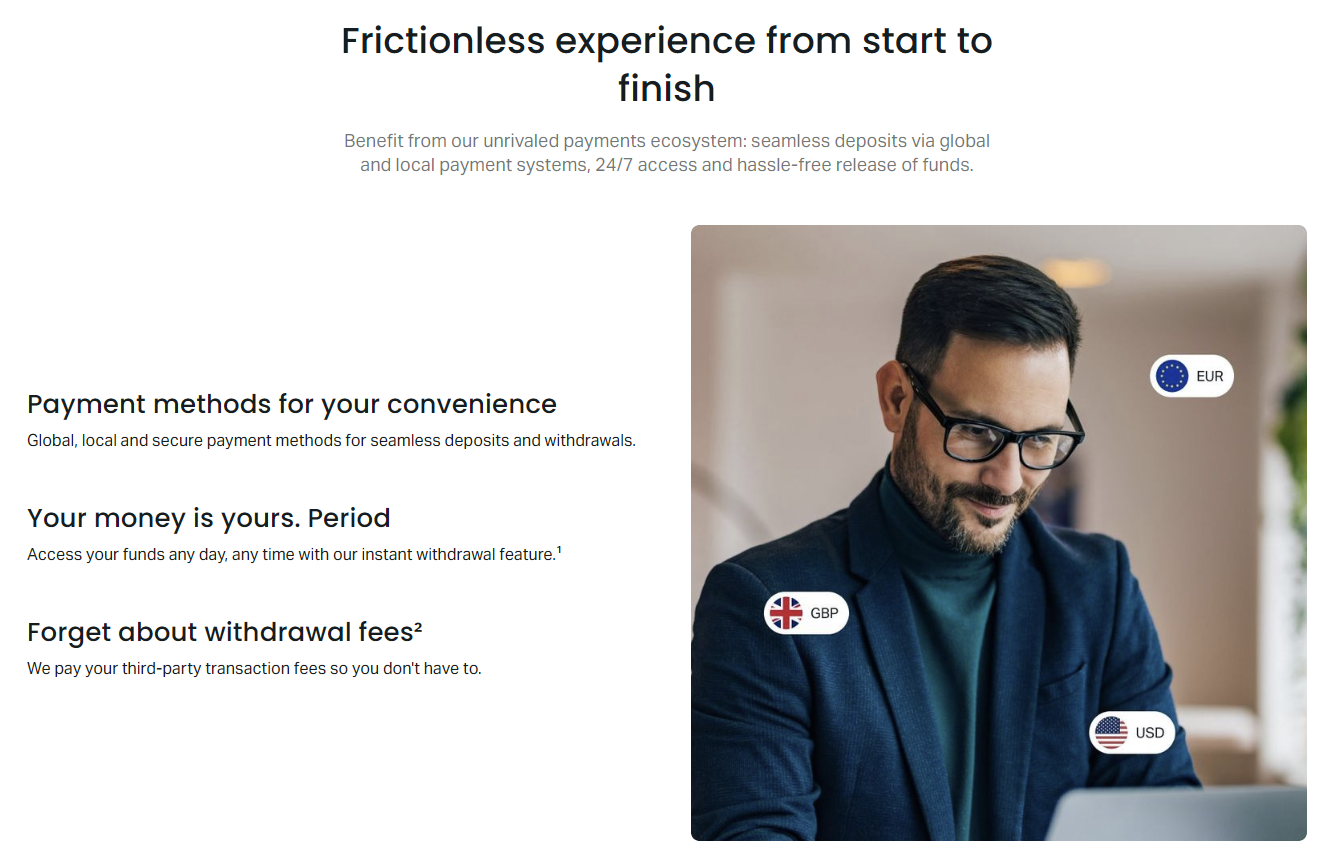
The payment dashboard displays all active methods for the client's verified country. Each tile shows the method name, processing time, fee (if any), and minimum deposit. Filtering by currency or speed helps narrow choices. The interface also highlights newly added local processors.
Deposit and Withdrawal Symmetry Rules
Exness enforces a closed-loop policy: withdrawals must return to the same method used for deposits, up to the deposited amount. Profits can be withdrawn to any verified method. This anti-money-laundering measure affects how traders plan their funding strategy, especially when using multiple channels.
- Deposit 100 USD via Visa → withdraw up to 100 USD to same Visa
- Profits above 100 USD can go to bank transfer or e-wallet
- Method verification required before first withdrawal
- Internal transfers between accounts are unrestricted
- Crypto deposits require blockchain confirmations for withdrawal eligibility
Traders should deposit via the method they intend to use for primary withdrawals. Splitting deposits across many methods complicates profit extraction. Consolidating funding through one or two reliable channels simplifies accounting and reduces verification overhead.
Unlimited Leverage and Minimum Equity Requirements
Exness offers unlimited leverage on accounts with equity below 1,000 USD. This feature applies to Standard, Cent, and Pro accounts. The minimum deposit to open such an account remains one dollar for Standard and Cent, or 200 USD for Pro. However, maintaining unlimited leverage requires keeping equity under the threshold.
Once account equity exceeds 1,000 USD, leverage caps engage automatically based on the instrument and account type. Traders using high leverage should monitor equity closely. A profitable position pushing equity past the limit will reduce available leverage, potentially triggering margin calls on open positions.
Unlimited leverage is a tool for micro accounts. Graduating past 1,000 USD equity shifts risk parameters automatically — plan position sizing accordingly.
Islamic Swap-Free Account Deposit Rules
Islamic accounts (swap-free) follow the same minimum deposit structure as their conventional counterparts. A Standard Islamic account requires 1 USD. A Pro Islamic account requires 200 USD. No additional deposit is charged for the swap-free status. Eligibility requires a declaration of faith and may be restricted in certain jurisdictions.
Swap-free accounts replace overnight financing fees with a fixed administration charge on held positions after a grace period. The charge varies by instrument and is disclosed in the contract specifications. Traders should factor this cost into swing and position trading strategies.
First Deposit Bonus and Promotional Considerations
Exness occasionally runs region-specific deposit bonuses or cashback programs. These promotions have their own minimum deposit requirements, often higher than the standard baseline. Terms include trading volume targets, time limits, and withdrawal restrictions. Read the promotion terms carefully before opting in.
- Promotional minimums typically 50-100 USD
- Bonus funds cannot be withdrawn directly
- Required volume usually expressed in lots traded
- Time limits range from 30 to 90 days
- Not available in all regulatory jurisdictions
Bonuses suit high-volume traders who can meet turnover requirements. Casual traders may find the conditions restrictive. The core trading conditions — spreads, commissions, execution — remain unchanged regardless of bonus participation. Evaluate whether the extra capital justifies the trading obligation.
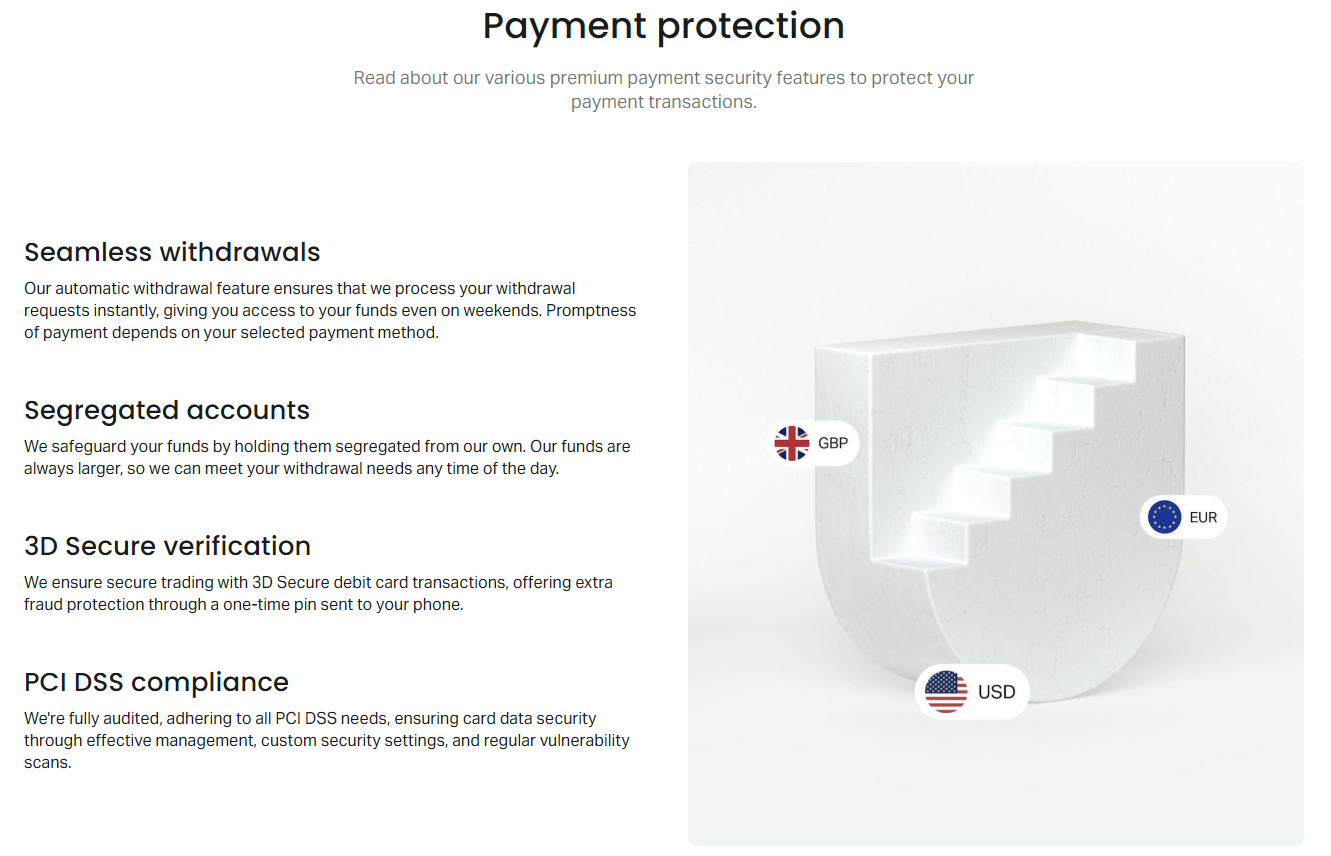
Payment security involves segregated accounts, encryption, and fraud monitoring. Exness holds client funds in top-tier banks separate from operational capital. Deposit transactions route through PCI-DSS compliant gateways. Two-factor authentication and device authorization add layers against unauthorized funding or withdrawal attempts.
Verification Impact on Deposit Limits
Account verification (KYC) unlocks higher deposit limits and withdrawal capability. Unverified accounts face strict caps on total deposits and cannot withdraw profits. Completing identity and address verification early removes these restrictions. The process typically takes a few hours during business days.
- Unverified: deposit cap ~2,000 USD, no withdrawals
- Verified: unlimited deposits, full withdrawal access
- Documents: government ID + proof of address (utility bill)
- Corporate accounts require additional incorporation documents
- Re-verification may trigger on large or unusual transactions
Traders planning significant volume should verify immediately after registration. Delaying verification creates friction when profits accumulate. The Personal Area guides users through document upload with clear requirements. Rejected submissions include specific reasons for quick correction.
Currency Conversion and Base Currency Choice
Account base currency determines the nominal minimum deposit. A 1 USD minimum equals 1 EUR, 1 GBP, or 1 CHF for accounts in those currencies. Traders funding from a different currency bank account incur conversion fees either at Exness or their bank. Choosing a base currency matching your primary funding source avoids double conversion.
Exness applies a competitive conversion spread when deposits arrive in a non-base currency. The rate is visible before confirmation. Some payment methods handle conversion on their side, which may be more or less favorable. Compare total received amount across methods to optimize.
Scroll horizontally to see all columns
| Base Currency | Standard Minimum | Pro Minimum | Typical Conversion Spread |
|---|---|---|---|
| USD | 1 USD | 200 USD | N/A |
| EUR | 1 EUR | 200 EUR | 0.3-0.5% |
| GBP | 1 GBP | 200 GBP | 0.3-0.5% |
| CHF | 1 CHF | 200 CHF | 0.3-0.5% |
| ZAR | 15 ZAR | 3000 ZAR | 0.5-1% |
ZAR accounts illustrate how emerging market currencies scale the nominal minimum. The 15 ZAR equivalent roughly matches 1 USD at current rates. Professional account minimums scale similarly. Traders should select base currency based on funding convenience, not the nominal minimum figure.
Common Deposit Errors and Troubleshooting
Failed deposits usually stem from mismatched names, insufficient card limits, expired tokens, or method-specific restrictions. The Personal Area displays error codes with descriptions. Most issues resolve by verifying details match the registered profile exactly, including middle names and address format.
- Name mismatch: card holder must match Exness profile
- 3D Secure failure: enable on bank app or contact issuer
- Insufficient funds: check available balance vs authorized limit
- Method unavailable: some processors restrict gambling/forex MCC
- Crypto address error: verify network (ERC20 vs TRC20) matches
Support responds quickly via live chat for deposit issues. Have the transaction ID, screenshot, and method details ready. Failed card deposits often succeed on retry after a few minutes. Bank transfers require patience for intermediary processing. Crypto deposits need sufficient network confirmations.
Name consistency across bank, ID, and Exness profile prevents 90% of deposit rejections. Verify spelling before first funding.
Strategic Funding for Different Trader Profiles
Capital allocation should reflect trading style, risk tolerance, and account type. A scalper on a Zero account benefits from 500-1,000 USD to absorb commission costs during drawdown. A swing trader on Standard may start with 100-200 USD. Cent account users can begin with 10-50 USD for genuine micro-risk practice.
- Beginner learning: 10-50 USD on Cent account
- Developing discretionary: 100-200 USD on Standard
- Algorithmic testing: 200-500 USD on Raw Spread
- High-frequency scalping: 500-1000 USD on Zero
- Professional portfolio: 2000+ USD across multiple accounts
Diversifying across account types lets traders match each strategy to its optimal cost structure. Internal transfers make rebalancing instant and free. Many professionals maintain a Standard account for swing positions, a Zero account for news scalping, and a Cent account for experimental EAs.
Deposit Processing Times by Method
Speed from initiation to trading-ready balance varies widely. Card and e-wallet deposits credit instantly in most cases. Local bank transfers range from minutes to one business day. International wires take 2-5 business days. Cryptocurrency depends on blockchain congestion — Bitcoin may take 30-60 minutes, while USDT on TRC20 often confirms in minutes.
Scroll horizontally to see all columns
| Method Category | Typical Time | Weekend Processing | Fee Incidence |
|---|---|---|---|
| Bank Cards | Instant | Yes | Usually free |
| E-Wallets | Instant | Yes | Usually free |
| Local Bank Transfer | Minutes to 24h | Limited | Varies by bank |
| International Wire | 2-5 business days | No | Intermediary fees |
| Cryptocurrency | Minutes to hours | Yes | Network fee only |
Weekend and holiday processing depends on the payment provider, not Exness. Card and crypto networks operate continuously. Bank-dependent methods follow banking hours. Plan funding ahead of major economic events to ensure margin availability when volatility spikes.
Risk Management Starting from First Deposit
The minimum deposit is a starting point, not a risk budget. Sound risk management limits per-trade exposure to 1-2% of account equity. On a 10 USD cent account, that means 10-20 cents per trade — achievable with 0.01 cent lots. On a 200 USD Pro account, 1-2% allows 2-4 USD risk, supporting 0.02-0.04 standard lots with reasonable stops.
Traders depositing the absolute minimum often over-leverage by necessity. This increases stop-out probability. Adding a buffer above the minimum — even 50-100 USD on a Standard account — provides room for normal drawdown without immediate margin pressure. Treat the minimum as a technical requirement, not a recommended starting capital.
Minimum deposit enables access. Adequate capital enables survival. Fund enough to withstand normal variance without blowing the account.
Comparing Exness Minimums to Industry Standards
Exness offers among the lowest entry barriers in the regulated forex space. Many competitors require 50-100 USD for standard accounts and 500-1,000 USD for raw-spread tiers. The 1 USD Standard and Cent minimum, combined with 200 USD professional tier entry, positions Exness as exceptionally accessible for retail traders globally.
Low minimums do not imply compromised conditions. Exness maintains tight spreads, fast execution, and regulatory oversight across all account tiers. The broker's scale allows thin margins on small accounts. Traders benefit from institutional-grade infrastructure regardless of deposit size.
Frequently Asked Questions
What is the absolute minimum deposit to open an Exness account?
The global minimum deposit for Standard and Cent accounts is 1 USD or equivalent in your chosen base currency. Professional accounts (Pro, Zero, Raw Spread) require 200 USD minimum.
Does the minimum deposit vary by country?
The broker's baseline is 1 USD for Standard accounts, but local payment processors may impose higher minimums, typically 10-20 USD for bank transfers and e-wallets in certain regions.
Can I deposit less than the minimum using cryptocurrency?
Cryptocurrency deposits generally follow the same 1 USD minimum for Standard accounts. Blockchain network fees are separate and paid by the sender.
Is there a minimum deposit for the Exness demo account?
Demo accounts are free and require no deposit. They simulate live conditions with virtual funds for practice and strategy testing.
What happens if I deposit below the minimum by mistake?
The payment gateway will reject the transaction before it reaches Exness. You will see an error message indicating the minimum amount for that method.
Do I need to verify my account before making a deposit?
You can deposit without full verification, but unverified accounts face deposit caps (approximately 2,000 USD total) and cannot withdraw any funds until KYC is complete.
Can I change my account base currency after the first deposit?
Base currency is set at account creation and cannot be changed. You can open additional accounts with different base currencies in the same Personal Area.
Are there fees on deposits at Exness?
Exness does not charge deposit fees. However, payment processors or banks may apply their own fees, especially for international wire transfers or currency conversion.
Final Assessment of Exness Minimum Deposit Structure
Exness minimum deposit requirements balance accessibility with professional-grade infrastructure. The 1 USD entry for Standard and Cent accounts removes capital barriers for new traders, while the 200 USD professional tier threshold remains competitive for raw-spread access. Regional variations exist but are transparent in the Personal Area. Traders should align deposit size with strategy needs, verify early, and choose payment methods that optimize speed and cost for their geography.