

Trading Education
Exness Copy Trading: Complete Guide for Investors
Master social trading on Exness with strategy copying, provider analysis, and portfolio diversification.

Forex Analyst
Forex Analyst specializing in currency markets, market trends, technical and fundamental analysis, and providing clear insights to help traders make informed decisions.
Exness copy trading enables investors to replicate the trades of experienced strategy providers automatically. This social trading feature connects followers with verified traders, allowing participation in financial markets without requiring deep technical analysis skills or constant market monitoring. The platform provides transparent performance metrics, risk scores, and flexible allocation controls so users can build diversified copy portfolios aligned with their financial goals and risk tolerance.
Contents
- What Is Exness Copy Trading
- How Exness Copy Trading Works
- Getting Started with Copy Trading
- Choosing Strategy Providers
- Understanding Fees and Commissions
- Risk Management in Copy Trading
- Exness Copy Trading Minimum Deposit
- Platform Features and Tools
- Mobile Copy Trading Experience
- Comparing Copy Trading vs Manual Trading
- Advanced Copy Trading Strategies
- Tax Considerations for Copy Trading
- Common Mistakes to Avoid
- Final Assessment of Exness Copy Trading
The service operates through the Exness Social Trading platform, accessible via web browser and mobile application. Investors browse a marketplace of strategy providers, review historical performance data, and allocate capital to copy selected strategies. Every trade executed by the provider is mirrored proportionally in the follower's account based on the allocated amount. This approach democratizes access to professional trading methodologies while maintaining full control over investment exposure.
Unlike traditional managed accounts, copy trading on Exness offers real-time visibility into every position, immediate withdrawal capability, and the freedom to stop copying any provider at any moment. The platform charges no management fees; instead, strategy providers set performance commissions that are only deducted from profitable copied trades. This alignment of interests encourages providers to focus on consistent, risk-adjusted returns rather than excessive risk-taking.
Understanding the mechanics, costs, and risk parameters of Exness copy trading is essential before committing capital. This guide covers platform functionality, provider evaluation criteria, minimum deposit requirements, fee structures, risk management tools, and practical steps for building a resilient copy trading portfolio. Whether you are new to social trading or seeking to optimize an existing copy portfolio, the following sections provide actionable insights grounded in platform specifics.
What Is Exness Copy Trading
Exness copy trading is a social trading service that allows investors to automatically replicate the trading activity of selected strategy providers in real time. When a provider opens, modifies, or closes a position, the same actions are executed in the follower's account proportionally to the allocated copy amount. The system handles trade synchronization, lot size calculation, and commission processing without manual intervention from the follower.
The feature is integrated into the Exness Personal Area and accessible through the dedicated Social Trading web interface and mobile app. Providers are traders who opt to share their strategy publicly, making their trading history, risk metrics, and performance statistics visible to potential followers. Exness verifies provider identities and monitors trading activity to ensure transparency, but does not guarantee profits or endorse specific strategies.
- Automatic trade replication with proportional lot sizing
- Real-time synchronization across all copied strategies
- Transparent provider performance history and risk metrics
- No management fees; performance commissions only on profits
- Full control to start, pause, or stop copying at any time
- Access to forex, metals, energies, indices, stocks, and crypto CFDs
Copy trading shifts the focus from market analysis to manager selection, making due diligence on strategy providers the primary determinant of outcomes.
How Exness Copy Trading Works
The copy trading workflow begins when an investor creates an Exness account, completes verification, and accesses the Social Trading section. From there, the investor browses the strategy marketplace, filtering providers by profitability, risk score, drawdown, trading frequency, and asset classes. Each provider profile displays key metrics including total return, monthly performance, maximum drawdown, Sharpe ratio, number of followers, and assets under management.
After selecting a provider, the investor specifies a copy amount, which determines the capital allocated to that strategy. The platform calculates a copying coefficient based on the provider's equity and the follower's allocation. For example, if a provider has $10,000 equity and a follower allocates $1,000, the copying coefficient is 0.1. When the provider opens a 1.0 lot position, the follower's account opens a 0.1 lot position in the same direction and instrument.
- Browse and filter strategy providers by performance and risk criteria
- Review detailed trading history, risk metrics, and commission structure
- Set copy amount and optional stop-loss for the copied strategy
- Confirm allocation; trades replicate automatically in real time
- Monitor copied positions in the Social Trading dashboard
- Adjust allocations or stop copying without closing provider positions
Trade replication occurs within milliseconds of the provider's execution, minimizing slippage between provider and follower fills. The system supports all order types used by providers, including market orders, pending orders, stop-loss, and take-profit levels. Followers cannot modify individual copied trades but can set a global stop-loss for each copied strategy to limit maximum drawdown.
Getting Started with Copy Trading
Opening an Exness account is the first step toward accessing copy trading functionality. The registration process requires an email address, password, and country of residence. After email verification, investors complete the Know Your Customer (KYC) process by submitting identity documents and proof of address. Verification typically completes within a few hours, after which full platform features become available including deposit, withdrawal, and Social Trading access.
Once verified, investors navigate to the Social Trading section from the Personal Area or directly via the Exness Social Trading web portal. The interface presents a curated list of strategy providers with sorting and filtering options. New users should spend time understanding the metric definitions: Return on Investment (ROI) measures total percentage gain since strategy inception; Maximum Drawdown shows the largest peak-to-trough decline; Risk Score is a proprietary 1-10 scale where lower values indicate more conservative approaches.
- Register and verify an Exness account via Personal Area
- Access Social Trading from the main menu or direct URL
- Use filters to narrow providers by risk, return, and asset class
- Click a provider to view detailed statistics and trade history
- Press Copy and enter the desired allocation amount
- Confirm the copy settings and monitor performance in dashboard
Scroll horizontally to see all columns
| Requirement | Details |
|---|---|
| Minimum Age | 18 years or legal age in jurisdiction |
| KYC Verification | Identity document and proof of address required |
| Supported Countries | Most jurisdictions except sanctioned regions |
| Platform Access | Web portal, iOS app, Android app |
| Base Currencies | USD, EUR, GBP, CHF, JPY, AUD, CAD, and more |
Choosing Strategy Providers
Selecting suitable strategy providers is the most critical decision in copy trading. Exness provides a comprehensive set of analytical tools to evaluate providers beyond simple return figures. Investors should examine the consistency of monthly returns, the ratio of winning to losing trades, average holding time, and the strategy's behavior during high-volatility periods such as major economic announcements or geopolitical events.
A provider with a high ROI but extreme drawdowns may suit aggressive investors with high risk tolerance, while conservative investors should prioritize providers with low maximum drawdown, steady equity curves, and reasonable risk scores. The platform's risk score aggregates multiple factors including leverage usage, position concentration, and historical volatility. Diversifying across multiple providers with different trading styles, timeframes, and asset classes reduces portfolio correlation risk.
- Analyze 12-month rolling returns for consistency
- Check maximum drawdown relative to total return
- Review risk score and leverage utilization patterns
- Examine trade frequency: scalping vs swing vs position trading
- Verify provider trades instruments matching your preferences
- Consider number of followers and AUM as confidence signals
A strategy that survives multiple market regimes with controlled drawdowns is more valuable than one with spectacular returns during a single favorable trend.
Understanding Fees and Commissions
Exness copy trading operates on a performance-based commission model. Strategy providers set a commission percentage that applies only to net profitable copied trades over a settlement period, typically weekly. If a follower's copied positions generate a net loss during the period, no commission is charged. This structure aligns provider incentives with follower profitability and eliminates fixed costs that erode capital during drawdown periods.
Commission rates vary by provider, commonly ranging from 10% to 50% of profits. The platform displays each provider's commission rate prominently on their profile. Followers should factor commissions into net return calculations when comparing providers. A provider with 30% commission and 20% monthly return yields 14% net to the follower, while a 10% commission provider with 15% return yields 13.5% net. The difference narrows at higher commission rates, making raw return alone an incomplete metric.
Scroll horizontally to see all columns
| Cost Component | Description | Impact on Follower |
|---|---|---|
| Performance Commission | Percentage of net profits paid to provider | Deducted weekly from profitable copied trades only |
| Spread Costs | Standard Exness spreads on copied instruments | Same as manual trading; included in trade P&L |
| Swap Fees | Overnight financing for positions held past rollover | Applied to copied positions proportionally |
| Deposit/Withdrawal Fees | Payment processor fees for funding copy wallet | Varies by method; Exness covers most fees |
| Management Fee | Fixed periodic charge regardless of performance | Not charged on Exness copy trading |
Risk Management in Copy Trading
Effective risk management in copy trading requires both platform-level tools and investor discipline. Exness provides several built-in controls: per-strategy stop-loss limits, maximum copy amount caps, and the ability to pause copying instantly. Investors should define their maximum acceptable drawdown per strategy and set the stop-loss accordingly. A common approach is limiting any single strategy to 5-10% of total copy trading capital and setting a 15-20% stop-loss on each allocation.
Portfolio-level risk management involves diversifying across uncorrelated strategies. Copying five providers who all trade EURUSD with high leverage creates concentration risk even if each has a low individual risk score. Investors should seek providers trading different asset classes (forex majors, gold, indices, crypto) and employing different timeframes (intraday, swing, position). Regular portfolio rebalancing, reviewing provider performance monthly, and removing underperforming or style-drifting strategies maintains risk alignment.
- Set per-strategy stop-loss at 15-20% of allocated amount
- Limit single strategy allocation to 5-10% of copy capital
- Diversify across asset classes: forex, metals, indices, crypto
- Mix trading styles: scalping, day trading, swing, position
- Monitor correlation between copied strategies monthly
- Remove providers who change strategy without notice
The platform's risk score (1-10) provides a quick reference but should not replace deeper analysis. A score of 1-3 indicates conservative strategies with low leverage and tight drawdown control. Scores 4-6 represent balanced approaches with moderate leverage and controlled risk. Scores 7-10 signal aggressive strategies using high leverage, concentrated positions, or volatile instruments. Investors should match provider risk scores to their personal risk tolerance and investment horizon.
Exness Copy Trading Minimum Deposit
The minimum deposit to start copy trading on Exness depends on the account type selected and the base currency. For Standard and Standard Cent accounts, the minimum deposit can be as low as $1 for certain payment methods, though practical copy trading allocations typically require more capital to achieve meaningful proportional position sizing. Professional account types (Pro, Raw Spread, Zero) have higher minimums, generally starting at $200-$500 depending on region and payment method.
While the platform technically allows copying with very small amounts, investors should consider the minimum lot size constraints of copied instruments. Forex majors typically allow 0.01 lots (micro lots), but some indices, stocks, or crypto CFDs may have higher minimum lot sizes. If the copying coefficient results in a position size below the instrument minimum, the trade may not replicate for that follower. Adequate capital ensures all provider trades copy faithfully across the full instrument range.
Scroll horizontally to see all columns
| Account Type | Minimum Deposit | Suitable For Copy Trading |
|---|---|---|
| Standard Cent | $1 (varies by method) | Yes, ideal for testing with real funds |
| Standard | $1 (varies by method) | Yes, flexible for all allocation sizes |
| Pro | $200 | Yes, lower spreads benefit copied trades |
| Raw Spread | $500 | Yes, commission-based pricing suits high volume |
| Zero | $200 | Yes, zero spread on major pairs |
Platform Features and Tools
The Exness Social Trading platform offers a suite of analytical tools for both followers and providers. The strategy dashboard displays real-time equity curves, monthly return heatmaps, trade-by-trade history with entry/exit prices, and risk metric trends. Followers can filter trade history by instrument, direction, duration, and profitability to understand a provider's behavior in specific market conditions. The platform also shows correlation matrices between followed strategies, helping investors identify overlapping exposures.
Advanced features include automated allocation rebalancing, where followers can set target percentages for each provider and the platform adjusts copy amounts periodically to maintain the desired portfolio weights. Copy trading statistics export allows offline analysis in spreadsheet software. The provider side includes strategy management tools: setting commission rates, writing strategy descriptions, managing follower communications, and accessing detailed performance analytics to refine their approach.
- Real-time equity curve with drawdown visualization
- Monthly return heatmap for quick pattern recognition
- Trade history filter by symbol, type, duration, result
- Correlation matrix between followed strategies
- Automated portfolio rebalancing to target weights
- CSV export of all copy trading activity for tax records
The correlation matrix is an underutilized tool; many copy portfolios appear diversified but hold highly correlated strategies that fail simultaneously during market stress.
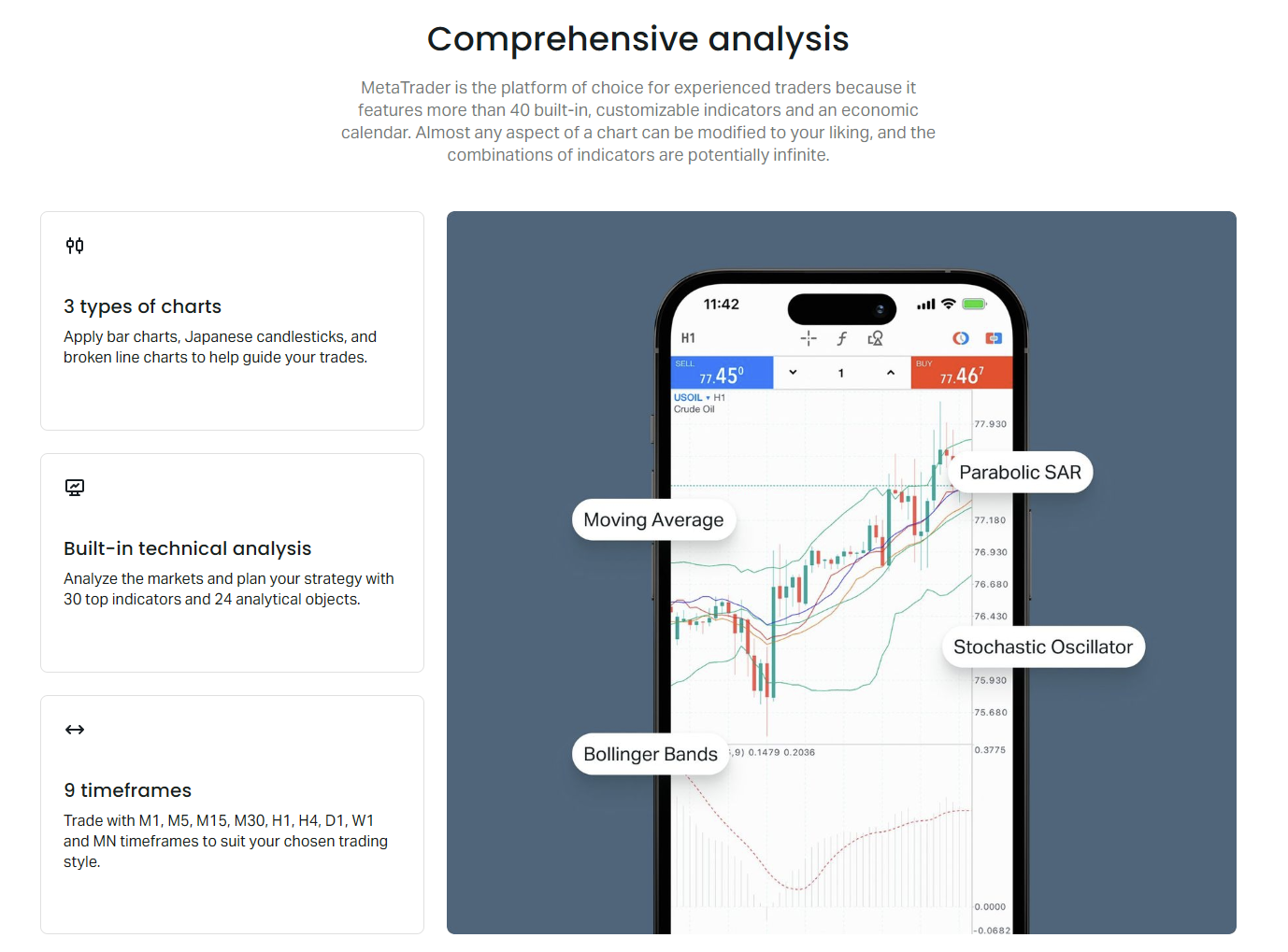
Notifications keep followers informed of critical events: new trades opened, stop-loss triggered, commission charged, provider strategy changes, or portfolio rebalancing executed. These alerts are configurable via email, push notification, or in-platform messages. The mobile app provides full functionality including provider discovery, allocation management, and real-time position monitoring, enabling active oversight from anywhere.
Mobile Copy Trading Experience
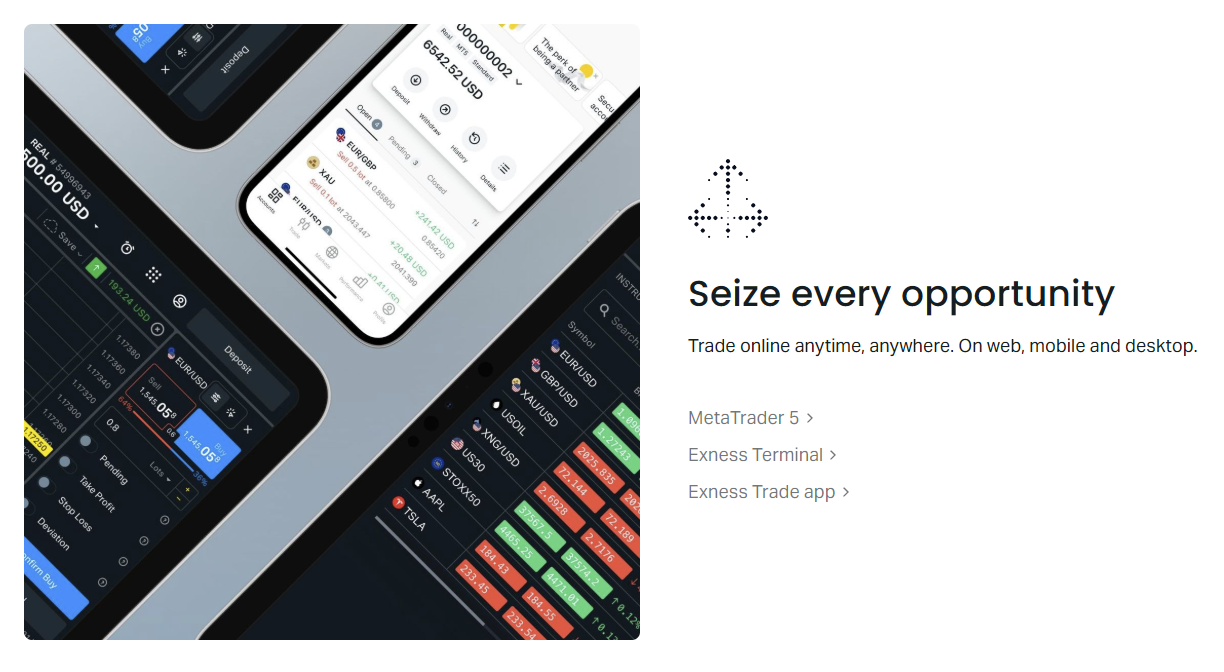
The Exness Trade app and dedicated Social Trading app bring full copy trading functionality to iOS and Android devices. The mobile interface mirrors the web platform's core features: provider marketplace with filtering, detailed strategy profiles with interactive charts, one-tap copy allocation adjustments, and real-time portfolio monitoring. Push notifications alert followers to significant events such as large drawdowns, new high-water marks, or provider commission changes.
Mobile-specific optimizations include biometric login for quick access, dark mode for extended monitoring sessions, and offline caching of provider performance data for review without connectivity. The app supports multi-account management, allowing investors to oversee copy trading across different Exness accounts from a single interface. Trade replication speed on mobile matches the web platform, as the copying engine operates server-side independent of the follower's device.
- Full provider marketplace access with advanced filters
- Interactive equity charts with pinch-to-zoom detail
- Instant copy amount adjustments and stop-loss changes
- Push notifications for drawdown alerts and commissions
- Biometric authentication for secure quick access
- Multi-account portfolio overview in single dashboard
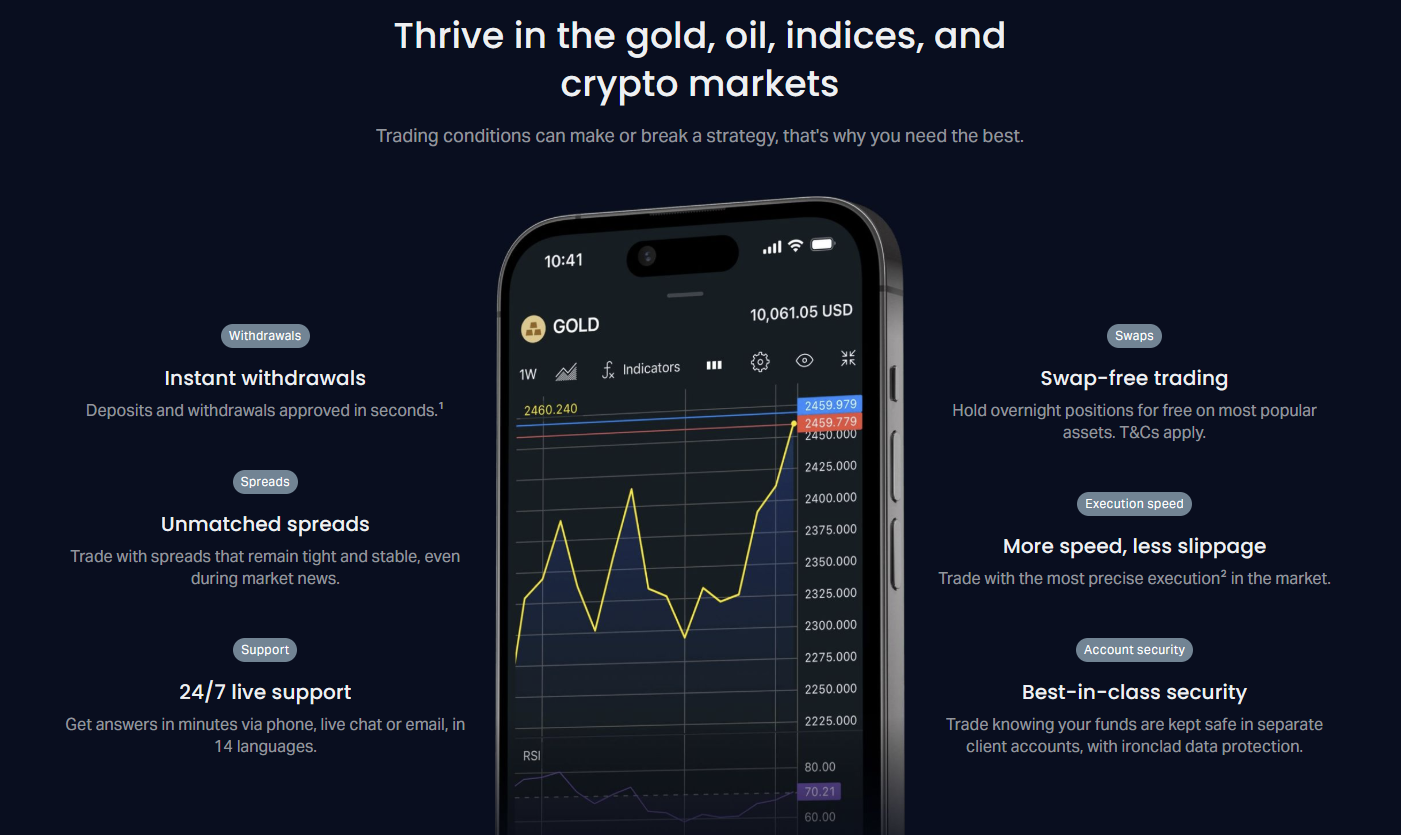
The mobile experience is particularly valuable for investors who cannot monitor markets continuously during trading hours. Real-time alerts allow timely decisions to reduce allocation or stop copying a strategy that deviates from its historical risk profile. The app also facilitates quick deposits to increase copy amounts when opportunities arise, though investors should avoid emotional top-ups during drawdowns without proper analysis.
Comparing Copy Trading vs Manual Trading
Copy trading and manual trading serve different investor profiles and objectives. Manual trading offers complete control over every decision, entry, exit, and position size, but requires significant time for analysis, execution, and emotional discipline. Copy trading delegates execution to providers while retaining capital allocation control, reducing time commitment but introducing manager selection risk. The choice depends on available time, trading knowledge, psychological comfort, and desire for control.
Many investors adopt a hybrid approach: allocating a portion of capital to copy trading for diversified market exposure while actively managing a separate discretionary portfolio. This combines the benefits of professional strategy diversification with personal market views. Exness supports this by allowing multiple trading accounts under one Personal Area, each with independent copy trading settings or manual trading configurations.
Scroll horizontally to see all columns
| Aspect | Copy Trading | Manual Trading |
|---|---|---|
| Time Commitment | Low (provider selection and monitoring) | High (analysis, execution, management) |
| Skill Requirement | Manager evaluation and risk management | Technical/fundamental analysis, execution |
| Control Level | Allocation and provider selection only | Full control over every trade decision |
| Diversification | Easy across multiple strategies/assets | Requires capital and expertise per market |
| Emotional Discipline | Reduced (provider executes) | Critical (self-execution under pressure) |
| Cost Structure | Performance commission on profits only | Spreads, commissions, swaps on all trades |
| Learning Opportunity | Observe professional strategies live | Direct experience builds skills faster |
Advanced Copy Trading Strategies
Beyond basic single-provider copying, experienced investors employ advanced portfolio construction techniques. Core-satellite allocation designates a majority of capital (60-80%) to low-risk, consistent providers as the core, with smaller allocations (20-40%) to higher-return, higher-risk satellite strategies. This structure aims for stable baseline returns with upside potential from aggressive providers, while limiting maximum portfolio drawdown through the core's stability.
Dynamic rebalancing adjusts allocations based on rolling performance metrics. For example, an investor might increase allocation to providers whose 3-month Sharpe ratio exceeds 1.5 and reduce allocation to those below 0.5, reviewed monthly. Some followers implement a 'trailing stop' approach: if a provider's equity drops 10% from its peak while copied, reduce allocation by 50%; if it drops 20%, stop copying entirely. This systematic approach removes emotional decision-making during drawdowns.
- Core-satellite: 70% conservative providers, 30% aggressive
- Risk parity: equal risk contribution from each provider
- Momentum rotation: shift capital to top 3-month performers
- Drawdown-based scaling: reduce allocation as provider draws down
- Correlation filtering: exclude providers with >0.7 correlation
- Seasonal allocation: adjust for known market patterns
Systematic allocation rules prevent the common error of adding to losing strategies out of hope and cutting winners too early out of fear.
Tax Considerations for Copy Trading
Tax treatment of copy trading profits varies by jurisdiction and individual circumstances. In many countries, profits from CFD trading (including copied trades) are treated as capital gains or trading income, depending on frequency, volume, and whether trading constitutes a business activity. Exness provides transaction history exports in CSV format suitable for tax reporting, including timestamps, instruments, volumes, prices, commissions, and realized P&L for each copied trade.
Investors should consult a qualified tax advisor familiar with financial trading regulations in their country of residence. Key considerations include: whether copy trading profits are taxed as capital gains or ordinary income, availability of loss carryforward provisions, treatment of performance commissions paid to providers (may be deductible as investment expenses), and reporting requirements for foreign broker accounts. Maintaining organized records from the start simplifies annual compliance.
- Export monthly CSV statements from Social Trading dashboard
- Record provider commission payments separately for deduction tracking
- Note base currency for FX gain/loss calculations on withdrawals
- Consult tax professional for jurisdiction-specific guidance
- Consider tax-advantaged accounts if available in your country
- Retain records for minimum statutory period (typically 5-7 years)
Common Mistakes to Avoid
New copy trading investors frequently make avoidable errors that impair returns or increase risk unnecessarily. Chasing recent high returns without examining the risk taken to achieve them is the most common mistake. A provider showing 50% monthly returns with 60% drawdown is likely using excessive leverage or martingale-style position sizing that will eventually cause catastrophic loss. Similarly, copying too many providers (10+) creates over-diversification, diluting returns while increasing monitoring burden and cumulative commission drag.
Another frequent error is failing to set stop-loss limits on copied strategies. Without a predefined exit, investors often hold through deep drawdowns hoping for recovery, only to stop copying at the bottom. Emotional reactions to short-term performance — adding to winning strategies during hot streaks and abandoning strategies during normal drawdowns — typically reduces returns compared to a disciplined, rule-based approach. Treating copy trading as a passive investment requiring zero oversight leads to unmonitored style drift or provider inactivity.
- Chasing high returns without analyzing risk metrics
- Over-diversifying across too many providers (10+)
- Neglecting to set per-strategy stop-loss limits
- Emotional allocation changes based on recent performance
- Ignoring provider style drift or inactivity periods
- Allocating funds needed for near-term expenses
- Not reviewing portfolio correlation quarterly
Final Assessment of Exness Copy Trading
Exness copy trading provides a robust, transparent platform for investors seeking market exposure through strategy replication. The performance-based commission model, comprehensive provider analytics, flexible allocation controls, and multi-platform access create a competitive social trading environment. The absence of management fees, low minimum deposits on Standard accounts, and instant withdrawal capability distinguish it from many traditional managed account services. However, success depends entirely on the investor's ability to select suitable providers, diversify effectively, and maintain discipline through inevitable drawdown periods.
The platform's strengths include real-time trade replication with minimal slippage, detailed risk metrics for informed provider selection, mobile apps with full functionality, and regulatory oversight through Exness's multiple licenses. Limitations include the inherent risk of following other traders' decisions, potential for provider style drift, commission drag on net returns, and the requirement for ongoing portfolio monitoring. Investors who approach copy trading as a structured portfolio component — with defined risk parameters, systematic rebalancing rules, and realistic return expectations — are best positioned for sustainable outcomes.
Frequently Asked Questions
How does Exness copy trading work for beginners?
Beginners register an Exness account, complete verification, access the Social Trading platform, browse strategy providers with performance metrics, select providers matching their risk tolerance, allocate capital to copy them, and monitor results in the dashboard. Trades replicate automatically in real time.
What is the minimum deposit for Exness copy trading?
The minimum deposit varies by account type: Standard and Standard Cent accounts can start from $1 depending on payment method, while Professional accounts (Pro, Raw Spread, Zero) require $200-$500. For effective diversification, $500-$1,000 is recommended.
Are there fees for Exness copy trading?
Exness charges no management fees. Strategy providers set performance commissions (typically 10-50%) deducted only from net profitable copied trades weekly. Standard trading costs (spreads, swaps) apply to copied positions.
Can I lose more than my allocated copy amount?
No. Losses are limited to the capital allocated to each copied strategy. You can set a stop-loss percentage per strategy to automatically stop copying if drawdown exceeds your threshold.
How do I choose the best strategy providers on Exness?
Evaluate providers using risk score (1-10), maximum drawdown, 12-month return consistency, Sharpe ratio, trade frequency, instrument diversification, and commission rate. Diversify across 3-5 providers with different styles and asset classes.
Can I stop copying a provider at any time?
Yes. You can stop copying instantly from the dashboard. Open copied positions can be closed manually or left to run until the provider closes them. No lock-up periods or penalties apply.
Is Exness copy trading available on mobile?
Yes. The Exness Trade app and Social Trading app for iOS and Android provide full copy trading functionality including provider discovery, allocation management, real-time monitoring, and push notifications.
What markets can I access through Exness copy trading?
Copied strategies can trade forex pairs, metals (gold, silver), energies (oil, gas), indices, stocks, and cryptocurrency CFDs, depending on each provider's chosen instruments.