

Forex Trading Accounts
Exness Standard Cent Account: Complete Guide for Traders
Everything you need to know about cent-denominated trading with Exness

Forex Analyst
Forex Analyst specializing in currency markets, market trends, technical and fundamental analysis, and providing clear insights to help traders make informed decisions.
The Exness Standard Cent Account provides traders with a unique entry point into live market conditions by denominating account balances in cents rather than dollars. This structure allows participants to experience real trading psychology and execution quality while committing significantly less capital. For beginners transitioning from demo environments and experienced traders testing new strategies, the cent account bridges the gap between simulation and full-scale live trading without the financial pressure of standard accounts.
Contents
- What Is the Exness Standard Cent Account
- Key Features and Benefits
- Trading Conditions and Specifications
- Spreads and Commissions Structure
- Leverage and Margin Requirements
- Available Trading Instruments
- Platform Compatibility and Trading Tools
- Account Opening and Verification Process
- Risk Management Tools and Features
- Comparison with Other Exness Account Types
- Who Should Use the Standard Cent Account
- Common Pitfalls and How to Avoid Them
- Transitioning from Cent to Standard Account
- Regulatory Considerations and Client Protection
- Final Assessment of Exness Standard Cent Account
Cent accounts have gained popularity across the forex industry because they preserve the mathematical relationships of standard trading while reducing nominal position sizes by a factor of one hundred. A one-cent pip movement on a micro lot produces the same percentage return as a one-dollar pip movement on a standard lot, meaning risk management principles, position sizing calculations, and strategy validation remain identical. The Exness implementation stands out through its combination of market execution, competitive spreads, and access to the full instrument catalog available on standard accounts.
This guide examines every aspect of the Exness Standard Cent Account, from core specifications and trading costs to platform compatibility and ideal user profiles. Whether you are opening your first live account or adding a cent-denominated environment to your existing trading toolkit, the following sections provide the detailed information needed to make an informed decision.
What Is the Exness Standard Cent Account
The Exness Standard Cent Account is a live trading account type where the base currency is denominated in cents (USDc, EURc, or other supported cent currencies) rather than full currency units. When you deposit $10, your account balance displays as 1,000 USDc. This denomination applies to all account metrics including equity, free margin, profit and loss, and margin requirements. The underlying market exposure remains identical to a standard account trading micro lots, but the numerical values are scaled by a factor of one hundred.
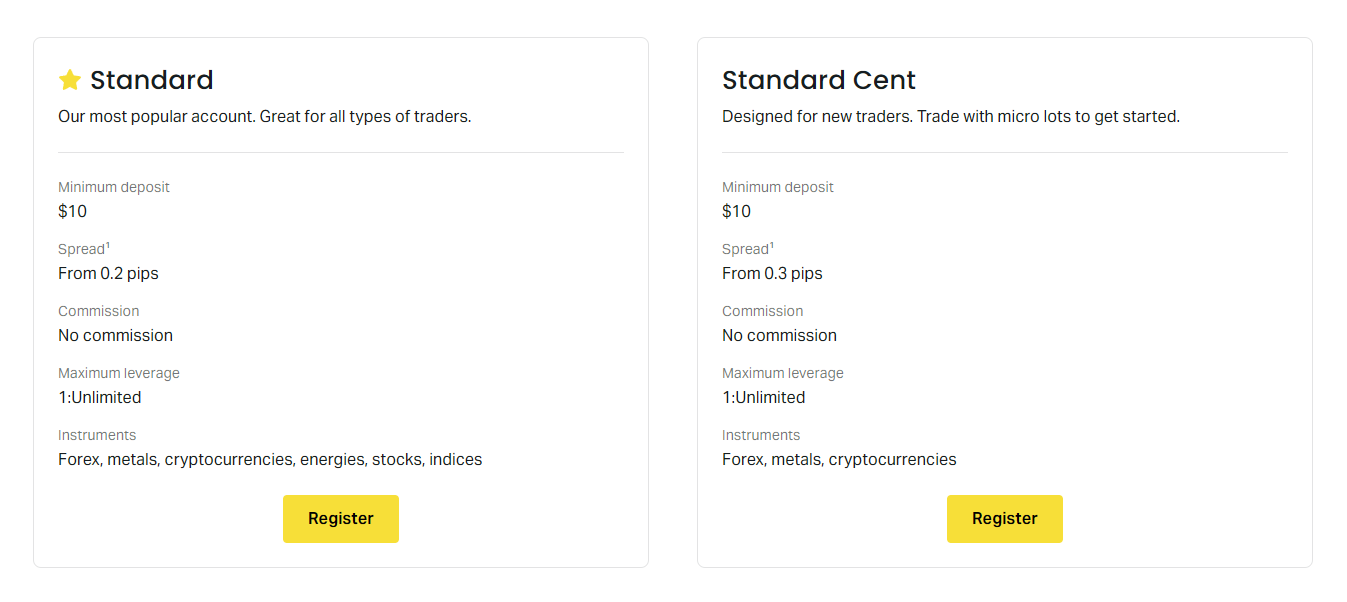
This account type falls under the Standard category within Exness account classifications, meaning it operates on a spread-only pricing model with no separate commission charges. The minimum deposit requirement is notably low, often starting at just $1 depending on the payment method and region, making it one of the most accessible live trading accounts in the industry. Despite the cent denomination, the account provides access to the same liquidity pool, execution engine, and trading infrastructure as all other Exness account types.
Traders often confuse cent accounts with demo accounts, but the distinction is critical. A cent account uses real money, connects to live market liquidity, and subjects trades to actual slippage, requotes (where applicable), and execution latency. The psychological experience differs fundamentally from demo trading because real capital is at risk, even if the absolute amounts are small. This makes the Standard Cent Account an ideal stepping stone for traders who have mastered demo trading but are not yet ready to commit significant funds to a standard dollar-denominated account.
The cent denomination also serves experienced traders who wish to test expert advisors, copy trading signals, or new discretionary strategies under live conditions without allocating substantial capital to the validation phase. Because the mathematical relationships are preserved, a strategy that proves profitable on a cent account will scale linearly to a standard account, assuming identical execution conditions and risk parameters.
Key Features and Benefits
The Exness Standard Cent Account delivers several distinctive features that differentiate it from both demo accounts and standard live accounts. Understanding these features helps traders determine whether this account type aligns with their current objectives and experience level.
- Cent-denominated balance reduces nominal capital requirements by 100x
- Market execution with no dealing desk intervention
- Access to full instrument catalog including forex, metals, energies, indices, stocks, and cryptocurrencies
- Spread-only pricing with no commission charges
- Maximum leverage up to 1:2000 (subject to regulatory restrictions)
- Minimum deposit as low as $1 for most payment methods
- Compatible with MetaTrader 4, MetaTrader 5, Exness Web Terminal, and mobile apps
- Negative balance protection ensuring losses never exceed deposited funds
- Instant withdrawal processing for most electronic payment methods
- Swap-free option available for eligible accounts (Islamic account compliance)
The combination of market execution and spread-only pricing creates a transparent cost structure. Traders see the spread as the sole explicit cost, with no additional commission line items to calculate. This simplicity benefits newer traders who may find commission-based pricing models confusing. The spread markup on the Standard Cent Account is slightly wider than on professional account types like Raw Spread or Zero, but the absence of commissions often makes the all-in cost competitive for smaller position sizes typical of cent account trading.
Negative balance protection is a regulatory requirement for Exness entities operating under major licenses such as CySEC and FCA. This protection ensures that even during extreme market events with gaps or flash crashes, a trader's liability is limited to the funds deposited in the account. For cent account traders who may be less experienced with risk management, this safety net provides important peace of mind.
Trading Conditions and Specifications
The trading conditions on the Exness Standard Cent Account are designed to replicate the standard account experience as closely as possible while accommodating the cent denomination. The following specifications define the operational parameters that every trader should understand before opening positions.
Scroll horizontally to see all columns
| Parameter | Specification |
|---|---|
| Account Currency | USDc, EURc, and other cent denominations |
| Minimum Deposit | $1 (varies by payment method) |
| Minimum Lot Size | 0.01 lots (1,000 units in cent terms = 10 units base currency) |
| Maximum Lot Size | 200 lots per position |
| Maximum Open Positions | 200 simultaneous positions |
| Execution Type | Market Execution |
| Pricing Model | Spread-only (no commission) |
| Maximum Leverage | Up to 1:2000 (varies by equity and regulation) |
| Margin Call Level | 60% |
| Stop Out Level | 0% |
| Swap-Free Option | Available for eligible accounts |
| Hedging Allowed | Yes |
| Scalping Allowed | Yes |
| Expert Advisors Allowed | Yes |
The minimum lot size of 0.01 lots deserves special attention. On a cent account, 0.01 lots represents 1,000 units of the base currency in cent terms, which equals 10 units of the actual base currency. This micro-position capability allows for extremely granular position sizing. A trader with a 1,000 USDc balance ($10) can open a 0.01 lot position on EURUSD with a margin requirement of approximately 3.33 USDc at 1:30 leverage, leaving ample free margin for additional positions or drawdown tolerance.
The stop out level of 0% is notably aggressive compared to many brokers who set stop out at 20% or 50%. This means Exness will continue to maintain positions until the account equity reaches zero, at which point all positions are automatically closed. While this provides maximum staying power for positions, it also means traders must monitor their margin levels actively, as the broker will not intervene earlier to prevent total loss of the account balance.
Spreads and Commissions Structure
The Standard Cent Account operates on a pure spread-only pricing model. There are no round-turn commissions, no ticket fees, and no hidden charges. The spread represents the complete explicit cost of trading. Exness publishes typical and minimum spreads for each instrument, with actual spreads varying based on market conditions, liquidity, and time of day.
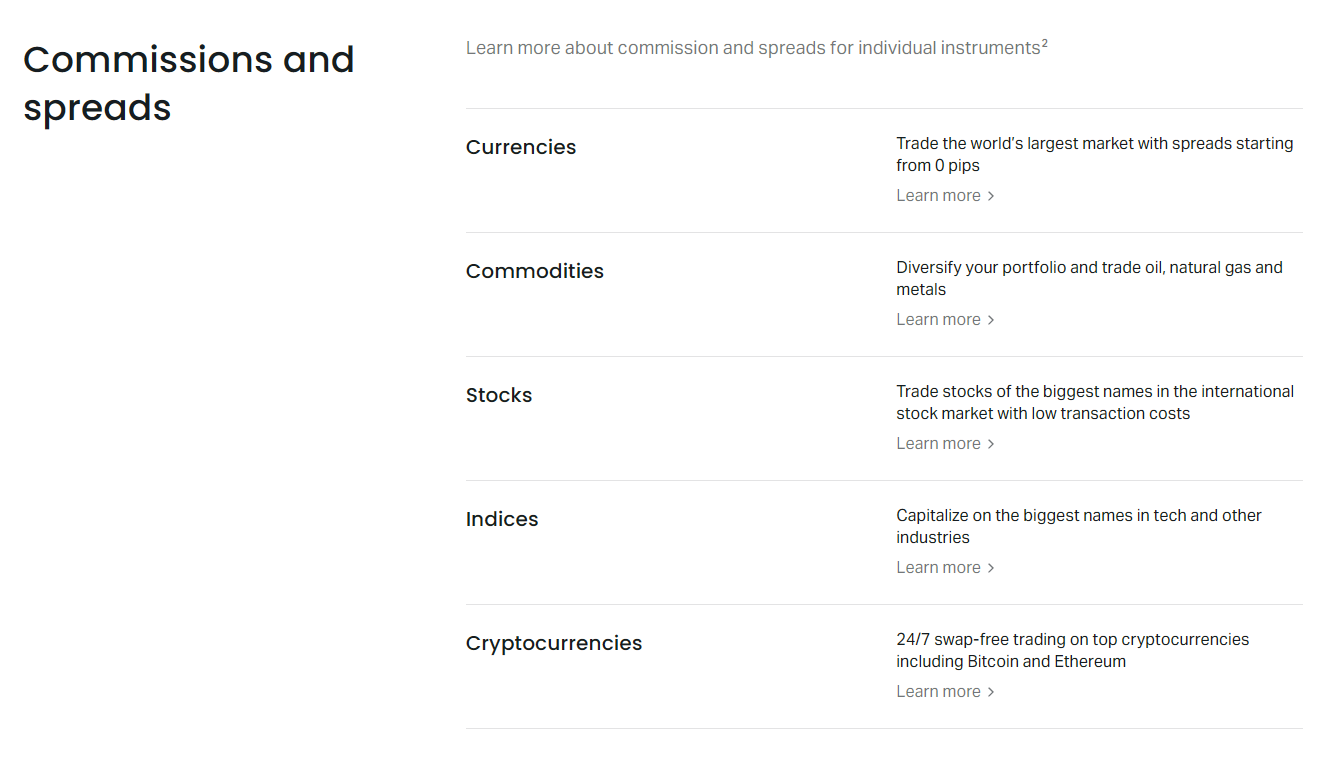
Typical spreads on major forex pairs for the Standard Cent Account start from approximately 0.3 pips on EURUSD during peak liquidity hours, widening to 1.0-1.5 pips during Asian session or around major news releases. Cross pairs like EURGBP or AUDJPY typically show spreads 1.5-3.0 pips wider than majors. Exotic pairs can see spreads of 20-50 pips or more during low liquidity periods. These spreads are variable and not fixed, meaning they expand and contract with market conditions.
For metals, gold (XAUUSD) typically trades with spreads starting around 15-25 cents (0.15-0.25 USD) per ounce on the cent account. Silver spreads start around 1.5-2.5 cents per ounce. Energy products like USOIL and UKOIL show spreads starting from 3-5 cents per barrel. Index CFDs such as US30, US500, and USTEC have spreads starting from 0.4-1.0 index points. Cryptocurrency spreads vary significantly by coin, with BTCUSD typically starting around $15-30 and ETHUSD around $0.50-1.00.
It is important to understand that the spread on a cent account is quoted in the same pip/point terms as a standard account. A 1.0 pip spread on EURUSD costs 10 USDc (10 cents) on a 0.01 lot position on a cent account, whereas the same spread costs $1 on a 0.01 lot position on a standard dollar account. The percentage cost relative to position value is identical. Traders should evaluate spreads in percentage terms rather than absolute currency amounts when comparing account types.
Leverage and Margin Requirements
Leverage on the Exness Standard Cent Account follows a dynamic model that adjusts based on account equity and the specific instrument being traded. The maximum available leverage reaches 1:2000 for forex pairs when account equity is below certain thresholds, but this maximum reduces progressively as equity grows. This dynamic leverage system is designed to protect both the trader and the broker from excessive risk exposure on larger balances.
Scroll horizontally to see all columns
| Account Equity (USD) | Maximum Leverage |
|---|---|
| 0 - 999 | 1:2000 |
| 1,000 - 4,999 | 1:1000 |
| 5,000 - 29,999 | 1:500 |
| 30,000 - 99,999 | 1:200 |
| 100,000+ | 1:100 |
For cent accounts, these equity thresholds apply to the USD-equivalent value of the cent-denominated balance. A balance of 50,000 USDc ($500) falls in the 1:1000 maximum leverage tier. A balance of 500,000 USDc ($5,000) falls in the 1:500 tier. This scaling ensures that as a trader grows their cent account, the leverage automatically adjusts to more conservative levels, encouraging sustainable risk management.
Margin requirements for non-forex instruments follow separate schedules. Gold typically requires 1% margin (1:100 leverage) regardless of account equity. Major indices often require 0.5-1% margin (1:200 to 1:100). Cryptocurrencies generally require 10-20% margin (1:10 to 1:5) due to their higher volatility. Stock CFDs typically require 5-20% margin depending on the specific equity. These instrument-specific margins apply in addition to the dynamic forex leverage caps.
Dynamic leverage protects growing accounts from excessive risk while allowing maximum flexibility for small balances where the absolute risk remains limited.
The margin call level at 60% means traders receive a warning when equity drops to 60% of used margin. The stop out at 0% means positions are only forcibly closed when equity reaches zero. This wide buffer between margin call and stop out gives traders significant time to add funds, reduce position sizes, or allow positions to recover. However, it also means a trader can lose their entire account balance before automatic liquidation occurs, making personal risk management essential.
Available Trading Instruments
One of the strongest advantages of the Exness Standard Cent Account is access to the complete instrument catalog. Unlike some brokers who restrict cent accounts to forex majors only, Exness provides the same 200+ instruments across all asset classes. This breadth allows traders to diversify strategies and test correlation-based approaches even with small account balances.
- Forex: 100+ currency pairs including majors, minors, and exotics
- Metals: Gold (XAUUSD), Silver (XAGUSD), Platinum, Palladium
- Energies: US Crude Oil (USOIL), UK Brent Oil (UKOIL), Natural Gas
- Indices: US30, US500, USTEC, GER40, UK100, JPN225, and more
- Stocks: 100+ major US and EU equities as CFDs
- Cryptocurrencies: BTCUSD, ETHUSD, LTCUSD, XRPUSD, and 20+ altcoins
The ability to trade cryptocurrencies on a cent account is particularly valuable. Crypto markets operate 24/7 with high volatility, making position sizing critical. The cent denomination allows traders to take positions in Bitcoin or Ethereum with precise risk control. For example, a 0.01 lot BTCUSD position on a cent account represents 0.1 BTC exposure (since 1 lot = 10 BTC on Exness), requiring approximately 300-500 USDc margin at 1:10 leverage. This granularity is difficult to achieve on standard accounts without committing thousands of dollars.
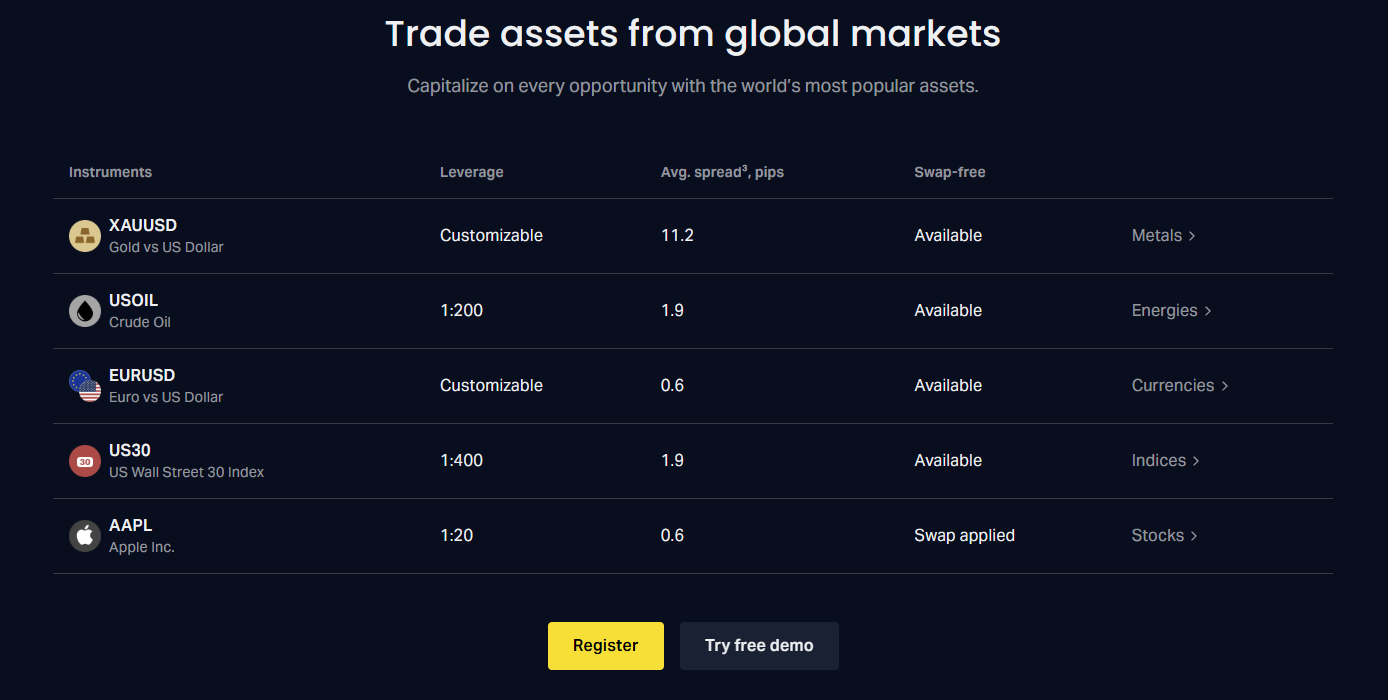
Stock CFDs on the cent account allow exposure to individual equities like Apple, Tesla, Amazon, or European blue chips with minimal capital. A 0.01 lot position on a $150 stock represents $1.50 of notional exposure, requiring roughly $0.30-$0.75 margin depending on the specific margin requirement. This enables portfolio-style trading or pairs trading strategies (long one stock, short another) with total capital requirements under $50.
Platform Compatibility and Trading Tools
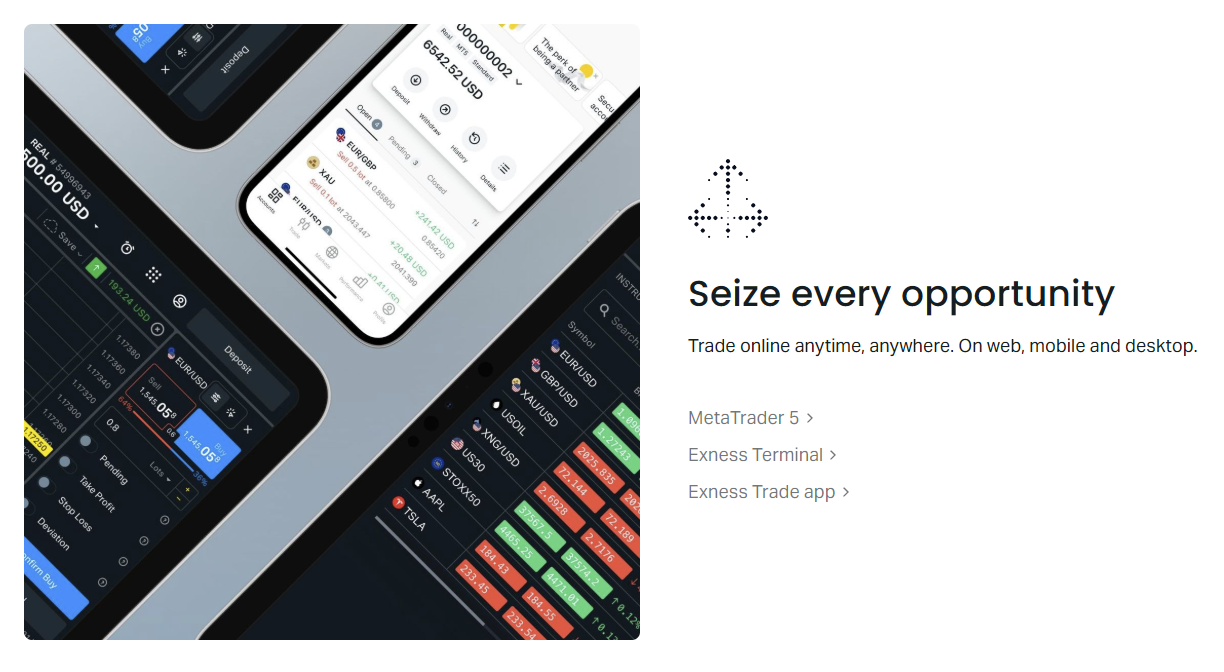
The Exness Standard Cent Account is fully compatible with all trading platforms offered by the broker. This platform parity ensures that traders can choose their preferred environment without sacrificing features or execution quality. The cent account works identically across MetaTrader 4, MetaTrader 5, the Exness Web Terminal, and the Exness mobile applications for iOS and Android.
MetaTrader 4 remains the most widely used platform for cent account traders due to its extensive expert advisor ecosystem, custom indicator library, and familiar interface. The Exness MT4 implementation includes all standard features plus Exness-specific additions like one-click trading panels, integrated economic calendar, and direct access to Exness analytical resources. Expert advisors developed for standard accounts function identically on cent accounts, with the only adjustment needed being position sizing logic that accounts for the cent denomination.
MetaTrader 5 offers additional timeframes, more order types, a built-in economic calendar, and improved strategy tester capabilities. For traders developing or backtesting automated strategies, MT5's multi-threaded strategy tester and support for multi-currency backtesting provide significant advantages. The cent account on MT5 allows validation of these strategies under live conditions with minimal capital risk.
The Exness Web Terminal provides browser-based access without installation, making it convenient for traders who switch devices frequently or cannot install software on work computers. The web terminal replicates the core charting, order entry, and account management functions of the desktop platforms. Mobile applications for iOS and Android offer full trading functionality including chart analysis, order management, deposit/withdrawal operations, and push notifications for price alerts and margin calls.
Account Opening and Verification Process
Opening an Exness Standard Cent Account follows a streamlined digital process that typically completes within minutes. The process begins on the Exness website or mobile app where prospective clients provide basic personal information including full name, email address, phone number, and country of residence. After email verification, clients access their Personal Area where they can create the Standard Cent Account by selecting it from the account type menu.
- Register with email and phone number
- Complete profile with personal details and address
- Select Standard Cent Account from account types
- Choose base currency (USDc, EURc, etc.)
- Set account leverage preference
- Create trading password and investor password
- Complete identity verification (KYC)
- Complete address verification (proof of residence)
- Make first deposit to activate live trading
Identity verification requires a government-issued photo ID (passport, national ID card, or driver's license) and a proof of residence document (utility bill, bank statement, or government letter) issued within the last three months. Exness uses automated document verification that typically completes within a few minutes during business hours, though manual review may take up to 24 hours in some cases. Until verification is complete, deposit and withdrawal limits may apply, and trading may be restricted.
The minimum deposit to activate live trading on the Standard Cent Account is $1 for most electronic payment methods including credit/debit cards, e-wallets (Skrill, Neteller, WebMoney, Perfect Money), and local payment systems. Bank wire transfers may have higher minimums ($10-$50) and longer processing times (1-3 business days). Exness does not charge deposit fees, though payment providers may apply their own fees. The first withdrawal must typically use the same method as the initial deposit, in accordance with anti-money laundering regulations.
Risk Management Tools and Features
Effective risk management is essential on any live trading account, and the Standard Cent Account provides several built-in tools to help traders control exposure. The cent denomination itself acts as a natural risk limiter by reducing the absolute value of each pip movement. However, traders should not rely solely on the small account size for risk control.
- Stop loss and take profit orders on every position
- Trailing stop functionality on MT4 and MT5
- Margin level monitoring in real-time
- Margin call alerts at 60% via platform and push notifications
- Negative balance protection at broker level
- Position size calculator in trading platforms
- Exness trading calculator for pre-trade analysis
- Maximum leverage caps that reduce automatically with equity growth
The Exness trading calculator, accessible from the Personal Area and web terminal, allows traders to calculate margin requirements, pip values, swap costs, and profit/loss scenarios before entering trades. On a cent account, the calculator automatically adjusts for the cent denomination, showing results in the account's base currency. This tool is invaluable for planning position sizes that align with a trader's risk tolerance, typically 1-2% of account equity per trade.
Swap charges (overnight financing costs) apply to positions held past the daily rollover time (typically 22:00 or 23:00 server time depending on the instrument). On the Standard Cent Account, swaps are charged in cent currency units. For example, a long EURUSD position might incur a swap of -0.50 USDc per night per 0.01 lot. Traders holding positions for extended periods should factor these costs into their profitability calculations. The swap-free option eliminates these charges for eligible accounts, typically those registered under Islamic finance principles.
Comparison with Other Exness Account Types
Exness offers several account types across Standard and Professional categories. Understanding how the Standard Cent Account compares helps traders choose the most suitable option for their current stage and objectives. The following comparison highlights key differences in pricing, requirements, and target users.
Scroll horizontally to see all columns
| Feature | Standard Cent | Standard | Raw Spread | Zero | Pro |
|---|---|---|---|---|---|
| Denomination | Cents (USDc, EURc) | USD, EUR, etc. | USD, EUR, etc. | USD, EUR, etc. | USD, EUR, etc. |
| Min Deposit | $1 | $1 | $200 | $200 | $200 |
| Pricing Model | Spread only | Spread only | Spread + commission | Spread + commission | Spread + commission |
| Typical EURUSD Spread | 0.3-1.0 pips | 0.3-1.0 pips | 0.0-0.2 pips + $3.5/lot | 0.0-0.2 pips + $3.5/lot | 0.1-0.5 pips + $3.5/lot |
| Commission | None | None | $3.5 per lot/side | $3.5 per lot/side | $3.5 per lot/side |
| Max Leverage | 1:2000 | 1:2000 | 1:2000 | 1:2000 | 1:2000 |
| Min Lot Size | 0.01 lots | 0.01 lots | 0.01 lots | 0.01 lots | 0.01 lots |
| Target User | Beginners, strategy testing | General retail traders | High-volume scalpers | Zero-spread strategies | Professional traders |
The Standard Cent Account and the regular Standard Account share identical spread structures and execution models. The only differences are the account denomination (cents vs. dollars) and the resulting numerical scale of balances, margins, and profits. A trader can effectively simulate a Standard Account experience on a Standard Cent Account by multiplying all position sizes by 100. This equivalence means strategies validated on the cent account transfer directly to the standard account without modification.
Professional accounts (Raw Spread, Zero, Pro) offer tighter raw spreads but charge commissions of $3.5 per lot per side ($7 round turn). For a cent account trader using 0.01-0.1 lot positions, the commission cost would be $0.035-$0.35 per side, which often exceeds the spread savings compared to the Standard Cent Account. Professional accounts become cost-effective only at higher volumes, typically above 1-2 lots per month. The $200 minimum deposit for professional accounts also represents a significant step up from the $1 cent account minimum.
Who Should Use the Standard Cent Account
The Exness Standard Cent Account serves several distinct trader profiles, each benefiting from different aspects of the cent denomination and low entry barrier. Identifying your profile helps set appropriate expectations and usage patterns.
- Complete beginners transitioning from demo to live trading
- Traders with limited capital ($10-$500) seeking live market experience
- Strategy developers validating expert advisors or discretionary systems
- Copy trading followers testing signal providers with minimal allocation
- Experienced traders testing new asset classes (crypto, stocks) without large exposure
- Traders practicing psychological discipline with real but manageable risk
- Portfolio managers testing correlation strategies across multiple asset classes
For beginners, the cent account provides a psychological bridge. The fear of losing $10 feels different from losing $1,000, yet the percentage loss and emotional response are similar. This allows new traders to experience genuine trading emotions — fear, greed, hope, regret — at a tuition cost they can afford. The lessons learned about discipline, position sizing, and emotional control transfer directly to larger accounts.
Strategy developers benefit from the ability to run multiple concurrent tests. With a $100 deposit (10,000 USDc), a developer can allocate 1,000 USDc to each of ten different expert advisors or parameter sets, running them simultaneously under identical market conditions. This parallel testing accelerates the optimization cycle dramatically compared to sequential testing on a single standard account.
The cent account is not a toy account — it is a properly scaled live account. The habits you build here become the habits you trade with at any size.
Copy trading followers can allocate small amounts to multiple signal providers to evaluate performance before committing larger capital. Since Exness Social Trading and copy trading features work with cent accounts, a follower with 5,000 USDc ($50) can copy five different providers with 1,000 USDc each, observing their drawdown behavior, trade frequency, and risk management in real time.
Common Pitfalls and How to Avoid Them
Despite its advantages, the Standard Cent Account presents several pitfalls that can undermine a trader's development if not recognized and addressed. Awareness of these traps helps traders use the account as intended — as a learning and validation tool — rather than developing habits that fail at scale.
- Overleveraging due to perceived low risk of small nominal amounts
- Ignoring swap costs on overnight positions
- Treating cent account profits as 'not real money' leading to poor discipline
- Failing to scale risk management rules when moving to standard accounts
- Overtrading because transaction costs feel negligible
- Neglecting proper position sizing calculations
- Using the cent account for gambling rather than structured trading
The most dangerous pitfall is psychological: treating cent account money as 'play money' because the amounts are small. This mindset leads to undisciplined trading — revenge trading after losses, oversizing positions, ignoring stop losses — that becomes ingrained habit. When the trader eventually moves to a standard account, these habits persist and cause significant losses. The solution is to treat every cent account trade with the same seriousness as a standard account trade, following a written trading plan with defined risk parameters.
Overleveraging is facilitated by the high maximum leverage (up to 1:2000) and the small margin requirements. A trader with 1,000 USDc ($10) can open a 1.0 lot position on EURUSD (100,000 units in cent terms = 1,000 units base currency) using only 5 USDc margin at 1:2000 leverage. A 5-pip adverse move would wipe out 50% of the account. Traders should self-impose leverage limits (e.g., maximum 1:100 or 1:200 effective leverage) regardless of the broker's maximum.
Transitioning from Cent to Standard Account
Many traders use the Standard Cent Account as a temporary phase before moving to a standard dollar-denominated account. This transition should be deliberate and based on demonstrated competence rather than an arbitrary timeline or account balance target. The following criteria suggest readiness for transition.
- Consistent profitability over 3-6 months on cent account
- Disciplined adherence to written trading plan
- Emotional stability during drawdowns (no revenge trading)
- Proper position sizing as automatic habit
- Understanding of all trading costs (spreads, swaps, slippage)
- Adequate capital for standard account minimums ($100-$500 recommended)
- Tested withdrawal process to confirm broker reliability
The transition process is straightforward. From the Exness Personal Area, traders can open a new Standard Account alongside the existing cent account. Funds can be transferred internally between accounts instantly and without fees. Many traders maintain both accounts simultaneously — using the cent account for strategy testing and the standard account for core trading — which is perfectly supported by Exness's multi-account architecture.
When moving strategies from cent to standard accounts, the only mathematical adjustment needed is position sizing. A strategy trading 0.10 lots on a cent account should trade 0.01 lots on a standard account for equivalent risk exposure (since 0.10 cent lots = 0.01 standard lots in base currency terms). All other parameters — stop loss distances in pips, take profit targets, risk percentages — remain identical. This seamless scaling is the cent account's greatest validation value.
Regulatory Considerations and Client Protection
Exness operates through multiple legal entities regulated by different authorities including CySEC (Cyprus), FCA (UK), FSCA (South Africa), FSA (Seychelles), and CBCS (Curaçao). The specific entity serving a client depends on their country of residence. Regulatory jurisdiction affects maximum leverage limits, negative balance protection guarantees, compensation scheme eligibility, and dispute resolution processes.
Clients under CySEC and FCA regulation benefit from the strongest protections including mandatory negative balance protection, segregation of client funds from company operational funds, and access to investor compensation funds (ICF up to €20,000 under CySEC, FSCS up to £85,000 under FCA). These protections apply equally to Standard Cent Accounts and all other account types. Clients should verify their assigned entity and applicable protections during the registration process.
Leverage restrictions vary by regulator. ESMA regulations (CySEC) cap retail forex leverage at 1:30 for major pairs and 1:20 for minors/exotics, regardless of the broker's advertised maximum. FCA applies similar limits. Entities regulated in other jurisdictions may offer the full 1:2000 leverage to eligible clients. Traders should understand which regulatory framework applies to their account and adjust their risk management accordingly.
Regulatory jurisdiction determines your protection level, not the account type. A cent account under CySEC has the same safeguards as a pro account under CySEC.
Final Assessment of Exness Standard Cent Account
The Exness Standard Cent Account represents one of the most well-implemented cent-denominated trading products in the retail forex industry. Its combination of minimal entry barriers ($1 deposit), full instrument access, market execution, and platform parity with professional accounts creates a genuine live trading environment at micro scale. For the intended use cases — learning, strategy validation, psychological adaptation, and low-capital trading — it delivers exceptional value.
The account's strengths lie in its authenticity. Unlike demo accounts or restricted cent accounts from other brokers, the Exness version imposes no artificial limitations on instruments, platforms, or execution quality. The spread-only pricing simplifies cost analysis for beginners. The dynamic leverage system provides flexibility for small balances while automatically enforcing conservatism as equity grows. Negative balance protection and regulatory oversight add essential safety layers.
The primary limitations are the slightly wider spreads compared to commission-based professional accounts and the 0% stop out level which requires disciplined self-management. These are not flaws but design trade-offs appropriate for the target user base. Traders who outgrow the cent account can transition seamlessly to standard or professional accounts within the same ecosystem, preserving their platform setup, trading history, and broker relationship.
Frequently Asked Questions
What is the minimum deposit for Exness Standard Cent Account?
The minimum deposit is $1 for most electronic payment methods including cards and e-wallets. Bank wire transfers may require higher minimums.
Can I use expert advisors on the Standard Cent Account?
Yes, expert advisors are fully supported on both MT4 and MT5. EAs developed for standard accounts work identically on cent accounts with position sizing adjustments.
What is the maximum leverage on the Standard Cent Account?
Maximum leverage is 1:2000 for forex pairs, but this reduces dynamically as account equity increases. Regulatory restrictions may impose lower caps (e.g., 1:30 under CySEC/FCA).
Are spreads fixed or variable on the Standard Cent Account?
Spreads are variable and change with market conditions. Typical EURUSD spreads range from 0.3 pips during high liquidity to 1.5+ pips during news or low liquidity periods.
Can I have both a Standard Cent Account and a Standard Account simultaneously?
Yes, Exness allows multiple accounts per client. You can maintain a cent account for testing and a standard account for core trading simultaneously.
Does the Standard Cent Account offer swap-free (Islamic) option?
Yes, swap-free status is available for eligible accounts upon request, typically for clients who cannot receive or pay swaps due to religious beliefs.
How do I calculate position size on a cent account?
Position sizing works identically to standard accounts in percentage terms. Use the Exness trading calculator which automatically adjusts for cent denomination, or calculate manually: 0.01 cent lot = 10 units base currency.
What happens if my cent account balance goes negative?
Exness provides negative balance protection on all regulated entities. Your losses cannot exceed your deposited funds, and negative balances are reset to zero.