

Forex Trading
Exness USDJPY Trading: Complete Guide for Forex Traders
Master USDJPY trading on Exness with professional tools, competitive pricing, and reliable execution.

Forex Analyst
Forex Analyst specializing in currency markets, market trends, technical and fundamental analysis, and providing clear insights to help traders make informed decisions.
The USDJPY currency pair represents one of the most actively traded instruments in the global foreign exchange market. As the second most liquid major pair after EURUSD, it attracts traders seeking exposure to the economic relationship between the United States and Japan. Exness provides access to this pair through multiple account types and trading platforms, offering competitive conditions that suit various trading styles from scalping to position trading.
Contents
- Why USDJPY Attracts Global Forex Traders
- Exness Trading Platforms for USDJPY Analysis
- MetaTrader 5 Advantages for USDJPY Traders
- Account Types and Their Impact on USDJPY Costs
- Execution Quality and Order Types for USDJPY
- Execution Models: Market vs Instant
- Spreads, Swaps, and Trading Costs Analysis
- Swap-Free Options for USDJPY Positions
- Risk Management Tools for USDJPY Trading
- Leverage and Margin Considerations
- Technical Analysis Resources for USDJPY
- Key Technical Levels and Indicators for USDJPY
- Fundamental Analysis and Economic Calendar Integration
- Trading USDJPY Around Major Economic Events
- Risk Sentiment and USDJPY Correlation Dynamics
- Session-Based USDJPY Trading Characteristics
- Mobile Trading and Position Management
- VPS Hosting for Automated USDJPY Strategies
- Deposit, Withdrawal, and Account Funding
- Currency Conversion and Base Currency Options
- Demo Account for USDJPY Strategy Development
- Regulatory Framework and Client Protection
- Verification and Account Security
- Social and Copy Trading for USDJPY Exposure
- Evaluating USDJPY Signal Providers
- Partner Program and Rebates for Active USDJPY Traders
- Customer Support and Educational Resources
- Market News and Analysis Integration
- Final Assessment of Exness USDJPY Trading
Trading USDJPY requires understanding the unique characteristics that drive its price action. The pair responds strongly to interest rate differentials between the Federal Reserve and the Bank of Japan, risk sentiment shifts in global markets, and Japanese economic data releases. Exness supports traders with tools designed to analyze these factors, including an integrated economic calendar, advanced charting capabilities, and multiple execution models that cater to different strategic approaches.
This guide examines the practical aspects of trading USDJPY on Exness, covering platform selection, account types, cost structures, risk management tools, and analytical resources. Whether you are new to forex or an experienced trader evaluating broker options, the following sections provide actionable information to help you make informed decisions about your USDJPY trading setup.
Why USDJPY Attracts Global Forex Traders
USDJPY holds a distinctive position in the forex market due to the economic scale of both nations and the yen's traditional role as a funding currency in carry trades. The pair typically exhibits lower spreads than many cross pairs, making it cost-effective for high-frequency strategies. Its correlation with US Treasury yields and global risk appetite creates identifiable trends that technical and fundamental traders can exploit.
- High liquidity during Asian and North American session overlap
- Strong correlation with US 10-year Treasury yields
- Sensitivity to Bank of Japan policy announcements
- Traditional safe-haven dynamics during market stress
- Suitable for both trend-following and range-bound strategies
The pair's behavior changes across market regimes. During periods of monetary policy divergence, USDJPY often develops sustained directional moves. When central banks align, the pair may consolidate in well-defined ranges. Exness provides the analytical infrastructure to identify these regimes through its charting tools and market news integration.
Exness Trading Platforms for USDJPY Analysis
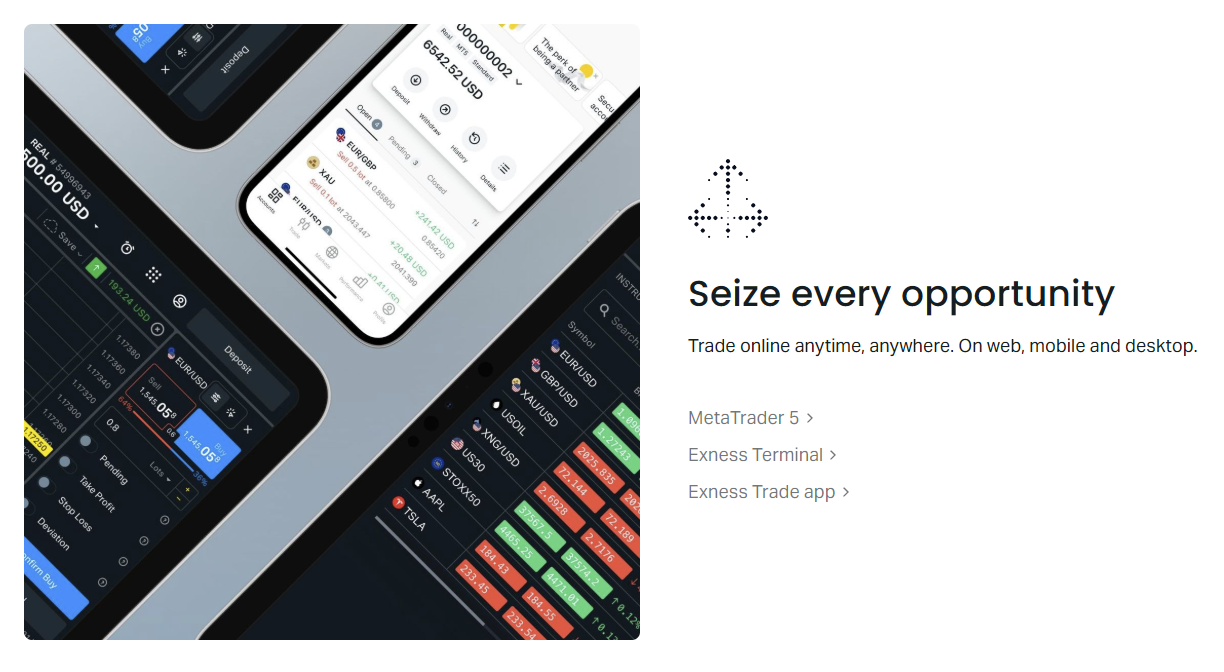
Platform choice significantly impacts trading efficiency. Exness offers multiple platforms that support USDJPY trading, each with distinct advantages for different workflows. The broker's proprietary web terminal provides browser-based access without installation, while MetaTrader 4 and MetaTrader 5 deliver the industry-standard environment with extensive customization options.
MetaTrader 5 offers additional timeframes, more order types, and an integrated economic calendar compared to MT4. The web terminal synchronizes with desktop platforms, allowing seamless transitions between devices. Mobile applications for iOS and Android maintain full functionality for traders who monitor USDJPY positions away from their primary workstation.
MetaTrader 5 Advantages for USDJPY Traders
MT5 provides 21 timeframes versus MT4's nine, enabling finer granularity for USDJPY scalping and day trading. The platform includes 38 built-in technical indicators and supports custom indicators written in MQL5. Depth of Market functionality displays liquidity levels, which is valuable for a pair like USDJPY where order flow analysis can reveal institutional positioning.
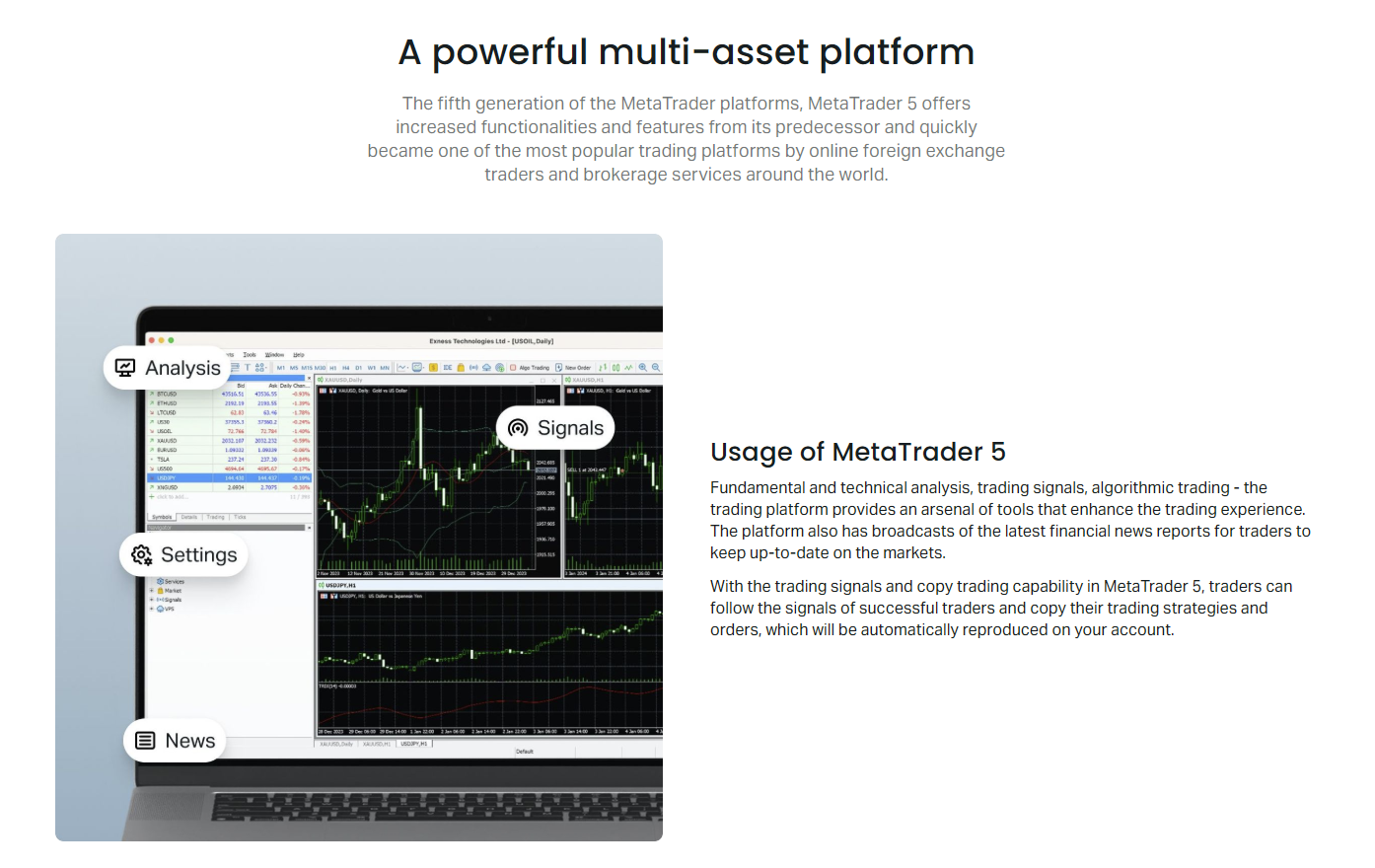
The strategy tester in MT5 supports multi-currency backtesting, allowing traders to validate USDJPY strategies against correlated pairs like EURJPY or GBPJPY. This feature helps identify whether a strategy captures genuine USDJPY dynamics or merely correlates with broader yen movements. Exness MT5 also supports hedging and netting modes, accommodating different position management preferences.
Account Types and Their Impact on USDJPY Costs
Exness offers several account types with different cost structures for USDJPY trading. Standard and Standard Cent accounts operate on a spread-only model with no commission, while Raw Spread and Zero accounts charge a commission per lot in exchange for tighter spreads. Professional accounts provide additional features like higher leverage limits and priority support for eligible clients.
Scroll horizontally to see all columns
| Account Type | Spread Model | Commission | Min Deposit | Best For |
|---|---|---|---|---|
| Standard | Spread-only | None | $1 | Beginners, swing traders |
| Standard Cent | Spread-only | None | $1 | Micro-lot practice, low capital |
| Raw Spread | Raw + commission | Per lot | $200 | Scalpers, high-volume traders |
| Zero | Fixed low + commission | Per lot | $200 | Algorithmic traders, EA users |
| Pro | Raw + commission | Per lot | $200 | Professional clients, high leverage |
For USDJPY specifically, the spread difference between account types can materially affect profitability for high-frequency strategies. A scalper executing 20 trades daily saves meaningful costs on Raw Spread or Zero accounts despite commissions. Swing traders holding positions for days may prefer Standard accounts to avoid commission accumulation on larger position sizes.
Execution Quality and Order Types for USDJPY
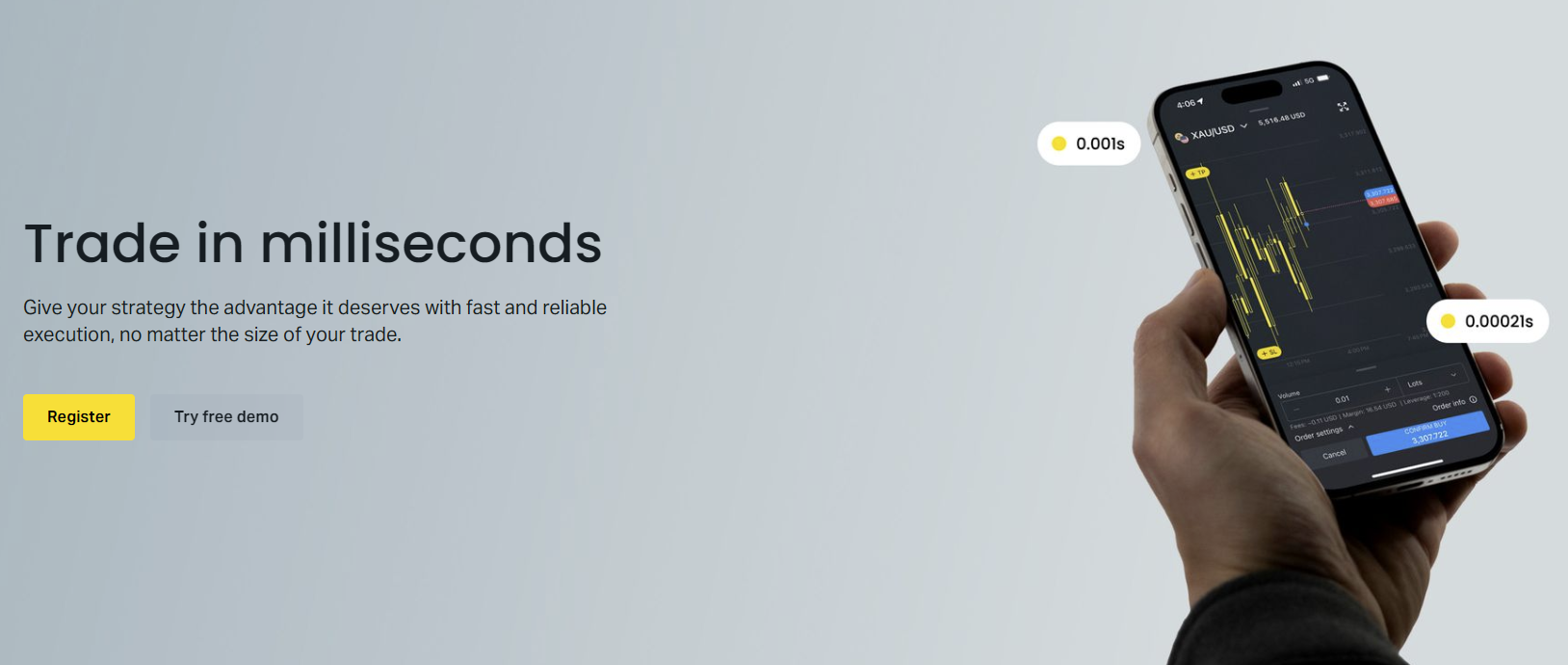
Execution speed and reliability are critical for USDJPY, particularly during high-volatility events like Non-Farm Payrolls or Bank of Japan policy decisions. Exness emphasizes market execution with no requotes, meaning orders fill at the best available price. The broker's infrastructure connects to multiple liquidity providers, reducing the likelihood of slippage during normal conditions.
Available order types include market, limit, stop, and stop-limit orders. MT5 adds buy stop limit and sell stop limit orders, which combine stop and limit functionality for precise entry control. One-click trading from the chart or Market Watch window accelerates execution for scalpers. Trailing stops automate profit protection on trending USDJPY moves.
Execution Models: Market vs Instant
Market execution fills orders at the current market price without confirmation dialogs, suitable for fast-moving USDJPY conditions. Instant execution allows price confirmation but may result in requotes during volatility. Exness uses market execution across its account types, aligning with the needs of traders who prioritize fill certainty over price control during news events.
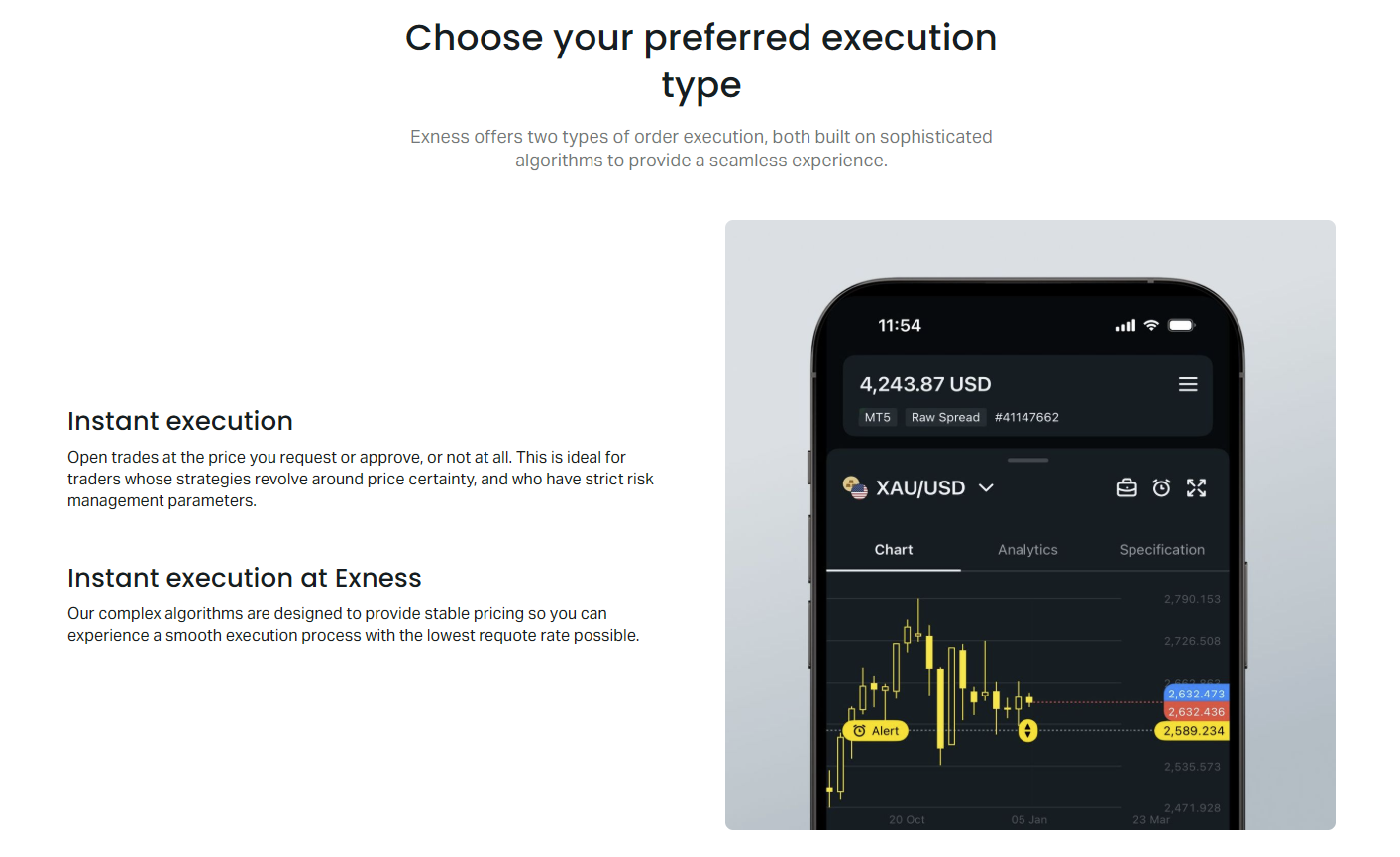
The broker publishes execution statistics including average execution speed and slippage data. For USDJPY, typical execution speeds are measured in milliseconds under normal conditions. During major economic releases, spreads may widen temporarily as liquidity providers adjust quotes. Traders using pending orders should account for potential gap risk when the market reopens after weekends.
Spreads, Swaps, and Trading Costs Analysis
Understanding the complete cost structure is essential for USDJPY profitability. Beyond spreads and commissions, overnight swap rates affect positions held past the daily rollover. USDJPY swaps reflect the interest rate differential between USD and JPY, which has historically favored long USD positions due to higher US rates. However, swap rates fluctuate with central policy changes.
Exness provides a trading calculator that computes margin requirements, pip values, and swap costs for any position size. This tool helps traders plan USDJPY trades with full cost awareness. The calculator accounts for account currency, leverage, and current market prices, eliminating manual calculation errors.
Swap-Free Options for USDJPY Positions
Exness offers swap-free accounts for clients who cannot earn or pay interest due to religious or regulatory reasons. On these accounts, USDJPY positions incur no overnight charges, but the broker may apply alternative fee structures or wider spreads. Traders should compare total costs between standard and swap-free accounts based on their typical holding periods.
Scroll horizontally to see all columns
| Cost Component | Description | Impact on Strategy |
|---|---|---|
| Spread | Bid-ask difference | Primary cost for Standard accounts |
| Commission | Per-lot fee (Raw/Zero/Pro) | Primary cost for commission accounts |
| Swap Long | Overnight fee for buy positions | Positive when USD rates exceed JPY |
| Swap Short | Overnight fee for sell positions | Negative when USD rates exceed JPY |
| Slippage | Fill price vs expected price | Variable during news events |
The trading calculator available in the Exness Personal Area and on the website allows precise cost estimation before entering USDJPY trades. Input your account type, leverage, position size, and direction to see projected margin, pip value, and swap charges. This transparency supports disciplined risk management.
Risk Management Tools for USDJPY Trading
Effective risk management separates sustainable USDJPY trading from speculative gambling. Exness provides several built-in tools that help traders control exposure. Negative balance protection ensures losses cannot exceed account equity, a critical safeguard during extreme volatility events like the 2015 Swiss franc unpegging or 2020 pandemic market dislocations.
Stop out levels vary by account type and regulatory jurisdiction. When margin falls below the stop out threshold, the system automatically closes positions starting with the largest losing trade. Traders can monitor margin levels in real time on all platforms. Setting appropriate stop losses on every USDJPY position remains the most direct risk control method.
Leverage and Margin Considerations
Exness offers dynamic leverage that adjusts based on account equity and instrument. For major forex pairs like USDJPY, maximum leverage can reach 1:2000 on certain account types, though regulatory restrictions apply in some jurisdictions. Higher leverage reduces margin requirements but amplifies both gains and losses. The margin calculator helps determine appropriate position sizes for your risk tolerance.
Leverage is a tool, not a strategy. The appropriate level depends on your trading style, account size, and psychological comfort with drawdowns.
Professional clients may access higher leverage limits after meeting eligibility criteria. Retail clients in regulated jurisdictions face leverage caps imposed by local authorities. Exness automatically applies the correct leverage based on your registration and verification status. Always verify current leverage for USDJPY in your Personal Area before trading.
Technical Analysis Resources for USDJPY
Technical analysis remains a primary approach for USDJPY traders. Exness platforms provide comprehensive charting tools including multiple chart types, timeframes, drawing tools, and indicator libraries. The web terminal and MT5 include TradingView charts with advanced features like multi-chart layouts, custom intervals, and extensive indicator collections.
Key Technical Levels and Indicators for USDJPY
USDJPY often respects round numbers (150.00, 145.00, 140.00) as psychological support and resistance. Fibonacci retracements applied to major swings identify potential reversal zones. Moving averages (50, 100, 200 periods) on daily charts define trend direction. The Ichimoku Cloud, popular among yen traders, provides a complete trend, momentum, and support/resistance framework in one indicator.
- Daily 200 SMA: long-term trend filter
- Ichimoku Cloud: comprehensive trend system
- RSI (14): momentum and divergence signals
- Bollinger Bands: volatility and mean reversion
- Volume profile: institutional accumulation zones
Exness integrates Trading Central signals directly into its platforms, providing automated pattern recognition and technical analysis for USDJPY. These signals identify chart patterns, key levels, and potential trade setups. While not a substitute for personal analysis, they serve as a useful second opinion or starting point for further research.
Custom indicators and Expert Advisors (EAs) expand analytical capabilities. The MQL5 marketplace offers thousands of free and paid tools specifically designed for USDJPY and other major pairs. Exness VPS hosting ensures low-latency EA operation for traders running automated strategies around the clock.
Fundamental Analysis and Economic Calendar Integration
USDJPY fundamental drivers center on monetary policy divergence, economic data surprises, and risk sentiment. The Federal Reserve's interest rate decisions, inflation reports (CPI, PCE), and employment data (NFP, JOLTS) create immediate USDJPY volatility. Similarly, Bank of Japan policy meetings, Tankan surveys, and Tokyo CPI releases drive yen-specific moves.
Exness provides an integrated economic calendar with impact ratings, consensus forecasts, and historical data. Events are filterable by currency, allowing traders to isolate USD and JPY releases. The calendar displays previous, forecast, and actual values with color-coded surprises. Mobile push notifications alert traders to upcoming high-impact events affecting USDJPY.
Trading USDJPY Around Major Economic Events
Event-driven USDJPY trading requires preparation. Before FOMC or BoJ meetings, reduce position sizes or move stops to breakeven on existing trades. Avoid entering new positions minutes before high-impact releases unless using a specific news strategy. After the initial volatility subsides (typically 15-30 minutes), assess the directional bias before re-engaging.
Risk Sentiment and USDJPY Correlation Dynamics
USDJPY exhibits a well-documented correlation with global risk appetite. During risk-on periods, investors borrow low-yielding yen to fund higher-yielding assets, pressuring USDJPY higher. During risk-off episodes, the yen strengthens as carry trades unwind. This dynamic makes USDJPY a barometer for equity market sentiment, particularly US indices like the S&P 500 and Nasdaq.
USDJPY often leads equity moves at major turning points. A breakdown in USDJPY can precede equity selloffs, while a sustained rally may confirm risk-on momentum.
Traders monitor the VIX (volatility index), US Treasury yields, and equity futures alongside USDJPY for confirmation. Divergences between USDJPY and these correlated assets can signal impending reversals. Exness platforms allow multiple chart layouts, enabling simultaneous monitoring of USDJPY, S&P 500, and 10-year yields.
Session-Based USDJPY Trading Characteristics
USDJPY liquidity and volatility vary significantly across trading sessions. The Asian session (Tokyo open) sees domestic Japanese participation and early reaction to Asian data. The London session brings European institutional flow. The New York session overlaps with London for peak liquidity, then continues with US-specific drivers. The Asian-European overlap often produces range-bound conditions suitable for mean reversion strategies.
Scroll horizontally to see all columns
| Session | Time (GMT) | Liquidity | Typical Behavior |
|---|---|---|---|
| Asian (Tokyo) | 00:00-09:00 | Moderate | Range-bound, domestic flow |
| London Open | 08:00-10:00 | High | Breakout attempts, trend initiation |
| London-NY Overlap | 13:00-17:00 | Peak | Largest moves, highest volume |
| New York Afternoon | 17:00-21:00 | Declining | Position squaring, reduced volatility |
Scalpers often prefer the London-NY overlap for tightest spreads and fastest execution. Swing traders may enter during Asian session consolidation for breakout plays at London open. Position traders focus on daily and weekly charts, making session timing less critical. Exness maintains consistent spreads across sessions, though minor widening may occur during low-liquidity periods.
Mobile Trading and Position Management
Modern USDJPY trading demands mobility. Exness mobile applications for iOS and Android provide full trading functionality including charting, order management, and account operations. The apps synchronize with desktop platforms, preserving chart layouts, indicators, and pending orders across devices. Push notifications alert traders to price levels, margin calls, and economic events.
The Exness Trade app offers a streamlined interface optimized for mobile screens. One-tap trading, customizable watchlists, and integrated deposit/withdrawal functions reduce friction for active traders. For USDJPY specifically, the app supports all order types available on desktop, including trailing stops and OCO (one-cancels-other) orders on MT5 mobile.

VPS Hosting for Automated USDJPY Strategies
Traders running Expert Advisors on USDJPY benefit from Exness VPS hosting. The virtual private server runs MT4/MT5 continuously with minimal latency to Exness trade servers. This eliminates dependency on home internet connections and power supply. Free VPS access is available for clients meeting minimum equity and trading volume thresholds.
VPS specifications include dedicated CPU, RAM, and SSD storage optimized for trading applications. The service supports multiple MT4/MT5 instances, allowing simultaneous operation of different USDJPY strategies. Latency to Exness servers typically measures under 5 milliseconds, critical for high-frequency EAs that depend on rapid order submission.
Deposit, Withdrawal, and Account Funding
Funding efficiency affects trading readiness. Exness supports numerous deposit methods including bank cards, electronic wallets, bank transfers, and regional payment systems. Most methods process instantly with no broker fees. Minimum deposit starts at $1 for Standard and Standard Cent accounts, making USDJPY accessible to traders with limited capital.
Withdrawals are processed automatically for most methods, with many completing within minutes. Exness emphasizes instant withdrawals as a core service feature. No withdrawal fees apply on the broker side, though payment processors may charge their own fees. Verification requirements follow standard KYC/AML procedures before first withdrawal.
Currency Conversion and Base Currency Options
Exness accounts can be denominated in multiple base currencies including USD, EUR, JPY, and others. Choosing JPY as base currency eliminates conversion costs for USDJPY traders who think in yen terms. The currency converter tool in the Personal Area shows real-time conversion rates for deposits and withdrawals in non-base currencies.
For USDJPY traders, USD-denominated accounts simplify pip value calculations (1 pip = $10 per standard lot). JPY-denominated accounts align with local banking for Japanese residents. The choice affects swap calculations and margin requirements display but not the underlying trading conditions for the pair.
Demo Account for USDJPY Strategy Development
Exness demo accounts replicate live trading conditions without financial risk. They provide access to all platforms, instruments, and analytical tools with virtual funds. Demo accounts never expire and can be reset at any time. This environment is ideal for developing and testing USDJPY strategies before committing real capital.
Demo trading on Exness uses the same liquidity feed and execution model as live accounts. Spreads, swaps, and margin requirements match real conditions. The only differences are psychological — demo trading lacks the emotional pressure of real losses. Traders should treat demo accounts seriously, applying the same risk management they would use live.
Regulatory Framework and Client Protection
Exness operates under multiple regulatory licenses across different jurisdictions. The specific regulator governing your account depends on your country of residence. Major licenses include CySEC (Cyprus), FCA (UK), FSCA (South Africa), and others. Each regulator imposes distinct client protection rules including leverage limits, negative balance protection, and compensation scheme eligibility.
Client funds are segregated from company operational funds in accordance with regulatory requirements. Exness participates in investor compensation schemes where applicable, providing additional protection up to specified limits. The broker undergoes regular audits and publishes financial statements demonstrating capital adequacy. These safeguards apply equally to USDJPY and all other traded instruments.
Verification and Account Security
Account verification (KYC) is required before withdrawals. The process involves submitting proof of identity and proof of address documents. Exness typically completes verification within 24 hours. Two-factor authentication (2FA) secures Personal Area access. The broker employs encryption, firewalls, and monitoring systems to protect client data and trading activity.
Regulatory oversight and fund segregation are foundational protections. Verify your account's governing regulator and applicable compensation limits before depositing significant capital.
Security advisories in the Personal Area alert clients to phishing attempts and security best practices. Exness never requests passwords or 2FA codes via email or phone. Traders should bookmark the official website and verify SSL certificates before logging in. These practices protect USDJPY trading accounts from unauthorized access.
Social and Copy Trading for USDJPY Exposure
Exness Social Trading allows investors to copy USDJPY strategies from verified signal providers. The platform displays performance metrics, risk scores, and historical drawdowns for each provider. Investors allocate capital proportionally and can stop copying at any time. Signal providers earn commissions from copied volume, aligning incentives with performance.
Copy trading suits investors who lack time or expertise for active USDJPY analysis. However, past performance does not guarantee future results. Due diligence on provider strategy, risk management, and consistency across market conditions is essential. Exness provides detailed statistics including Sharpe ratio, profit factor, and maximum drawdown for each strategy.
Evaluating USDJPY Signal Providers
When selecting USDJPY signal providers, examine the strategy's logic, not just returns. Strategies relying on martingale, grid, or no-stop-loss approaches may show smooth equity curves until a catastrophic loss. Prefer providers with defined risk per trade, reasonable drawdowns, and transparent methodology. The Social Trading app enables mobile monitoring of copied positions.
- Maximum drawdown under 20% preferred
- Profit factor above 1.5 indicates edge
- Consistent monthly returns, not few large wins
- Strategy description matches actual trades
- Provider trades own capital (skin in the game)
- Reasonable trade frequency for your risk tolerance
Diversification across multiple USDJPY providers with different approaches (trend, mean reversion, breakout) reduces single-strategy risk. Exness allows simultaneous copying with individual allocation controls. Regular review of provider performance ensures continued alignment with your objectives.
Partner Program and Rebates for Active USDJPY Traders
High-volume USDJPY traders can benefit from Exness partner and rebate programs. The Introducing Broker (IB) program rewards clients who refer new traders with commissions based on referred clients' trading volume. The rebate program returns a portion of spreads or commissions directly to the trading account, effectively reducing USDJPY trading costs.
Rebate rates vary by account type and volume tier. For USDJPY scalpers generating significant monthly volume, rebates can meaningfully improve net profitability. The partner program provides additional income streams for traders with networks or educational content. Both programs operate transparently with real-time tracking in the Personal Area.
Customer Support and Educational Resources
Reliable support matters when technical issues affect open USDJPY positions. Exness provides 24/7 multilingual support via live chat, email, and phone. Live chat typically connects within minutes. The support team handles platform issues, account queries, and transaction questions. For complex technical problems, screen sharing sessions assist with diagnosis.
Educational resources include webinars, video tutorials, trading guides, and market analysis articles. Topics cover technical analysis, fundamental analysis, risk management, and platform mastery. The Exness blog publishes regular USDJPY outlooks and trading ideas. Webinars often feature live chart analysis of major pairs including USDJPY.
Market News and Analysis Integration
Exness integrates FXStreet market news directly into its platforms and website. Real-time headlines cover central bank speeches, economic data releases, and geopolitical events affecting USDJPY. The news feed filters by currency pair, ensuring relevant information surfaces quickly. Audio squawk services provide live commentary during major events for traders who prefer auditory updates.
Information speed is a competitive advantage. Integrated news feeds eliminate the delay of switching between terminals and browsers during fast-moving USDJPY events.
The economic calendar, market news, and analytical resources create a complete information ecosystem for USDJPY decision-making. Traders who combine technical setups with fundamental awareness typically achieve more consistent results than those relying on a single approach.
Frequently Asked Questions
What are the typical spreads for USDJPY on Exness?
USDJPY spreads vary by account type and market conditions. Standard accounts typically see spreads from 0.5 pips during peak liquidity. Raw Spread and Zero accounts offer near-zero spreads with a per-lot commission. Spreads widen during major news events and low-liquidity periods.
Which Exness account type is best for USDJPY scalping?
Raw Spread and Zero accounts suit scalpers due to minimal spreads, though commissions apply. The commission cost is typically offset by spread savings at high trade frequencies. Standard accounts work for lower-frequency scalping where commission accumulation would exceed spread savings.
Does Exness allow hedging on USDJPY positions?
Yes, Exness supports hedging on all account types. MT5 offers both hedging and netting modes. Hedging allows simultaneous long and short USDJPY positions, useful for grid strategies or managing correlated exposure across multiple yen pairs.
What leverage is available for USDJPY on Exness?
Maximum leverage for USDJPY reaches 1:2000 on certain account types for eligible clients. Retail clients in regulated jurisdictions face lower caps (e.g., 1:30 under ESMA, 1:50 under ASIC). Dynamic leverage adjusts based on account equity. Check your Personal Area for current limits.
How do swaps work for USDJPY overnight positions?
USDJPY swaps reflect the USD-JPY interest rate differential. Long USDJPY positions typically earn positive swap when US rates exceed Japanese rates. Short positions pay negative swap. Swap rates update daily and triple on Wednesdays to account for weekend rollover. Swap-free accounts are available.
Can I trade USDJPY on Exness mobile apps?
Yes, both the Exness Trade app and MetaTrader 4/5 mobile apps support full USDJPY trading functionality including charting, all order types, position management, and account operations. Charts and settings synchronize with desktop platforms.
What is the minimum deposit to trade USDJPY on Exness?
Standard and Standard Cent accounts require a minimum deposit of $1. Raw Spread, Zero, and Pro accounts require $200. Cent accounts allow micro-lot trading (0.01 lots = 1,000 units) ideal for small accounts learning USDJPY dynamics.
How fast are USDJPY withdrawals on Exness?
Most withdrawal methods process automatically within minutes. Bank transfers may take 1-3 business days. Exness charges no withdrawal fees, though payment processors may apply their own charges. Verification must be completed before first withdrawal.
Final Assessment of Exness USDJPY Trading
Exness delivers a comprehensive environment for USDJPY trading with competitive pricing, multiple platform choices, robust risk management tools, and reliable execution. The broker's account variety accommodates traders from beginners testing micro-lots on cent accounts to professionals running high-frequency algorithms on VPS-hosted EAs. Transparent cost structures, instant withdrawals, and multi-jurisdictional regulation provide operational confidence. For traders serious about USDJPY, Exness combines the technological infrastructure and trading conditions necessary for consistent market participation.