

Trading Education
Exness Oil Trading: Complete Guide to Crude Oil CFDs
Master WTI and Brent crude trading with Exness energy markets

Forex Analyst
Forex Analyst specializing in currency markets, market trends, technical and fundamental analysis, and providing clear insights to help traders make informed decisions.
Exness oil trading provides access to one of the world's most actively traded commodity markets through contracts for difference. Traders can speculate on price movements of West Texas Intermediate and Brent crude without taking physical delivery of barrels. The broker offers these energy instruments across multiple account types with varying spread structures, leverage tiers, and execution models designed to accommodate different trading approaches.
Contents
- Understanding Oil Markets on Exness
- WTI vs Brent Crude Oil Contracts
- Trading Platforms for Oil CFDs
- Account Types and Oil Trading Conditions
- Leverage and Margin Requirements
- Spreads, Commissions, and Swap Rates
- Risk Management for Oil Trading
- Technical Analysis Tools for Energy Markets
- Fundamental Factors Affecting Oil Prices
- Trading Strategies for Crude Oil
- Exness Analytical Resources for Oil Traders
- Execution Quality and Order Types
- Mobile Trading Experience for Oil Markets
- Deposit, Withdrawal, and Funding for Oil Traders
- Regulatory Framework and Client Protection
- Comparing Exness Oil Trading to Alternatives
- Getting Started with Oil Trading on Exness
- Final Assessment of Exness Oil Trading
Crude oil remains a cornerstone of global energy markets, influencing inflation, transportation costs, and geopolitical dynamics. Price volatility creates opportunities for short-term speculators and longer-term position traders alike. Exness connects clients to deep liquidity pools, enabling tight pricing even during major news events such as OPEC decisions, inventory reports, and geopolitical disruptions that move energy markets significantly.
This guide examines every aspect of trading oil on Exness, from contract specifications and platform choices to risk management techniques and analytical approaches. Whether you are new to energy markets or an experienced commodities trader evaluating a new broker, the following sections provide the practical knowledge needed to navigate crude oil CFDs effectively.
Understanding the mechanics of oil CFDs, the differences between benchmark grades, and the cost structure of each account type forms the foundation for consistent decision-making. The sections ahead break down these elements systematically, supported by platform features, analytical resources, and risk controls available to Exness clients.
Understanding Oil Markets on Exness
Exness offers two primary crude oil benchmarks: WTI (West Texas Intermediate) and Brent. WTI represents light sweet crude produced primarily in the United States, particularly the Permian Basin, and serves as the North American pricing reference. Brent crude, sourced from the North Sea, acts as the international benchmark for roughly two-thirds of globally traded oil. Both trade as CFDs with the suffix .c or .spot depending on the platform, reflecting spot prices rather than futures expiration cycles.
These instruments track the front-month futures contracts on NYMEX and ICE respectively, with automatic rollover adjustments applied to prevent price gaps at expiration. The rollover mechanism credits or debits the swap difference between expiring and new contracts, ensuring continuous chart history. Traders should monitor the rollover calendar published in the Exness personal area to anticipate adjustments, particularly when contango or backwardation structures widen.
Trading hours for oil CFDs align with the underlying futures exchanges. WTI trades Sunday 23:00 through Friday 22:00 server time with a daily one-hour break at 23:00-00:00. Brent follows a similar schedule but opens one hour earlier at 22:00 Sunday. Liquidity peaks during the London-New York overlap (13:00-17:00 UTC) when both European and American participants are active. Spreads typically narrow during this window and widen during the Asian session or around major economic releases.
Contract sizes are standardized at 100 barrels per lot for both benchmarks. Minimum trade size is 0.01 lots (one barrel equivalent), allowing precise position sizing for accounts of any scale. Margin requirements vary by account type and regulatory jurisdiction, with professional clients accessing higher leverage tiers. The tick value is $0.01 per barrel, meaning a one-cent move equals $1 per lot. This transparent pip valuation simplifies profit and loss calculations compared to futures where tick sizes differ by exchange.
WTI vs Brent Crude Oil Contracts
While both benchmarks track light sweet crude, structural differences create distinct trading characteristics. WTI typically trades at a discount to Brent due to transportation constraints from landlocked Cushing, Oklahoma to coastal export terminals. The spread between them, known as the WTI-Brent spread, fluctuates based on US production growth, pipeline capacity, and global demand patterns. Exness offers both contracts simultaneously, enabling spread trading strategies that isolate regional supply-demand dynamics from broad directional moves.
Brent's waterborne nature makes it more responsive to international shipping disruptions, Middle East tensions, and European refinery demand. WTI reacts more sharply to US inventory data (EIA weekly reports), domestic production figures, and pipeline outages. Traders focusing on macroeconomic themes often prefer Brent for its global representation, while those tracking US shale dynamics may favor WTI. Correlation between the two exceeds 0.95 over long periods but can decouple during regional supply shocks.
- WTI: North American benchmark, landlocked delivery at Cushing, Oklahoma
- Brent: International benchmark, waterborne delivery from North Sea
- Typical spread: Brent premium of $2-8 per barrel under normal conditions
- WTI more sensitive to EIA inventory data and US production reports
- Brent more sensitive to OPEC decisions and geopolitical risk premiums
- Both available as spot CFDs with automatic rollover on Exness
Seasonal patterns also differ. WTI often strengthens in spring ahead of summer driving season and US refinery maintenance completion. Brent tends to firm in winter when European heating oil demand peaks and North Sea production faces weather-related disruptions. These seasonal tendencies overlay the fundamental supply-demand balance and can provide edge for calendar spread or seasonal trading approaches.
Trading Platforms for Oil CFDs
Exness provides oil CFDs across MetaTrader 4, MetaTrader 5, the proprietary Exness Terminal (web and desktop), and mobile applications for iOS and Android. Each platform delivers the same pricing feed and execution engine but differs in analytical toolkit, order management features, and customization depth. Choosing the right platform depends on your analysis workflow, automation needs, and device preferences.
MetaTrader 4 remains popular for its extensive library of custom indicators and expert advisors developed specifically for commodities. The platform supports nine timeframes, 30 built-in indicators, and hedging mode by default. Oil traders often use custom scripts for crack spread calculations (heating oil vs crude vs gasoline) or seasonal pattern recognition. MT4's strategy tester allows backtesting oil-specific EAs against historical tick data available from the Exness history center.
MetaTrader 5 adds 21 timeframes, 38 built-in indicators, depth of market (Level 2) display, and netting/hedging account modes. The economic calendar integrates directly into the platform, flagging high-impact events like EIA inventory, API data, and OPEC meetings on oil charts. MT5's multi-threaded strategy tester accelerates optimization of oil trading robots across multiple parameter sets. The platform also supports exchange-traded instruments should Exness expand into listed oil futures.
The Exness Terminal offers a browser-based experience with no installation required. Its charting package includes 50+ indicators, drawing tools, and multiple chart layouts saved to cloud profiles. One-click trading from charts, keyboard shortcuts for rapid order entry, and integrated Trading Central signals for oil appear directly on the workspace. The terminal synchronizes settings across devices, so chart templates and watchlists persist between desktop and mobile sessions.
Account Types and Oil Trading Conditions
Exness structures oil trading conditions across Standard, Standard Cent, Pro, Raw Spread, and Zero accounts. Each account type applies a distinct spread and commission model that materially affects the all-in cost of trading crude oil. Understanding these differences is essential for selecting the account that aligns with your trading frequency, position size, and cost sensitivity.
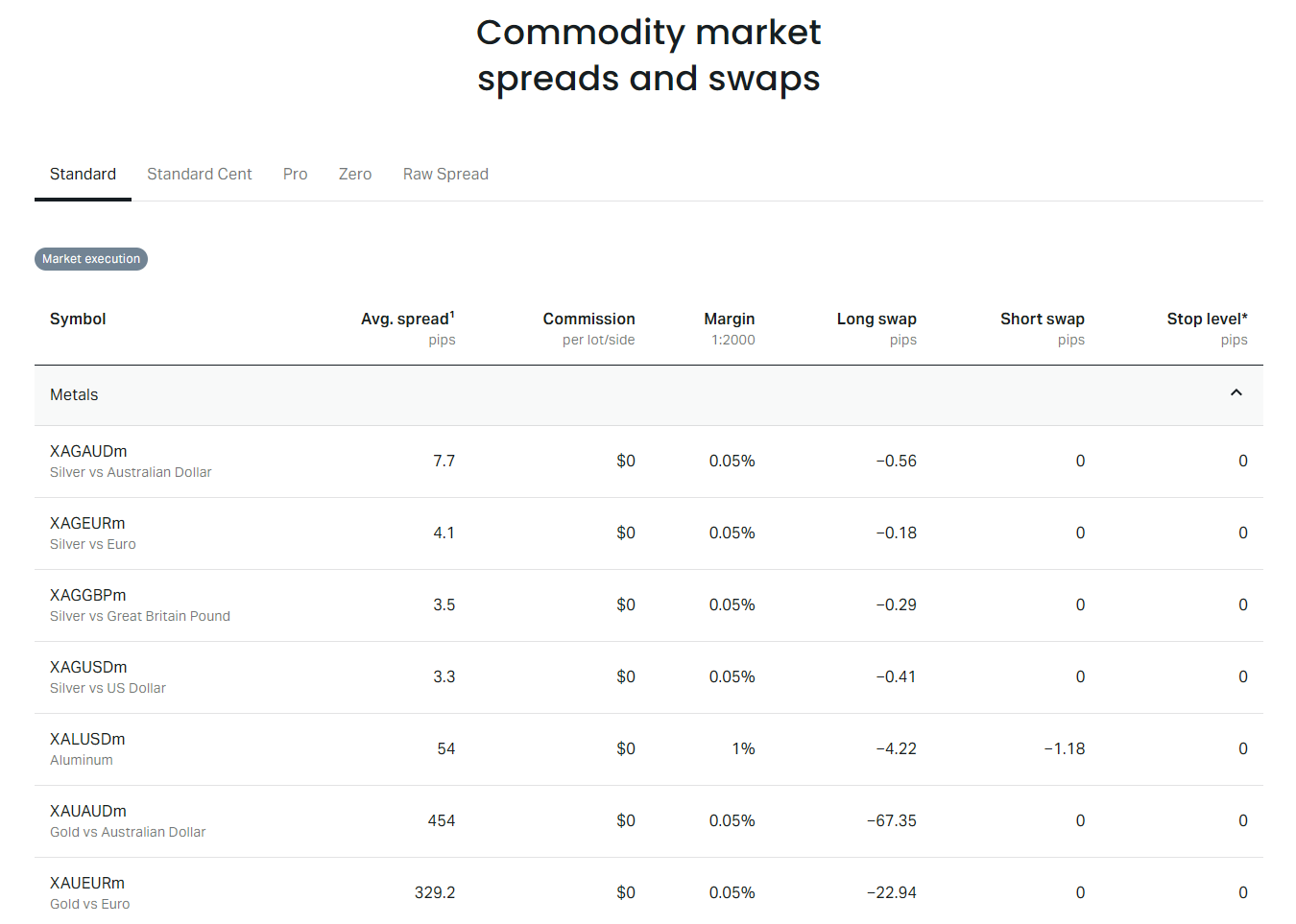
Standard and Standard Cent accounts operate on a spread-only model with no commission. Oil spreads on these accounts are floating and typically range from 0.03 to 0.05 points (3-5 cents per barrel) during peak liquidity. The cent account denominates balance in cents, allowing micro-position sizing ideal for learning oil dynamics with minimal capital at risk. Both account types offer unlimited leverage for equity under $1,000, though oil margin requirements still apply per instrument specifications.
Pro accounts also use spread-only pricing but with tighter baseline spreads, often 0.01-0.02 points better than Standard during normal conditions. This account suits traders who prefer simplicity without commission calculations. Raw Spread and Zero accounts introduce commission-based pricing: Raw Spread charges $3.50 per side per lot with spreads near zero during peak hours, while Zero account fixes commission at $3.50 per side but guarantees zero spread for 95% of the trading day on major instruments including oil.
Scroll horizontally to see all columns
| Account Type | WTI Spread (typical) | Brent Spread (typical) | Commission per Lot | Min Deposit |
|---|---|---|---|---|
| Standard | 0.03-0.05 | 0.03-0.05 | None | $1 |
| Standard Cent | 0.03-0.05 | 0.03-0.05 | None | $1 |
| Pro | 0.01-0.03 | 0.01-0.03 | None | $200 |
| Raw Spread | 0.00-0.01 | 0.00-0.01 | $3.50/side | $200 |
| Zero | 0.00 (95% day) | 0.00 (95% day) | $3.50/side | $200 |
Swap rates for oil CFDs differ between long and short positions and vary by account type. Long positions typically incur negative swaps (cost to hold overnight) reflecting the cost of carry in contango markets. Short positions may receive positive swaps in backwardation but often pay negative swaps as well due to financing costs. Exness publishes daily swap values in the contract specifications and the trading platform market watch. Islamic accounts swap-free status applies to oil CFDs, replacing swaps with a fixed administration fee after a grace period.
Leverage and Margin Requirements
Leverage for oil CFDs on Exness follows a tiered structure based on account equity and regulatory classification. Retail clients under CySEC, FCA, and similar regulators face maximum leverage of 1:10 for commodities per ESMA guidelines. Professional clients and those under offshore entities (Seychelles FSA, etc.) can access up to 1:200 for oil, with dynamic leverage reducing automatically as position size increases. The broker's margin calculator in the personal area computes exact requirements for any position size and account currency.
Margin is calculated as: (Contract Size × Lots × Market Price) / Leverage. For example, 1 lot of WTI at $75 with 1:100 leverage requires $75 margin. At 1:10 leverage, the same position requires $750. Dynamic leverage tiers typically reduce leverage at 10 lots, 50 lots, and 100 lots thresholds. Traders should monitor the margin level indicator in the platform; stop-out occurs at 0% margin level on Exness, meaning positions close automatically when equity equals used margin.
- Retail maximum leverage: 1:10 for commodities (ESMA regulated entities)
- Professional/offshore maximum: up to 1:200 for oil CFDs
- Dynamic leverage reduces at higher position volumes
- Margin formula: (100 barrels × lots × price) / leverage
- Stop-out level: 0% margin level (equity = used margin)
- Margin calculator available in personal area and platforms
Hedged positions (simultaneous long and short on same instrument) benefit from 50% margin reduction on Exness. This allows traders to lock in risk during volatile news events without doubling margin requirement. However, spread costs apply to both legs, and swap charges accumulate on both positions. The margin relief applies only to perfectly offsetting sizes; partial hedges calculate margin on the net exposure plus the hedged portion at reduced rate.
Spreads, Commissions, and Swap Rates
The all-in cost of trading oil on Exness combines spread, commission (where applicable), and overnight financing. During the London-New York overlap, WTI spreads on Raw Spread and Zero accounts frequently hit 0.00-0.01 points (0-1 cent per barrel). Standard accounts typically show 0.03-0.05 points. Commission on Raw Spread and Zero accounts totals $7 per round-turn lot ($3.50 per side). At a $75 oil price, 0.01 spread equals $1 per lot, making Raw Spread cheaper than Standard when spread exceeds 0.07 points.
Swap rates for oil reflect the interest rate differential between USD and the commodity's cost of carry. In contango (futures curve upward sloping), long swaps are negative and short swaps may be positive or less negative. In backwardation (downward sloping curve), the opposite occurs. Exness updates swaps daily around 23:00 server time. Triple swaps apply Wednesday-Thursday rollover to account for weekend financing. Traders holding positions beyond intraday should factor swap costs into profitability calculations, especially for swing trades lasting weeks.
Scroll horizontally to see all columns
| Cost Component | Standard Account | Raw Spread Account | Zero Account |
|---|---|---|---|
| WTI Spread (peak) | 0.04 pts ($4/lot) | 0.00 pts ($0/lot) | 0.00 pts ($0/lot) |
| Brent Spread (peak) | 0.04 pts ($4/lot) | 0.00 pts ($0/lot) | 0.00 pts ($0/lot) |
| Commission RT | None | $7/lot | $7/lot |
| All-in Cost (peak) | $4/lot | $7/lot | $7/lot |
| All-in Cost (off-peak) | $8-12/lot | $8-10/lot | $7/lot |
Off-peak spreads can widen to 0.08-0.12 points on Standard accounts, making commission-based accounts more economical for Asian session trading. Zero account's guaranteed zero spread for 95% of the day provides cost certainty valuable for algorithmic strategies. Exness publishes historical spread data in the personal area, allowing traders to analyze cost patterns across sessions and optimize execution timing.
Risk Management for Oil Trading
Oil's volatility demands disciplined risk management. Daily ranges of 2-3% are common, with 5%+ moves during supply shocks or OPEC surprises. Exness provides several platform-native risk controls: stop-loss and take-profit orders attached at entry or modified later, trailing stops that lock in profits as price moves favorably, and guaranteed stop-loss (GSL) on certain account types for a premium spread markup. GSL ensures execution at the specified price regardless of gaps or slippage.
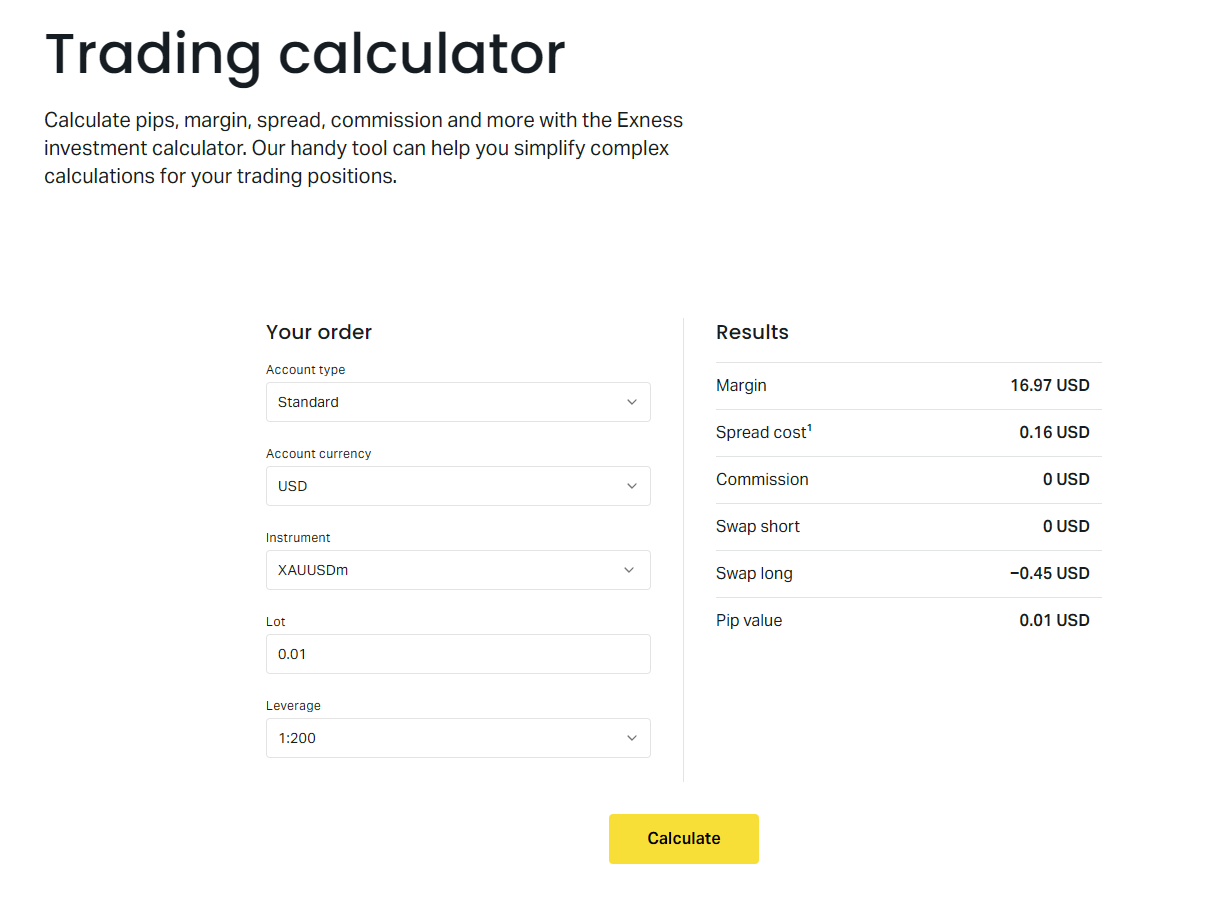
Position sizing should reflect account risk tolerance. A common rule limits risk per trade to 1-2% of account equity. For a $10,000 account risking 1% ($100) on a WTI trade with a 50-cent stop-loss (500 pips), the appropriate size is 0.2 lots (500 pips × $0.01 × 0.2 lots = $100). The Exness trading calculator automates this computation, accepting entry, stop, account currency, and risk percentage to output optimal lot size.
Correlation risk matters when trading multiple energy instruments. WTI, Brent, natural gas, heating oil, and gasoline often move together during macro risk-on/risk-off episodes. Diversifying across uncorrelated assets (forex majors, indices, gold) reduces portfolio drawdown during energy-specific shocks. Exness correlation matrix in the analytics section quantifies rolling correlations across timeframes, helping traders avoid unintended concentration.
Technical Analysis Tools for Energy Markets
Technical analysis on oil CFDs benefits from the deep liquidity and 23-hour trading session that produce clean chart patterns with fewer gaps than equity markets. Exness platforms provide comprehensive toolkits: trend indicators (moving averages, Ichimoku, ADX), momentum oscillators (RSI, Stochastic, CCI), volatility measures (Bollinger Bands, ATR, Keltner Channels), and volume-based tools (OBV, Volume Profile, VWAP on MT5). Custom indicators from the MQL5 marketplace extend functionality for oil-specific studies like crack spreads and seasonal indices.
Moving average crossovers (e.g., 50/200 EMA) identify major trend shifts on daily charts. The 200-day EMA often acts as dynamic support/resistance for crude oil. Intraday traders favor VWAP anchored to the London open (08:00 UTC) or NYMEX pit session open (09:00 ET) as a fair-value reference. Price above VWAP with rising volume suggests institutional accumulation; below with volume indicates distribution. Exness Terminal includes VWAP as a standard overlay.
Fibonacci retracements applied to major swing highs and lows identify potential reversal zones. The 61.8% and 38.2% levels frequently coincide with prior consolidation areas. Combining Fibonacci with horizontal support/resistance from weekly/monthly charts increases confluence probability. Harmonic patterns (Gartley, Butterfly) appear regularly on 4-hour and daily oil charts due to the market's rhythmic nature driven by inventory cycles and seasonal flows.
- Daily 50/200 EMA crossover for trend direction
- VWAP anchored to London/NY session opens for intraday bias
- ATR(14) for volatility-adjusted stop placement
- Volume Profile on MT5 to identify high-volume nodes
- Fibonacci retracements on weekly swings for swing trade entries
- Seasonal chart overlays for calendar-based tendencies
Fundamental Factors Affecting Oil Prices
Fundamental analysis of oil centers on supply-demand balance, inventory trends, and geopolitical risk. Exness integrates an economic calendar flagging high-impact events: EIA Weekly Petroleum Status Report (Wednesday 10:30 ET), API Weekly Statistical Bulletin (Tuesday 16:30 ET), OPEC Monthly Oil Market Report, OPEC+ ministerial meetings, and Baker Hughes Rig Count (Friday 13:00 ET). The calendar shows forecast, previous, and actual values with volatility impact ratings.
Supply factors include OPEC+ production quotas and compliance, US shale output growth, non-OPEC supply (Canada, Brazil, Guyana), and unplanned outages (hurricanes, sanctions, infrastructure attacks). Demand factors encompass global GDP growth, Chinese import data, seasonal consumption patterns, and the accelerating energy transition's impact on long-term demand forecasts. The IEA and EIA monthly reports provide authoritative supply-demand balances that move prices on release.
Inventory data serves as the most timely fundamental indicator. Weekly EIA crude oil stock changes directly reflect the physical market tightness. Draws (inventory declines) typically support prices; builds pressure them. The five-year seasonal average provides context: a build during a seasonal draw period is bullish. Cushing, Oklahoma inventories (WTI delivery hub) specifically influence the WTI-Brent spread. Exness market news feed from FXStreet delivers real-time commentary on inventory implications.
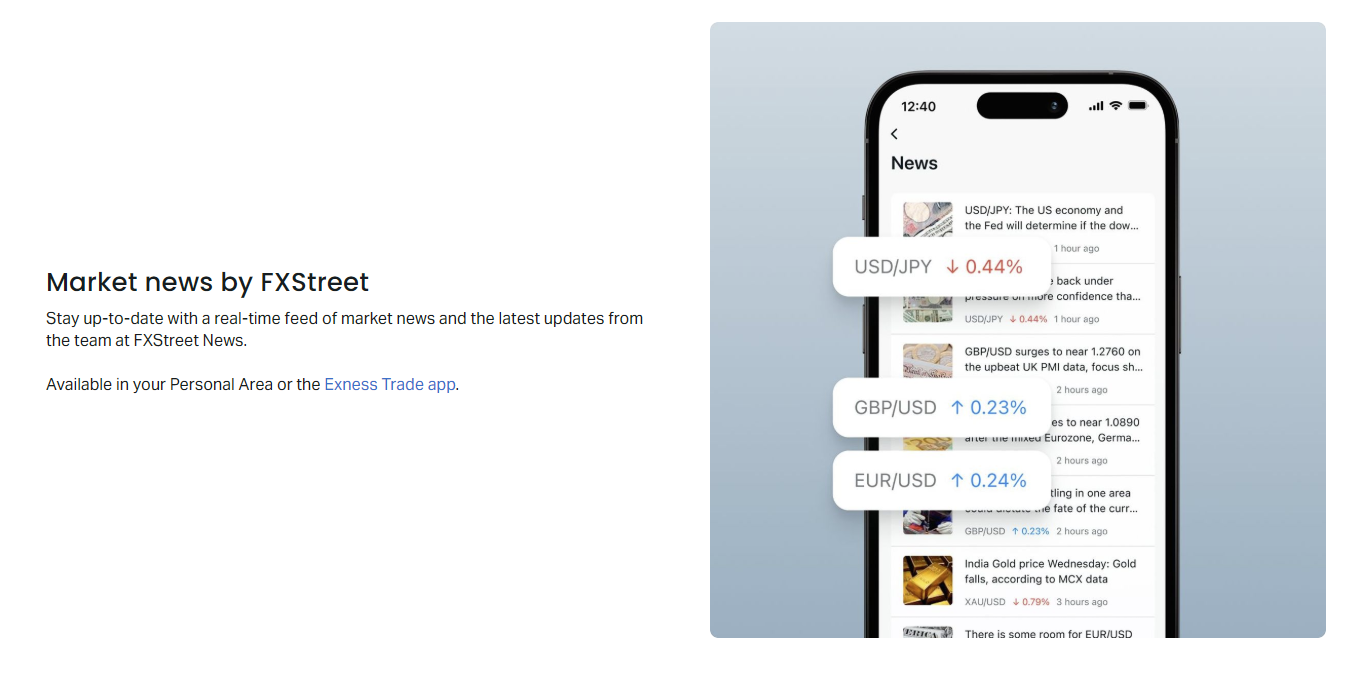
Geopolitical risk premium fluctuates with Middle East tensions, Russia-Ukraine developments, Venezuela/Iran/Libya sanctions, and Strait of Hormuz transit risks. These events create asymmetric upside risk: prices spike on disruption fears but revert gradually as supply adapts. Options market skew (put/call implied volatility) quantifies this premium. Traders can monitor the CBOE OVX (oil volatility index) as a sentiment gauge, though Exness does not offer options directly.
Trading Strategies for Crude Oil
Several strategy archetypes suit oil CFDs on Exness given the instrument's characteristics. Trend following captures persistent directional moves driven by fundamental shifts. Mean reversion exploits range-bound conditions during seasonal lulls. Breakout trading targets volatility expansion after consolidation. Spread trading isolates relative value between WTI and Brent or between crude and refined products. Each approach requires specific risk parameters and time horizon alignment.
Trend following on daily charts using 50/200 EMA crossover with ATR-based trailing stops (2-3x ATR) captures major moves like the 2020 crash and 2021-2022 recovery. Position sizing at 1% risk per trade with pyramiding (adding on pullbacks to 20 EMA) compounds winners. This approach suits swing traders holding weeks to months. The Exness VPS service ensures EA uptime for automated trend systems, with latency under 1ms to London execution servers.
Mean reversion strategies fade extreme RSI readings (>80 or <20) on 4-hour charts during low-volatility regimes (ATR below 20-day average). Entries target VWAP or 20-period Bollinger Band middle line with tight stops (0.5x ATR). Profit targets at opposite band or prior session high/low. This works best in summer months when oil ranges contract. Risk-reward typically 1:1.5 to 1:2 with 55-65% win rates in backtests.
- Trend follow: Daily EMA crossover + ATR trailing stop, weeks-months horizon
- Mean reversion: 4H RSI extremes + VWAP/Bollinger, days horizon, summer bias
- Breakout: 4H Donchian channel (20) + volume confirmation, intraday-swing
- WTI-Brent spread: Long WTI/short Brent when spread narrows historically
- Crack spread: Long crude/short heating oil & gasoline (refining margin)
- Seasonal: Long WTI March-May, long Brent Oct-Dec per historical tendencies
Breakout traders monitor the Asian session range (00:00-08:00 UTC) and enter on London open breakouts with volume confirmation. The 20-period Donchian channel on 4-hour charts defines the range. False breakouts are common; requiring a 15-minute candle close beyond the channel plus volume 1.5x average filters noise. Stop-loss at channel midpoint, target at 1.5x range height. This captures volatility expansion around EIA/OPEC events.
Exness Analytical Resources for Oil Traders
Exness provides a suite of analytical resources accessible from the personal area and trading platforms. Trading Central delivers technical analysis signals for WTI and Brent across multiple timeframes, identifying pattern completions, support/resistance levels, and directional bias with confidence ratings. These signals appear directly on charts in the Exness Terminal and MT5 as overlay icons with tooltip details. The signals update continuously and cover both intraday and swing horizons.
The economic calendar filters for energy-specific events with customizable alerts via email, push notification, or platform popup. Historical event data shows actual vs forecast deviations and the resulting price impact on oil, enabling post-trade analysis of news-driven moves. The market news feed aggregates headlines from FXStreet, Dow Jones, and Exness proprietary analysis, tagged by instrument so oil headlines are isolated from forex noise.
Exness calculator tools include a margin calculator, pip calculator, profit calculator, and swap calculator, all pre-configured for oil contract specifications. The margin calculator accepts account type, leverage, position size, and current price to output required margin and free margin after trade. The profit calculator models P&L scenarios for target and stop levels. These tools eliminate manual calculation errors and speed pre-trade preparation.
The integration of Trading Central signals directly on oil charts reduces context switching between analysis and execution, a meaningful workflow advantage for active energy traders.
Execution Quality and Order Types
Exness executes oil CFD orders via market execution model with no dealing desk intervention. Orders fill at the best available price from liquidity providers, with positive and negative slippage both possible. The broker publishes execution statistics quarterly, showing average execution speed (typically under 25ms), slippage distribution, and requote rates. For oil, fill rates exceed 99.9% during normal conditions. During high-impact news, spreads widen and slippage increases, reflecting underlying market conditions rather than broker manipulation.
Available order types include market, limit, stop, stop-limit, and OCO (one-cancels-other) on MT5. Trailing stops function server-side on MT4/MT5 (continue working if terminal closes) and client-side on Exness Terminal (require active session). Partial close allows scaling out of winning positions. The Exness Terminal adds one-click trading panel with preset lot sizes and risk-based sizing buttons, accelerating entry during fast oil moves.
VPS hosting through Exness partners (BeeksFX, Commercial Network Services) provides co-located servers in London Equinix LD4 and NY4 data centers, reducing latency to under 1ms for MT4/MT5 expert advisors. This is critical for high-frequency oil scalping strategies and news-trading EAs that require millisecond reaction to EIA headlines. The VPS service is free for clients meeting minimum volume thresholds (typically 5 lots/month) or available for a monthly fee.
Mobile Trading Experience for Oil Markets
The Exness Trade app (iOS/Android) and MetaTrader mobile apps deliver full oil trading capability on smartphones and tablets. The Exness app features a streamlined interface with oil instruments prominently displayed in the commodities watchlist. Charts support all standard indicators, drawing tools, and timeframes. One-tap trading from charts, price alerts with push notifications, and account management (deposit/withdrawal) integrate seamlessly. The app synchronizes chart templates and watchlists with the web terminal.
MetaTrader 4/5 mobile apps replicate desktop functionality including custom indicators, expert advisors (view-only on mobile), and full order management. The MT5 mobile app adds depth of market and netting mode support. Both apps support split-screen on iPad and Android tablets, allowing simultaneous chart analysis and order entry. Push notifications for price alerts, margin calls, and news events keep traders informed without constant screen monitoring.
Deposit, Withdrawal, and Funding for Oil Traders
Funding an Exness account for oil trading supports multiple methods: bank wire, credit/debit cards, electronic wallets (Skrill, Neteller, WebMoney, Perfect Money), and regional payment systems (Pix, UPI, local bank transfers). Minimum deposit is $1 for Standard/Standard Cent accounts and $200 for Pro/Raw Spread/Zero. Most methods process instantly; bank wires take 1-3 business days. No deposit fees are charged by Exness, though payment providers may apply their own fees.
Withdrawals process back to the original deposit method per anti-money laundering regulations. E-wallet withdrawals are instant after approval. Card refunds take 1-10 business days depending on issuer. Bank wire withdrawals take 1-5 business days. Exness does not charge withdrawal fees. The personal area tracks withdrawal status in real time. No minimum withdrawal amount applies for most methods, though bank wires may have minimums imposed by correspondent banks.
Account currency options include USD, EUR, GBP, CHF, JPY, AUD, CAD, and others. Choosing USD as base currency eliminates conversion costs when trading oil (quoted in USD). Profits and losses realize directly in account currency. Swap charges and commissions also denominate in account currency. The currency converter in the personal area shows real-time rates for cross-currency transfers between wallets.
Regulatory Framework and Client Protection
Exness operates through multiple regulated entities: Exness (Cy) Ltd regulated by CySEC (Cyprus), Exness (UK) Ltd authorized by FCA (UK), Exness (VG) Ltd registered in British Virgin Islands, and Exness (SC) Ltd licensed by FSA (Seychelles). The entity serving a client depends on residence and regulatory perimeter. Retail clients in EEA/UK receive negative balance protection, leverage caps (1:10 for commodities), and segregation of client funds in tier-1 banks. Professional clients and offshore entity clients access higher leverage but with different protection frameworks.
Client funds are held in segregated accounts separate from operational capital. Exness participates in investor compensation schemes where applicable (ICF in Cyprus up to €20,000, FSCS in UK up to £85,000). The broker publishes audited financial statements and maintains capital adequacy ratios well above regulatory minimums. Regular external audits by Big Four firms verify financial integrity. These protections apply equally to oil CFD positions as to forex or other instruments.
Multi-jurisdictional regulation means oil traders must verify which Exness entity onboards them, as leverage limits and protection schemes differ materially between CySEC/FCA retail and offshore professional classifications.
Comparing Exness Oil Trading to Alternatives
When evaluating Exness against other brokers for oil trading, several dimensions merit comparison: all-in trading cost (spread + commission + swap), execution quality (speed, slippage, fill rate), platform stability during volatility, analytical toolkit depth, and regulatory alignment. Exness distinguishes itself with zero-spread accounts for oil, sub-25ms execution, no requotes, and a comprehensive proprietary terminal alongside MT4/MT5. The broker's focus on instant withdrawals and no-fee funding reduces friction for active traders moving capital between strategies.
Some competitors offer exchange-traded oil futures (CME WTI, ICE Brent) which provide centralized clearing and transparent volume data but require higher margins ($5,000+ per contract) and lack micro-lot flexibility. CFDs on Exness democratize access with 0.01 lot minimums and dynamic leverage. Futures also expire quarterly, requiring roll management, whereas Exness spot CFDs roll automatically. The trade-off is counterparty risk (mitigated by regulation) and overnight financing costs instead of exchange fees.
Scroll horizontally to see all columns
| Feature | Exness CFDs | Exchange Futures | Other CFD Brokers |
|---|---|---|---|
| Min Contract Size | 0.01 lots (1 barrel) | 1 contract (1,000 barrels) | 0.01-0.1 lots typical |
| Margin (1 lot WTI @ $75) | $75 (1:100) to $750 (1:10) | $5,000-7,000 | Similar to Exness |
| All-in Cost (peak) | $4-7 per lot RT | $1.50-3.00 exchange fees | $5-15 per lot RT |
| Expiration/Rollover | Automatic daily | Quarterly manual roll | Automatic daily |
| Platform Choice | MT4, MT5, Exness Terminal | Proprietary/TT/CQG | Usually MT4/MT5 only |
| Regulatory Protection | Multi-jurisdictional | Exchange clearing | Varies widely |
For traders requiring physical delivery hedging or institutional volume reporting, futures remain the standard. For speculative and tactical trading with capital efficiency, Exness oil CFDs offer compelling advantages. The broker's continuous investment in execution infrastructure, analytical integration, and client-centric funding/withdrawal processes positions it strongly in the retail and professional CFD segment.
Getting Started with Oil Trading on Exness
Opening an Exness account for oil trading takes minutes. Registration requires email, password, and country of residence. The personal area then guides through profile completion: personal details, tax residency, trading experience questionnaire (determines leverage eligibility), and identity verification (KYC). Documents typically include government-issued ID and proof of address (utility bill or bank statement under 3 months). Verification completes within hours during business days.
After verification, create a trading account selecting the desired type (Standard, Pro, Raw Spread, Zero) and base currency. The Standard Cent account is recommended for new oil traders to practice position sizing and risk management with real market conditions but cent-denominated risk. Fund the account via preferred payment method. Download the chosen platform (MT4, MT5, or use Exness Terminal in browser) and log in with trading account credentials.
- Register at exness.com with email and country
- Complete profile and trading experience questionnaire
- Upload ID and proof of address for KYC verification
- Create trading account: choose type, currency, leverage
- Deposit funds via card, e-wallet, or bank transfer
- Download platform or launch Exness Terminal in browser
- Add WTI and Brent to market watch, configure charts
- Practice on demo account before live trading
Exness offers unlimited demo accounts with virtual funds, replicating live pricing and execution. Demo accounts do not expire and reset on request. Use demo to test oil strategies, familiarize with platform order entry, and validate risk calculator outputs. Transition to live only after consistent demo profitability over at least 20-30 trades. The psychological difference between demo and live is real; start with small live positions (0.01-0.05 lots) to bridge the gap.
Final Assessment of Exness Oil Trading
Exness delivers a robust offering for crude oil CFD trading across WTI and Brent benchmarks. The combination of multiple account types with transparent cost structures, three platform choices including a capable proprietary terminal, deep liquidity with sub-25ms execution, and integrated analytical resources creates a complete ecosystem for energy market participants. Competitive all-in costs, particularly on Raw Spread and Zero accounts during peak hours, make Exness cost-effective for high-frequency and swing traders alike.
The broker's regulatory footprint across CySEC, FCA, and offshore entities provides options for different client classifications, though traders must understand the leverage and protection implications of their assigned entity. Instant withdrawals, no funding fees, and responsive multilingual support reduce operational friction. The VPS program, Trading Central signals, and comprehensive calculator suite add professional-grade tooling without additional cost for qualifying clients.
Areas for improvement include expanding energy product range beyond WTI/Brent (adding heating oil, gasoline, natural gas CFDs), offering options on oil for structured risk management, and providing deeper Level 2 liquidity visualization on the proprietary terminal. The current offering nevertheless covers the core needs of most crude oil speculators and hedgers. Traders should evaluate their specific strategy requirements against Exness conditions using the demo environment before committing significant capital.
Frequently Asked Questions
What oil contracts does Exness offer for trading?
Exness offers two primary crude oil CFDs: WTI (West Texas Intermediate) and Brent crude. Both trade as spot contracts with automatic rollover, tracking the front-month futures on NYMEX and ICE respectively.
What are the typical spreads for oil on Exness?
During peak liquidity (London-NY overlap), WTI and Brent spreads range from 0.00-0.01 points on Raw Spread/Zero accounts and 0.03-0.05 points on Standard/Pro accounts. Spreads widen during Asian session and major news events.
What leverage is available for oil trading on Exness?
Retail clients under ESMA-regulated entities (CySEC, FCA) have maximum 1:10 leverage for commodities. Professional clients and those under offshore entities can access up to 1:200 with dynamic leverage tiers reducing at higher volumes.
Does Exness charge commission on oil trades?
Standard, Standard Cent, and Pro accounts use spread-only pricing with no commission. Raw Spread and Zero accounts charge $3.50 per side per lot ($7 round-turn) with near-zero spreads.
What are the trading hours for oil CFDs on Exness?
WTI trades Sunday 23:00 to Friday 22:00 server time with a daily 1-hour break at 23:00-00:00. Brent opens at 22:00 Sunday. Both follow NYMEX/ICE futures hours with peak liquidity 13:00-17:00 UTC.
Can I use automated trading strategies for oil on Exness?
Yes. Exness supports expert advisors on MT4 and MT5, offers free VPS hosting for qualifying volumes, and provides sub-25ms execution latency from London/NY co-located servers suitable for algorithmic oil trading.
How do swap rates work for oil positions held overnight?
Swap rates reflect the cost of carry and differ for long/short positions. Long swaps are typically negative in contango markets. Triple swaps apply Wednesday-Thursday. Islamic accounts are swap-free with an administration fee after a grace period.
What is the minimum trade size for oil on Exness?
The minimum trade size is 0.01 lots, equivalent to 1 barrel of crude oil. This allows precise position sizing for accounts of any size. Contract size is 100 barrels per standard lot.