

Forex Trading Education
Exness Margin Requirements and Trading Conditions
Complete guide to margin calculations, stop out levels, and risk management on Exness platforms.

Forex Analyst
Forex Analyst specializing in currency markets, market trends, technical and fundamental analysis, and providing clear insights to help traders make informed decisions.
Margin trading allows traders to control larger positions with a smaller capital outlay, amplifying both potential profits and losses. Exness offers flexible margin conditions across its account types, catering to retail and professional clients with varying risk appetites. Understanding how margin works on this broker's platforms is essential for effective position sizing and avoiding unexpected liquidations.
Contents
- Understanding Margin in Forex Trading
- What Is Margin and How It Works
- Exness Margin Requirements by Account Type
- Leverage Options and Margin Impact
- Dynamic Leverage on Exness
- Margin Calculation Methods
- Using the Exness Margin Calculator
- Margin Call and Stop Out Levels
- Managing Margin Across Asset Classes
- Forex Pairs Margin Requirements
- Metals and Commodities Margin
- Indices and Cryptocurrencies Margin
- Professional vs Retail Margin Rules
- Risk Management Strategies for Margin Trading
- Monitoring Margin in Trading Platforms
- MT4 and MT5 Margin Display
- Exness Web Terminal Margin Tools
- Common Margin Mistakes to Avoid
- Key Takeaways About Exness Margin
This guide covers Exness margin requirements, leverage tiers, margin call and stop out mechanics, calculation methods, and practical risk management strategies. Whether you trade forex majors, gold, indices, or cryptocurrencies, the principles outlined here apply across all instruments available on Exness MT4, MT5, and the proprietary Web Terminal.
Exness operates under multiple regulatory licenses, which influence the maximum leverage available to clients based on their jurisdiction and account classification. Retail clients in certain regions face leverage caps imposed by regulators, while professional clients may access higher ratios. The broker also implements dynamic leverage that adjusts automatically as position size grows, protecting both the trader and the broker from excessive exposure.
Understanding Margin in Forex Trading
Margin represents the collateral a trader must deposit to open and maintain a leveraged position. It is not a fee or transaction cost; rather, it is a portion of your account equity set aside by the broker while the trade remains open. When you close the position, the margin is released back to your free balance.
What Is Margin and How It Works
In forex and CFD trading, margin is expressed as a percentage of the full position value. A 1% margin requirement corresponds to 1:100 leverage, meaning you control $100,000 with $1,000 of your own funds. The remaining $99,000 is effectively borrowed from the broker. Exness calculates margin in real time based on the current market price, contract size, and the leverage applied to your account or specific instrument.
- Initial margin: the amount required to open a new position.
- Maintenance margin: the minimum equity needed to keep the position open.
- Free margin: equity minus used margin, available for new trades.
- Margin level: equity divided by used margin, expressed as a percentage.
Monitoring your margin level is critical. A declining margin level signals that floating losses are eroding your equity. Exness provides real-time margin data in all its trading platforms, allowing you to act before a margin call or stop out occurs. The broker's margin policy is designed to be transparent, with no hidden fees or sudden requirement changes during normal market hours.
Exness Margin Requirements by Account Type
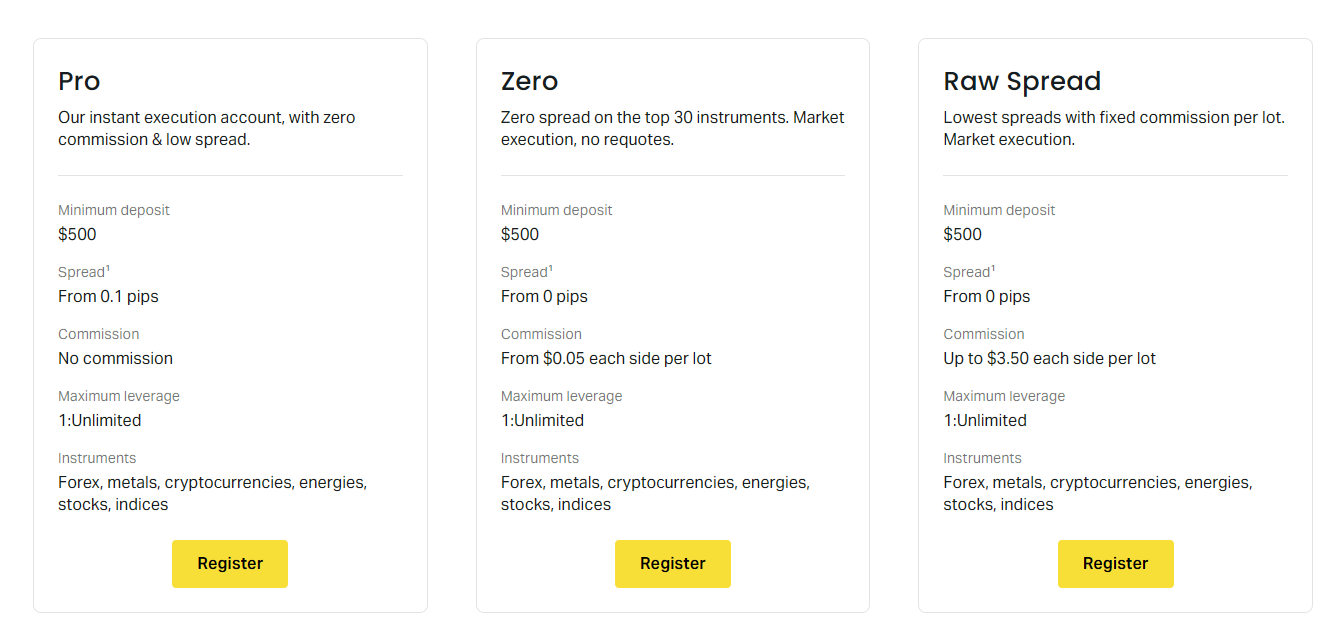
Exness offers several account types, each with distinct margin and leverage characteristics. Standard and Standard Cent accounts target beginners with low minimum deposits and fixed or floating spreads. Professional accounts — Pro, Raw Spread, and Zero — provide tighter spreads and commission-based pricing, often with different margin treatment for large positions.
Scroll horizontally to see all columns
| Account Type | Max Leverage (Forex) | Margin Call Level | Stop Out Level | Commission |
|---|---|---|---|---|
| Standard | 1:Unlimited* | 60% | 0% | None |
| Standard Cent | 1:Unlimited* | 60% | 0% | None |
| Pro | 1:Unlimited* | 60% | 0% | None |
| Raw Spread | 1:Unlimited* | 60% | 0% | $3.5 per lot/side |
| Zero | 1:Unlimited* | 60% | 0% | $3.5 per lot/side |
The asterisk on unlimited leverage indicates that Exness offers 1:Unlimited for eligible accounts with sufficient equity and trading history, subject to dynamic leverage rules. Regulatory restrictions may cap leverage for retail clients in the EU, UK, Australia, and other jurisdictions to 1:30 for major forex pairs and lower for other asset classes. Professional clients who meet eligibility criteria can access higher ratios.
Leverage Options and Margin Impact
Leverage directly determines the margin required for each trade. Higher leverage means lower margin per lot, freeing up capital for additional positions or providing a larger buffer against adverse price moves. However, excessive leverage increases the speed at which losses accumulate, raising the risk of margin calls. Exness allows clients to select their preferred leverage during account creation and adjust it later in the Personal Area.
Dynamic Leverage on Exness
Dynamic leverage is a risk management feature that automatically reduces the maximum available leverage as the total notional value of open positions increases. This protects traders from overexposure during volatile markets. Exness applies dynamic leverage tiers per instrument group. For example, forex majors might allow 1:Unlimited up to $5 million notional, then step down to 1:2000, 1:1000, and so on as exposure grows.
- Tier 1: Up to $5M notional — maximum leverage available.
- Tier 2: $5M–$20M — leverage reduced to 1:2000.
- Tier 3: $20M–$50M — leverage reduced to 1:1000.
- Tier 4: $50M–$100M — leverage reduced to 1:500.
- Tier 5: Above $100M — leverage reduced to 1:200.
These tiers apply per instrument group, not across the entire account. A trader with large forex positions but small gold positions will see leverage reduced only on forex. The system recalculates in real time, and changes take effect immediately. Traders receive notifications when leverage tiers shift, allowing them to adjust positions or deposit additional funds if needed.
Margin Calculation Methods
Exness uses standard margin formulas adapted for each asset class. For forex pairs, margin equals contract size divided by leverage, multiplied by the current price for the base currency. For CFDs on metals, indices, energies, and cryptocurrencies, the formula incorporates the contract specification, including lot size and tick value. The broker provides a built-in margin calculator accessible from the Personal Area and trading platforms.
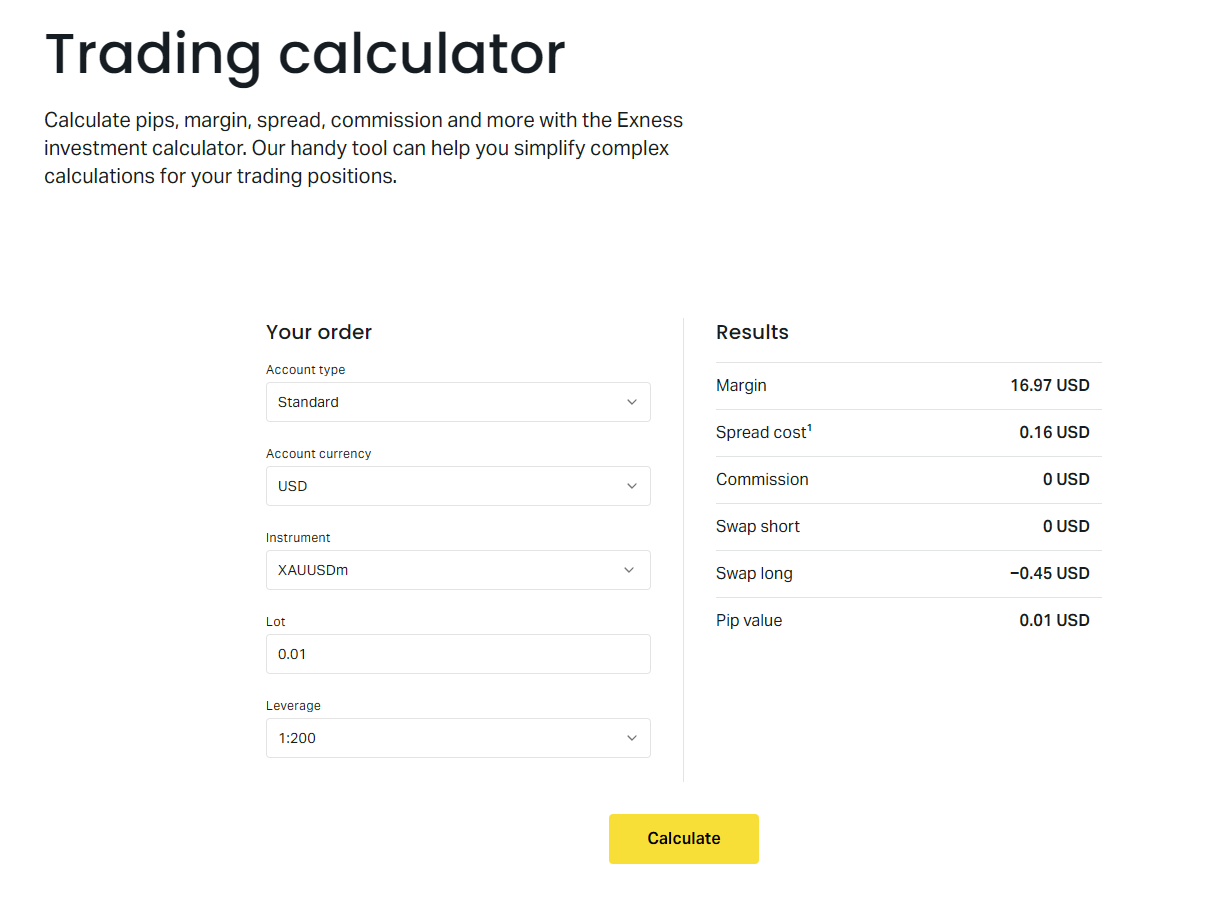
The calculator lets you input account type, leverage, instrument, volume, and entry price to instantly see required margin, pip value, and swap costs. This tool is invaluable for pre-trade planning, especially when scaling into positions or trading multiple correlated instruments. Using it consistently helps avoid accidental overleveraging.
Using the Exness Margin Calculator
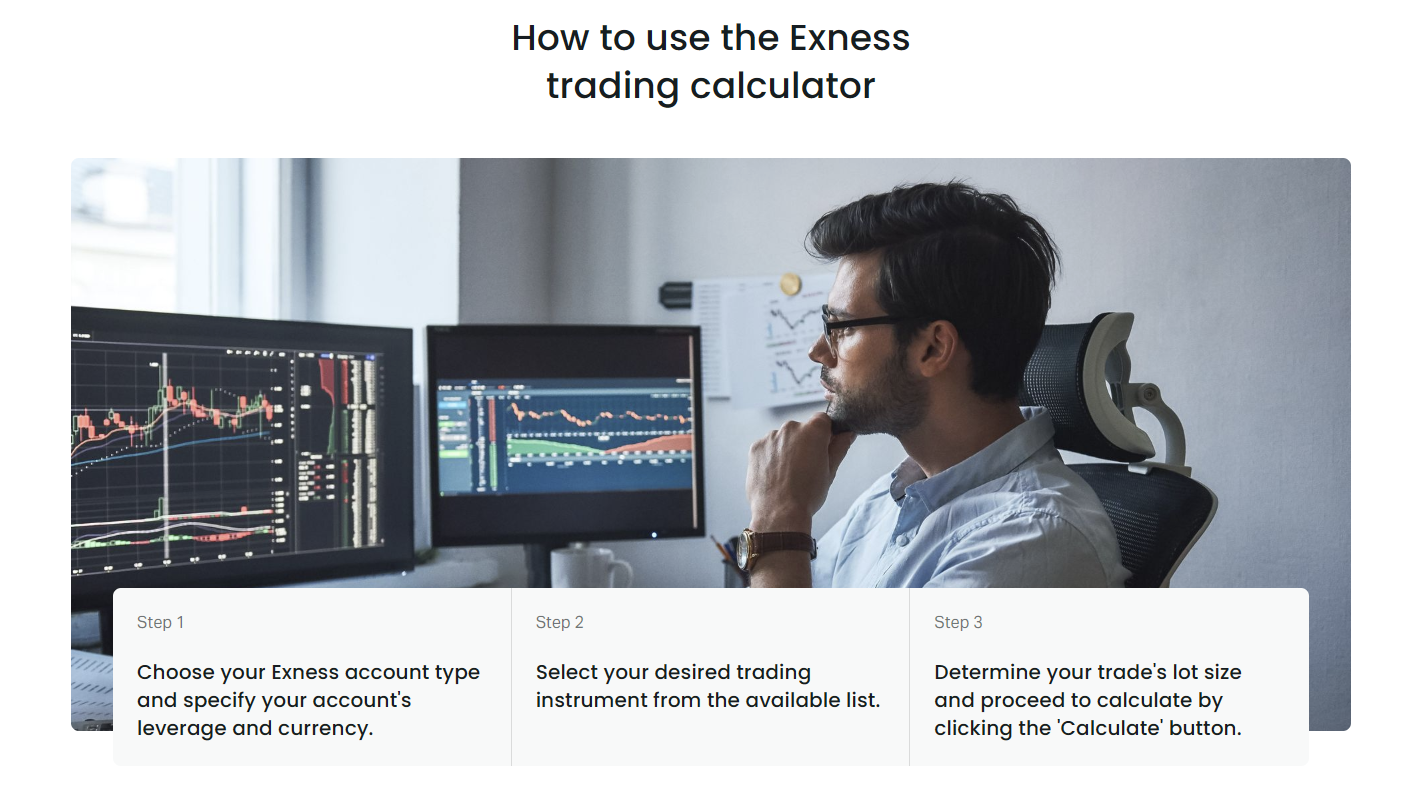
To use the calculator, select your account currency, choose the trading instrument, enter the desired volume in lots, and set your leverage. The tool displays the margin required in your account currency, the point value, and estimated swap charges for long and short positions. You can also simulate different entry prices to see how margin changes with market movement.
The guide illustrates each parameter with examples for forex, gold, US indices, and Bitcoin. It also explains how dynamic leverage affects the calculation when your total exposure crosses tier thresholds. Professional traders often keep the calculator open in a browser tab while analyzing setups, adjusting volume until the margin fits their risk parameters.
Margin Call and Stop Out Levels
A margin call is a warning that your account equity has fallen to a level where additional funds are needed to maintain open positions. Exness sets the margin call level at 60% for most account types. When your margin level drops to 60%, you receive a notification but positions remain open. If equity continues to decline and reaches the stop out level, the system begins closing positions automatically.
Scroll horizontally to see all columns
| Account Type | Margin Call | Stop Out | Position Closure Order |
|---|---|---|---|
| Standard | 60% | 0% | Largest losing position first |
| Standard Cent | 60% | 0% | Largest losing position first |
| Pro | 60% | 0% | Largest losing position first |
| Raw Spread | 60% | 0% | Largest losing position first |
| Zero | 60% | 0% | Largest losing position first |
The 0% stop out level means Exness will close positions until margin level rises above 0%, effectively liquidating all losing trades if necessary. This is more aggressive than brokers who stop out at 20% or 50%. The rationale is to prevent negative balance situations, though Exness also offers negative balance protection for retail clients under applicable regulations. Professional clients should verify their specific agreement terms.
Managing Margin Across Asset Classes
Margin requirements vary significantly across forex, metals, energies, indices, stocks, and cryptocurrencies. Exness groups instruments into categories with distinct leverage and margin rules. Understanding these differences is crucial when building a diversified portfolio or hedging across markets.
Forex Pairs Margin Requirements
Major forex pairs like EURUSD, GBPUSD, and USDJPY typically offer the highest leverage and lowest margin requirements. Exotic pairs and crosses may have higher margin due to lower liquidity and wider spreads. During major news events, Exness may temporarily increase margin requirements for affected pairs to manage systemic risk. These changes are announced in advance via the Economic Calendar and platform notifications.
Metals and Commodities Margin
Gold (XAUUSD) and silver (XAGUSD) are popular with Exness clients. Gold typically allows leverage up to 1:2000 for retail clients in unrestricted jurisdictions, translating to 0.05% margin. Other metals like platinum and palladium have higher margin requirements. Energy CFDs such as USOIL and UKOIL also carry higher margin due to inherent volatility. Commodity margin is calculated per lot based on the contract specification.
Indices and Cryptocurrencies Margin
Major indices like US30, US500, and USTEC offer leverage up to 1:400 for retail clients, requiring 0.25% margin. Cryptocurrency CFDs have the highest margin requirements, often 50% (1:2 leverage) for major coins like BTCUSD and ETHUSD, reflecting extreme volatility. Exness adjusts crypto margin dynamically during weekends and high-volatility periods. Always check the current specification in the trading terminal before entering crypto positions.
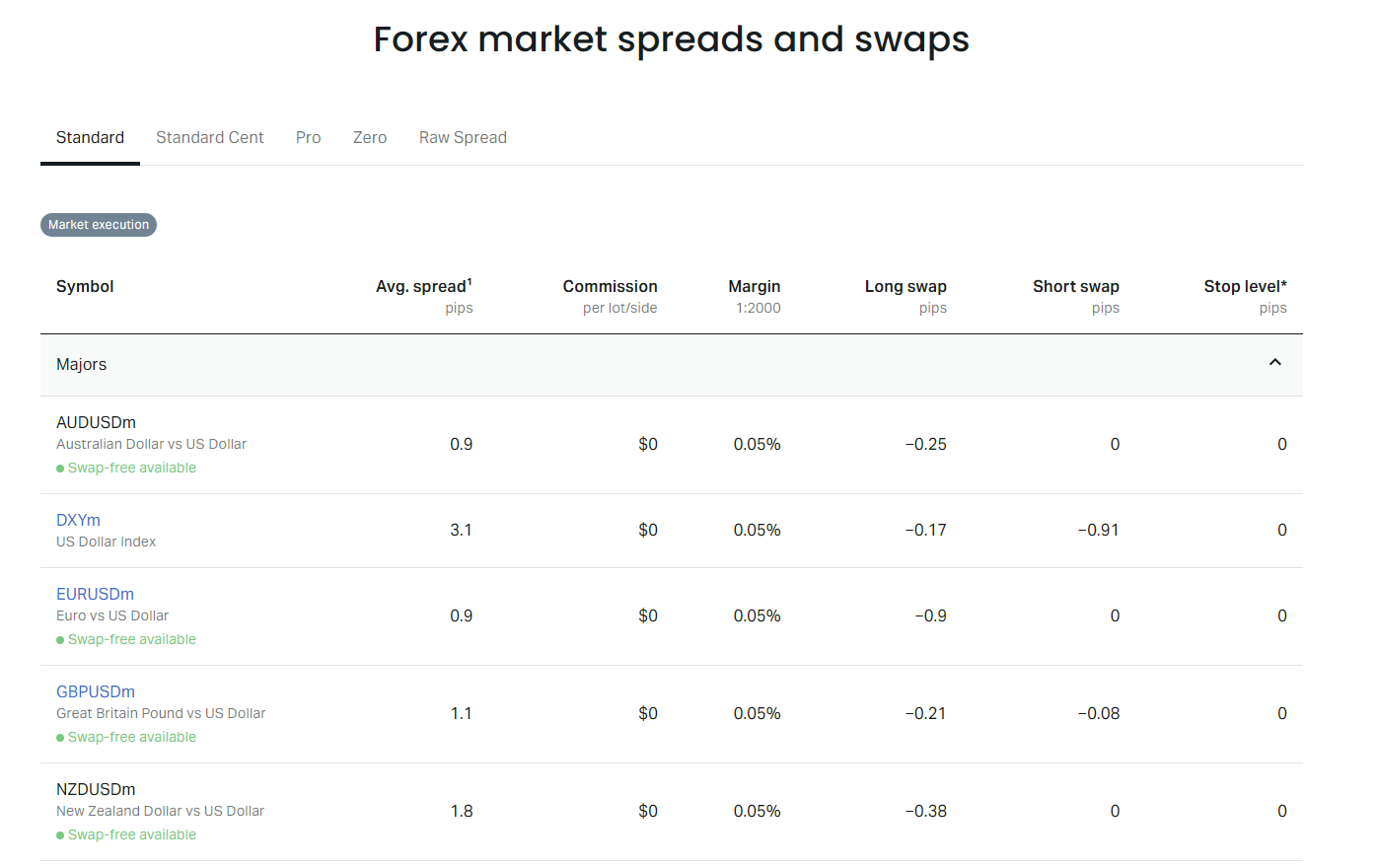
The spreads and swaps table in the Personal Area and on the Exness website lists current margin percentages for every instrument. This table updates in real time and reflects any temporary changes due to market conditions. Bookmark it for quick reference during trading hours.
Professional vs Retail Margin Rules
Regulatory frameworks in the EU, UK, Australia, and other regions impose leverage caps on retail clients. Exness complies by restricting maximum leverage for retail accounts: 1:30 for major forex, 1:20 for minors and gold, 1:10 for other commodities and indices, 1:5 for stocks, and 1:2 for cryptocurrencies. Professional clients who meet quantitative and qualitative criteria can access the broker's full leverage range, including 1:Unlimited where available.
Professional classification requires meeting at least two of three criteria: significant trading volume, large portfolio size, or relevant professional experience. Once approved, the client gains access to higher leverage, but also loses certain regulatory protections such as negative balance protection and lower margin close-out rules. The decision to switch should be based on genuine trading needs and risk tolerance, not merely the desire for higher leverage.
Scroll horizontally to see all columns
| Feature | Retail Client | Professional Client |
|---|---|---|
| Max Forex Leverage | 1:30 | 1:Unlimited* |
| Max Gold Leverage | 1:20 | 1:2000 |
| Max Indices Leverage | 1:10 | 1:400 |
| Max Crypto Leverage | 1:2 | 1:100 |
| Negative Balance Protection | Yes | No |
| Margin Close Out Rule | 50% (regulatory) | 0% (Exness policy) |
The table illustrates the trade-off. Professional clients gain flexibility but assume greater responsibility. Exness provides a professional eligibility assessment in the Personal Area. Traders should review the implications carefully, including tax treatment differences in some jurisdictions, before requesting reclassification.
Risk Management Strategies for Margin Trading
Effective margin management is inseparable from overall risk management. The goal is to survive drawdowns and avoid forced liquidations that lock in losses at the worst prices. Exness provides tools, but the discipline must come from the trader.
- Risk per trade: limit to 1–2% of account equity.
- Maximum concurrent exposure: cap total used margin at 20–30% of equity.
- Correlation awareness: avoid overexposure to correlated pairs like EURUSD and GBPUSD.
- Stop loss discipline: always define exit before entry.
- Position sizing: use the margin calculator to verify lot size.
- Regular withdrawals: remove profits to reduce account equity at risk.
- News avoidance: reduce leverage or close positions before high-impact events.
These rules form a framework. Experienced traders adapt them to their strategy, but the core principle remains: never let a single trade or correlated group of trades threaten the account's survival. Exness's instant withdrawal feature supports the profit removal habit, allowing you to move gains to your wallet within minutes.
Margin is a tool, not a target. The best traders use the minimum leverage necessary to execute their strategy, preserving mental capital alongside financial capital.
Psychological pressure increases as margin level drops. Traders who maintain a healthy buffer make clearer decisions during market stress. Consider setting a personal margin level floor — for example, never letting it fall below 200% — well above the broker's 60% margin call. This self-imposed limit forces early action and prevents emotional reactions.
Monitoring Margin in Trading Platforms
All Exness platforms — MT4, MT5, Web Terminal, and mobile apps — display real-time margin data in the terminal window. Key metrics include balance, equity, used margin, free margin, and margin level percentage. Customizing the display to show only essential columns reduces clutter and helps you focus on the numbers that matter.
MT4 and MT5 Margin Display
In MetaTrader 4 and 5, the Trade tab shows margin for each open position and the account summary at the bottom. Right-click the account summary to add or remove columns. Enable 'Margin Level' and 'Free Margin' for constant visibility. The platforms also support custom indicators that can alert you when margin level crosses thresholds you define.
Exness Web Terminal Margin Tools
The proprietary Exness Web Terminal offers a streamlined margin view with color-coded warnings: green above 200%, yellow 100–200%, orange 60–100%, and red below 60%. This visual cue helps traders assess risk at a glance. The Web Terminal also integrates the margin calculator directly into the order ticket, showing required margin before you confirm a trade.
Common Margin Mistakes to Avoid
Even experienced traders fall into margin traps. Recognizing these patterns can save your account during turbulent markets.
- Ignoring dynamic leverage tiers and assuming constant margin.
- Adding to losing positions without recalculating total margin.
- Trading exotic pairs or crypto with forex-sized lots.
- Holding positions over weekends without checking margin changes.
- Relying solely on the broker's margin call instead of personal alerts.
- Using maximum leverage on every trade as default.
- Forgetting that hedged positions still consume margin on Exness.
Hedging deserves special attention. On Exness, opening an opposite position in the same instrument does not fully offset margin. The larger leg determines the margin requirement, though some reduction applies. This differs from brokers who offer zero-margin hedging. Always verify the net margin impact in the calculator before executing a hedge.
Key Takeaways About Exness Margin
Exness margin conditions are among the most flexible in the industry, offering unlimited leverage for qualified accounts, a transparent 60% margin call and 0% stop out, and real-time calculation tools across all platforms. The dynamic leverage system protects against runaway exposure, while the margin calculator enables precise pre-trade planning. Retail clients face regulatory caps, but professional classification unlocks the full range for those who qualify. Success with margin trading on Exness depends less on the maximum leverage available and more on disciplined position sizing, continuous monitoring, and respect for the amplified risk that leverage introduces.
Frequently Asked Questions
What is the margin call level on Exness?
Exness sets the margin call level at 60% for all standard account types. When your margin level falls to 60%, you receive a notification but positions remain open.
What is the stop out level on Exness?
The stop out level on Exness is 0%. The system will automatically close positions starting with the largest losing trade until your margin level rises above 0%.
Does Exness offer negative balance protection?
Yes, Exness provides negative balance protection for retail clients under applicable regulations. Professional clients may not have this protection depending on their agreement.
How does dynamic leverage work on Exness?
Dynamic leverage automatically reduces maximum available leverage as your total notional exposure increases. It applies per instrument group and recalculates in real time across tiers.
Can I change leverage on an existing Exness account?
Yes, you can adjust leverage in the Personal Area under account settings. Changes apply to new positions; existing positions retain their original leverage until closed.
How is margin calculated for hedged positions on Exness?
For hedged positions in the same instrument, margin is based on the larger leg with a partial reduction. It does not fully offset. Use the margin calculator to see exact requirements.
What leverage is available for retail clients in the EU?
EU retail clients are limited to 1:30 for major forex pairs, 1:20 for minors and gold, 1:10 for other commodities and indices, 1:5 for stocks, and 1:2 for cryptocurrencies per ESMA regulations.
Where can I find current margin requirements for each instrument?
Current margin percentages are listed in the spreads and swaps table in your Personal Area and on the Exness website. The trading terminal also shows margin per position in real time.