
Forex & CFD Trading
Exness Metals Trading: Gold, Silver, and Precious Metals CFDs
Complete guide to precious metals CFD trading conditions, platforms, and risk management.

Forex Analyst
Forex Analyst specializing in currency markets, market trends, technical and fundamental analysis, and providing clear insights to help traders make informed decisions.
Exness Metals Trading provides access to precious metals markets through contracts for difference, allowing traders to speculate on price movements without owning physical bullion. The broker offers gold, silver, platinum, and palladium pairs against major currencies, with trading available on MetaTrader 4, MetaTrader 5, and the proprietary Exness Web Terminal. This article examines the available instruments, trading conditions, platform features, and risk considerations for metals CFD trading on Exness.
Contents
- Precious Metals Available on Exness
- Gold Trading: XAUUSD and XAUEUR
- Silver Trading: XAGUSD and XAGEUR
- Platinum and Palladium CFDs
- Trading Platforms for Metals
- Mobile Trading for Metals
- Account Types and Metals Trading Conditions
- Spreads, Commissions, and Swaps for Metals
- Leverage and Margin Requirements
- Risk Management Tools for Metals Trading
- Market Analysis and Trading Signals
- Trading Hours and Session Characteristics
- Deposit, Withdrawal, and Account Funding
- Key Takeaways for Exness Metals Trading
- Final Assessment of Exness Metals Trading
Precious metals have long served as portfolio diversifiers and hedges against currency depreciation. Through CFDs, traders can take long or short positions with leverage, enabling participation in both rising and falling markets. Exness structures its metals offering around major spot pairs such as XAUUSD for gold and XAGUSD for silver, alongside cross pairs like XAUEUR and XAGEUR. Platinum and palladium are also available, typically quoted against the US dollar.
The broker's execution model emphasizes speed and stability, with market execution as the default for most account types. This means orders are filled at the best available price without requotes, though slippage can occur during volatile periods. Understanding how execution works for metals is essential, as these markets can experience rapid price swings around economic data releases, central bank announcements, and geopolitical events.
Precious Metals Available on Exness
Exness offers four primary precious metals as CFDs: gold, silver, platinum, and palladium. Each metal trades as a spot pair against the US dollar, with gold and silver also available against the euro. The most actively traded pair is XAUUSD, representing gold priced in US dollars per troy ounce. Silver follows as XAGUSD, while platinum and palladium appear as XPTUSD and XPDUSD respectively.
- Gold: XAUUSD, XAUEUR
- Silver: XAGUSD, XAGEUR
- Platinum: XPTUSD
- Palladium: XPDUSD
Gold dominates trading volume due to its status as a global reserve asset and safe-haven instrument. Silver attracts both industrial demand exposure and monetary hedge interest. Platinum and palladium are more closely tied to automotive catalyst demand, making them sensitive to industrial production cycles and emission regulation changes. All metals trade nearly 24 hours a day, five days a week, with a brief daily break for server maintenance.
Gold Trading: XAUUSD and XAUEUR
Gold remains the most popular metals CFD on Exness, with XAUUSD offering deep liquidity and tight spreads during major session overlaps. The pair responds to US dollar strength, real interest rates, inflation expectations, and geopolitical risk sentiment. Traders often use gold as a hedge against equity market drawdowns or currency debasement scenarios. XAUEUR provides an alternative for those wanting euro-denominated exposure without USD correlation.
Contract specifications for gold typically feature a standard lot size of 100 troy ounces, with minimum trade sizes as low as 0.01 lots on Standard accounts. This allows precise position sizing for accounts of any size. Swap rates apply to positions held overnight and vary by account type, with swap-free options available for eligible clients. Margin requirements depend on the selected leverage tier and account equity.
Gold price action often correlates inversely with the US Dollar Index and real yields on Treasury Inflation-Protected Securities. During periods of financial stress, gold may decouple from traditional correlations and rally alongside the dollar as both act as havens. Traders should monitor Federal Reserve policy, CPI releases, and geopolitical developments when positioning in XAUUSD.
Silver Trading: XAGUSD and XAGEUR
Silver combines monetary and industrial characteristics, making it more volatile than gold on a percentage basis. The gold-silver ratio, calculated by dividing the gold price by the silver price, serves as a widely watched indicator of relative value. When the ratio reaches historical extremes, some traders rotate between the two metals. XAGUSD typically sees wider spreads than XAUUSD due to lower liquidity, though Exness maintains competitive pricing across account types.
Industrial demand for silver comes from photovoltaics, electronics, and medical applications. This creates a fundamental floor tied to manufacturing activity, while investment demand responds to the same macro drivers as gold. The dual nature means silver can outperform gold during economic expansions and underperform during contractions. Position sizing should account for higher daily ranges compared to gold.
Platinum and Palladium CFDs
Platinum and palladium occupy a smaller niche in CFD trading, primarily driven by automotive catalyst demand. Platinum sees use in diesel catalysts and jewelry, while palladium dominates gasoline catalyst applications. The shift toward electric vehicles creates long-term structural questions for both metals, though hybrid vehicles continue to require catalysts. Supply concentration in South Africa and Russia adds geopolitical risk premiums.
These metals exhibit lower liquidity than gold and silver, resulting in wider spreads and higher margin requirements. Exness offers XPTUSD and XPDUSD with standard lot sizes of 100 troy ounces for platinum and 100 troy ounces for palladium. Minimum trade sizes remain at 0.01 lots. Traders should verify current spread and swap conditions in the trading terminal before entering positions, as these can widen significantly around major economic releases.
Palladium has historically traded at a premium to platinum due to tighter gasoline vehicle supply dynamics. However, the ratio has inverted during periods of substitution speculation. Both metals can experience sharp intraday moves on mining disruption news, labor strikes, or export restriction announcements. Risk management becomes even more critical given the reduced liquidity.
Trading Platforms for Metals
Exness supports metals trading across three platform families: MetaTrader 4, MetaTrader 5, and the Exness Web Terminal. Each provides access to the full metals instrument list with real-time pricing, charting tools, and order management. The choice often comes down to workflow preference, as all platforms connect to the same pricing engine and execution infrastructure.
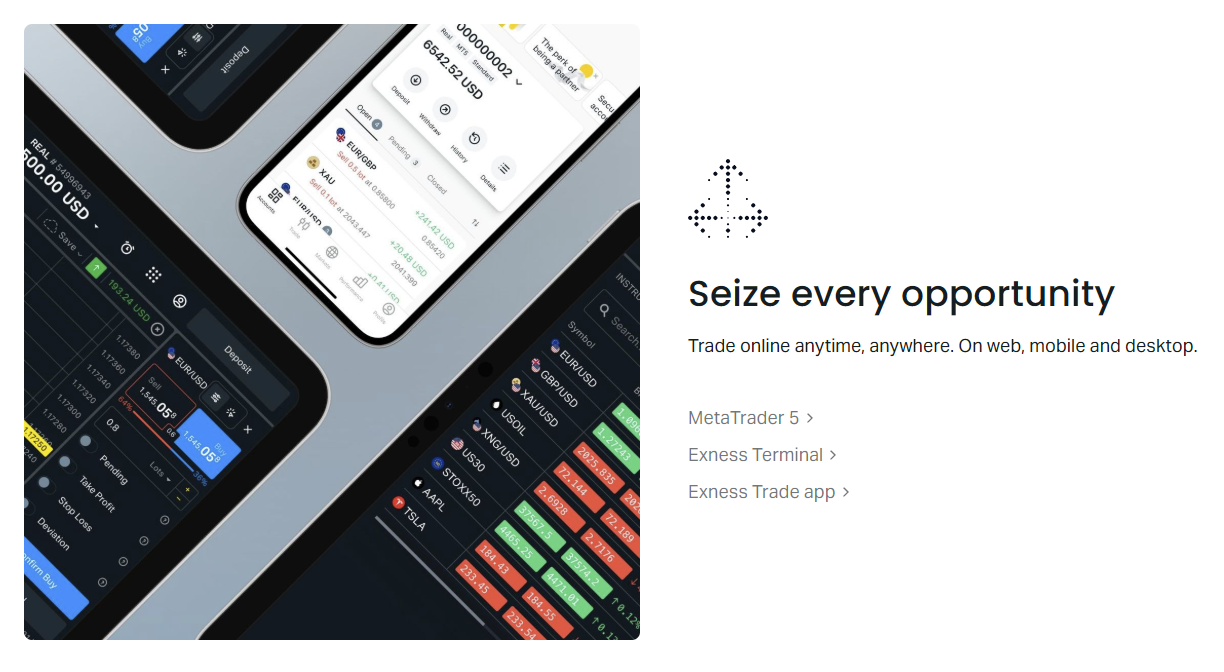
MetaTrader 4 remains popular for its extensive expert advisor ecosystem and familiar interface. It supports hedging mode by default and offers 9 timeframes for technical analysis. MetaTrader 5 adds more timeframes, an economic calendar, depth of market, and netting mode alongside hedging. The Exness Web Terminal requires no installation, runs in any modern browser, and synchronizes with the trader's Personal Area for seamless account management.
Mobile Trading for Metals
Both MetaTrader 4 and MetaTrader 5 offer native mobile applications for iOS and Android, providing full metals trading capability on smartphones and tablets. The Exness Trade app adds a streamlined mobile-first experience with integrated account management, deposits, and withdrawals. Mobile platforms support all order types, including pending orders and trailing stops, enabling position management away from the desktop.
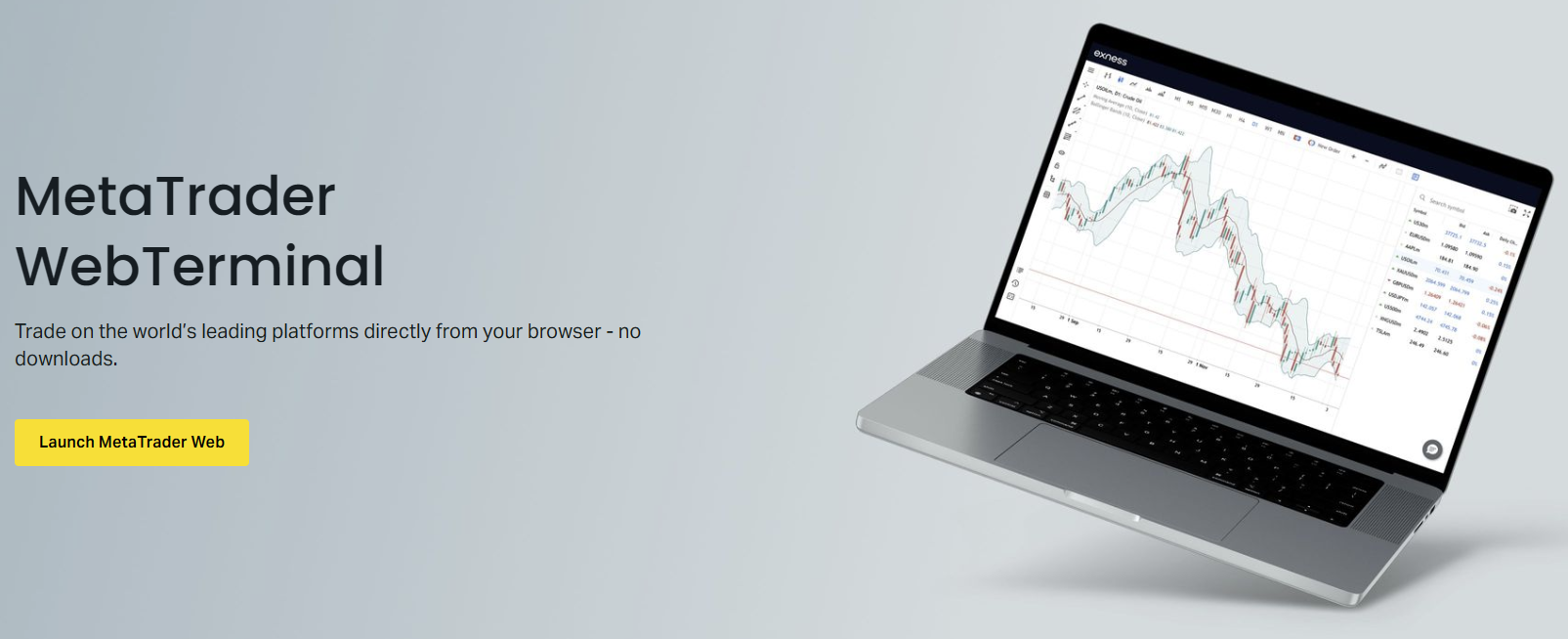
The Web Terminal and mobile apps synchronize chart templates, indicators, and drawing objects across devices when logged into the same account. This allows traders to analyze metals charts on desktop, set alerts, and manage positions from mobile without losing their workspace. Push notifications for price alerts and margin calls help maintain awareness during volatile sessions.
Account Types and Metals Trading Conditions
Exness offers Standard and Professional account categories, each with distinct metals trading conditions. Standard accounts include Standard and Standard Cent, featuring market execution, no commissions, and spreads that incorporate the broker's markup. Professional accounts include Raw Spread, Zero, and Pro, offering tighter raw spreads with per-lot commissions. The account choice affects effective trading costs for metals, particularly for high-frequency or scalping strategies.
Scroll horizontally to see all columns
| Account Type | Execution | Commission | Spread Basis |
|---|---|---|---|
| Standard | Market | None | Markup included |
| Standard Cent | Market | None | Markup included |
| Raw Spread | Market | Per lot | Raw interbank |
| Zero | Market | Per lot | Raw interbank |
| Pro | Market | None | Raw interbank |
Standard Cent accounts denominate balance in cents, allowing micro-lot trading with minimal capital. This suits beginners testing metals strategies with real market conditions. Professional accounts require higher minimum deposits but reduce the all-in cost per trade for active traders. The Pro account eliminates commissions entirely while providing raw spreads, though it carries the highest equity requirement. Traders should calculate their expected volume and compare total cost across account types.
Spreads, Commissions, and Swaps for Metals
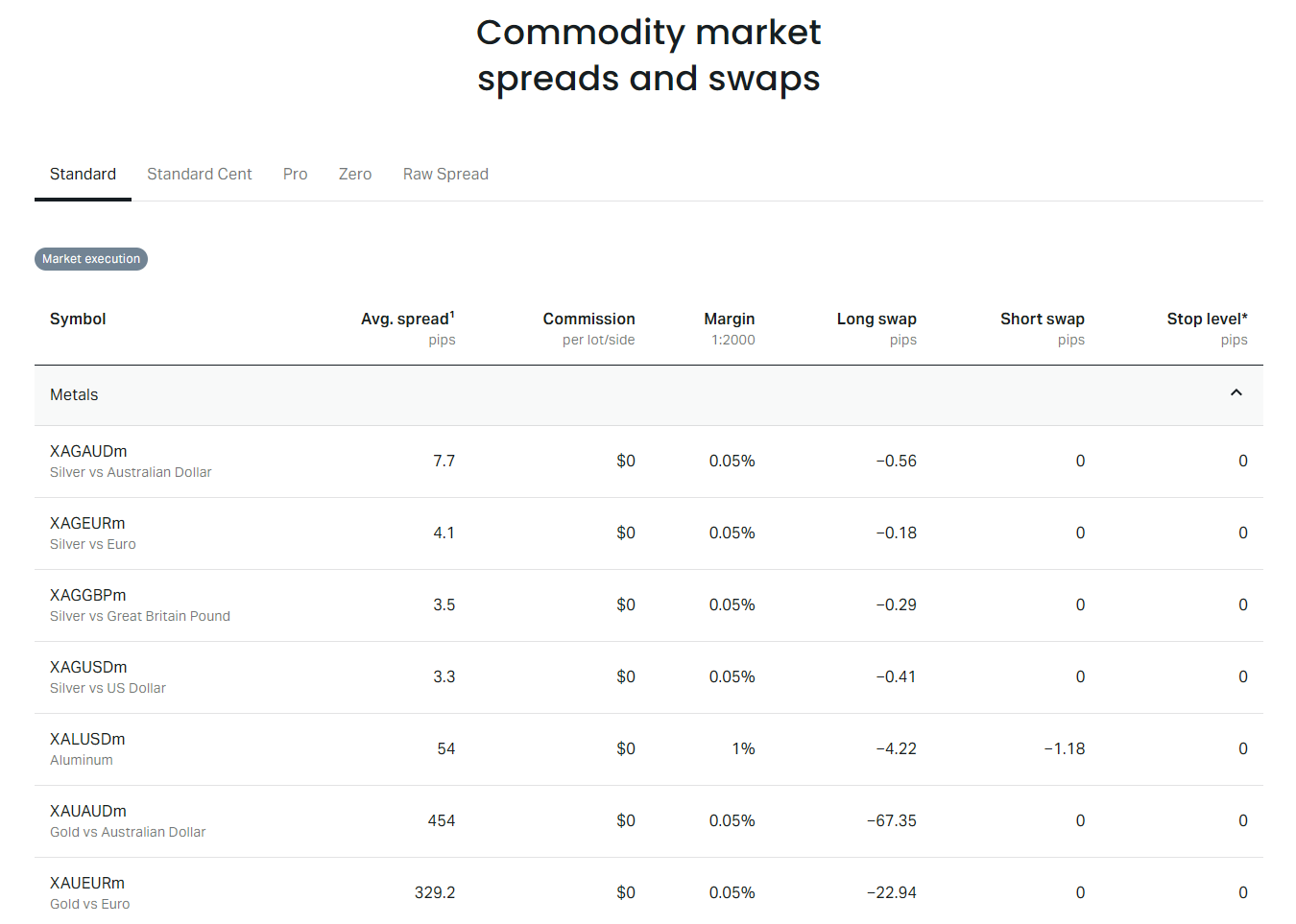
Spreads on metals vary by instrument, time of day, and market conditions. XAUUSD typically shows the tightest spreads, often starting from 0.1 pips on Raw Spread and Zero accounts during peak liquidity. XAGUSD spreads are wider, reflecting lower order book depth. Platinum and palladium spreads are the widest among the metals. Commissions on Raw Spread and Zero accounts are charged per round-turn lot and differ by instrument.
Swap rates for metals CFDs reflect the interest rate differential between the base currency and the metal's implied financing cost. Gold and silver swaps can be positive or negative depending on prevailing rates and the broker's markup. Swap-free accounts eliminate overnight financing charges for eligible clients, typically those residing in jurisdictions where swap payments conflict with religious principles. Weekend swaps are usually tripled to account for the two-day settlement gap.
Effective metals trading cost analysis requires combining spread, commission, and expected swap accumulation over the intended holding period.
Leverage and Margin Requirements
Exness provides dynamic leverage for metals that adjusts based on account equity and the specific instrument. Gold typically offers the highest maximum leverage, while silver, platinum, and palladium have progressively lower tiers. As account equity grows, maximum available leverage decreases in steps to manage systemic risk. Margin requirements are calculated as a percentage of notional position value and update in real time.
Traders should understand that leverage amplifies both gains and losses. A 1% adverse move on a position leveraged 1:200 results in a 200% loss of the allocated margin. Exness implements margin call and stop-out levels to prevent negative balances, with stop-out typically occurring when margin level falls below a defined threshold. Monitoring free margin and using stop-loss orders are essential practices for metals positions.
Risk Management Tools for Metals Trading
Exness provides several built-in risk management features applicable to metals trading. Stop-loss and take-profit orders can be set at order entry or attached to open positions. Trailing stops automatically adjust the stop-loss level as price moves favorably, locking in profits while allowing room for normal fluctuations. The trading calculator in the Personal Area helps estimate margin, pip value, and swap costs before entering a trade.
Negative balance protection ensures clients cannot lose more than their deposited funds, a critical safeguard for leveraged metals positions during extreme market events. The margin call notification system alerts traders when account equity approaches critical levels, providing time to add funds or reduce exposure. Guaranteed stop-loss orders are not currently offered; slippage can occur during gaps or flash crashes.
- Stop-loss and take-profit on every position
- Trailing stop for trend-following strategies
- Trading calculator for pre-trade analysis
- Negative balance protection on all accounts
- Margin call and stop-out automation
Market Analysis and Trading Signals
Exness integrates Trading Central signals and analytics directly into its platforms, providing technical analysis, pivot points, and pattern recognition for metals pairs. The economic calendar highlights high-impact events that historically move gold and silver, such as FOMC meetings, non-farm payrolls, CPI releases, and central bank speeches. FXStreet market news feed delivers real-time commentary on precious metals drivers.
Technical traders can apply the full suite of MetaTrader indicators and custom tools to metals charts. Popular approaches include trend-following with moving averages, mean reversion using Bollinger Bands, and momentum oscillators like RSI for overbought or oversold conditions. Fundamental traders monitor real yields, dollar index, inflation breakevens, and physical demand data from major consuming nations.
Combining technical entry signals with fundamental awareness of macro catalysts improves timing for metals CFD trades.
Trading Hours and Session Characteristics
Metals CFDs trade from Monday 00:05 server time to Friday 23:55 server time, with a daily break from 23:55 to 00:05 for maintenance. Liquidity peaks during the London and New York session overlap, roughly 13:00 to 17:00 UTC, when spreads are tightest and execution quality highest. The Asian session sees reduced participation and wider spreads, particularly for platinum and palladium.
Gold and silver remain active around the clock due to global demand, but volume thins significantly during the daily maintenance window and early Asian hours. Traders holding positions through the break should anticipate potential gaps at reopen. Economic calendar events scheduled during low-liquidity periods can produce exaggerated moves. Adjusting position size for session risk is a prudent practice.
Deposit, Withdrawal, and Account Funding
Funding an Exness account for metals trading supports multiple methods including bank cards, electronic wallets, bank transfers, and regional payment systems. Minimum deposit requirements vary by method and region, with some options allowing instant crediting. Withdrawals are processed back to the original deposit method where possible, with many electronic methods offering near-instant settlement. The broker does not charge deposit or withdrawal fees, though payment providers may apply their own charges.
Account verification follows standard KYC procedures, requiring proof of identity and address. Completing verification unlocks higher withdrawal limits and access to all payment methods. The Personal Area dashboard provides transparent tracking of transaction history, pending requests, and available balance. Traders should ensure sufficient free margin before initiating withdrawals to avoid automatic position closure.
Key Takeaways for Exness Metals Trading
Exness Metals Trading delivers a comprehensive precious metals CFD offering with competitive pricing, multiple platform choices, and robust risk management infrastructure. Gold and silver provide the deepest liquidity and tightest spreads, making them suitable for a wide range of strategies from scalping to position trading. Platinum and palladium cater to specialized views on industrial demand dynamics but require wider risk parameters.
Account type selection should align with trading volume and cost sensitivity. Standard accounts simplify cost structure with spread-only pricing, while Professional accounts reduce all-in costs for active traders through raw spreads and commissions. The availability of swap-free accounts accommodates diverse client needs. Mobile and web platforms ensure continuous access without software installation.
Frequently Asked Questions
Which precious metals can I trade as CFDs on Exness?
Exness offers gold (XAUUSD, XAUEUR), silver (XAGUSD, XAGEUR), platinum (XPTUSD), and palladium (XPDUSD) as CFD instruments.
What is the minimum trade size for metals on Exness?
The minimum trade size for metals CFDs is 0.01 lots on Standard and Professional accounts, representing 1 troy ounce for gold and silver.
Are swap-free accounts available for metals trading?
Yes, Exness provides swap-free account options for eligible clients, eliminating overnight financing charges on metals positions.
Which platform is best for trading metals on Exness?
All platforms (MT4, MT5, Web Terminal, mobile apps) provide full metals access. Choice depends on preferred workflow, charting tools, and whether you need expert advisors or browser-based access.
How does leverage work for metals on Exness?
Leverage is dynamic and varies by instrument and account equity. Gold offers the highest maximum leverage, with progressively lower tiers for silver, platinum, and palladium.
What are the trading hours for metals CFDs?
Metals trade Monday 00:05 to Friday 23:55 server time, with a daily maintenance break from 23:55 to 00:05.
Does Exness charge commissions on metals trades?
Standard accounts have no commissions with spreads including markup. Raw Spread and Zero accounts charge per-lot commissions with raw spreads. Pro accounts offer raw spreads with no commissions.
Final Assessment of Exness Metals Trading
Exness Metals Trading stands out for its broad instrument coverage, flexible account structure, and multi-platform accessibility. The combination of tight spreads on major pairs, dynamic leverage scaling, and negative balance protection creates a professional-grade environment for precious metals CFD trading. Traders benefit from integrated analytics, instant withdrawal options, and a regulatory framework spanning multiple jurisdictions. Whether pursuing short-term tactical trades or longer-term macro positions, the infrastructure supports diverse approaches while emphasizing risk awareness. As with all leveraged products, success depends on disciplined strategy execution, appropriate position sizing, and continuous education on the unique drivers of each metal.