

Forex Broker Fees
Exness Fees: Complete Guide to Trading Costs and Charges
Detailed breakdown of all trading and non-trading fees for Exness clients.

Forex Analyst
Forex Analyst specializing in currency markets, market trends, technical and fundamental analysis, and providing clear insights to help traders make informed decisions.
Trading costs directly affect profitability, and understanding the complete fee structure at any broker is essential for effective capital management. Exness operates with a transparent pricing model that varies by account type, instrument class, and trade volume. This guide examines every cost component — from spreads and commissions to swap rates and withdrawal charges — so traders can calculate true expenses before placing orders.
Contents
- Exness Fee Structure Overview
- Spread Costs Across Account Types
- Standard Account Spreads
- Professional Account Spreads
- Commission Fees for Raw Spread and Zero Accounts
- Swap Rates and Overnight Financing
- Forex Swap Rates
- Commodity and Index Swaps
- Deposit and Withdrawal Fees
- Exness Withdrawal Fees by Method
- Non-Trading Fees and Inactivity Charges
- Fee Comparison with Industry Standards
- How to Minimize Trading Costs on Exness
- Key Takeaways on Exness Fees
Exness offers several account categories, each with distinct fee characteristics. Standard accounts use spread-only pricing with no commission, while professional accounts such as Raw Spread and Zero introduce per-lot commissions in exchange for tighter spreads. The broker also applies overnight financing fees known as swaps, which differ across forex pairs, metals, energies, indices, stocks, and cryptocurrencies. Non-trading fees include potential inactivity charges and payment processor costs, though Exness itself does not charge for most deposits or withdrawals.
This analysis covers the current fee schedule as published by Exness, explains how fees interact with leverage and position sizing, and provides practical comparisons to help traders select the most cost-efficient account for their strategy. All figures referenced reflect typical market conditions; actual spreads and swaps fluctuate with liquidity and volatility.
Exness Fee Structure Overview
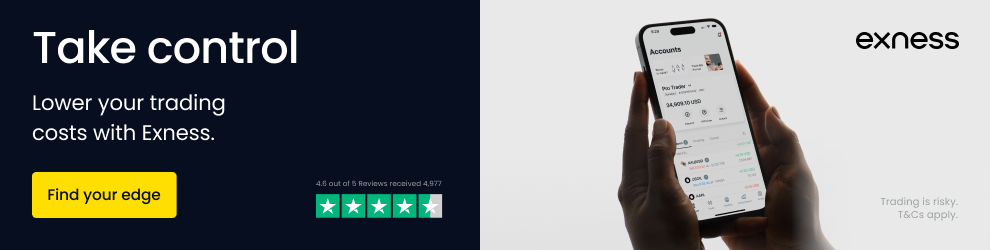
Exness separates trading fees into three primary categories: spread costs, commission charges, and swap rates. Spread costs represent the difference between bid and ask prices at order execution. Commission charges apply only to Raw Spread and Zero accounts as a fixed fee per lot traded per side. Swap rates, also called rollover fees, accrue when positions remain open past the daily cutoff time. Additionally, non-trading fees may arise from payment providers or account dormancy, though Exness absorbs most transaction fees for popular deposit and withdrawal methods.
The broker publishes real-time spread and swap data in the trading terminal and on its website, allowing traders to verify current rates before entering positions. Spreads are variable and widen during major news events, low-liquidity hours, or periods of extreme volatility. Commissions remain fixed per lot regardless of market conditions. Swaps are calculated daily based on interbank interest rate differentials and a broker markup, with triple swaps applied on Wednesdays to account for weekend rollover.
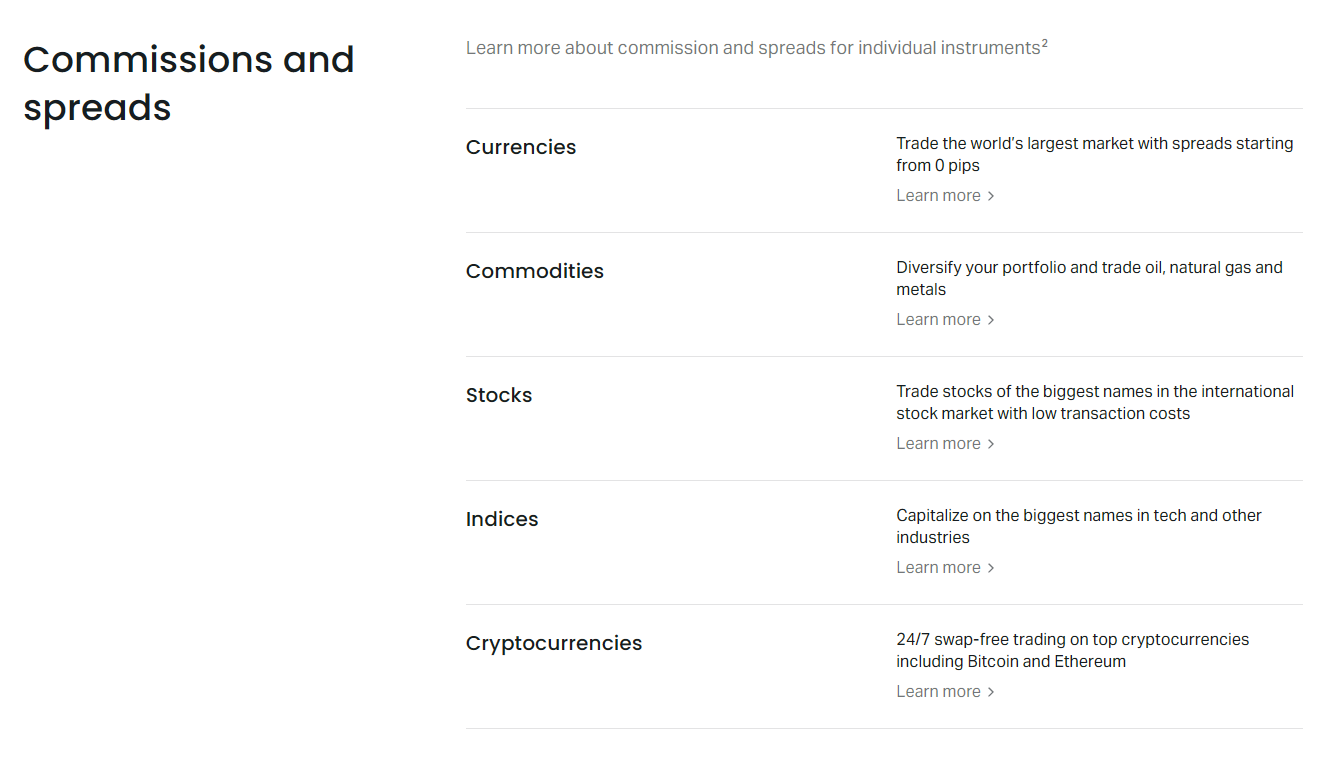
Account type selection fundamentally changes the fee profile. Standard and Standard Cent accounts charge no commission; all costs are embedded in the spread. Pro, Raw Spread, and Zero accounts charge commissions but offer significantly tighter spreads, often starting from zero pips on major pairs. The break-even volume where commission-based accounts become cheaper than spread-only accounts depends on the specific instrument and typical spread width. High-frequency traders and scalpers generally benefit from commission accounts, while swing traders holding positions for days may prefer spread-only simplicity.
Spread Costs Across Account Types
Spreads constitute the most visible trading cost for the majority of Exness clients. The broker aggregates liquidity from multiple providers, enabling competitive spreads that vary by account tier. Standard accounts typically show EURUSD spreads around 0.7 to 1.0 pips under normal conditions, while Pro accounts reduce this to approximately 0.3 to 0.6 pips. Raw Spread and Zero accounts frequently display near-zero spreads on major pairs during peak liquidity, with the trade-off being a fixed commission per lot.
Standard Account Spreads
Standard accounts target retail traders seeking simplicity. No commission is charged; the spread includes the broker's markup. Typical spreads for major forex pairs range from 0.7 pips on EURUSD to 1.5 pips on GBPUSD during London-New York overlap. Minor pairs such as EURGBP or AUDJPY often trade between 1.2 and 2.5 pips. Exotic pairs carry wider spreads, frequently exceeding 10 pips, reflecting lower liquidity and higher provider risk. Gold (XAUUSD) spreads on Standard accounts average 25 to 40 cents, while major indices like US30 trade around 1.5 to 3 points.
- EURUSD: 0.7–1.0 pips typical
- GBPUSD: 1.0–1.5 pips typical
- USDJPY: 0.7–1.0 pips typical
- XAUUSD: 25–40 cents typical
- US30: 1.5–3 points typical
- Exotic pairs: 10+ pips common
Standard Cent accounts mirror Standard spreads but denominate balances in cents, allowing micro-lot trading with minimal capital. Spreads in pip terms are identical; only the monetary value per pip changes. This makes Cent accounts suitable for strategy testing and low-risk practice without altering cost structure.
Professional Account Spreads
Professional accounts — Pro, Raw Spread, and Zero — deliver institutional-grade spreads. Pro accounts offer spreads starting from 0.1 pips on majors with no commission, positioning them between Standard and commission-based tiers. Raw Spread accounts provide spreads from 0.0 pips with a commission of $3.50 per lot per side ($7 round turn). Zero accounts also start from 0.0 pips but charge $3.50 per lot per side on forex and metals, with slightly different commission schedules for other asset classes. The effective cost per trade equals spread cost plus commission, which often undercuts Standard accounts for traders executing sufficient volume.
Scroll horizontally to see all columns
| Instrument | Standard | Pro | Raw Spread | Zero |
|---|---|---|---|---|
| EURUSD | 0.7–1.0 pips | 0.1–0.3 pips | 0.0–0.1 pips | 0.0–0.1 pips |
| GBPUSD | 1.0–1.5 pips | 0.2–0.4 pips | 0.0–0.2 pips | 0.0–0.2 pips |
| XAUUSD | 25–40 cents | 10–20 cents | 5–15 cents | 5–15 cents |
| US30 | 1.5–3 points | 0.8–1.5 points | 0.4–1.0 points | 0.4–1.0 points |
| BTCUSD | 15–30 dollars | 10–20 dollars | 5–15 dollars | 5–15 dollars |
Spread widening during news releases affects all account types proportionally. Exness does not guarantee fixed spreads; the variable model reflects genuine market depth. Traders using expert advisors or scalping strategies should test spread behavior during high-impact events such as NFP, CPI, or central bank announcements to ensure strategy viability.
Commission Fees for Raw Spread and Zero Accounts
Commission-based accounts charge a fixed fee per standard lot (100,000 units of base currency) per trade side. On Raw Spread and Zero accounts, the standard forex and metals commission is $3.50 per lot per side, equating to $7.00 per round-turn lot. This fee is deducted at trade opening and closing. For a 0.1 lot EURUSD trade, the commission would be $0.35 per side. Commissions for indices, energies, stocks, and cryptocurrencies follow separate schedules, typically expressed as a percentage of notional value or a fixed amount per lot.
The commission structure is volume-neutral — no tiered discounts or rebates apply for higher volumes on standard retail accounts. However, Exness offers an Introducing Broker (IB) and partner program where affiliates earn rebates from client commissions, effectively reducing net costs for referred traders. Institutional clients negotiating directly with Exness may receive custom commission rates based on monthly volume commitments.
Calculating total trading cost requires adding spread cost (in monetary terms) to commission. For example, if Raw Spread EURUSD shows 0.05 pips average spread and commission is $7 per round lot, a 1-lot trade costs approximately $5 in spread (0.05 pips × $10 per pip) plus $7 commission, totaling $12. A Standard account with 0.8 pips spread costs $80 per lot with no commission. The crossover point where Raw Spread becomes cheaper occurs around 0.15 pips equivalent spread difference, which major pairs frequently achieve during active sessions.
Swap Rates and Overnight Financing
Swaps represent the cost or credit of holding positions overnight. They derive from the interest rate differential between the two currencies in a forex pair, plus a broker markup. Long positions on the higher-yielding currency may earn positive swap; short positions pay negative swap. Exness publishes daily swap rates for all instruments in the trading terminal and contract specifications. Triple swaps apply on Wednesday night to cover Saturday and Sunday when markets are closed.
Forex Swap Rates
Forex swaps vary significantly by pair. Major pairs with similar interest rates (e.g., EURUSD, GBPUSD) often show small negative swaps on both sides due to the broker markup. Pairs with wide rate differentials (e.g., USDTRY, USDMXN, EURTRY) can generate substantial positive or negative swaps depending on direction. For example, long USDTRY may earn significant positive swap reflecting Turkey's higher interest rates, while short USDTRY pays a large negative swap. Traders holding positions for weeks or months must factor cumulative swap impact into profit projections.
Scroll horizontally to see all columns
| Pair | Long Swap | Short Swap |
|---|---|---|
| EURUSD | -0.8 | -0.4 |
| GBPUSD | -0.6 | -0.5 |
| USDJPY | 0.2 | -1.2 |
| USDTRY | 120.0 | -150.0 |
| EURTRY | 90.0 | -110.0 |
| AUDUSD | -0.3 | -0.7 |
Swap rates update daily based on central bank policy changes and interbank lending conditions. Exness applies a markup to the raw interbank rate, which constitutes the broker's compensation for carrying the position. Islamic (swap-free) accounts eliminate swaps entirely for eligible clients, replacing them with a fixed administration fee per lot per night after a grace period, ensuring Sharia compliance without overnight interest.
Commodity and Index Swaps
Metals, energies, indices, stocks, and cryptocurrencies use a different swap calculation based on the underlying asset's financing cost. Gold (XAUUSD) swaps typically run negative on both sides, reflecting storage and financing costs. Crude oil (USOIL, UKOIL) swaps incorporate the futures curve structure — contango or backwardation — which can flip swap signs depending on contract month. Index swaps track the risk-free rate minus dividend yield for the constituent stocks. Cryptocurrency swaps are generally high negative on both sides due to borrowing costs and volatility risk premiums.
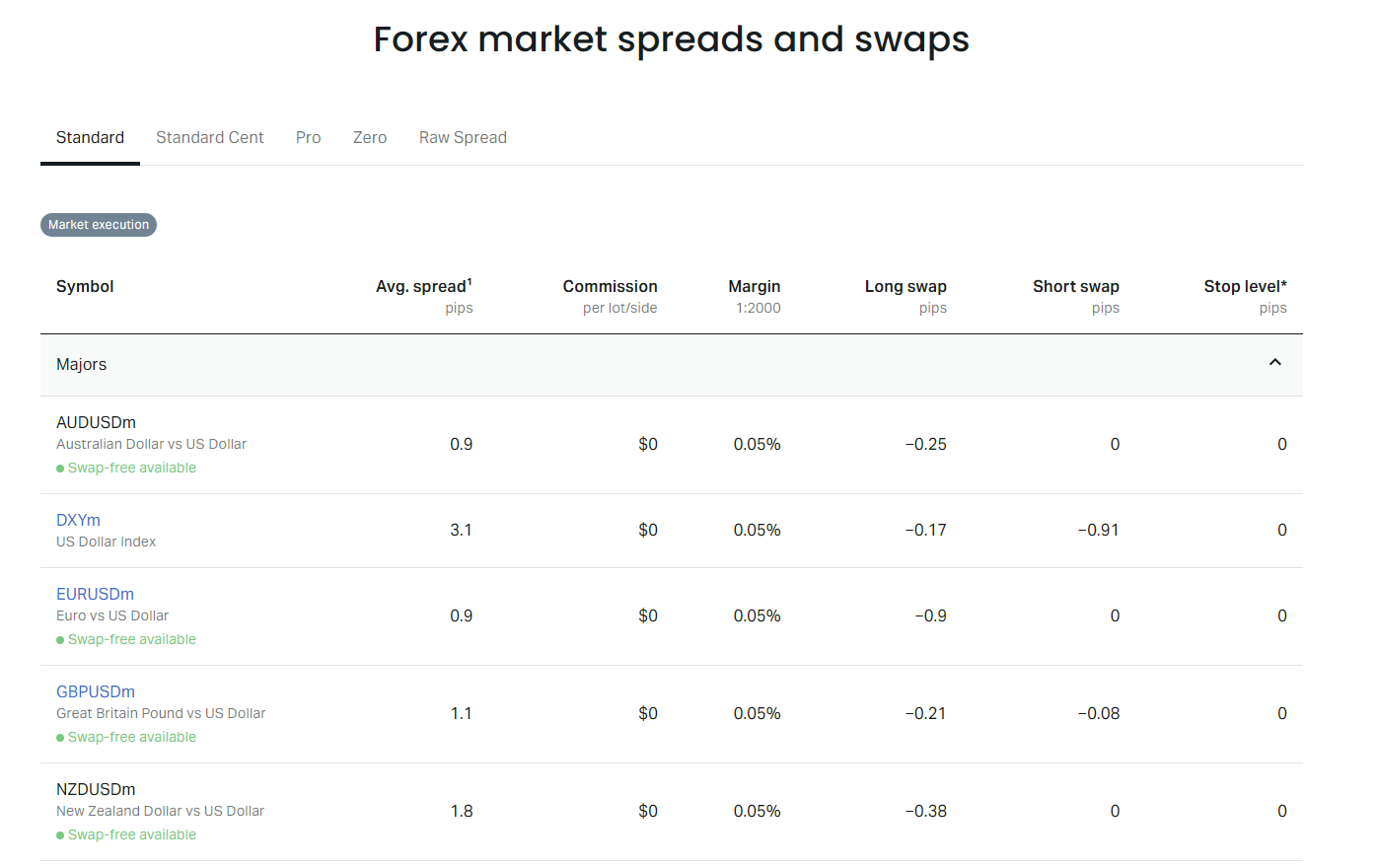
Traders can view exact swap values for any instrument in the MetaTrader Market Watch window by right-clicking and selecting Specification. The swap long and swap short fields show points per lot per night. To convert to account currency, multiply points by pip value and lot size. Monitoring swap trends helps position traders decide whether to roll positions or close before weekend triple-swap charges.
Deposit and Withdrawal Fees
Exness does not charge internal fees for deposits or withdrawals via most electronic payment systems, including bank cards, electronic wallets (Skrill, Neteller, WebMoney, Perfect Money), and local payment methods in supported regions. Cryptocurrency deposits and withdrawals (USDT, USDC, BTC, ETH) are also free on the Exness side, though blockchain network fees apply and are paid to miners, not the broker. Bank wire transfers may incur intermediary bank charges, which Exness cannot control; the broker recommends confirming total costs with the sending bank before initiating wires.
Exness Withdrawal Fees by Method
Withdrawal processing times and potential third-party fees vary by method. Card refunds (Visa, Mastercard) typically process within 1–3 business days and are fee-free from Exness, though card issuers may apply currency conversion fees if the account currency differs from the card currency. E-wallet withdrawals are often instant after approval and carry no Exness fee. Local payment methods (e.g., Pix in Brazil, UPI in India, bank transfers in Vietnam, Thailand, Indonesia) are generally free and settle within hours. Cryptocurrency withdrawals require network confirmations; Exness covers no miner fees.
Scroll horizontally to see all columns
| Method | Exness Fee | Processing Time | Notes |
|---|---|---|---|
| Visa / Mastercard | None | 1–3 business days | Card issuer may charge FX fee |
| Skrill / Neteller | None | Instant | Wallet may charge internal fee |
| Bank Wire | None | 1–5 business days | Intermediary banks may deduct fees |
| Crypto (USDT, BTC, ETH) | None | Blockchain dependent | Network fee paid to miners |
| Local Bank Transfer | None | Minutes to hours | Region-specific availability |
Minimum withdrawal amounts apply per method and are displayed in the Personal Area. Exness processes withdrawal requests 24/7, including weekends, for most electronic methods. Bank wires follow banking hours. The broker emphasizes instant withdrawals as a core feature; the majority of e-wallet and local transfer requests complete automatically without manual review.
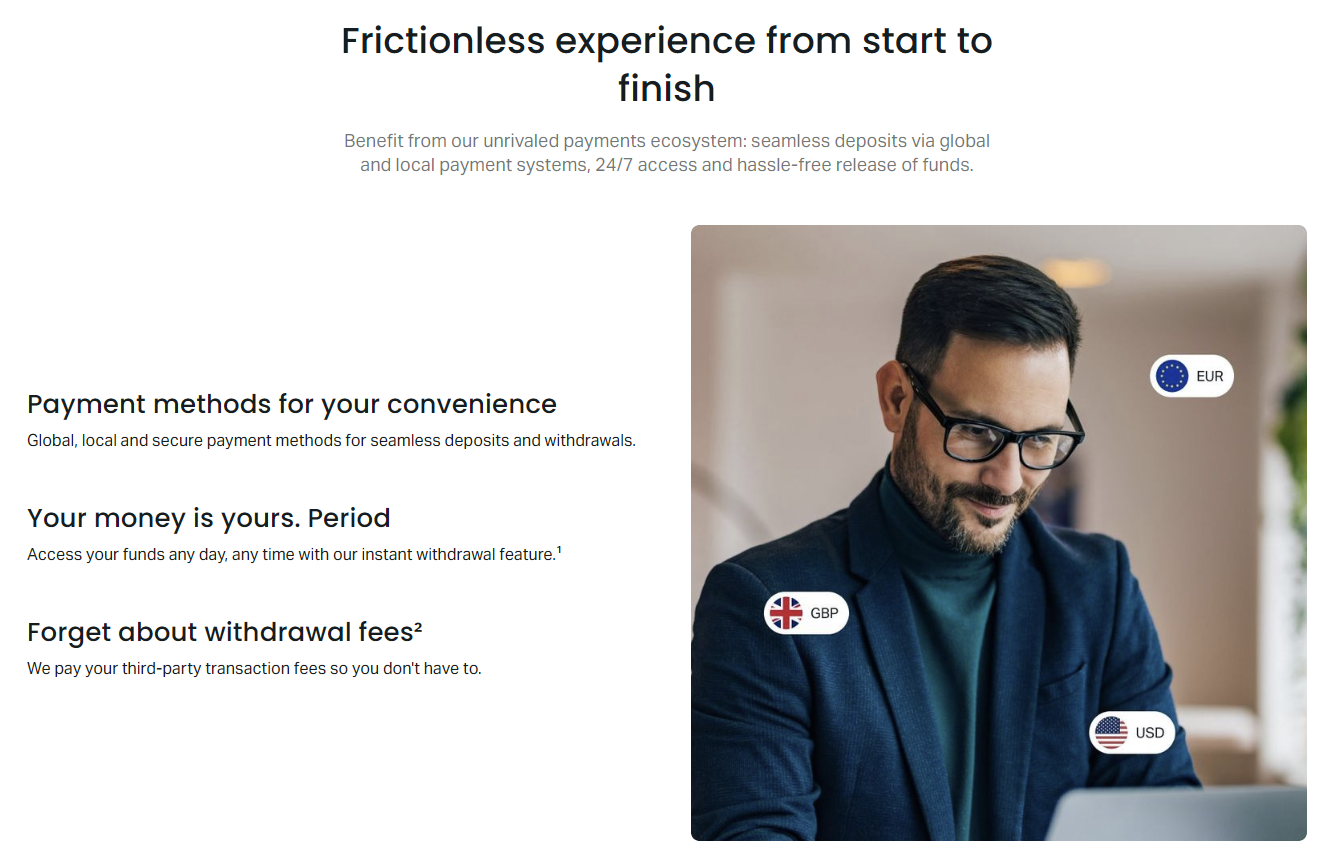
Currency conversion occurs automatically when deposit or withdrawal currency differs from the trading account currency. Exness uses competitive interbank rates with a small markup. Traders can avoid conversion costs by maintaining accounts in their preferred base currency (USD, EUR, GBP, CHF, JPY, AUD, CAD, NZD, SGD, HKD, CNY, and others) and funding in the same currency.
Non-Trading Fees and Inactivity Charges
Exness applies an inactivity fee of $10 per month on accounts with no trading activity, no open positions, and no deposits or withdrawals for 180 consecutive calendar days. The fee deducts from the account balance monthly until activity resumes or balance reaches zero. Accounts with open positions, pending orders, or any transaction within the 180-day window are exempt. This policy aligns with industry practice for covering dormant account maintenance costs.
No fees apply for account opening, account maintenance (beyond inactivity), platform access (MT4, MT5, Web Terminal, mobile apps), or use of analytical tools such as Trading Central signals, economic calendar, or VPS hosting (free for qualifying equity thresholds). The Exness Premier loyalty program provides additional cost benefits for high-volume traders, including reduced spreads, priority support, and dedicated account managers, without additional fees.
Fee Comparison with Industry Standards
Benchmarking Exness fees against other major brokers reveals a competitive position, particularly for commission-based accounts. Raw Spread and Zero accounts offer among the lowest all-in costs (spread + commission) for EURUSD in the industry, frequently undercutting brokers advertising 'zero spread' but charging higher commissions. Standard account spreads sit near the industry average for market-maker and STP brokers, neither the tightest nor the widest. Swap rates are comparable to peers, with the markup component clearly disclosed.
A key differentiator is Exness's instant withdrawal capability for most electronic methods without internal fees. Many competitors impose withdrawal fees ($1–$25 per transaction) or enforce minimum withdrawal thresholds ($50–$100). Exness allows withdrawals from $1 on most methods. The absence of deposit fees across all methods also contrasts with brokers charging 1–3% for card or e-wallet deposits.
Scroll horizontally to see all columns
| Broker / Account Type | Spread (pips) | Commission ($) | Total Cost ($) |
|---|---|---|---|
| Exness Raw Spread | 0.05 | 7.00 | 12.00 |
| Exness Zero | 0.05 | 7.00 | 12.00 |
| Exness Standard | 0.80 | 0.00 | 80.00 |
| Industry Avg ECN | 0.10 | 6.00–8.00 | 16.00–18.00 |
| Industry Avg STP | 0.90–1.20 | 0.00 | 90.00–120.00 |
Total cost of ownership depends on trading style. Scalpers executing 50 lots monthly save approximately $3,400 on Raw Spread versus Standard. Swing traders holding 5 lots monthly may find Standard simpler with negligible difference. The commission model rewards volume; the spread model rewards simplicity. Exness provides both without penalizing either choice.
How to Minimize Trading Costs on Exness
Cost optimization begins with account selection aligned to strategy. High-frequency traders should choose Raw Spread or Zero accounts and trade during peak liquidity (London-New York overlap) when spreads compress. Swing traders and position traders may prefer Standard or Pro accounts to avoid commission drag on fewer, larger trades. Using limit orders instead of market orders can capture spread savings by entering at favorable prices, though fill probability decreases.
- Match account type to trade frequency and holding period
- Trade major pairs during London-New York overlap for tightest spreads
- Use limit orders to avoid crossing wide spreads during news
- Monitor swap rates; close negative-swap positions before Wednesday triple-swap if holding short-term
- Select deposit/withdrawal methods with no third-party fees
- Maintain account activity to avoid $10/month inactivity fee
- Consider Islamic account if eligible and holding long-term positions
- Use Exness trading calculator to estimate total costs before trade entry
The Exness trading calculator, accessible in the Personal Area and terminal, computes margin, pip value, swap, and commission for any position size and instrument. Inputting planned trade parameters reveals the exact fee breakdown, enabling precise risk management. Traders should also enable swap-free status if qualified, as the fixed administration fee is often lower than accumulated negative swaps on certain pairs.
The cheapest account on paper is not always the cheapest in practice — execution quality, slippage, and fill rates determine real costs more than published spreads.
Key Takeaways on Exness Fees
Exness Fees present a transparent, competitive structure that accommodates diverse trading styles through multiple account tiers. Standard accounts embed all costs in variable spreads with no commission, suiting lower-frequency traders. Raw Spread and Zero accounts exchange fixed per-lot commissions for near-zero spreads, benefiting high-volume and algorithmic strategies. Swap rates follow interbank differentials with a disclosed markup, and Islamic accounts offer a swap-free alternative. Deposits and withdrawals carry no internal fees across most methods, with instant processing for electronic options. The $10 monthly inactivity fee applies only after 180 days of complete dormancy. By selecting the appropriate account, trading during optimal hours, and using the built-in calculator, traders can minimize total cost of ownership while accessing deep liquidity and reliable execution.
Frequently Asked Questions
What is the commission on Exness Raw Spread account?
The commission on Exness Raw Spread account is $3.50 per lot per side ($7.00 round turn) for forex and metals. Commissions for other instruments follow separate schedules.
Does Exness charge withdrawal fees?
Exness does not charge internal fees for withdrawals via cards, e-wallets, local transfers, or cryptocurrencies. Third-party processors or banks may apply their own fees, particularly for wire transfers or currency conversion.
How are swap rates calculated on Exness?
Swap rates derive from the interest rate differential between the two currencies or the financing cost of the underlying asset, plus a broker markup. Rates update daily and triple on Wednesdays to cover weekend rollover.
What is the Exness inactivity fee?
Exness charges $10 per month on accounts with no trading activity, no open positions, and no deposits or withdrawals for 180 consecutive days. The fee stops when any account activity occurs.
Which Exness account has the lowest spreads?
Raw Spread and Zero accounts offer the lowest spreads, frequently starting from 0.0 pips on major forex pairs during peak liquidity, with a fixed commission per lot.
Are there deposit fees on Exness?
Exness does not charge deposit fees for any payment method. Payment providers may apply their own charges, particularly for credit card currency conversions or cryptocurrency network fees.
How can I avoid swap fees on Exness?
Eligible clients can open an Islamic (swap-free) account, which replaces swaps with a fixed administration fee per lot per night after a grace period. Alternatively, close positions before the daily rollover time to avoid overnight financing.