

Forex Broker Analysis
Exness Commission Structure and Trading Costs Explained
Understand how Exness commissions work for forex, stocks, crypto, and other instruments.

Forex Analyst
Forex Analyst specializing in currency markets, market trends, technical and fundamental analysis, and providing clear insights to help traders make informed decisions.
Traders evaluating brokerage options often focus on the Exness commission structure because transaction costs directly affect profitability. This guide breaks down how commissions apply across different account types, instruments, and trade volumes so you can estimate expenses before placing a trade.
Contents
- Exness Account Types and Their Commission Models
- Commission Rates for Forex Pairs on Raw Spread and Zero Accounts
- How Commission Is Calculated Per Trade
- Commission on Non-Forex Instruments: Stocks, Indices, Commodities
- Using the Exness Trading Calculator to Estimate Total Costs
- Spread vs Commission: Which Model Suits Your Strategy
- Regional Considerations: Exness Commission in India and Other Markets
- Impact of Leverage and Lot Size on Commission Expense
- Swap Fees and Overnight Financing Compared to Commission
- How to Verify Commission Charged on Your Trades
- Comparing Exness Commission with Other Major Brokers
- Commission Rebates and Partner Programs
- Common Misconceptions About Exness Commission
- Steps to Choose the Right Exness Account for Your Commission Profile
- Final Assessment of Exness Commission Structure
Exness offers several account categories, each with a distinct pricing model. Some accounts charge a round-turn commission per lot while others embed costs into the spread. Knowing which model suits your strategy helps avoid surprises when reviewing trade history or calculating net returns.
The broker publishes transparent fee schedules, but real-world costs also depend on market conditions, execution speed, and overnight financing. We examine each component so you can build an accurate cost picture for your preferred markets.
Exness Account Types and Their Commission Models
Exness provides Standard, Standard Cent, Pro, Raw Spread, and Zero accounts. Standard and Standard Cent accounts operate on a spread-only basis with no separate commission. Pro accounts also use spread-only pricing but typically feature tighter spreads than Standard variants.
- Standard: spread-only, no commission, suitable for beginners
- Standard Cent: spread-only, cent-denominated lots for micro risk
- Pro: spread-only, tighter spreads, no commission
- Raw Spread: low spreads plus fixed commission per lot
- Zero: near-zero spreads on major pairs with fixed commission per lot
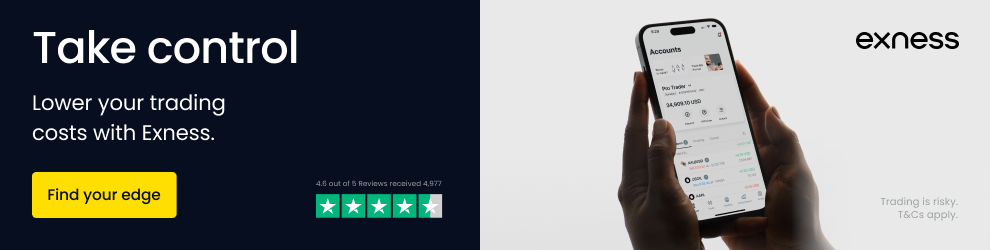
Raw Spread and Zero accounts charge a fixed commission per round turn. The commission amount varies by instrument and is quoted in the account currency. This structure benefits high-volume traders who prefer predictable per-trade costs over variable spread widening.
Commission Rates for Forex Pairs on Raw Spread and Zero Accounts
On Raw Spread accounts, the typical commission is $3.50 per side per standard lot ($7 round turn) for major forex pairs. Zero accounts often charge $3.50 per side per lot on majors as well, but spreads start from 0.0 pips on select pairs during peak liquidity.
Scroll horizontally to see all columns
| Account Type | Major Forex | Minor Forex | Exotic Forex |
|---|---|---|---|
| Raw Spread | $7.00 | $7.00 - $10.00 | $10.00 - $20.00 |
| Zero | $7.00 | $7.00 - $10.00 | $10.00 - $20.00 |
| Pro | Included in spread | Included in spread | Included in spread |
| Standard | Included in spread | Included in spread | Included in spread |
Commission rates for minors and exotics are higher because liquidity providers charge wider spreads and higher fees. Always check the current specification sheet in the personal area before trading less liquid pairs.
How Commission Is Calculated Per Trade
Commission applies per side, meaning opening and closing a position each incur the fee. A round turn on one standard lot of EURUSD on a Raw Spread account costs $7 total. If you trade 0.5 lots, the round-turn commission is $3.50.
- Determine the commission per side for your instrument
- Multiply by two for the round-turn cost
- Adjust for actual lot size traded
- Convert to account currency if different from USD
The trading platform displays commission in real time on the trade tab. Historical statements also itemize commission separately from swap and profit or loss, making reconciliation straightforward.
The image above illustrates how commission and spreads interact across account types. Notice that Raw Spread and Zero accounts show lower raw spreads but add a fixed commission, while Standard and Pro accounts wrap all costs into the spread.
Commission on Non-Forex Instruments: Stocks, Indices, Commodities
Exness applies commission on stock CFDs, index CFDs, commodity CFDs, and cryptocurrency CFDs differently depending on the account type. On Raw Spread and Zero accounts, these instruments carry a commission per lot or per contract. On Standard and Pro accounts, costs are embedded in the spread.
Scroll horizontally to see all columns
| Instrument | Raw Spread Commission | Zero Commission | Standard/Pro Cost Model |
|---|---|---|---|
| US Stocks CFD | $0.02 per share, min $1 | $0.02 per share, min $1 | Spread only |
| US30 Index CFD | $0.50 per lot | $0.50 per lot | Spread only |
| Gold (XAUUSD) | $0.50 per lot | $0.50 per lot | Spread only |
| Bitcoin (BTCUSD) | $5.00 per lot | $5.00 per lot | Spread only |
Stock CFD commissions are typically quoted per share with a minimum ticket charge. Index and commodity CFDs use a per-lot commission. Cryptocurrency CFDs often have higher per-lot fees due to wider underlying spreads and custody costs.
Using the Exness Trading Calculator to Estimate Total Costs
The Exness trading calculator lets you input account type, instrument, lot size, leverage, and direction to see estimated margin, spread cost, commission, and swap. This tool is essential for planning trade risk and comparing account types side by side.
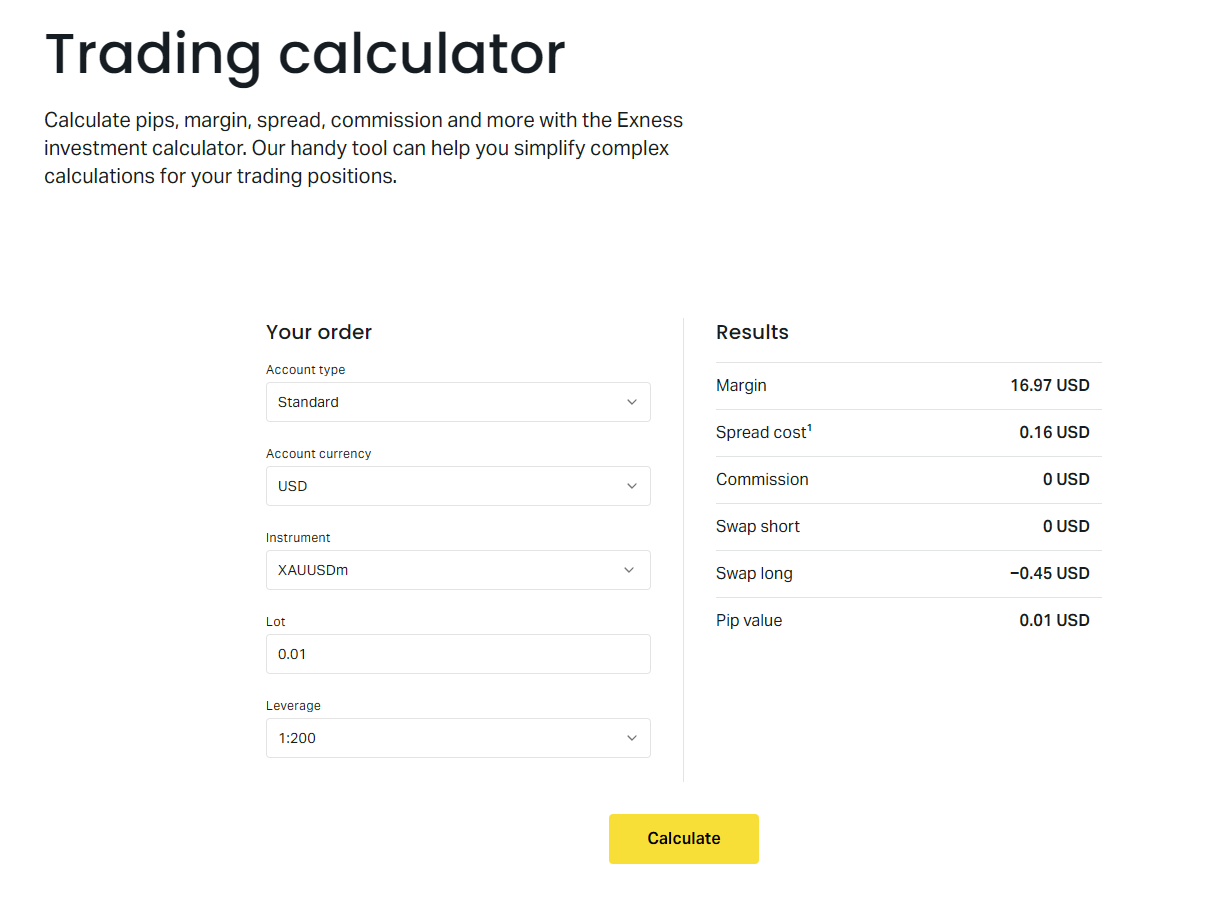
The calculator separates commission from spread cost, so you can see exactly how much each component contributes to the total round-turn expense. It also shows swap charges for holding positions overnight, which can exceed commission on longer-term trades.
Spread vs Commission: Which Model Suits Your Strategy
Scalpers and high-frequency traders often prefer Raw Spread or Zero accounts because the fixed commission is predictable and the tight spreads reduce slippage. Swing traders and position traders may favor Standard or Pro accounts where all costs are in the spread, simplifying calculations.
- Scalping: Raw Spread or Zero for lowest effective cost per trade
- Day trading: Raw Spread or Zero if volume justifies commission
- Swing trading: Standard or Pro for simplicity
- Position trading: Standard or Pro, but monitor swap costs
- Algorithmic trading: Raw Spread or Zero for precise cost modeling
A trader executing 100 lots per month on EURUSD saves roughly $350 in spread costs on a Zero account compared to a Standard account, but pays $700 in commission. The net difference depends on the actual spread differential at the time of each trade.
Fixed commissions reward volume; spread-only pricing rewards simplicity. Choose based on your monthly turnover and tolerance for variable costs.
Regional Considerations: Exness Commission in India and Other Markets
Traders in India and other regions access the same global commission schedule. However, local payment methods, currency conversion fees, and tax treatment of trading income can affect net costs. Exness does not charge extra commission based on residency.
- Commission rates are uniform globally for each account type
- Deposit or withdrawal fees may vary by payment provider
- Currency conversion applies if account currency differs from deposit currency
- Local tax regulations determine reporting obligations
Indian traders often use INR-denominated accounts or USD accounts. If using an INR account, commission is converted at the prevailing rate. The trading calculator automatically handles currency conversion when you select your account currency.
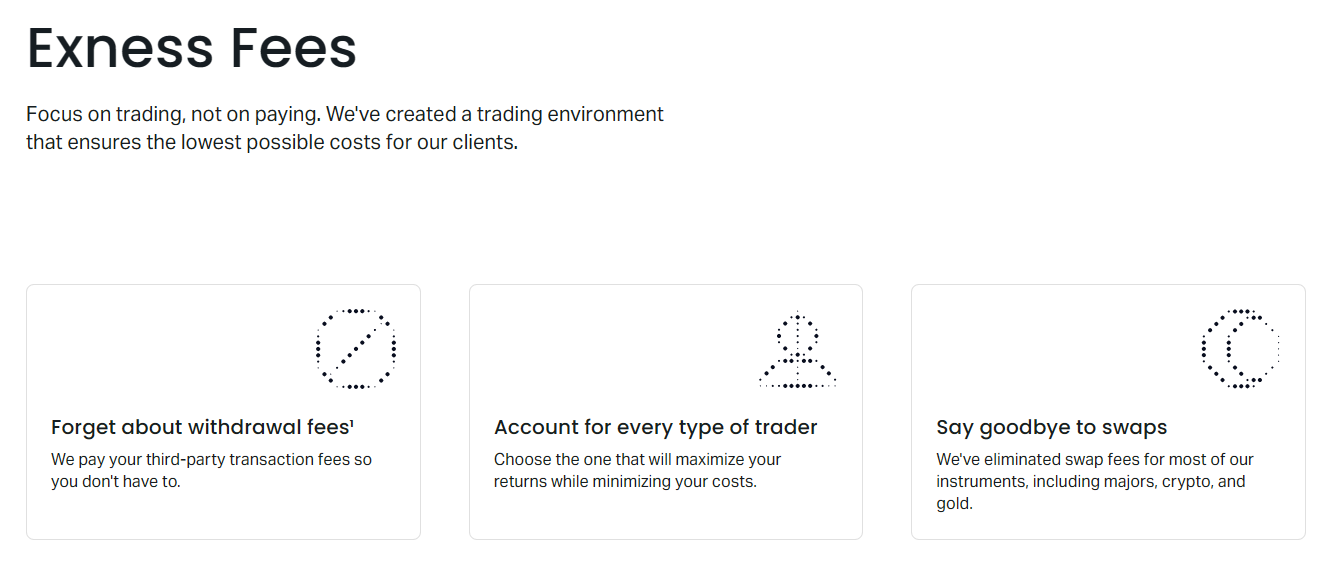
The fee overview above provides a quick reference for commission rates across major instrument groups. Keep this handy when switching between forex, metals, energies, indices, stocks, and crypto markets.
Impact of Leverage and Lot Size on Commission Expense
Leverage does not change the commission per lot. However, higher leverage allows larger positions with the same margin, which increases total commission paid per trade. A 10-lot position incurs ten times the commission of a 1-lot position regardless of leverage.
Scroll horizontally to see all columns
| Position Size | Commission Per Side | Round-Turn Commission | Margin at 1:2000 |
|---|---|---|---|
| 0.1 lot | $0.35 | $0.70 | $50 |
| 1 lot | $3.50 | $7.00 | $500 |
| 5 lots | $17.50 | $35.00 | $2,500 |
| 10 lots | $35.00 | $70.00 | $5,000 |
The table shows how commission scales linearly with volume. Margin requirements at high leverage are low, but commission remains a fixed cost per lot. Always factor commission into your risk-reward calculations, especially for high-frequency strategies.
Swap Fees and Overnight Financing Compared to Commission
Swap (rollover) fees apply when positions are held past the daily cutoff. For short-term traders, commission dominates. For positions held days or weeks, swap can exceed commission. Exness publishes swap rates for long and short sides per instrument.
- Swap charged at 21:00 UTC (22:00 UTC during DST)
- Triple swap applied on Wednesday for forex and metals
- Swap-free accounts available for eligible clients
- Swap rates vary by instrument and market interest rates
The trading calculator includes swap estimates based on current rates and intended holding period. Compare total cost (commission + spread + swap) across account types for your expected trade duration.
A day trader pays commission once; a swing trader pays swap daily. Over a month, swap on a single position can surpass the commission on dozens of day trades.
How to Verify Commission Charged on Your Trades
Every executed trade shows commission in the terminal's trade history and in the personal area statement. The MT4 and MT5 platforms display commission in the 'Commission' column. Mobile app users find it under trade details.
- Open terminal trade history tab
- Right-click and select 'Save as Report' for detailed CSV
- Check personal area transaction history for monthly totals
- Compare with calculator estimates to validate
If commission appears higher than expected, verify the instrument specification for that trade date. Temporary spread widening or commission adjustments during high volatility are rare but possible. Contact support with the trade ticket if discrepancies persist.
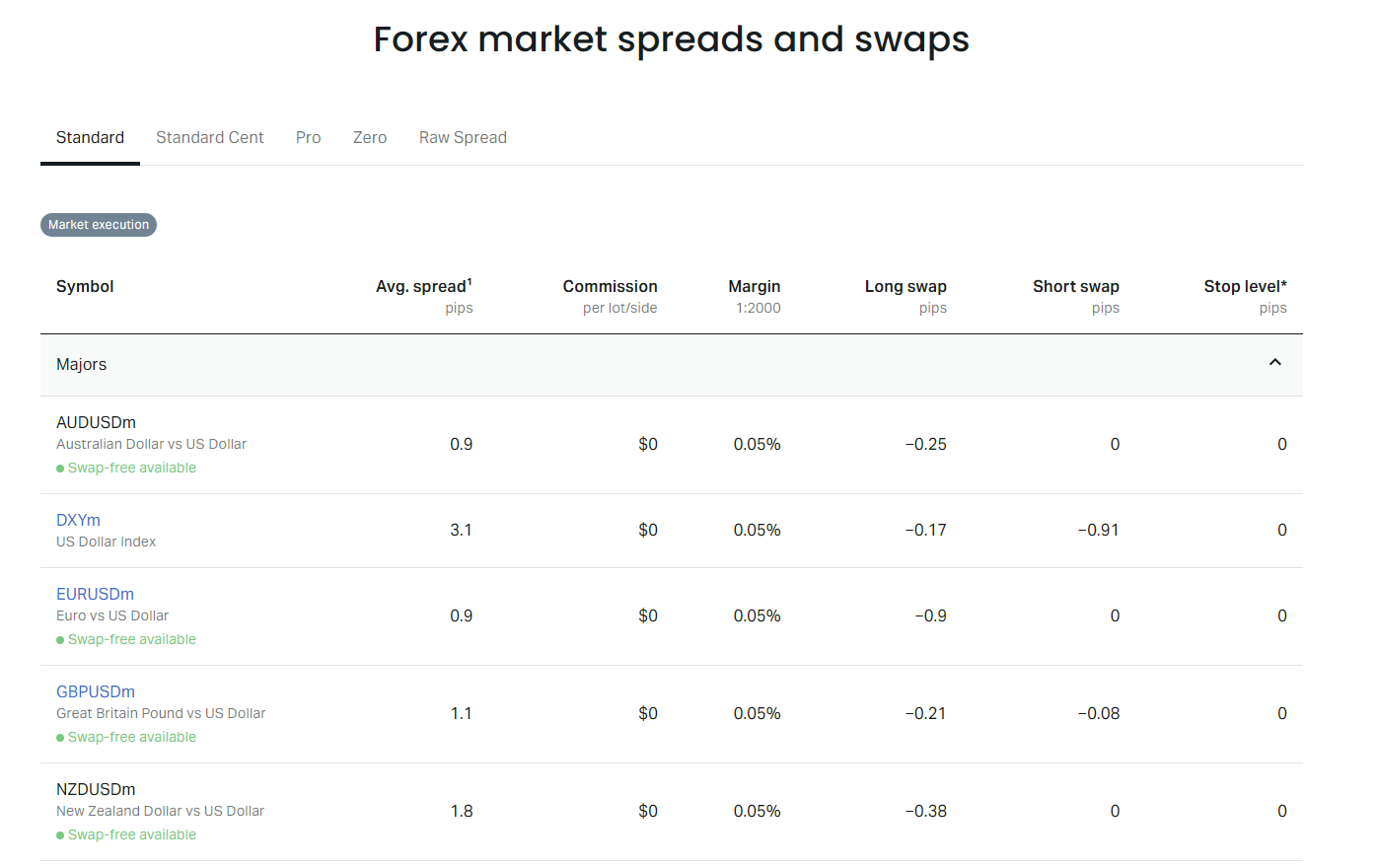
The spreads and swaps reference above helps you cross-check the costs applied to your trades. Commission is listed separately from spreads, so you can isolate each cost component.
Comparing Exness Commission with Other Major Brokers
Exness Raw Spread and Zero commissions of $3.50 per side per lot ($7 round turn) are competitive with other ECN-style brokers. Some competitors charge $6-$10 round turn. Spread-only brokers may advertise zero commission but widen spreads by 0.5-1.5 pips, which can cost more on high volume.
Scroll horizontally to see all columns
| Broker Model | Typical Spread | Commission | Effective Cost |
|---|---|---|---|
| Exness Zero | 0.0 - 0.2 pips | $7.00 | $7.00 - $9.00 |
| Exness Raw Spread | 0.1 - 0.3 pips | $7.00 | $8.00 - $10.00 |
| Competitor ECN A | 0.1 - 0.2 pips | $8.00 | $9.00 - $10.00 |
| Spread-Only Broker B | 1.0 - 1.5 pips | $0.00 | $10.00 - $15.00 |
Effective cost combines spread (converted to dollars per lot) and commission. Exness Zero often yields the lowest all-in cost during peak hours when spreads approach zero. During news events, spreads widen on all models, but commission remains fixed on Raw Spread and Zero accounts.
Commission Rebates and Partner Programs
Exness offers an Introducing Broker (IB) and affiliate program where partners earn rebates based on the commission generated by referred clients. Traders who register under an IB may receive cashback, effectively reducing their net commission.
- IB rebates paid daily or weekly depending on program tier
- Cashback credited directly to trading account
- Does not affect trading conditions or execution
- Available for all account types including Raw Spread and Zero
Rebate rates vary by partner and region. Some IBs pass back 50-80% of their commission share. If you trade significant volume, compare cashback offers before opening an account. Ensure the IB is authorized and the rebate structure is transparent.
A 50% rebate on a $7 round-turn commission reduces effective cost to $3.50 per lot, making Raw Spread accounts extremely competitive for high-volume traders.
Common Misconceptions About Exness Commission
Several myths circulate about Exness fees. One is that Standard accounts have hidden commissions. They do not; all costs are in the spread. Another is that commission changes randomly. Commission per lot is fixed per instrument; only spreads vary with liquidity.
- Myth: Standard accounts charge secret commission — false
- Myth: Commission varies by time of day — false, only spreads vary
- Myth: Zero account has zero cost — false, commission applies
- Myth: Swap is part of commission — false, separate fee
- Myth: Higher leverage increases commission — false, per-lot fixed
Understanding the actual fee structure prevents overpaying or avoiding suitable account types. Always refer to the official contract specification and the trading calculator for authoritative numbers.
Steps to Choose the Right Exness Account for Your Commission Profile
Selecting the optimal account starts with estimating your monthly volume, preferred instruments, and holding periods. Follow this process to match your profile to the right pricing model.
- Estimate average monthly lots traded per instrument
- Identify typical holding period (intraday, swing, position)
- Run calculator for each account type with your estimates
- Compare total monthly cost: commission + spread + swap
- Factor in any available rebate or cashback
- Open a demo account to test execution and real spreads
- Start with the lowest-cost model that fits your style
You can open multiple account types under one personal area. Many traders keep a Standard account for swing trades and a Raw Spread account for scalping. Switching between them is instant in the terminal.
Frequently Asked Questions
Does Exness charge commission on Standard accounts?
No. Standard and Standard Cent accounts use spread-only pricing with no separate commission. All trading costs are embedded in the spread.
What is the commission on Exness Raw Spread account for EURUSD?
The typical commission is $3.50 per side per standard lot, making a round turn $7.00 for EURUSD on Raw Spread accounts.
How do I calculate Exness commission for 0.3 lots on a Zero account?
Multiply the per-lot round-turn commission by your lot size. For example, $7.00 × 0.3 = $2.10 round turn on major forex pairs.
Are Exness commissions the same for all countries including India?
Yes. Commission rates are uniform globally for each account type. Local payment fees or currency conversion may apply separately.
Does the Exness trading calculator include commission in its cost estimate?
Yes. The calculator shows commission, spread cost, swap, and margin separately so you can see the full cost breakdown before trading.
Can I get a commission rebate or cashback on Exness?
Yes. Exness offers an Introducing Broker program where partners may share commission rebates with referred clients, reducing net trading costs.
Is commission charged on both opening and closing a trade?
Yes. Commission applies per side. Opening and closing each incur the fee, so a round turn costs twice the per-side rate.
Final Assessment of Exness Commission Structure
Exness commission pricing is transparent, competitive, and aligned with industry standards for ECN-style accounts. The choice between spread-only and commission-based models should reflect your trading frequency, volume, and preference for cost predictability. Use the trading calculator regularly, monitor total monthly expenses, and consider rebate programs if you generate significant commission volume. By matching your account type to your actual trading behavior, you minimize friction costs and retain more of your trading edge.