

Forex Trading Education
Exness Maximum Leverage Explained for Traders
Complete guide to leverage limits, margin requirements, and trading conditions at Exness

Forex Analyst
Forex Analyst specializing in currency markets, market trends, technical and fundamental analysis, and providing clear insights to help traders make informed decisions.
Leverage is one of the most powerful tools available to forex and CFD traders, allowing control of larger positions with a relatively small capital outlay. At Exness, the maximum leverage offered varies depending on several factors including the account type selected, the specific instrument being traded, the regulatory jurisdiction governing the client, and the current equity in the trading account. Understanding these variables is essential for anyone who wants to use leverage responsibly while avoiding unexpected margin calls or stop-outs.
Contents
- Leverage Limits by Account Type
- Standard and Standard Cent Accounts
- Professional Account Tiers
- Instrument-Specific Leverage Rules
- Forex Major Pairs
- Minor and Exotic Pairs
- Metals, Energies, and Indices
- Cryptocurrency CFDs
- Regulatory Impact on Leverage Availability
- FCA and CySEC Restrictions
- FSCA and Other Jurisdictions
- Client Classification Differences
- Dynamic Leverage and Margin Requirements
- How Dynamic Leverage Works
- Margin Calculation Examples
- Risk Management with High Leverage
- Position Sizing Strategies
- Stop-Loss Placement
- Margin Call and Stop-Out Levels
- Practical Leverage Selection Guide
- Choosing Leverage for Your Strategy
- Scalping vs Swing Trading Considerations
- Exness Leverage Compared to Industry Standards
- Final Assessment of Exness Maximum Leverage
This guide provides a comprehensive overview of how Exness structures its leverage offering. It covers the differences between retail and professional client classifications, explains dynamic leverage mechanisms that adjust automatically as position size grows, and outlines practical risk management techniques that help traders stay in control. Whether you are a beginner exploring a demo account or an experienced trader evaluating a switch to Exness, the information here will help you make informed decisions about leverage selection.
Exness has built a reputation for offering some of the highest leverage ratios in the industry, particularly for clients registered under entities that permit flexible margin requirements. However, high leverage is a double-edged sword. It amplifies both potential profits and potential losses. The sections that follow break down the specific leverage caps for each account type, detail how leverage changes across asset classes, and show how regulatory frameworks shape what is available to you.
Leverage Limits by Account Type
Exness offers several distinct account types, each designed for different trading styles and experience levels. The maximum leverage available differs significantly between these accounts. Standard and Standard Cent accounts typically provide the highest leverage ratios, while professional accounts such as Raw Spread, Zero, and Pro have more conservative caps that reflect the tighter spreads and commission-based pricing structures they offer.
Standard and Standard Cent Accounts
Standard and Standard Cent accounts are the most popular choices for retail traders. These accounts generally support the highest maximum leverage offered by Exness, often reaching unlimited leverage for eligible clients under certain regulatory entities. The term unlimited leverage means that margin requirements can be extremely low, effectively allowing traders to open positions with minimal capital. However, this feature is typically reserved for accounts that meet specific equity and trading volume thresholds, and it may not be available in all jurisdictions.
- Standard accounts offer access to the full range of instruments with variable spreads and no commissions.
- Standard Cent accounts allow trading in cents rather than dollars, reducing nominal position sizes for beginners.
- Both account types may qualify for unlimited leverage when equity and volume requirements are satisfied.
- Leverage caps apply automatically when account equity exceeds defined thresholds.
Professional Account Tiers
Professional accounts including Raw Spread, Zero, and Pro are tailored for high-volume traders who prioritize low trading costs over maximum leverage. These accounts typically feature maximum leverage ratios that are lower than those available on Standard accounts. The reduced leverage reflects the professional nature of these accounts, where traders are expected to have more sophisticated risk management practices and larger account balances.
- Raw Spread accounts offer spreads from zero pips with a commission per lot traded.
- Zero accounts provide fixed zero spreads on major pairs for a commission fee.
- Pro accounts combine low spreads with commission-free trading on most instruments.
- Maximum leverage on professional accounts is generally capped at lower ratios than Standard accounts.
Instrument-Specific Leverage Rules
Maximum leverage is not uniform across all trading instruments. Exness applies different leverage caps to different asset classes based on volatility, liquidity, and regulatory guidelines. Forex major pairs typically enjoy the highest leverage, while exotic pairs, cryptocurrencies, and certain CFDs have progressively lower limits. Understanding these distinctions helps traders avoid surprises when switching between markets.
Forex Major Pairs
Major currency pairs such as EURUSD, GBPUSD, USDJPY, and USDCHF generally receive the most generous leverage treatment. These pairs benefit from deep liquidity and tight spreads, which allows brokers to offer higher leverage with manageable risk. On Standard accounts, major pairs often qualify for the highest available leverage tiers, including unlimited leverage where permitted.
Minor and Exotic Pairs
Minor pairs (crosses that do not include the US dollar) and exotic pairs (involving emerging market currencies) usually have lower maximum leverage than majors. The reduced leverage reflects wider spreads, lower liquidity, and higher volatility. Traders should check the specific leverage schedule for each pair before building positions, as the margin requirement can be several times higher than for major pairs.
Metals, Energies, and Indices
Precious metals like gold (XAUUSD) and silver (XAGUSD), energy products such as crude oil and natural gas, and major stock indices typically have moderate leverage caps. These instruments can experience sharp price movements during economic releases or geopolitical events, so brokers apply more conservative margin requirements. Leverage for these assets is often expressed as a fixed ratio rather than an unlimited tier.
Cryptocurrency CFDs
Cryptocurrency CFDs including Bitcoin, Ethereum, and other major coins generally carry the lowest maximum leverage among all instrument categories. The extreme volatility of crypto markets makes high leverage particularly dangerous. Exness typically caps crypto leverage at conservative levels to protect traders from rapid liquidation during sudden price swings. This cap applies regardless of account type or equity level.
Scroll horizontally to see all columns
| Instrument Class | Standard Account | Professional Accounts | Notes |
|---|---|---|---|
| Forex Majors | Up to Unlimited | Up to 1:2000 | Subject to equity thresholds |
| Forex Minors | Up to 1:2000 | Up to 1:1000 | Lower than majors |
| Forex Exotics | Up to 1:200 | Up to 1:100 | Higher margin required |
| Gold & Silver | Up to 1:2000 | Up to 1:500 | Dynamic leverage applies |
| Energies | Up to 1:200 | Up to 1:100 | Fixed leverage tiers |
| Indices | Up to 1:2000 | Up to 1:500 | Varies by index |
| Cryptocurrencies | Up to 1:400 | Up to 1:200 | Conservative caps |
Regulatory Impact on Leverage Availability
The regulatory framework under which a client is onboarded has a profound effect on the maximum leverage they can access. Exness operates through multiple legal entities regulated by different authorities including the FCA in the UK, CySEC in Cyprus, FSCA in South Africa, and others. Each regulator imposes its own leverage restrictions, particularly for retail clients. Professional clients who meet certain criteria may qualify for higher leverage under some jurisdictions.
FCA and CySEC Restrictions
Clients onboarded under the FCA (UK) or CySEC (Cyprus) entities face strict leverage caps mandated by ESMA regulations. For retail clients, maximum leverage on major forex pairs is limited to 1:30, on minor pairs and gold to 1:20, on commodities and indices to 1:10, and on cryptocurrencies to 1:2. These limits are non-negotiable and apply regardless of account type or equity. Professional clients who pass the eligibility assessment can access higher leverage, but still within regulatory boundaries.
FSCA and Other Jurisdictions
Clients registered under the FSCA (South Africa) or other jurisdictions with more flexible leverage rules may access significantly higher maximum leverage, including the unlimited leverage feature on Standard accounts. This is why many international traders choose to register under entities that offer higher leverage, provided they understand the increased risk. It is important to verify which entity governs your account and what leverage limits apply.
Client Classification Differences
Exness classifies clients as either retail or professional based on regulatory criteria that typically include trading experience, portfolio size, and frequency of trading. Professional classification unlocks higher leverage limits and access to certain account features not available to retail clients. However, professional clients also lose certain regulatory protections such as negative balance protection guarantees and access to compensation schemes. The classification decision should be made carefully.
Dynamic Leverage and Margin Requirements
Exness employs a dynamic leverage system that automatically adjusts the maximum leverage available on a position based on the total notional value of open positions for a given instrument. As position size increases, the leverage tier steps down, requiring more margin per additional lot. This mechanism protects both the trader and the broker from excessive exposure on large positions. Understanding how dynamic leverage tiers work is crucial for position sizing and margin planning.
How Dynamic Leverage Works
Dynamic leverage operates on a tiered structure. The first tier covers positions up to a certain notional value and offers the highest leverage. Once the cumulative notional value of open positions for that instrument exceeds the first tier threshold, the excess volume moves to the next tier with lower leverage. This continues through multiple tiers until the maximum position size is reached. The system applies per instrument, so a large position in EURUSD does not affect the leverage available for GBPUSD or gold.
- Tier 1: Highest leverage for smallest positions
- Tier 2: Reduced leverage for moderate positions
- Tier 3: Further reduced leverage for large positions
- Tier 4: Minimum leverage for very large positions
- Thresholds vary by instrument and account type
Margin Calculation Examples
To illustrate dynamic leverage, consider a Standard account trading EURUSD. The first 10 lots might enjoy unlimited leverage (near-zero margin). The next 40 lots might require 1:2000 leverage (0.05% margin). The next 50 lots might require 1:1000 leverage (0.1% margin). Positions beyond 100 lots might drop to 1:500 leverage (0.2% margin). The margin requirement for the total position is the sum of margin required for each tier. This blended margin approach means effective leverage decreases gradually as position size grows.
Scroll horizontally to see all columns
| Volume Tier (Lots) | Leverage | Margin Required | Cumulative Margin for Tier |
|---|---|---|---|
| 0 - 10 | Unlimited | ~0% | Near zero |
| 10 - 50 | 1:2000 | 0.05% | $25 per 10 lots |
| 50 - 100 | 1:1000 | 0.10% | $100 per 10 lots |
| 100+ | 1:500 | 0.20% | $200 per 10 lots |
Dynamic leverage ensures that margin requirements scale responsibly with position size, preventing runaway exposure while still allowing flexibility for smaller trades.
Risk Management with High Leverage
High leverage magnifies both gains and losses. A 1% adverse price move on a position leveraged 1:1000 results in a 10x loss relative to the margin posted. Without disciplined risk management, high leverage can lead to rapid account depletion. Exness provides several tools to help traders manage leverage risk, including margin call and stop-out levels, negative balance protection for eligible clients, and a trading calculator for pre-trade analysis.
Position Sizing Strategies
Effective position sizing is the single most important risk control when using high leverage. Traders should determine position size based on the maximum acceptable loss per trade as a percentage of account equity, not based on the maximum leverage available. A common rule is to risk no more than 1-2% of account equity on any single trade. This approach ensures that a string of losses does not critically damage the account, regardless of the leverage used.
- Define risk per trade as a fixed percentage of equity (e.g., 1%)
- Calculate position size from stop-loss distance and risk amount
- Ignore maximum leverage when sizing; use it only as a ceiling
- Reduce position size during high volatility or news events
- Monitor free margin regularly to avoid margin calls
Stop-Loss Placement
Stop-loss orders are essential when trading with leverage. They define the maximum loss per trade and prevent small adverse moves from becoming catastrophic. With high leverage, even a few pips against the position can trigger a margin call if no stop-loss is in place. Traders should place stop-losses at levels that invalidate the trade setup, not at arbitrary distances. Trailing stops can lock in profits while allowing room for normal market noise.
Margin Call and Stop-Out Levels
Exness uses a margin call level of 100% and a stop-out level of 0% for most account types. When account equity falls to 100% of used margin, a margin call warning is issued. If equity continues to decline and reaches 0% of used margin, the system automatically closes positions starting with the largest losing position. Negative balance protection ensures that retail clients under eligible entities cannot lose more than their account balance. Professional clients should verify their specific stop-out terms.
Practical Leverage Selection Guide
Choosing the right leverage is not about maximizing the available ratio. It is about matching leverage to your trading strategy, risk tolerance, and account size. A scalper targeting 5-pip moves on major pairs may use higher effective leverage than a swing trader holding positions for days. The key is to use only as much leverage as your strategy requires, keeping a comfortable margin buffer at all times.
Choosing Leverage for Your Strategy
Short-term strategies like scalping and day trading often benefit from higher leverage because positions are closed quickly and stop-losses are tight. However, the high frequency of trades means that a single technology glitch or slippage event can be costly. Swing traders and position traders typically use lower effective leverage because their wider stop-losses require more margin to withstand normal market fluctuations. Match your leverage to your average holding period and stop-loss distance.
Scalping vs Swing Trading Considerations
Scalpers often prefer accounts with the highest available leverage to maximize capital efficiency on small moves. They must be vigilant about spread widening during rollover or news, which can instantly hit tight stops. Swing traders benefit from lower leverage because it forces larger margin buffers, reducing the chance of being stopped out by normal volatility. Both styles should test their leverage assumptions on a demo account before committing real capital.
The best leverage is the lowest leverage that still allows your strategy to function. Excess leverage is a liability, not an asset.
Exness Leverage Compared to Industry Standards
Exness is known for offering higher maximum leverage than many competitors, particularly for clients under its FSCA and offshore entities. While many brokers cap retail leverage at 1:30 or 1:50 due to regulatory pressure, Exness provides access to 1:2000 and unlimited leverage tiers for eligible clients. This flexibility attracts traders who want full control over their margin usage. However, the industry trend is toward lower leverage caps driven by regulator concerns about retail investor protection.
Scroll horizontally to see all columns
| Broker | Retail Max (Majors) | Professional Max | Unlimited Leverage |
|---|---|---|---|
| Exness (FSCA/Offshore) | Up to Unlimited | Up to 1:2000 | Yes (conditions apply) |
| Exness (FCA/CySEC) | 1:30 | Up to 1:500 | No |
| Typical EU Broker | 1:30 | 1:500 | No |
| Typical Offshore Broker | 1:500 - 1:1000 | 1:1000 - 1:2000 | Sometimes |
Leverage flexibility is a competitive advantage for Exness, but it places greater responsibility on the trader to self-regulate exposure.
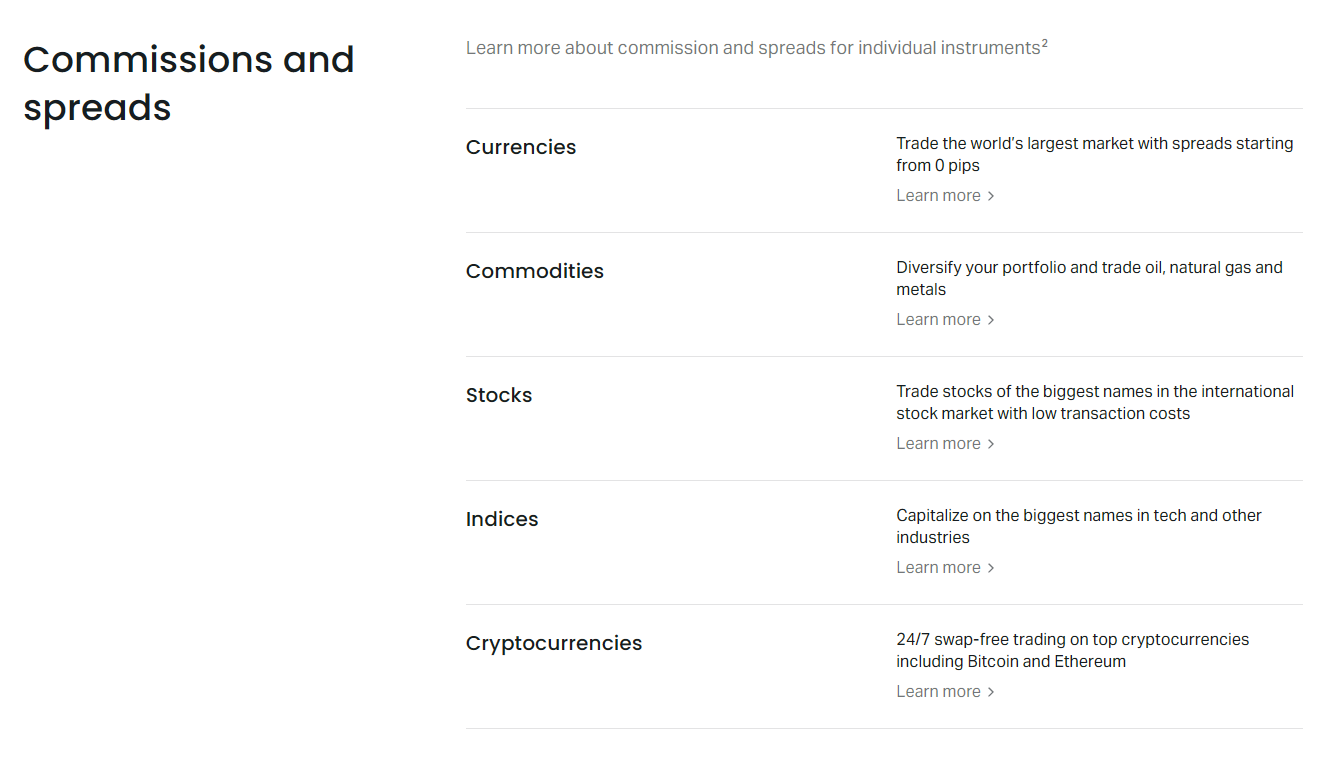
The image above illustrates how commissions and spreads differ across Exness account types. These cost structures interact with leverage choices because tighter spreads on professional accounts reduce the breakeven distance for trades, partially offsetting the lower maximum leverage available on those accounts.
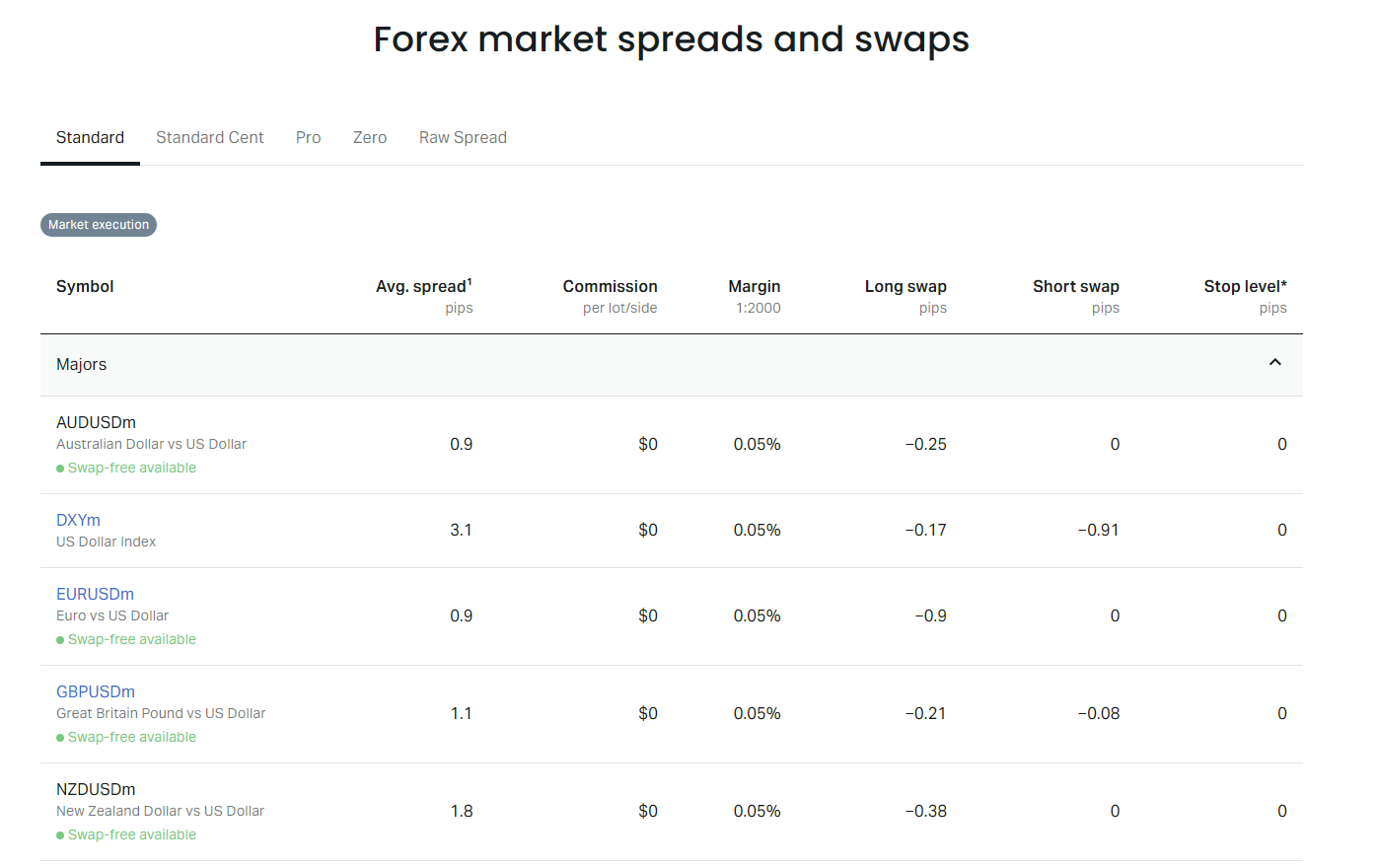
Spread and swap rates shown here directly impact the profitability of leveraged positions, especially those held beyond the daily rollover. Traders using high leverage should factor these costs into their risk calculations, as they effectively increase the required price movement to reach breakeven.
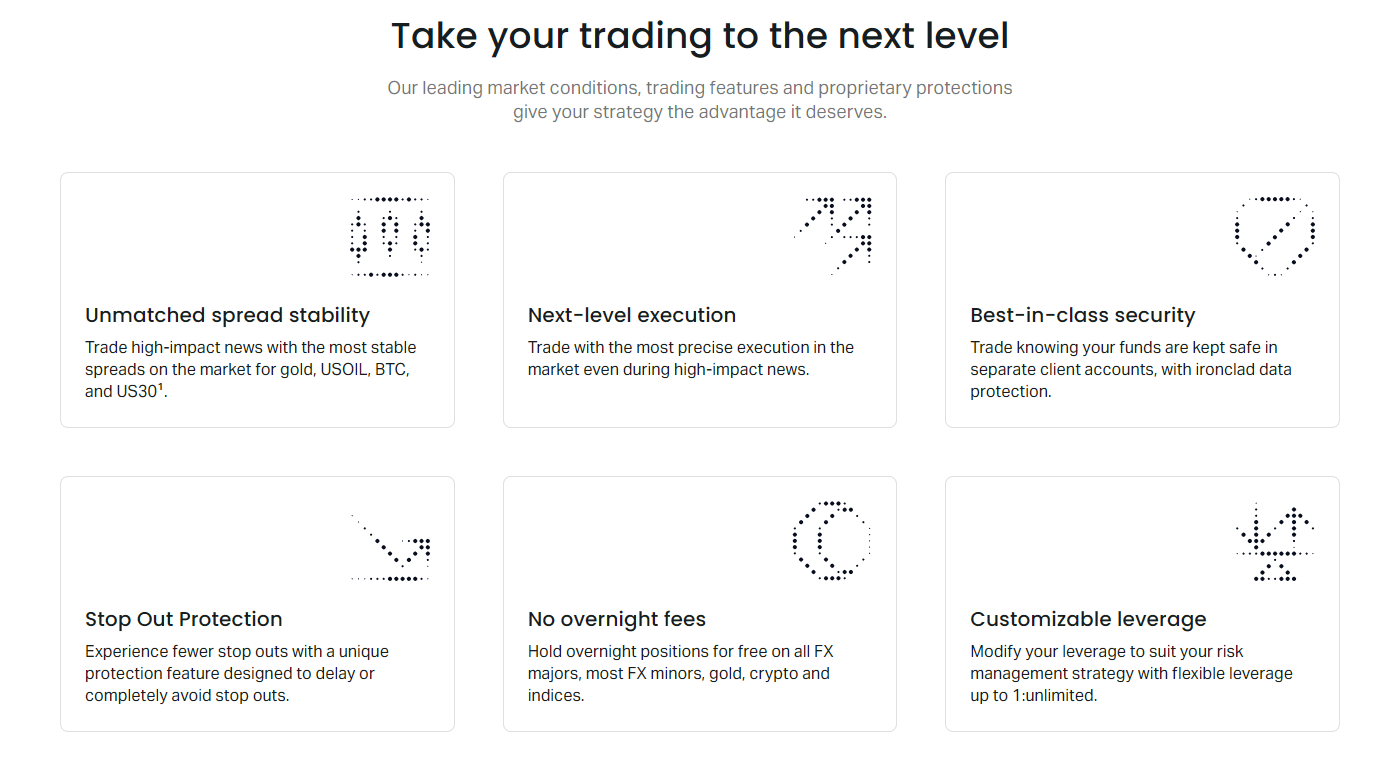
The platform features highlighted above include risk management tools that help traders monitor and control leveraged exposure. Real-time margin level displays, one-click trading with preset stop-losses, and the integrated trading calculator all contribute to safer leverage usage.
Final Assessment of Exness Maximum Leverage
Exness maximum leverage stands out in the industry for its flexibility and depth. The combination of unlimited leverage tiers for qualifying Standard accounts, dynamic leverage that scales with position size, and a wide range of account types gives traders unprecedented control over their margin usage. However, this power demands respect. The highest leverage settings are appropriate only for traders with proven risk management discipline, clear position sizing rules, and the emotional resilience to withstand amplified drawdowns.
For most traders, the optimal approach is to treat maximum leverage as a ceiling rather than a target. Use the Exness trading calculator to model margin requirements for your typical trade sizes. Set personal leverage limits well below the maximum available. Monitor your margin level continuously, especially during volatile sessions. And always remember that leverage does not change the probability of a trade winning or losing — it only changes the magnitude of the outcome.
Frequently Asked Questions
What is the maximum leverage available on Exness Standard accounts?
Exness Standard accounts can offer unlimited leverage for eligible clients who meet specific equity and trading volume thresholds. This feature is available under certain regulatory entities and may not be accessible in all jurisdictions.
Does Exness offer unlimited leverage for all clients?
No. Unlimited leverage is typically reserved for Standard and Standard Cent account holders who satisfy minimum equity and volume requirements. Clients under FCA or CySEC regulation face strict leverage caps regardless of account type.
How does dynamic leverage affect my margin requirements?
Dynamic leverage reduces the maximum leverage available as your total position size for a specific instrument increases. Margin requirements are calculated per tier, so larger positions require progressively more margin per lot.
What leverage limits apply to cryptocurrency CFDs at Exness?
Cryptocurrency CFDs generally have the lowest maximum leverage among all instrument classes, typically capped at 1:400 for Standard accounts and 1:200 for professional accounts, regardless of equity level.
Can I change my leverage setting after opening an account?
Yes. Leverage can be adjusted in the Personal Area for each trading account. Changes apply to new positions; existing positions retain their original margin requirements until closed.
What happens if my margin level falls below the stop-out level?
When margin level reaches 0%, Exness automatically closes positions starting with the largest losing position until margin level recovers. Retail clients under eligible entities are protected from negative balances.
Is higher leverage better for scalping strategies?
Higher leverage can improve capital efficiency for scalpers with tight stop-losses, but it also reduces the margin buffer. Scalpers should test their strategy with conservative leverage first and only increase it after demonstrating consistent profitability.
How do I know which regulatory entity governs my Exness account?
Log into your Personal Area and check the account details section. The regulatory entity is listed there and determines the leverage limits and protections that apply to your account.