

Forex Broker Account Types
Exness Account Types: Complete Guide to Choosing the Right Account
Detailed breakdown of Exness trading accounts to match your strategy and experience level.

Forex Analyst
Forex Analyst specializing in currency markets, market trends, technical and fundamental analysis, and providing clear insights to help traders make informed decisions.
Exness offers a diverse range of account types designed to accommodate traders at every stage of their journey, from beginners testing the markets with minimal risk to seasoned professionals executing high-volume strategies. Understanding the nuances between these accounts is essential because the choice directly influences trading costs, available leverage, execution speed, and the overall trading experience. This guide provides a comprehensive overview of each Exness account type, highlighting key features, typical use cases, and practical considerations to help you make an informed decision.
Contents
- Exness Standard and Standard Cent Accounts
- Exness Professional Accounts: Pro, Zero, and Raw Spread
- Exness Demo Account for Practice
- Exness Islamic (Swap-Free) Account
- Minimum Deposit Requirements Across Account Types
- Spreads and Commissions Comparison
- Leverage and Margin Rules by Account Type
- Account Opening Process and Verification
- Switching Between Account Types
- Exness Account Types for Different Trading Styles
- Risk Management Features Across Accounts
- Platform Compatibility and Trading Tools
- Regional Availability and Regulatory Considerations
- Final Assessment of Exness Account Types
Selecting the appropriate account begins with an honest assessment of your trading goals, capital, and risk tolerance. A novice trader may prioritize low minimum deposits and micro-lot trading to learn without significant exposure, while a scalper might seek the tightest possible spreads and commission-based pricing. Exness structures its offerings into two broad categories: Standard accounts aimed at retail traders and Professional accounts tailored for advanced users. Additionally, specialized accounts such as swap-free Islamic accounts and risk-free demo accounts address specific regulatory and educational needs. The following sections examine each category in detail.
Exness Standard and Standard Cent Accounts
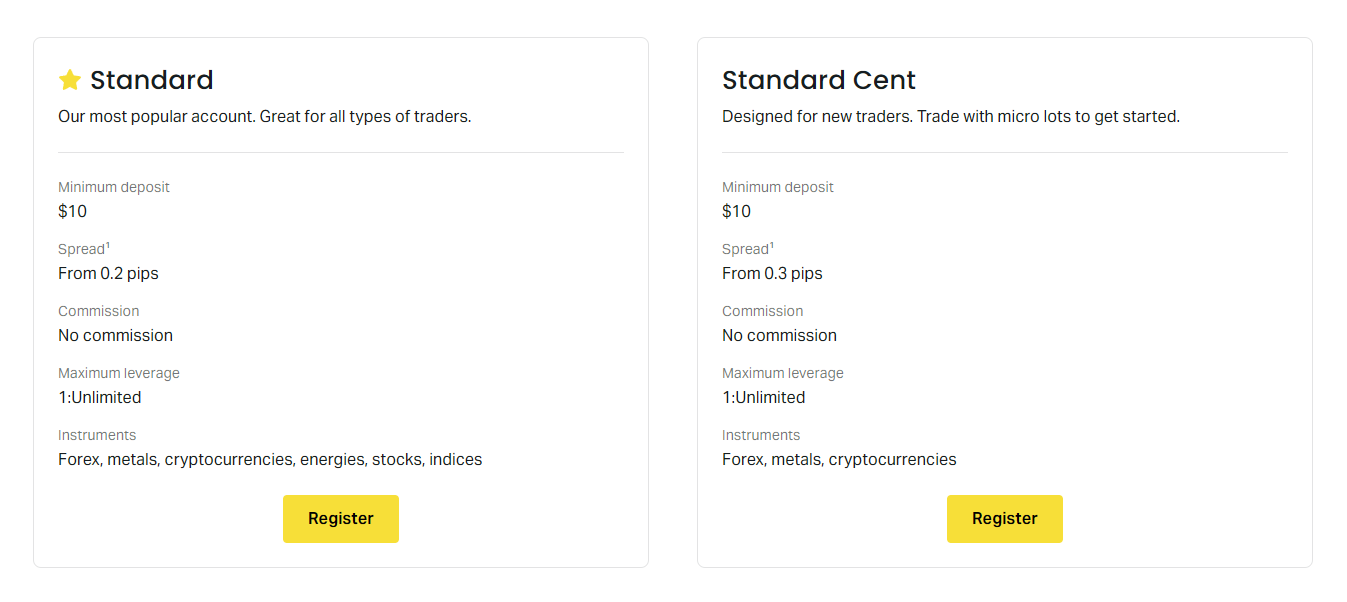
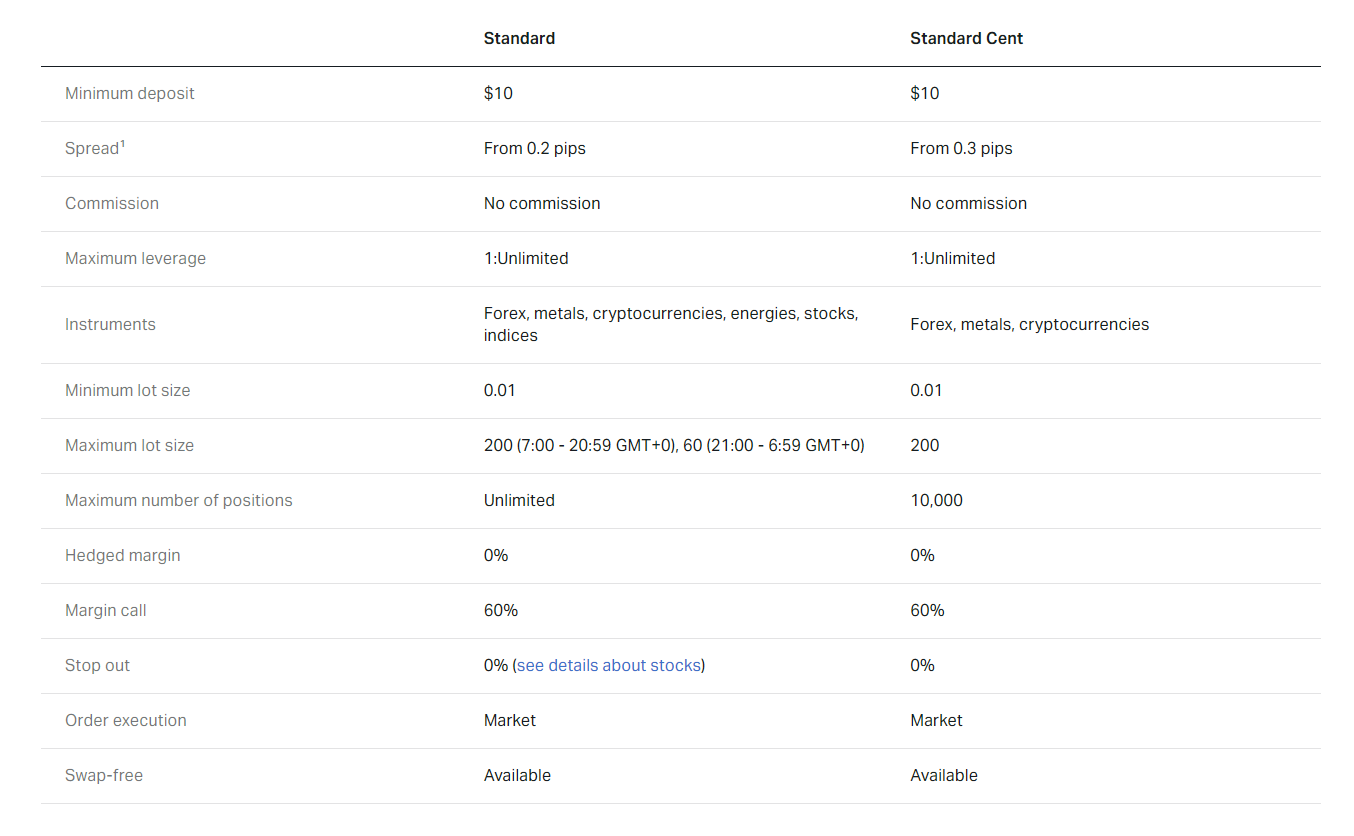
The Standard account is the most accessible entry point for new Exness clients. It requires a low minimum deposit, often as little as one unit of the account base currency, and supports market execution with no commissions. Spreads on major pairs typically start from 0.3 pips, though they fluctuate with market conditions. The Standard Cent account mirrors the Standard account in terms of trading conditions but denominates the balance in cents rather than dollars, euros, or other base currencies. This cent-denomination allows traders to open positions as small as 0.01 cent lots, effectively reducing the financial commitment by a factor of one hundred. Both accounts provide access to the full range of Exness instruments, including forex, metals, energies, indices, stocks, and cryptocurrencies.
The primary distinction between Standard and Standard Cent lies in the account currency and the resulting position sizing granularity. For a trader depositing $10, a Standard account shows a balance of $10, while a Standard Cent account displays 1,000 cents. This psychological and practical difference makes the Cent account ideal for testing live strategies with real money but negligible risk. Both account types support the same maximum leverage, which varies by instrument and regulatory jurisdiction, and both are eligible for the Exness Premier loyalty program once volume thresholds are met.
Scroll horizontally to see all columns
| Feature | Standard Account | Standard Cent Account |
|---|---|---|
| Account Currency | USD, EUR, GBP, etc. | USC, EURC, GBPC (cents) |
| Minimum Deposit | 1 unit of base currency | 1 unit of base currency |
| Minimum Lot Size | 0.01 lot | 0.01 cent lot (0.0001 standard lot) |
| Typical Spread EURUSD | From 0.3 pips | From 0.3 pips |
| Commission | None | None |
| Max Leverage | Up to 1:2000 (varies by region) | Up to 1:2000 (varies by region) |
Exness Professional Accounts: Pro, Zero, and Raw Spread
Professional accounts cater to traders who demand tighter spreads, faster execution, and commission-based pricing structures. Exness offers three professional variants: Pro, Zero, and Raw Spread. The Pro account features low spreads with no commissions, making it suitable for traders who prefer an all-inclusive cost model. The Zero account provides spreads from 0.0 pips on top instruments for 95% of the trading day, charging a fixed commission per lot per side. The Raw Spread account delivers the tightest possible spreads sourced directly from liquidity providers, with a low commission per lot per side. All professional accounts require a higher minimum deposit, typically $200, and are designed for strategies sensitive to transaction costs, such as scalping, high-frequency trading, and algorithmic systems.
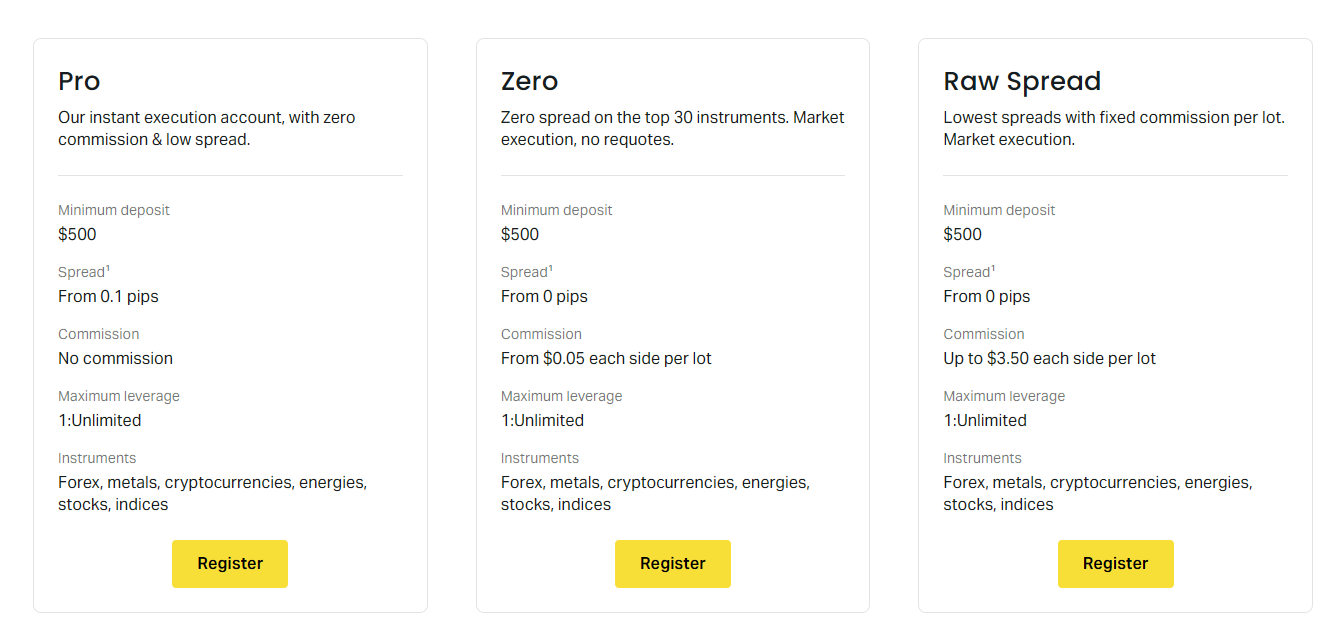
Choosing among the professional accounts depends on your trading style and cost sensitivity. The Pro account simplifies cost calculation by embedding fees into the spread, which can be advantageous during periods of high volatility when spreads widen but commissions remain fixed. The Zero account appeals to traders who want near-zero spreads on major pairs during peak liquidity hours and are comfortable paying a predictable commission. The Raw Spread account targets the most cost-conscious traders, offering the lowest effective spreads but with a commission that varies by instrument. All professional accounts support hedging, scalping, and expert advisors without restrictions.
Scroll horizontally to see all columns
| Account | Min Deposit | Spread Model | Commission (per lot/side) | Best For |
|---|---|---|---|---|
| Pro | $200 | Low variable, no commission | None | Swing traders, all-inclusive pricing preference |
| Zero | $200 | From 0.0 pips (top pairs 95% of day) | Fixed, e.g., $3.5 per side | Scalpers, high-frequency on majors |
| Raw Spread | $200 | Market raw spreads | Low variable, e.g., $1.5 per side | Algorithmic traders, lowest effective cost seekers |
Exness Demo Account for Practice
A demo account is an indispensable tool for both beginners and experienced traders. Exness provides unlimited demo accounts that replicate live market conditions, including real-time spreads, execution speeds, and instrument availability. Traders can open multiple demo accounts across different account types — Standard, Pro, Zero, Raw Spread — to test strategies under each cost structure without risking capital. The demo environment also supports the full suite of Exness platforms: MetaTrader 4, MetaTrader 5, Exness Web Terminal, and the Exness mobile app. There is no time limit on demo usage, and balances can be reset or topped up at any time from the Personal Area.
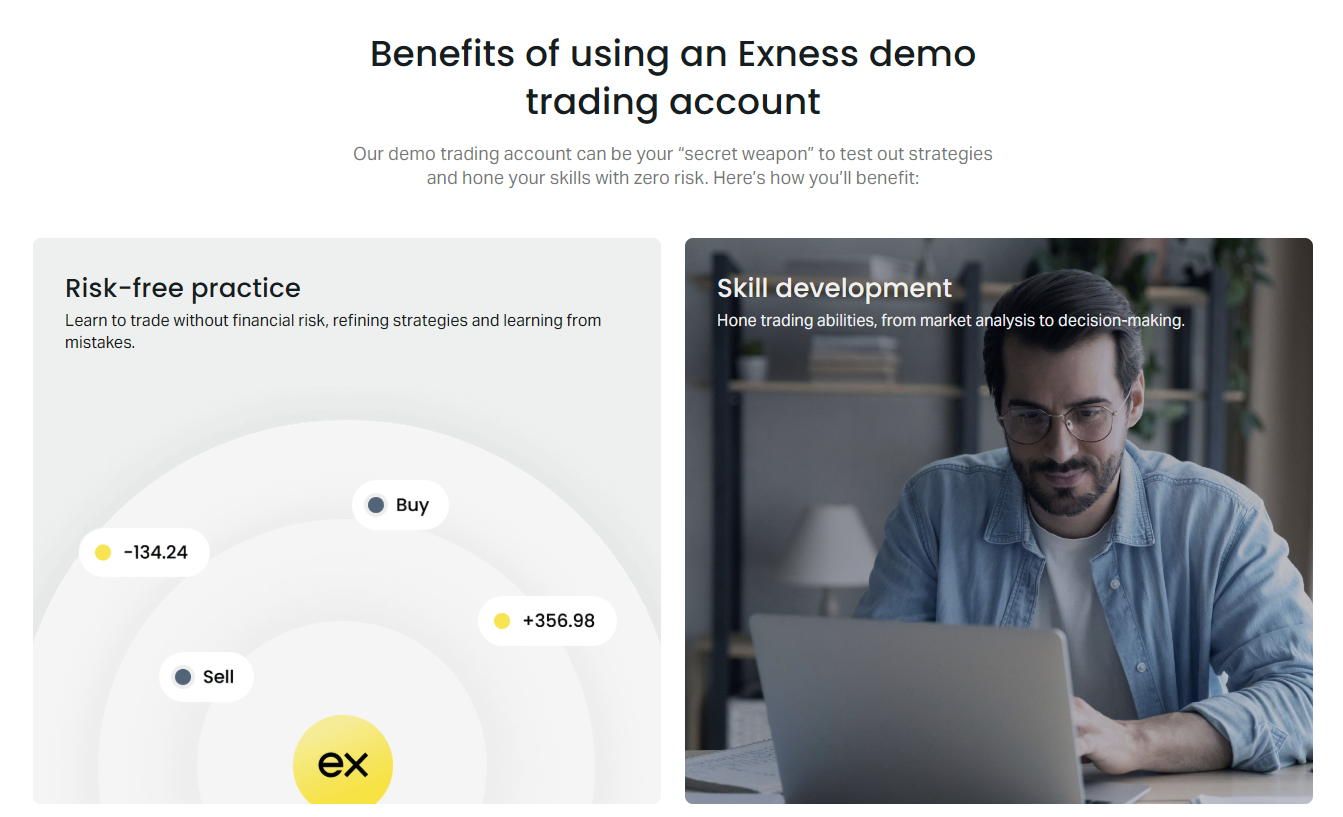
While demo trading eliminates financial risk, it cannot fully replicate the psychological pressure of live trading. Traders should treat demo accounts seriously, applying the same risk management rules they would use with real funds. Exness also offers a seamless transition from demo to live: once a trader feels confident, they can open a live account directly from the same Personal Area, often with the same login credentials. This continuity reduces friction and allows immediate application of tested strategies.
Exness Islamic (Swap-Free) Account
Exness provides swap-free accounts compliant with Sharia law, which prohibit the payment or receipt of interest (riba). These accounts are available to clients who self-declare their eligibility based on religious beliefs. On an Islamic account, overnight financing charges (swaps) are replaced by a fixed administration fee on certain instruments, typically applied after a grace period of several days. The fee structure is transparent and published in the contract specifications. Islamic accounts can be opened under both Standard and Professional categories, preserving access to the same spreads, commissions, and leverage as their conventional counterparts.
Minimum Deposit Requirements Across Account Types
Minimum deposit thresholds vary by account type and payment method. Standard and Standard Cent accounts typically require a minimum deposit of $1 (or equivalent) for most electronic payment systems, though bank wire transfers may have higher minimums. Professional accounts (Pro, Zero, Raw Spread) generally require a $200 minimum deposit to unlock the tighter spreads and commission structures. The demo account requires no deposit. Islamic accounts follow the same minimum deposit rules as their underlying account type. Traders should verify current requirements in the Personal Area, as regional regulations and payment processor policies can affect the effective minimum.
Scroll horizontally to see all columns
| Account Type | Typical Minimum Deposit | Notes |
|---|---|---|
| Standard | $1 | Varies by payment method |
| Standard Cent | $1 | Varies by payment method |
| Pro | $200 | Required for professional pricing |
| Zero | $200 | Required for professional pricing |
| Raw Spread | $200 | Required for professional pricing |
| Demo | $0 | Virtual funds only |
| Islamic (any base type) | Same as base type | No extra deposit for swap-free status |
Spreads and Commissions Comparison
Trading costs are a decisive factor in long-term profitability. Exness publishes typical spreads for each account type, but actual spreads fluctuate with market liquidity, volatility, and time of day. Standard accounts incorporate all costs into the spread, starting from 0.3 pips on EURUSD. Professional accounts separate spreads and commissions: Zero accounts target 0.0 pips on top pairs for most of the trading day with a fixed commission, while Raw Spread accounts pass through raw market spreads with a low variable commission. The effective cost per trade equals spread cost plus commission (if any). Traders should calculate the total cost for their specific strategy, considering trade frequency, holding period, and instrument selection.
During major news events or low-liquidity hours, spreads on all account types can widen significantly. Exness employs a dynamic spread model that reflects real-time market depth. Professional account holders benefit from priority execution and access to deeper liquidity pools, which can mitigate slippage during volatile periods. The Exness trading calculator, available in the Personal Area, allows traders to estimate total transaction costs for any instrument, account type, and position size before entering a trade.
Leverage and Margin Rules by Account Type
Exness offers dynamic leverage up to 1:2000 on forex and metals for eligible accounts, subject to regulatory restrictions. Leverage is not fixed per account type but adjusts automatically based on the account equity and the instrument traded. Higher equity tiers may see reduced maximum leverage. Margin requirements are calculated per position and aggregated across the account. All Exness accounts feature negative balance protection, ensuring clients cannot lose more than their deposited funds. Margin call and stop-out levels are standardized across account types, typically at 100% and 0% margin level respectively, though exact values can vary by regulator.
Account Opening Process and Verification
Opening an Exness account is a fully digital process that typically takes a few minutes. Prospective clients register with an email address, create a password, and select their country of residence. The Personal Area then guides them through profile completion, including personal details, tax residency, and a suitability questionnaire assessing trading experience and financial knowledge. Identity verification (KYC) requires a government-issued ID and proof of address (utility bill or bank statement no older than three months). Verification is usually completed within 24 hours. Once verified, clients can open multiple live accounts of different types from the same Personal Area, deposit funds, and start trading immediately.
- Register email and password on Exness website or app
- Complete personal profile and suitability questionnaire
- Upload identity document (passport, national ID, driver's license)
- Upload proof of address (utility bill, bank statement)
- Wait for verification confirmation (typically <24 hours)
- Open desired account type(s) from Personal Area
- Deposit funds via preferred payment method
- Download trading platform or use Web Terminal
Switching Between Account Types
Exness allows clients to hold multiple live accounts simultaneously, each with a different account type. There is no need to close an existing account to try another; simply open a new account from the Personal Area and select the desired type. Funds can be transferred instantly between accounts within the same Personal Area at no cost. This flexibility enables traders to allocate capital across accounts based on current market conditions or strategy requirements — for example, using a Raw Spread account for scalping during the London session and a Standard account for swing positions held overnight. Account type cannot be changed after creation; a new account must be opened for a different type.
Choosing the right account type aligns your trading costs with your strategy, reducing friction and preserving capital over the long term.
Exness Account Types for Different Trading Styles
Matching account type to trading style optimizes cost efficiency. Scalpers and high-frequency traders benefit from Zero or Raw Spread accounts due to minimal spreads and predictable commissions. Day traders who hold positions for hours may prefer Pro accounts for commission-free simplicity. Swing and position traders, less sensitive to spread width, often choose Standard accounts for the lowest entry barrier. Algorithmic traders running expert advisors typically select Raw Spread for the most accurate backtest-to-live correlation. Cent accounts suit beginners and those testing new strategies with real micro-risk. Islamic accounts serve traders requiring swap-free conditions regardless of style.
- Scalping / HFT: Zero or Raw Spread
- Day trading: Pro or Zero
- Swing trading: Standard or Pro
- Position trading: Standard
- Algorithmic / EA: Raw Spread
- Beginner / strategy testing: Standard Cent
- Swap-free requirement: Islamic variant of any type
Risk Management Features Across Accounts
All Exness accounts share core risk management protections. Negative balance protection ensures that losses never exceed the account balance, a critical safeguard during extreme market events. Margin call and stop-out levels are applied consistently, with real-time margin monitoring available in all platforms. Exness also offers a unique Stop Out Protection feature that attempts to close losing positions at the best available price rather than instantly at the stop-out level, potentially reducing slippage during volatile closures. Traders can set custom margin alerts in the Personal Area to receive notifications before reaching critical levels. These features operate identically across Standard, Professional, and Islamic accounts.
Platform Compatibility and Trading Tools
Every Exness account type supports the full range of trading platforms: MetaTrader 4, MetaTrader 5, Exness Web Terminal, and the Exness mobile app (iOS and Android). The Web Terminal requires no installation and works directly in modern browsers, offering one-click trading, advanced charting, and integrated analytical tools. MetaTrader platforms provide the complete ecosystem of expert advisors, custom indicators, and script automation. The Exness mobile app adds push notifications, biometric login, and a streamlined interface for on-the-go management. Additionally, Exness offers a free VPS service for clients meeting volume thresholds, beneficial for EA traders on Professional accounts requiring low-latency connectivity.
Regional Availability and Regulatory Considerations
Exness operates under multiple regulatory licenses, including CySEC (Cyprus), FCA (UK), FSCA (South Africa), and others. The available account types, maximum leverage, and investor protections can differ based on the regulatory entity under which a client is onboarded. For example, retail clients under CySEC or FCA are limited to 1:30 leverage on major forex pairs, while clients under other jurisdictions may access up to 1:2000. Professional client classification, available to those meeting quantitative and qualitative criteria, unlocks higher leverage and different margin rules across all account types. Traders should confirm the specific conditions applicable to their region during registration.
Frequently Asked Questions
What is the difference between Exness Standard and Standard Cent accounts?
Standard Cent accounts denominate balances in cents, allowing micro-lot trading (0.01 cent lots) with the same spreads and conditions as Standard accounts. This reduces financial risk by a factor of 100.
Which Exness account type has the lowest spreads?
Raw Spread accounts offer the tightest raw market spreads with a low variable commission. Zero accounts provide 0.0 pips on top pairs for 95% of the day with a fixed commission.
Can I have multiple Exness account types at the same time?
Yes. You can open multiple live accounts of different types (Standard, Pro, Zero, Raw Spread, Cent, Islamic) within a single Personal Area and transfer funds between them instantly.
What is the minimum deposit for Exness Professional accounts?
Professional accounts (Pro, Zero, Raw Spread) typically require a minimum deposit of $200. Standard and Cent accounts can be opened with as little as $1 depending on the payment method.
Are Islamic (swap-free) accounts available for all Exness account types?
Yes. Islamic swap-free status can be applied to Standard, Standard Cent, Pro, Zero, and Raw Spread accounts. Administration fees may replace swaps after a holding period.
Does Exness offer a demo account for each account type?
Yes. You can open unlimited demo accounts for Standard, Pro, Zero, Raw Spread, and Cent account types to test conditions risk-free before going live.
How does leverage work across different Exness account types?
Leverage is dynamic and based on account equity and instrument, not account type. Maximum leverage up to 1:2000 is available where permitted by regulation. All accounts include negative balance protection.
Final Assessment of Exness Account Types
Exness account types provide a well-structured spectrum that accommodates virtually every trading profile. The Standard and Standard Cent accounts lower the barrier to entry, enabling new traders to experience live markets with minimal capital. Professional accounts — Pro, Zero, and Raw Spread — deliver institutional-grade pricing and execution for cost-sensitive strategies. The Islamic account option ensures accessibility for faith-based traders without compromising on trading conditions. Unlimited demo accounts across all types allow thorough testing before commitment. While the array of choices may initially seem complex, the clear segmentation by trading style and cost preference simplifies selection. Traders should align their account choice with their strategy's sensitivity to spreads, commissions, and swap costs, and periodically reassess as their volume and approach evolve. Exness's transparent fee structure, multi-platform support, and consistent risk protections across all account types reinforce its position as a versatile broker for a global clientele.