

Forex & Crypto Trading
Exness Ethereum Trading ETHUSD: Complete Guide
Comprehensive overview of ETHUSD trading conditions, platforms, and strategies on Exness

Forex Analyst
Forex Analyst specializing in currency markets, market trends, technical and fundamental analysis, and providing clear insights to help traders make informed decisions.
Ethereum remains the second-largest cryptocurrency by market capitalization and serves as the foundation for decentralized finance, non-fungible tokens, and countless blockchain applications. Trading ETHUSD allows speculators and investors to gain exposure to Ethereum price movements against the US dollar without holding the underlying asset. Exness provides access to this market through contracts for difference, enabling both long and short positions with leverage. This guide examines every aspect of Exness Ethereum trading ETHUSD, from platform selection and account types to execution quality, risk management, and analytical resources.
Contents
- Exness Ethereum Trading Overview
- Trading Platforms for ETHUSD
- Account Types and ETHUSD Conditions
- Spreads and Commissions on Ethereum
- Leverage and Margin Requirements
- Execution Quality and Order Types
- Risk Management Tools for Crypto Trading
- Mobile Trading Experience
- Analytical Resources for Ethereum Analysis
- Deposit and Withdrawal for Crypto Traders
- Security and Regulation
- ETHUSD Trading Strategies on Exness
- Comparing Exness ETHUSD to Alternatives
- Key Takeaways for Exness Ethereum Trading
- Final Assessment of Exness Ethereum Trading
The ETHUSD pair represents the value of one Ethereum token quoted in US dollars. Unlike spot cryptocurrency exchanges where you purchase and custody actual ETH, CFD trading on Exness lets you speculate on price direction with flexible position sizing. This structure appeals to traders who want to avoid wallet management, private key security, and blockchain transaction fees. Exness offers ETHUSD across multiple account types with varying spread and commission structures, making it accessible to beginners and suitable for high-volume professionals alike.
Cryptocurrency markets operate 24/7, and Exness reflects this with extended trading hours for ETHUSD that cover most of the week. Liquidity tends to peak during overlapping European and American sessions, while weekends can see wider spreads due to reduced institutional participation. Understanding these dynamics helps traders plan entries, exits, and position sizing. The following sections break down each component of the Exness Ethereum trading experience in detail.
Exness Ethereum Trading Overview
Exness lists ETHUSD as a cryptocurrency CFD alongside other major pairs like BTCUSD, LTCUSD, and XRPUSD. The instrument is available on all live account types including Standard, Standard Cent, Pro, Raw Spread, and Zero. Each account type applies a different cost model: Standard and Standard Cent use spread-only pricing with no commission, while Raw Spread and Zero accounts charge a per-lot commission in exchange for tighter raw spreads. Pro accounts sit in the middle with low spreads and no commission. This variety lets traders match their cost structure to trading frequency and strategy.
The minimum trade size for ETHUSD is 0.01 lots, where one lot equals one Ethereum token. This granularity allows precise position sizing even on smaller accounts. Maximum leverage for cryptocurrency CFDs on Exness reaches 1:400 for eligible professional clients, while retail clients typically see 1:2 or 1:5 depending on regulatory jurisdiction. Leverage amplifies both gains and losses, so appropriate risk management is essential. Margin requirements adjust dynamically based on the chosen leverage and current market price.
- ETHUSD available on all live account types
- Spread-only or commission-based pricing models
- Minimum trade size 0.01 lots (1 ETH per lot)
- Leverage up to 1:400 for professional clients
- 24/7 trading with brief weekend maintenance windows
Exness does not charge swap fees for holding cryptocurrency positions overnight on most account types, which distinguishes it from many competitors that apply daily financing costs. This swap-free feature benefits swing traders and those holding positions for days or weeks. However, traders should verify current swap policies in the contract specifications, as conditions can change. The absence of overnight financing reduces the cost of carry for longer-term Ethereum exposure.
Trading Platforms for ETHUSD
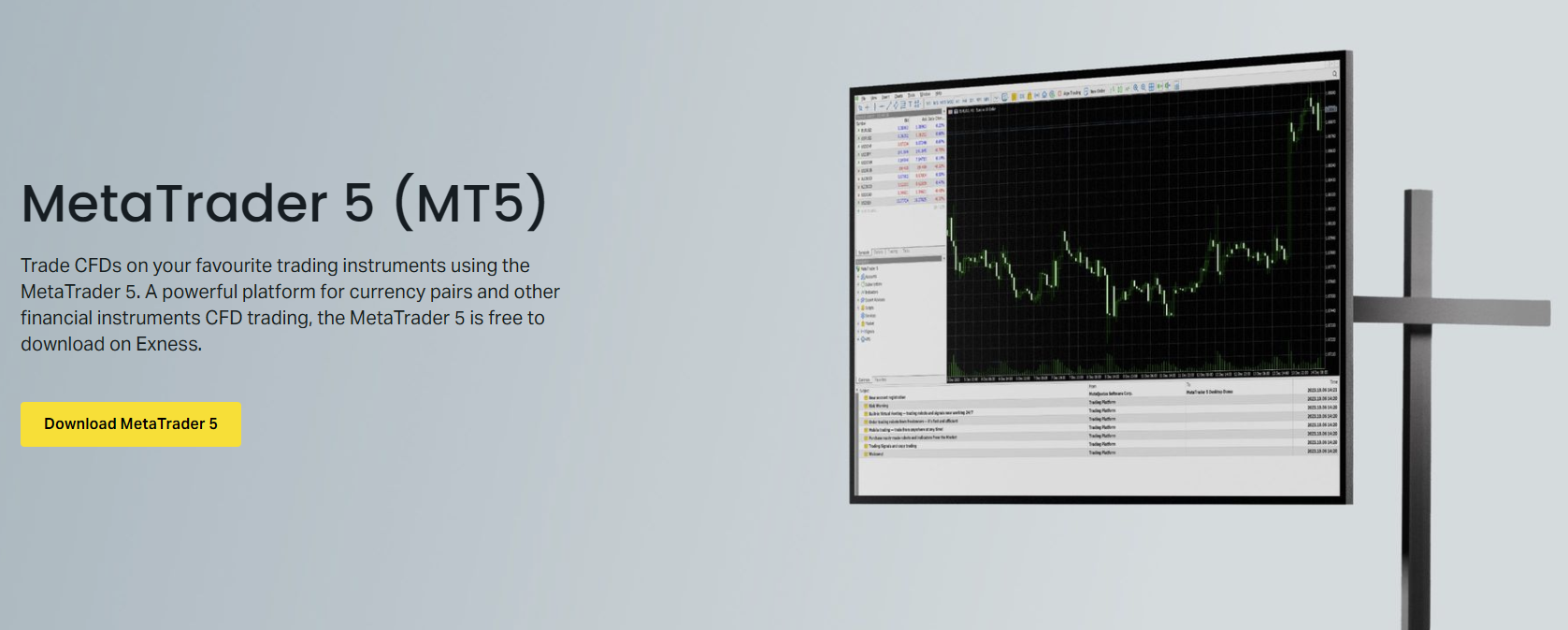
Exness supports ETHUSD trading across MetaTrader 4, MetaTrader 5, the proprietary Exness Web Terminal, and the Exness Trade mobile app. Each platform offers full charting, technical indicators, and order management for cryptocurrency CFDs. MetaTrader 5 provides additional timeframes, more built-in indicators, and a depth-of-market view that can be useful for assessing ETHUSD liquidity. The Web Terminal requires no installation and works directly in modern browsers, making it convenient for quick access from any device.
The Exness Trade app delivers a streamlined mobile experience with one-tap trading, real-time price alerts, and integrated account management. It supports biometric login, push notifications for margin calls, and full position history. For traders who prefer the familiar MetaTrader ecosystem, both MT4 and MT5 mobile apps are available on iOS and Android with feature parity to their desktop counterparts. The choice of platform often comes down to personal workflow preference and whether you need advanced algorithmic trading capabilities.
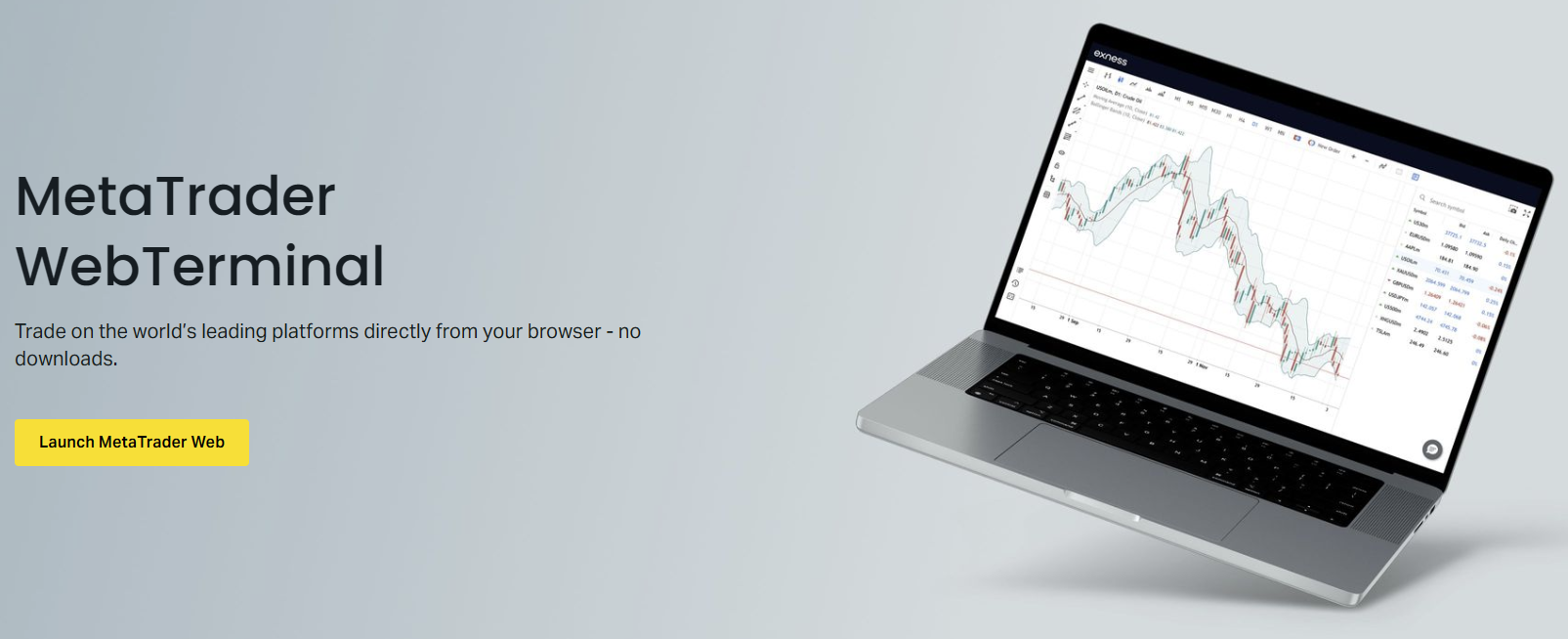
All platforms synchronize positions and orders through the Exness Personal Area, so you can open a trade on desktop and manage it on mobile without interruption. The Web Terminal and Exness Trade app also provide direct access to the economic calendar, market news from FXStreet, and Trading Central signals. These integrated resources help ETHUSD traders stay informed about macroeconomic events and technical setups without leaving the trading environment.
Account Types and ETHUSD Conditions
Exness offers five primary live account types, each with distinct ETHUSD trading conditions. Standard and Standard Cent accounts target beginners with no commission, instant execution, and low minimum deposits. Standard Cent denominates balances in cents, allowing micro-position sizing ideal for learning. Pro accounts cater to experienced traders with tighter spreads, market execution, and no commission. Raw Spread and Zero accounts provide the tightest spreads with a fixed commission per lot, suited for scalpers and high-frequency strategies.
The table below summarizes key ETHUSD parameters across account types. Actual spreads fluctuate with market conditions; values shown represent typical averages during peak liquidity. Commission on Raw Spread and Zero accounts is charged per side per lot. Minimum deposit requirements vary by region and payment method. Islamic swap-free accounts are available for all types upon request, compliant with Sharia principles.
Scroll horizontally to see all columns
| Account Type | Typical Spread | Commission | Execution | Min Deposit |
|---|---|---|---|---|
| Standard | From 1.5 pips | None | Instant | $1 |
| Standard Cent | From 1.5 pips | None | Instant | $1 |
| Pro | From 0.6 pips | None | Market | $200 |
| Raw Spread | From 0.0 pips | $3.5 per side | Market | $200 |
| Zero | From 0.0 pips | $3.5 per side | Market | $200 |
Professional clients who meet eligibility criteria can access higher leverage and may qualify for the Exness Premier program, which offers dedicated support, reduced commissions, and priority withdrawals. The Premier tiers — Silver, Gold, and Platinum — are based on trading volume and account equity. For most retail ETHUSD traders, the Pro account strikes a practical balance between low spreads and zero commission, while Raw Spread and Zero accounts benefit those executing many trades daily where commission savings outweigh the per-lot cost.
Spreads and Commissions on Ethereum
Spreads on ETHUSD vary throughout the day based on liquidity, volatility, and time of day. During the London-New York overlap, spreads typically reach their narrowest. Major news events — such as Federal Reserve announcements, Ethereum network upgrades, or significant DeFi protocol developments — can cause spreads to widen temporarily. Exness uses a floating spread model, meaning the spread you see on the platform reflects real-time market depth from liquidity providers.
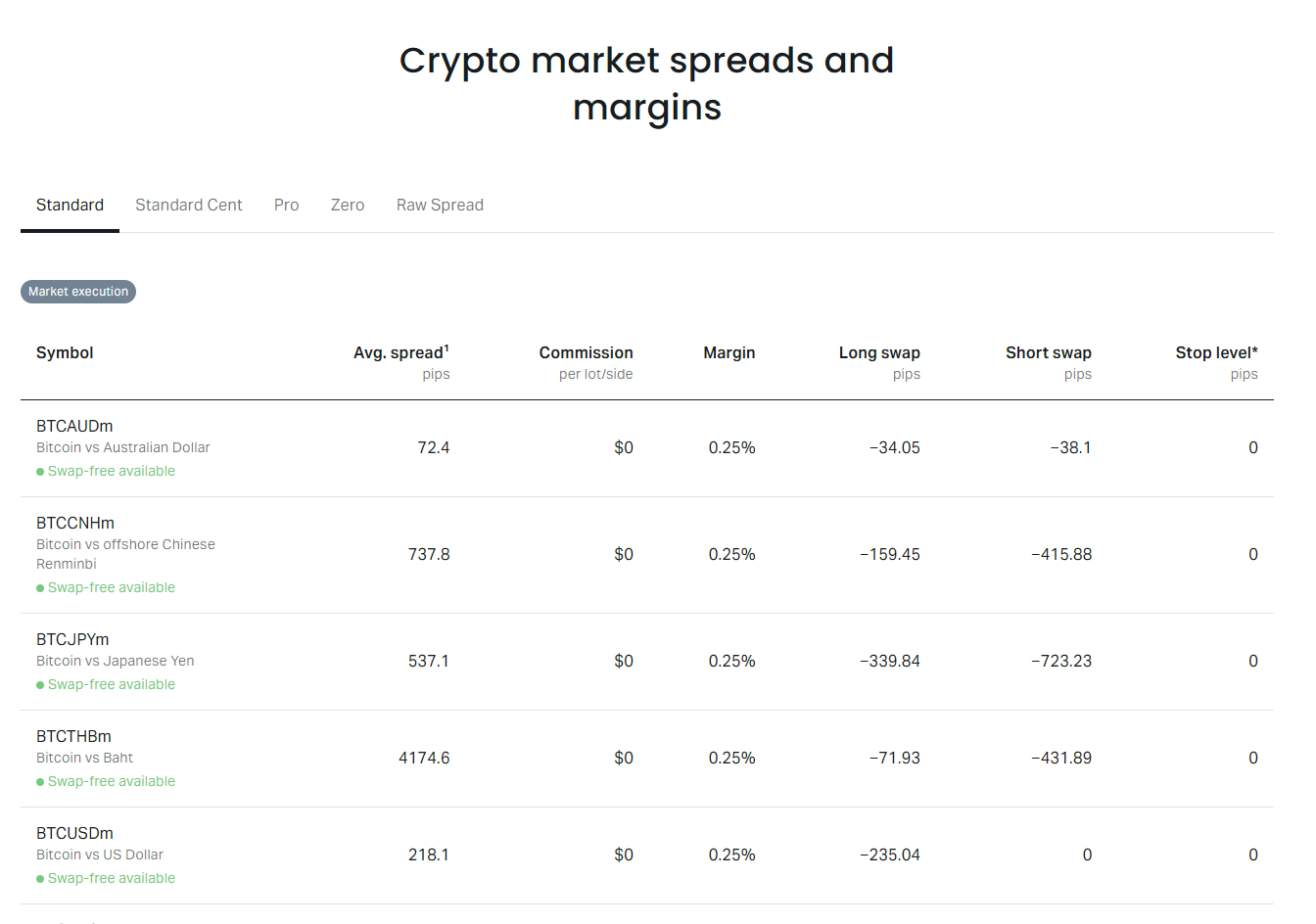
Commission on Raw Spread and Zero accounts is $3.5 per lot per side, so a round-turn trade costs $7 per lot. For a 1-lot ETHUSD position at $3,000, this represents roughly 0.023% of notional value. Traders should calculate whether the spread savings versus Pro accounts justify the commission based on their typical trade size and frequency. A trader executing 50 lots per month saves approximately 0.5 pips per trade on Raw Spread versus Pro, equating to $250 in spread savings against $350 in commissions — a net cost increase. However, at 200 lots monthly, spread savings reach $1,000 against $700 commission, netting $300 savings.
Exness publishes historical spread data and average spreads in the contract specifications. Reviewing these figures helps set realistic expectations for trading costs. The platform also displays current spread in real time on the market watch and chart, so you can verify conditions before entering a trade. During periods of extreme volatility, spreads may widen significantly beyond typical averages, affecting both entry and exit prices.
Leverage and Margin Requirements
Leverage determines how much capital is required to open a position. For ETHUSD, Exness offers dynamic leverage that adjusts based on the total notional value of open cryptocurrency positions. As position size increases, the maximum available leverage decreases in tiers. This tiered structure protects both the trader and the broker from excessive risk concentration. Retail clients under ESMA regulation are limited to 1:2 leverage on cryptocurrency CFDs, while professional clients and those in other jurisdictions may access up to 1:400.
Margin is the collateral required to maintain an open position. It is calculated as notional value divided by leverage. For example, a 1-lot ETHUSD position at $3,000 with 1:100 leverage requires $30 margin. If the account equity falls below the margin maintenance level, a margin call occurs. Exness uses a stop-out level of 0% for most accounts, meaning positions are automatically closed when equity reaches zero. However, negative balance protection ensures you cannot lose more than your account balance.
- Dynamic leverage tiers based on total crypto exposure
- Retail leverage capped at 1:2 for crypto CFDs in EU
- Professional clients up to 1:400 leverage
- Margin = notional value / leverage
- Stop-out at 0% with negative balance protection
The Exness trading calculator, accessible from the Personal Area and platforms, lets you compute required margin, pip value, and potential profit or loss for any ETHUSD position size before trading. This tool is essential for position sizing and risk management. It accounts for current price, leverage, account currency, and swap rates. Using the calculator consistently helps avoid accidental over-leveraging and ensures each trade fits within your risk parameters.
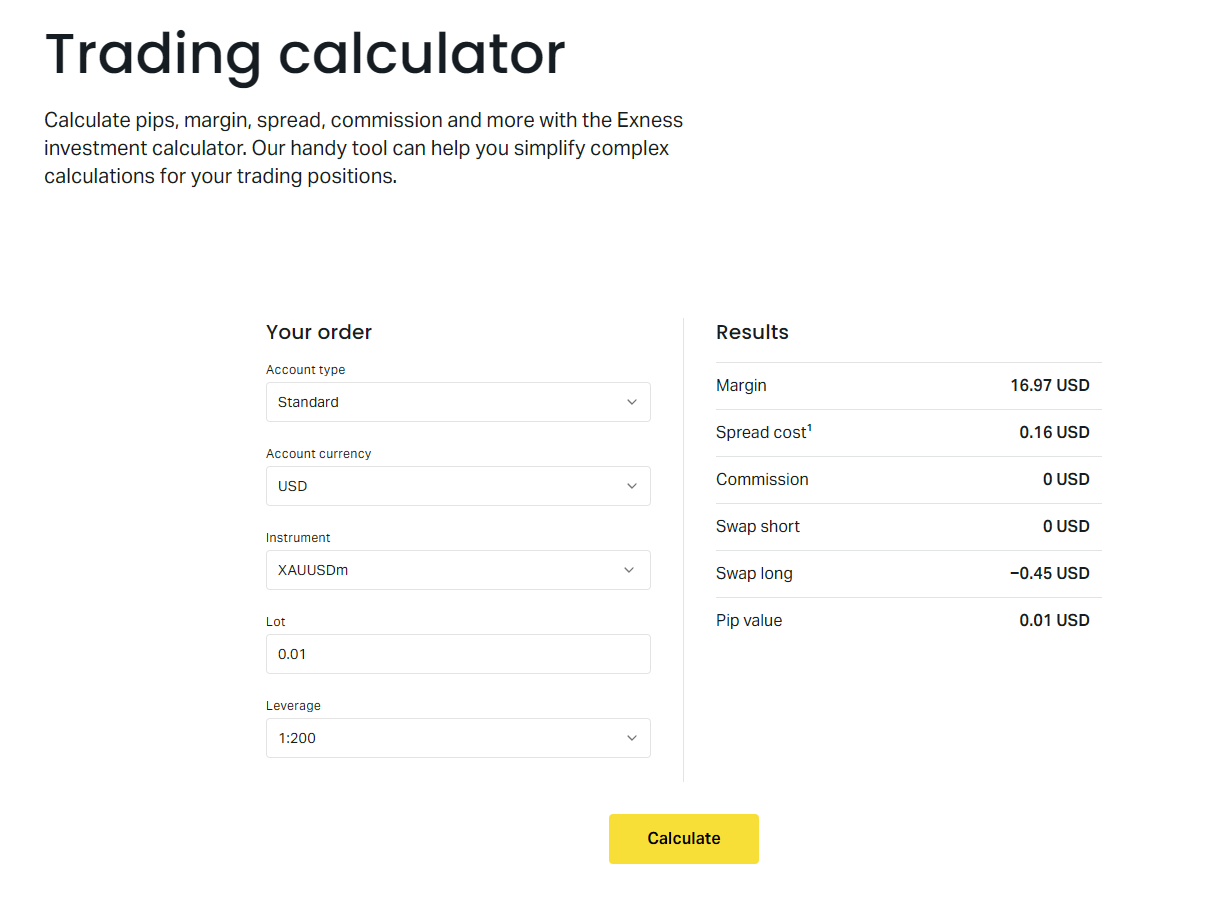
Higher leverage reduces margin requirements but increases the speed at which adverse price movements erode equity. A 1% move against a 1:100 leveraged position consumes 100% of the allocated margin. Conservative traders often use effective leverage well below the maximum available, keeping ample free margin to withstand normal volatility. The dynamic leverage tiers on Exness automatically reduce maximum leverage as cumulative crypto exposure grows, providing a built-in safeguard against excessive risk accumulation.
Execution Quality and Order Types
Execution quality directly impacts trading outcomes, especially for cryptocurrency pairs that can experience rapid price changes. Exness offers market execution on Pro, Raw Spread, and Zero accounts, meaning orders are filled at the best available price from liquidity providers with no requotes. Standard and Standard Cent accounts use instant execution, where the broker fills at the requested price or rejects the order if the price has moved. Market execution generally provides faster fills during volatile conditions, while instant execution offers price certainty for smaller orders.
The platform supports market orders, pending orders (buy limit, sell limit, buy stop, sell stop), stop loss, and take profit. Trailing stops are available on MT4 and MT5, automatically adjusting the stop loss as price moves favorably. For ETHUSD, where intraday swings of 3-5% are common, trailing stops can lock in profits during extended trends. One-cancels-other (OCO) orders are not natively supported but can be implemented via custom Expert Advisors on MetaTrader.
Exness publishes execution statistics including average execution speed, slippage distribution, and fill rates. The majority of ETHUSD orders execute within milliseconds under normal conditions. During high-impact news or extreme volatility, slippage can occur — both positive and negative. The broker does not guarantee stop-loss execution at the exact price during gaps; stops become market orders once triggered. Traders should account for potential slippage in risk calculations, particularly when holding positions over weekends or major events.
Fast, reliable execution matters most when markets move quickly. Exness market execution model aligns broker and trader interests by passing orders directly to liquidity providers.
Risk Management Tools for Crypto Trading
Cryptocurrency volatility demands disciplined risk management. Exness provides several built-in tools: stop loss and take profit on every order, margin call and stop-out alerts via email and push notification, and the trading calculator for pre-trade analysis. The Exness Trade app allows setting price alerts for ETHUSD at specific levels, notifying you when the market approaches key technical zones. These alerts help you act on planned entries or exits without constant chart monitoring.
Position sizing is the foundation of risk management. A common rule risks no more than 1-2% of account equity per trade. For a $10,000 account, 1% risk equals $100. If your stop loss is 50 pips from entry and pip value is $1 per 0.01 lot, you can trade 0.02 lots. The Exness calculator automates this math. Consistently applying position sizing prevents a string of losses from severely damaging the account. Diversification across uncorrelated instruments — such as adding forex majors or indices alongside ETHUSD — further reduces portfolio risk.
Negative balance protection ensures you never owe more than your deposited funds. This is a regulatory requirement for many jurisdictions and a standard feature on Exness. However, it does not prevent losses up to your full account balance. The stop-out mechanism closes positions automatically when equity approaches zero, but in extreme gap scenarios, the final closure price may result in a small negative balance that Exness absorbs. This protection is a critical safety net for leveraged crypto trading.
Mobile Trading Experience
The Exness Trade app provides a native mobile experience optimized for on-the-go ETHUSD trading. It includes full charting with multiple timeframes, technical indicators (moving averages, RSI, MACD, Bollinger Bands), and drawing tools. One-tap trading from the chart or market watch enables rapid execution. The app also integrates account functions: deposit, withdrawal, verification status, and transaction history. Biometric authentication (Face ID, fingerprint) secures access without passwords.
MetaTrader 4 and 5 mobile apps offer deeper functionality for traders who rely on custom indicators, Expert Advisors, or advanced chart templates. Both apps synchronize with desktop platforms, preserving chart layouts, indicator settings, and open positions. Push notifications for margin calls, order fills, and price alerts work across all mobile platforms. The choice between Exness Trade and MetaTrader mobile often depends on whether you prioritize simplicity and integrated broker features (Exness Trade) or advanced technical analysis and algorithmic trading (MetaTrader).
Mobile trading introduces unique risks: smaller screens can make precise order placement harder, and connectivity interruptions may delay order modifications. Exness mitigates this with server-side stop loss and take profit — once set, they execute on the broker's servers even if your device goes offline. Always verify that protective orders are active after opening a mobile trade. The app also displays margin level prominently, helping you monitor account health at a glance.
Analytical Resources for Ethereum Analysis
Exness integrates multiple analytical resources directly into its platforms and Personal Area. Trading Central provides technical analysis signals for ETHUSD, identifying potential entry and exit points based on chart patterns, indicators, and support/resistance levels. These signals appear on the Web Terminal, Exness Trade app, and MetaTrader via plugin. They cover multiple timeframes from intraday to weekly, catering to scalpers, day traders, and swing traders alike.
The economic calendar highlights upcoming events that may impact ETHUSD: Federal Reserve meetings, US employment data, inflation reports, and Ethereum-specific events like network upgrades (e.g., Shanghai, Dencun) or major protocol governance votes. FXStreet market news delivers real-time headlines and analysis covering crypto regulation, institutional adoption, DeFi trends, and macroeconomic factors influencing risk appetite. Combining technical signals with fundamental awareness improves trade timing and conviction.
Exness also offers a currency converter, pip calculator, margin calculator, and profit calculator as standalone tools. The economic calendar can be filtered by impact level (high, medium, low) and currency (USD for ETHUSD relevance). For traders who conduct independent analysis, the platforms support unlimited custom indicators and templates. Historical data is available for backtesting strategies on MetaTrader. These resources collectively reduce the need for external analysis platforms, keeping workflow contained within the Exness ecosystem.
Deposit and Withdrawal for Crypto Traders
Funding an Exness account for ETHUSD trading supports numerous methods: bank cards (Visa, Mastercard), electronic wallets (Skrill, Neteller, WebMoney, Perfect Money), bank wire, and regional payment systems. Most deposits are instant and commission-free on the Exness side, though payment providers may charge fees. Minimum deposit starts at $1 for Standard and Standard Cent accounts, $200 for Pro, Raw Spread, and Zero. The Exness Personal Area manages all transactions with real-time status tracking.
Withdrawals are processed back to the original deposit method per anti-money laundering regulations. Exness aims for instant withdrawal processing for electronic methods, with bank wires taking 1-3 business days. There are no withdrawal fees from Exness, though intermediary banks may deduct charges. The instant withdrawal feature is a notable advantage for traders who need quick access to profits. Verification (KYC) must be completed before the first withdrawal, requiring proof of identity and address.
Exness does not currently accept cryptocurrency deposits directly for trading accounts; funding is via fiat channels only. However, profits from ETHUSD trading can be withdrawn to the same fiat methods. Traders who prefer crypto-native funding may need to convert through an exchange first. The broker's focus on fiat on-ramps aligns with its regulatory framework and ensures compliance with financial licensing requirements across jurisdictions.
Security and Regulation
Exness operates under multiple regulatory licenses including the Financial Services Authority (FSA) in Seychelles, the Cyprus Securities and Exchange Commission (CySEC), the Financial Conduct Authority (FCA) in the UK, and the Financial Sector Conduct Authority (FSCA) in South Africa. The specific regulator governing your account depends on your country of residence. Regulatory oversight mandates client fund segregation, negative balance protection, and regular audits. These protections apply equally to ETHUSD and all other instruments.
Client funds are held in segregated accounts with top-tier banks, separate from Exness operational capital. The broker participates in investor compensation schemes where applicable (e.g., ICF in Cyprus, FSCS in UK). Two-factor authentication (2FA) secures the Personal Area, and withdrawal confirmations require email or SMS verification. The platform employs TLS encryption for all data transmission. Exness also publishes quarterly financial reports and execution quality metrics, demonstrating transparency.
Multi-jurisdictional regulation and segregated funds provide a strong safety framework. Traders should verify which entity governs their account based on residence.
Security best practices remain the trader's responsibility: use unique strong passwords, enable 2FA, avoid phishing links, and never share login credentials. Exness will never ask for your password via email or chat. The official domains are exness.com and associated subdomains. Bookmark the login page and verify the SSL certificate. These habits protect against credential theft regardless of the broker's internal security measures.
ETHUSD Trading Strategies on Exness
The 24/7 nature of ETHUSD accommodates diverse trading styles. Scalpers target small price movements on 1-5 minute charts, benefiting from Raw Spread or Zero account commissions during high-liquidity hours. Day traders focus on intraday trends using 15-minute to 4-hour charts, often combining technical indicators with news catalysts. Swing traders hold positions for days to weeks, analyzing daily and weekly charts for major support/resistance, moving average alignments, and on-chain metrics like exchange flows or staking rates.
Ethereum-specific fundamentals influence ETHUSD beyond general risk sentiment. Network upgrade schedules, EIP implementations, staking yield changes, layer-2 adoption metrics, and DeFi total value locked (TVL) all affect long-term valuation. Traders incorporating fundamental analysis monitor Ethereum Foundation blog posts, developer calls, and on-chain analytics platforms. Exness market news and economic calendar surface some of these catalysts, but dedicated crypto research complements the broker's resources.
- Scalping: 1-5 min charts, high frequency, low spread priority
- Day trading: 15M-4H charts, intraday trends, news awareness
- Swing trading: Daily/weekly charts, multi-day holds, fundamentals
- Position trading: Weekly/monthly charts, macro thesis, low leverage
- Hedging: Offset spot ETH exposure with short ETHUSD CFD
Hedging is permitted on Exness — you can hold long and short ETHUSD positions simultaneously on the same account (MT5 netting mode aggregates them; MT4 hedging mode keeps them separate). This allows spot ETH holders to hedge downside risk without selling their tokens. The swap-free feature on most accounts makes hedging cost-effective for extended periods. However, hedging doubles margin requirement for the net exposure, so capital efficiency must be evaluated.
Comparing Exness ETHUSD to Alternatives
Traders evaluating Exness for ETHUSD often compare it to other CFD brokers and spot cryptocurrency exchanges. CFD brokers offer leverage, short selling without borrowing, and regulated client protections. Spot exchanges provide actual asset ownership, DeFi access, and staking yields but require self-custody and lack leverage (unless using futures/perp markets). Exness distinguishes itself with instant withdrawals, swap-free crypto positions, multi-platform access, and a wide range of account types. Spread competitiveness varies by account type and time of day.
Scroll horizontally to see all columns
| Feature | Exness CFD | Spot Exchange |
|---|---|---|
| Asset Ownership | No (CFD) | Yes (actual ETH) |
| Leverage | Up to 1:400 | Typically 1:1 (spot) |
| Short Selling | Native | Requires margin/futures |
| Custody Risk | Broker regulated | Self-custody or exchange |
| Trading Hours | 24/7 (brief pauses) | 24/7/365 |
| Withdrawal Speed | Instant (e-wallets) | Blockchain confirmations |
| Swap Fees | None on most accounts | N/A (spot) |
| Regulatory Protection | Multiple licenses | Varies by exchange |
For traders who want Ethereum exposure without managing private keys, Exness CFDs offer a regulated, leveraged alternative with competitive costs. The swap-free feature is particularly advantageous versus perpetual futures on crypto exchanges, which charge funding rates every 8 hours. However, CFD traders do not participate in staking yields, airdrops, or governance — benefits reserved for actual ETH holders. The choice depends on whether your goal is pure price speculation or ecosystem participation.
Key Takeaways for Exness Ethereum Trading
Exness Ethereum trading ETHUSD delivers a comprehensive CFD trading experience with multiple account types, platforms, and analytical tools. The broker's swap-free policy on cryptocurrency positions, instant withdrawal capability, and multi-jurisdictional regulation address key pain points for crypto traders. Account type selection should align with your trading volume and cost sensitivity: Pro for moderate volume, Raw Spread or Zero for high frequency. Platform choice balances advanced features (MetaTrader) against integrated convenience (Web Terminal, Exness Trade app).
Risk management remains paramount given Ethereum's volatility. Use the trading calculator for precise position sizing, always set stop losses, and respect margin requirements. Leverage amplifies outcomes in both directions; conservative effective leverage preserves longevity. The integrated Trading Central signals, economic calendar, and FXStreet news provide a solid analytical foundation, though serious traders should supplement with independent research. Exness's execution model and transparency metrics support confidence in trade fills.
Frequently Asked Questions
What is the minimum deposit to trade ETHUSD on Exness?
The minimum deposit is $1 for Standard and Standard Cent accounts, and $200 for Pro, Raw Spread, and Zero accounts. Requirements may vary slightly by payment method and region.
Does Exness charge swap fees for holding ETHUSD overnight?
Exness generally does not charge swap fees for cryptocurrency CFDs including ETHUSD on most account types, making it cost-effective for swing and position traders. Always verify current contract specifications.
What leverage is available for ETHUSD on Exness?
Retail clients under ESMA regulation are limited to 1:2 leverage on crypto CFDs. Professional clients and traders in other jurisdictions may access up to 1:400 with dynamic leverage tiers based on total position size.
Can I trade ETHUSD on the Exness mobile app?
Yes, the Exness Trade app, MetaTrader 4 mobile, and MetaTrader 5 mobile all support full ETHUSD trading with charting, indicators, and order management.
How fast are withdrawals from Exness after trading ETHUSD?
Electronic wallet withdrawals are typically instant after verification. Bank wire withdrawals take 1-3 business days. Exness charges no withdrawal fees, though payment providers may apply their own charges.
Is hedging allowed when trading ETHUSD on Exness?
Yes, hedging is permitted. On MT5 you can use netting mode (positions aggregate) or hedging mode (separate long/short). MT4 uses hedging mode by default. Margin is required for each open position.
Which Exness account type is best for ETHUSD scalping?
Raw Spread or Zero accounts offer the tightest spreads with a fixed $3.5 per lot per side commission, making them suitable for high-frequency scalping where spread savings exceed commission costs.
Does Exness offer negative balance protection for ETHUSD trading?
Yes, Exness provides negative balance protection across all account types, ensuring you cannot lose more than your deposited funds even during extreme market volatility.
Final Assessment of Exness Ethereum Trading
Exness Ethereum trading ETHUSD stands out for its combination of regulatory breadth, cost flexibility, and trader-centric features like swap-free crypto positions and instant withdrawals. The multi-account structure accommodates everyone from micro-lot beginners to high-volume professionals, while platform diversity ensures access whether you prefer MetaTrader depth, browser convenience, or mobile simplicity. Analytical integration reduces context switching, and the trading calculator enforces disciplined position sizing. For traders seeking leveraged Ethereum exposure within a regulated CFD framework, Exness presents a compelling, well-rounded offering that balances accessibility with professional-grade infrastructure.